The Economics of the Super Bowl: On ‘The Woodstock for the 1%’ | Urban Cusp

The Economics of the Super Bowl:

On ‘The Woodstock for the 1%’

By David J. Leonard

UC Columnist, Eye on Culture

America’s biggest unofficial national holiday, Super Bowl Sunday, is more than a football game. It is a celebration of military prowess (in 2011, the Navy spent 450,000 tax-payer dollars to conduct its 2011 flyover), excess, and a culture of wealth. With tickets going for $3,000-4,000 a piece, and millions of dollars going to local businesses (although this number is often overstated), the economics of the Super Bowl are as important as questions about Rob Gronkowski’s injury and the potential dominance of Giants defensive line. Yet, the economic question transcends the issues of the “local economy” as the Super Bowl is yet another party for the rich, by the rich, and of the rich.

“The Super Bowl is perennially the Woodstock for the 1%: a Romney-esque cavalcade of private planes, private parties, and private security,” writes Dave Zirin. Tony Koreheiser once described the Super Bowl as “a celebration of concentrated wealth,” while Dave Zirin, in his discussion of festivities in Detroit a few years back, identified the festivities as a 2-week “binge.” Still relevant today, Zirin describes the Super Bowl as little more than a cross between Lifestyles of the Rich and Famous and My Super Sweet 16:

Every Super Bowl Sunday, corporate executives and politicians exchange besotted, sodden backslaps, amidst an atmosphere that would shame Jack Abramoff. Only this year the bacchanalia — complete with ice sculptures peeing Grey Goose vodka and two tons of frozen lobster flown directly to the stadium — is happening in the United States’ most impoverished, ravaged city: Detroit.

The image of the Super Bowl as Americana, tailgates, beer and hot dogs, is a misnomer at best, given the predominance of America’s 1%. 2010 set a record for the number of private jets landing for a Super Bowl with 400, only to be left in the dust with 600 private jets in 2011. “For the private jet business, the Super Bowl is the, well, Super Bowl of private jet rentals. Every year, like monarchs to Mexico, a swarm of private jets descends on the big game to unload the rich and powerful football fans,” writes Robert Frank. There’s no tailgating under the tail fins, or downing buffalo wings on the wing of the G550. But for some reason, private-jetting and football have always gone well together for February’s big game.” The 2012 Super Bowl may surpass these past records.

Planes are not the only excess. According to one report, 35% ticket holders write off the game as a business expense. Highlighting the ways in which the Super Bowl is a party for billionaires, whether it be team owners, corporate executives, or other members of the 1%, the disparities and disconnect that will be on full display this Sunday, should give pause.

The 1% has a lot to celebrate at the Super Bowl given the amount of money generated because of the football game, very little of which goes to the players and the other people who make the game happen. According to Wall Street Journal report, over 5 million NFL fans will stimulate the economy through upgrading their television in anticipation of the game. Additionally, on average those watching the game spend 60 per person in food and merchandize. The Super Bowl is an economic bonanza.

Continue reading at  The Economics of the Super Bowl: On ‘The Woodstock for the 1%’ | Urban Cusp.

Baller Blues: 49ers’ Kyle Williams Under Attack from Racist Fans – Entertainment & Culture – EBONY

Baller Blues: 49ers’ Kyle Williams Under Attack from Racist Fans

By David Leonard Writer

The New York Giants secured their spot in Super Bowl XLVI by defeating the San Francisco 49ers in an overtime thriller. Unfortunately, the game is not being remembered for its amazing defense, offensive struggles, and punting genius, but for the miscues of Kyle Williams, the 49ers 2nd year wide receiver. In two separate occasions, Williams was unable to secure the ball while receiving a punt, resulting in two Giant scores, the last one ending the game. In describing the reaction to Williams, Sean Jensen notes how he is “a goat, not a hero. And he’s vilified, not celebrated.” Football fans took to social media sites like Twitter to blame, vilify, demonize, and call for violence against Williams and his family: “@KyleWilliams_10. I hope you, youre wife, kids and family die, you deserve it” “Jim Harbaugh, please give @KyleWilliams_10 the game ball. And make sure it explodes when he gets in his car” (see here for more examples)

While Kyle Williams is not the first player to receive ample criticism for an on-the-field mistake (although the criticism of Billy Cundiff has not taken a similar tone), the racial subtext, evident ion the language and the calls for violence, has been particularly disturbing. The criticisms from many sports writers and fans alike have not simply been that he made a mistake or that he erred on the field, but rather that the game reflects his failures as a player and a person

“My take on this is that KW is not the ideal ‘team’ player. KW was so intent on making the ‘big’ play for himself than adhering to rules that all return men hold as gospel.

“Both fumbles on Williams, both for not thinking smart.”

“This Bonehead was carrying the football like he just stole a loaf of bread from the corner store. The Bonehead had no business being on the field in the first place.”

“I want this LOSER cut from the team immediately. Him and his hideous tattoos ruined a great season. He single handedly prevented the 49ers from winning this game twice! Fire this LOSER.”

Evident in these comments and others is the ways that race infuses meaning into the discussion, whereupon the conversation goes from the play to his character, his intelligence, his personality, his demeanor, and his body. While some have renounced the assaults on Williams, and sought to “blame” other circumstances for the loss, it is important to reflect on the hatred and violence directed at the wide receiver.

The efforts to explain use racialized language, to play on stereotypes, and otherwise demonize Williams has a larger context that reflects the varied ways that the sports world, from commentators to fans, talk about athletes through racially distinct language. Citing a 1996 study that “examined NFL telecasts,” Andrew Billings notes that, “sportscasters had entirely different focal points for commentary about athletes of different ethnicities.” He further argues “If the player was White, sportscasters placed an increased focus on the cerebral aspects of the player (e.g., cognitive qualities) but, if the player was Black, sportscasters placed their focus on describing the body size, type, and strength of the athletes (e.g., physical qualities).” With Williams, we see similarities, with emphasis on his “intelligence,” “decision-making” and “understanding of the game.”

Continue reading @ Baller Blues: 49ers’ Kyle Williams Under Attack from Racist Fans – Entertainment & Culture – EBONY.

Lose like a Man: Who is Really Losing in the new Weight Watchers Campaign? | The Feminist Wire

Lose like a Man: Who is Really Losing in the new Weight Watchers Campaign

By David J. Leonard

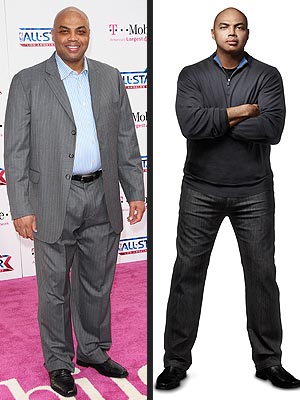
It seems that Charles Barkley is everywhere and that isn’t just because there are basketball games on each and every day due to the compressed post-lockout schedule. Whether appearing on Saturday Night live or Sunday Night Football, Barkley has emerged as a highly recognized figure since his retirement from professional basketball. Yet, his ascendance has reached new heights recently with the launch of his “Lose like a man” campaign with Weight Watchers.

Barkley’s struggle with his weight since his retirement has been well documented, often the butt of jokes on his TNT’s NBA Tonight. It would seem that this laughter and joking stops with his new Weight Watchers commercial. In front of an all-black screen and wearing all black clothes, Barkley announces:

I am still not a role model. But maybe I can change that. Maybe if I tell you that I am losing weight and getting healthy you will see that you can to. Maybe if I said I was stopping making excuses and started making progress, you’d do the same. And maybe if I told you I was doing it with Weight Watchers, you’d join me. Lose like a man.

Referencing Barkley’s “I am not a role model” NIKE commercial, the commercial establishes a firm binary between his past hypermasculine ways and his new more refined and skinny self.

The commercial presents Barkley as a role model because he is able to lose weight, to show his vulnerability, all while maintaining a clear articulation of manhood. Weight Watchers, in fact, allows for this successful balance. In an online spot, Barkley further articulates the gendered approach to weight loss:

Every guy thinks they can install the dishwasher themselves until they blow up the kitchen. And every guy thinks they can lose weight on their own. Look around guys, it ain’t working. Weight watchers has a plan for men; it has helped me lose 23 pounds already and gives me the tools to keep losing. I tried doing it myself; it didn’t go to well.

The efforts to capitalize on the ways in which weight-loss and body image have been feminized within the national discourse are fully evident here. In defining weight loss in gendered terms Weight Watchers reifies the boundaries of gender, ultimately concluding that men can remain men even if they are losing weight. The commercial, therefore, imagines weight-loss as a feminine domain, one that men can enter as long as there is a parallel masculine space. Lisa Guerrero, an associate professor in the Department of Critical Culture, Gender, and Race Studies at Washington State University, identifies the commercial as part of a larger process of gendering behaviors, objects, and processes. Like other examples of gendering of food – “man food” v.“chick food” – the Barkley spots are “yet another example of what Butler would call ‘girling’ or ‘boying’ discourse, which directs ‘appropriate’ gendered behaviors.

Continue reading @ Lose like a Man: Who is Really Losing in the new Weight Watchers Campaign? | The Feminist Wire.

NewBlackMan: “#theLakersAreSoWhite:” Celebrations of the White Baller

“#theLakersAreSoWhite:” Celebrations of the White Baller

by David J. Leonard | NewBlackMan

One of the more popular twitter trends of late has been the #theLakersAreSoWhite meme, a response to a Lakers’ roster that has five white American players: Luke Walton, Jason Kapono, Josh McRoberts, Steve Blake, and Troy Murphy. The meme includes a range of posts from the silly – #thelakersaresowhite half the team is skipping the plane back tonight to open a gluten-free bakery in #ripcity – to those based solely around recycling stereotypes of blackness and whiteness:

#thelakersaresowhite Kobe bought them all do rags for Christmas and they all thanked him for the new “handkerchief”.

#TheLakersAreSoWhite the Kardashians won’t attend Lakers games anymore

#thelakersaresowhite they can’t dance

The meme elicited a column from JA Adande on the changing “color” of the Lakers. The 2011-2012 Lakers have the most number of white American players since the 1977-1978 team. In “Purple and gold take on a new color,” Adande reflects on the Lakers’ recent demographic shift, situating the increased number of white American players on the Lakers within a downward trend throughout the league. Adande wonders if the Lakers, as one of the NBA marquee franchises, have the potential to increase the number of white kids seeking entry into the NBA. “It also would be interesting to see if having so many white players on a high-profile team could have any long-term effects on the dwindling number of white American players in the NBA.” At this level, the piece is quite instructive because it offers a challenge to the biological determinism that both explicitly and implicitly governs much of sports discussions.

In speculating as to how the visibility of a cluster of white American players on the NBA’s principle franchise, Adande makes clear that the racial demographics of the NBA is the result of a myriad of factors from culture (self-fulfilling prophecies) and role models, to resource allocation and inequality in the availability of sports. “The acceptance of this ‘natural athlete thesis’ … is instead an insult when you really break down all the implications,” writes Todd Boyd in Young Black, Rich and Famous. “If this was true, how do we account for the millions of black people, who have never played a sport? Why then are not all black people who pursue sport successful? The biological argument is without any merit, though it is argument that keeps getting recycled. Culture is key to understanding this phenomenon, but few are ready to accept it as such” (Boyd 64-64). I n this regard, Adande’s explanation of the Lakers changing color is a challenge to “the natural athlete thesis” and the memes that have been generated in response to the supposedly new found diversity of the team.

Yet, Adande’s shock and awe reinforces the very spectacle that so often surrounds the entry of whiteness on the basketball court. The mere fact that he writes an article, and that countless others chimed in with twitter comments (the meme) is a testament to the ways in which dominant discourse normalize blackness within the context of the NBA. The spectacle and discourse of the white baller anomaly pivots on the assumed natural connection between blackness and basketball. “Basketball’s prevailing ghettocentric logic keys on essentializing the embodied practices and experiences of Black urban male youth as a means of denoting an ‘authentic Blackness’ designed to appeal primarily to White, middle-class consumers,” writes David Andrews and Michael Silk.

continue reading @ NewBlackMan: “#theLakersAreSoWhite:” Celebrations of the White Baller.

Kobe Bryant: Where Amazing Happens – Entertainment & Culture – EBONY

Amazing Happens

Doubters Beware- Bryant Isn’t Going Anywhere

By David Leonard Writer

The Kobe haters have been out with full vengeance as of recent. Hyperventilating about the number of shots he is taking, his unwillingness to defer to Andrew Bynum, his debilitating body, and his off-the-court problems, critics have spent early parts of the season predicting Bryant’s forthcoming demise. Following an opening day loss to the Chicago Bulls, Alex Kay, in “Kobe Bryant: Failure to Close vs. Bulls Proves Black Mamba Has Lost a Step” describes KB24 as “a superstar at the end of his prime ready to fade into the twilight.” Dave Zirin has similarly wrote his basketball obituary, noting how “old and exposed he looked during the 2011 playoffs”. Dave McMenamin voiced similar skepticism about his status as an elite player, reiterating Charles Barkley proclamation that “Father Time is undefeated.”

The criticism of Kobe hasn’t focused simply on his being “over-the-hill;” instead his critics of recycled longstanding narratives about his arrogance and ego combined with his age to doubt Kobe’s future success. In “Shoot first, Ask Kobe,” Rick Reilly offers this argument, highlighting the danger of Kobe’s “me/shoot-first attitude” and a declining skill set: “Bryant believes in shot selection. He selects them all. Unfortunately, he’s making fewer of them.”

In “Person of Interest: Kobe Bryant,” Jay Caspian Kang furthers the assault on Kobe, recycling tired arguments of years past. Like so many, Kang fixates on the number of shots and “bad shots,” calling him a “one man side show.” Worse yet, he seems to link Bryant’s selfishness to the absence of his benevolent white father: Phil Jackson. Yet again, Kobe’s greatness and the beauty of his game are called into question.

Through 15 games of the season, Kobe (and the Lakers) has answered these critics. With a record of 10-5 (exceeding expectations of most of the prognosticators), Kobe’s start has been spectacular. Playing with a wrist injury, in a new system and with several new teammates, all without adequate time for training camp, practice, and treatment, Kobe Bean Bryant has responded to his critics with greatness. Following a 48-point output against the Suns, Bryant told reporters: “Not bad for the seventh best player in the league.”

His 48-point game, while his best during the early campaign, has been the norm thus far: he has surpassed the 30 point plateau three times and the 40 point plateau an astonishing four times. Add to this, he is averaging almost 6 assists and rebounds per game. Leading the league in scoring at 30.8 points per game (shooting 46%), fans have seen his greatness in the box score. But unless you watch Kobe each and every night, it is hard to appreciate the beauty of his game.

Yet, his success, the beauty of game, isn’t central to the narrative we are getting now nor has that been the predominant narrative throughout his illustrious career.

Continue reading @ Kobe Bryant: Where Amazing Happens – Entertainment & Culture – EBONY.

Not Another T**** Column: Waking Up from the National Nightmare | The Starting Five

Not Another T**** Column: Waking Up from the National Nightmare

David J. Leonard

I am resisting the temptation to write a column about you know who. As with Charles Barkley, I am sick of hearing about him; I am sick of the celebration and the double standards; I am tired of “the national nightmare” and am ready to wake up to talk about something else within the sports world.

As both men are playing this weekend, I thought I would wish the best of luck to Joe Flacco and Alex Smith. Yes, Flacco was recently described as “mediocre” on Around the Horn and described as one of the “worst quarterbacks on a good team” by The Bleacher Report. Sure Alex Smith is routinely ridiculed, called a bust, and otherwise doubted. What’s not to like about Flacco and Smith

In 2011, Flacco saw a slight dip in his numbers, with a quarterback rating of 80.9 and a completion percentage of almost 58%. Statistically, Smith finished with a higher quarterback rating of 90.7, having completed 61% of his passes. Most importantly, Flacco led his team to a 12-4 record, with Smith taking the 49ers into the playoffs with an impressive 13-3. Of course, you can focus on their struggles and their uneven performances, but “they just win”; all they do is win.” Isn’t that the only thing that matters? I think I heard that sometime before.

As we are in the midst of the NFL playoffs, it is important to remember those great performances. Remember Timmy Smith who ran for 204 yards, leading the Redskins to victory in Super Bowl XXII. So what if he last one more year in the league, and that some call him the one-hit wonder of the NFL, does a great playoff game make a career? I mean Larry Brown and David Tyree also had amazing performances during Super Bowl victories and didn’t they get elevated to national heroes, on the cover of every sports magazine, and the key endorsement for those running for president?

I also want to pay homage to those quarterbacks, who despite having OK or not so good careers were given little opportunity to even be a backup in the NFL. Remember Akili Smith, Dennis Dixon (third string in Pittsburgh), and JaMarcus Russell. Where are they now? You would think a team like the Colts or the Broncos could have used one of them as a backup.

With the King holiday on Monday, I have found myself thinking about politics off-the-field and the history of resistance in sports.

Toni Smith, a graduate of Manhatanville College, used her platform as a collegiate basketball player, to protest the injustices and inequalities of society. Prior to each game, as the National Anthem played, she turned away from the flag, bowing her head toward the floor. She described her motivation as follows: “For some time now, the inequalities that are embedded into the American system have bothered me. As they are becoming progressively worse and it is clear that the government’s priorities are not on bettering the quality of life for all of its people, but rather on expanding its own power, I cannot, in good conscience, salute the flag.” Not surprisingly, her courage and her desire to express her political views were met with condemnation. Told “to leave our country, called “disgraceful,” and other demonized, Smith remains a powerful example of a person who challenged the status quo, who refused to cow-tow to the dominant expectations of her as an athlete, as a women of color, and student. She stood tall and said with her actions that progressive politics have a place in sports.

Continue reading @ Not Another T**** Column: Waking Up from the National Nightmare | The Starting Five.

NewBlackMan: Black Athletes and the Racial Politics of Sickle Cell

Black Athletes and the Racial Politics of Sickle Cell

by David J. Leonard | NewBlackMan

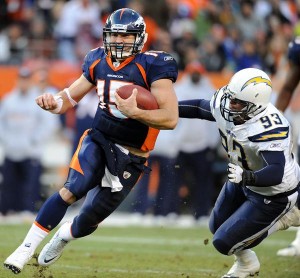
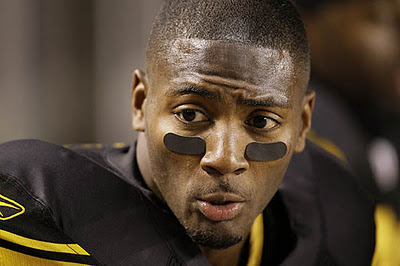
With the Raiders losing on Sunday, the Denver Broncos backpedaled their way into the 2012 NFL playoffs. Although guaranteeing one more week of conversations about Tim Tebow, a fact that no one should wish for, their playoff birth is dramatically impacting the Pittsburgh Steelers and more specifically their safety Ryan Clark. On Monday, Tomlin announced that Clark would be unable to play with the team because he has a sickle-cell trait, which can cause problems in high altitude situations. During a 2007 game in Denver, Clark became terribly ill. Doctors had to remove his spleen and gallbladder; as a result of his organs being deprived of oxygen, Clark lost an astounding 30 pounds.

While the threat to his life is significant, and the decision to skip the game would seem to be a no-brainer, Clark had planned to play. “I mean, everybody knows I want to play and I would have played,” Clark told ESPN. “I talked to my doctors and we actually had a plan in place for me to play. All things pointed to me going until (Tomlin) told me I can’t. He said he wouldn’t have let his son play and so I’m not playing either.” It would be easy to dismiss Clark’s comments, assuming that his plans to play were never realistic or possible. Yet, it is not hard to imagine an NFL player risking life and limb to play “on any given Sunday.”

In an Associated Press story on San Diego Charges offensive Lineman, Kris Dielman, acknowledged a willingness to risk his health in his pursuit to win a Super Bowl title. Dielman, who missed 10 games as a result of a concussion, had a seizure during a post-game team flight, resulting in him being rushed to the hospital. “This was definitely a scare. Waking up in the hospital with my wife standing over me, that was pretty scary. I don’t scare easy, but that was something different.” Neither this scare nor his 2 kids at home changed his approach to the game. He is not alone. Two weeks ago, the Associated Press reported that half of the players (23/44) of the players they interviewed admitted that, “they would try to conceal a possible concussion rather than pull themselves out of a game.” So it should surprise no one that Clark wants to play.

In a sport and a culture that defines masculinity through toughness, invincibility, and competitive fire. In a world of sports that values “winning at all costs” and “a never quit attitude,” Clark’s response reflects the masculinist orientation of sports culture. This is why Coach Mike Tomlin’s decision to hold Clark out of the game, and his unwillingness to ask his players to do anything he wouldn’t feel comfortable asking his children to do, is one worth celebrating. It challenges the culture of masculinity and the ways in which a football culture puts victories and a particular vision of masculinity ahead of everything else.

What has also been striking in the media coverage of Clark’s situation is the absence of any discussion of sickle cell/sickle cell trait in relationship to African Americans. There is a missed opportunity here to differentiate between the trait and disease; Clark has the trait and not the disease. While some articles discussed the medical science related to sickle-cell and how it put him at risk in high altitude settings, with most treating his inability to play as another sports-related “injury story,” there is bigger story here as it relates to sickle cell and African Americans.

This erasure fits with a larger history whereupon the health issues faced by people of color are rendered invisible. Writing about the Black Panther Party and its efforts “to raise public consciousness about sickle cell anemia,” Alondra Nelson states in Body and Soul: The Black Panther Party and the Fight against Medical Discrimination. “The condition became a rallying cry for other representatives of the black community.” The media missed an opportunity to highlight how this disease disproportionately impacts African Americans. In the United States, 1 in 12 African Americans carries the sickle cell trait (1 in 500 have the disease).

The missed opportunity reflects an overall failure to acknowledge the ways in which sickle cell disproportionately impacts African Americans. As Imani Perry told me, “Being at higher risk, because one belongs to a particular ethnic group, has to be distinguished from the idea that the disease is actually a consequence of race, which is a social construct” notes the Professor of African American Studies at Princeton University, “Some diseases are more likely to be found in particular ethnic or racial groups, but that may be a product of environmental conditions or history rather than some genetics that correlate to what we call race.”

While race is a social construction, with zero biological imperative, this disease effects African Americans in devastating ways. In “Dying in the City of the Blues: Sickle Cell Anemia and the Politics of Race and Health,” Keith Wailoo argues that “history of sickle cell anemia in the United States,” is a story of “transformation from an ‘invisible’ malady to a powerful, yet contested, cultural symbol of African American pain and suffering.”

Continue reading @ NewBlackMan: Black Athletes and the Racial Politics of Sickle Cell.