NewBlackMan: Protecting the (White Male) Gaze: Homophobia of Sports Talk Radio Goes Unchallenged

Protecting the (White Male) Gaze: Homophobia of Sports Talk Radio Goes Unchallenged

by David C. Leonard | NewBlackMan

During his ESPN show on Tuesday, Bruce Jacobs described the Los Angeles Sparks and the Phoenix Mercury as “the “Los Angeles Lesbians” and the “Phoenix Dyke-ury.” He returned to the air the following day to offer the following “apology”: “My comments yesterday were ridiculous, stupid and amateurish. I apologize for even uttering the comments, whether you heard them or not, whether you were offended or not.”

To date, little has been made about either his comments or his half-hearted apology that neither apologizes for the spirit of his remarks nor the ideological underpinnings that led to such comments. His apology does not repudiate his own homophobic stereotypes nor does it challenge the ideological assumptions evident here, but instead apologizes for vocalizing them. It isn’t the homophobia that warrants the apology, but expressing it on his show.

While Mr. Jacobs needs to be held accountable for his remarks, along with ESPN, which has failed to publicly condemn the comments, it would be a mistake to isolate this rhetoric as that of a “bad apple.” The homophobia and sexism on display here is reflective of sport talks radio. As with talk radio in general, sports talk radio emerged as a movement to “restore” the hegemony of white male heterosexism. The homophobic remarks of Bruce Jacobs represents a systemic and longstanding effort to restore the normalized vision of sports as a space of male dominance.

Like the efforts to sexualize female athletes, the construction of female athletes as lesbians reaffirms the “normalcy” of sports as a male domain. According to David Nylund (2004), “With White male masculinity being challenged and decentered by feminism, affirmative action, gay and lesbian movements, and other groups’ quest for social equality, sports talk shows, similar to talk radio in general, have become an attractive venue for embattled White men seeking recreational repose and a nostalgic return to a prefeminist ideal.” As argued by Trujillo (1994) and quoted in Nylund:

Media coverage of sports reinforces traditional masculinity in at least three ways. It privileges the masculine over the feminine or homosexual image by linking it to a sense of positive cultural values. It depicts the masculine image as “natural” or conventional, while showing alternative images as unconventional or deviant. And it personalizes traditional masculinity by elevating its representatives to places of heroism and denigrating strong females or homosexuals. (p. 97)

His comments, thus, embody the efforts to silence, surveil, demonize, and ultimately discipline and punish any challenges to the white male heterosexuality of sporting cultures. Those perceived threats to this hegemony are met with efforts to reclaim the sporting space as one of masculinity. From the ubiquity of images of hypersexual female athletes on various sports websites to the commonality of homophobic, sexist, and racist rhetoric, we see that despite the increased levels of diversity, the hegemony of white male heterosexuality remains a central facet within to contemporary sports culture.

The relative silence about this instance of homophobia (as of writing there has been only 9 articles about Jacobs’ comments) and the culture of homophobia within the sports media is especially telling given the widespread condemnation of various players for homophobic slurs during the 2011. Others may cite the varied levels of celebrity and the divergent platforms as reasons for why the comments of Kobe Bryant, Joakim Noah, and Wayne Simmonds received ample media attention. Yet, the comparative silence here reflects a level of comfort in isolating homophobia as a symptom of athlete culture, hip-hop culture and blackness.

Continue reading @ NewBlackMan: Protecting the (White Male) Gaze: Homophobia of Sports Talk Radio Goes Unchallenged.

The Layup Line » Will Injuries Derail 2011 NBA Season?

Will Injuries Derail 2011 NBA Season?

by David Leonard

In a much-hyped preseason game between the Los Angeles Lakers and their cross-the-hall “rivals,” the worst possible scenario confronted the 16-time NBA champion: Kobe Bryant was hurt. Falling awkwardly, Bryant tore the lunotriquetral ligament in his right wrist. Less than a week later, the New Jersey Nets announced that Brook Lopez broke his foot during the first half of their game with the New York Knicks. With the Lakers potentially losing a Bryant at full-strength, and the Nets likely without the services of Lopez for 4-6 weeks, the injuries are potentially devastating to both teams, particularly the Nets whose ability to trade for Dwight Howard will be severely limited with the loss of this cornerstone trade asset.

Yet, more than the impact on the respective teams, these injuries highlight both the potential consequences of the NBA’s lockout. While injuries are commonplace, a rushed preseason and a compressed training camp represent a threat to the physical wellbeing of the players themselves. Stephen Smith, in “Expert warns of NBA lockout-related injuries,” compares the injuries that came about as a result of the NFL with the potential with the 2011-2012 season. There, he quotes Timothy Hewett, who is Director of Research at The Ohio State University Medical Center’s Sports Medicine Department: “Extrapolate what we’ve seen in the NFL, and I could see in the NBA in the range of 2, 3, 4 times higher rates of injury. This could be a historic event, where we start to think, ‘Is there a potential for really putting players at risk by these legal wranglings?’”

As evident, the injury bug has not been limited to the league’s stars, with Darrell Author (out for the year), Stephen Curry, and Marcus Camby all facing significant injuries. Celtics forward Jeff Green will also have to sit out this season because of a heart ailment discovered during his preseason physical. There’s also the improbable case of Sacramento Kings forward Chuck Hayes who in the span of two weeks went from the brink of having to end his NBA career after he was released by the Kings because of a heart condition diagnosed during his initial physical, only to be resigned by the Kings when Hayes’ doctors concluded that his diagnosis was not as severe as earlier believed.

While unable to blame these injuries on the lockout, it is hard not to think about the connection. And as the Hayes situation reveals, an incident in years past that might have taken a month or so to resolve, appeared to have been hastily resolved in two weeks all in an effort to get the show on the road. Contrary to all the speculation about “Will Kobe Play on Sunday,” these injuries, the rush to push the lockout behind, and the determination to start the season on Christmas/NBC/National TV days all point to the central focus anywhere and everywhere except on the physical health of the NBA’s players.

These injuries also point to the absurdity of the league’s best effort to cultivate rivalries and to manipulate and change the rules to guarantee parity. David Stern is unable to veto the injuries of Bryant, Lopez, or Curry for basketball reasons; just as he wasn’t able to veto the injury of David Robinson in 1997, which ultimately led the Spurs to draft Tim Duncan. Success, rivalries, and dynasties all organically happen; they won’t be the result of the manipulation and rule shifting policies of the league.

No matter how the rules are changed to “spread the stars” around the league, no matter how restrictive the system is on player movement, and no matter how much the NBA and ESPN tries to sell the game as one of rivalries rather than superstars, the league cannot control everything. They cannot control injuries, they cannot control players’ willingness to take less money, they cannot control for up-and-coming players (Marc Gasol; Kevin Love; Danny Granger) nor can the league guarantee that the next superstar will indeed deliver. The league cannot prevent injuries for its stars, but if they could they would certainly do it to protect its financial interests.

via The Layup Line » Will Injuries Derail 2011 NBA Season?.

Why the NCAA Should Pay Student-Athletes and Pay Them Fairly (Part 2 of 2) | Urban Cusp

Why the NCAA Should Pay Student-Athletes and Pay Them Fairly (Part 2 of 2)

By David J. Leonard

UC Columnist

Beyond graduation rates and the compromised quality of the education provided in exchange for athletic participation, it is crucial to think about the overall value of an education and degree in the twenty-first century. Remember, this is the unit of exchange. The national unemployment rate for college graduates is roughly 5%. While significantly lower than those without a college degree (or a high school diploma), the increased unemployment amongst college graduates along with underemployment illustrates the increasingly shrinking value of a scholarship. Worse yet, the 5% unemployment rate includes all college graduates, a figure of limited value when reflecting on compensation levels of current and future student-athletes. In “Jobless College Graduates Struggle Under Ongoing Recession” Amanda Fairbanks and Andrew Lenoir elucidate the profound issues facing today’s college graduates:

College graduates still fare better than their peers with only a high school diploma, but even their job prospects show signs of fatigue. According to the U.S. Bureau of Labor Statistics’ Current Population Survey, the unemployment rate for college graduates between the ages of 20 to 24-year-olds soared five percentage points in the past month — from 7.1 percent in May to 12.1 percent in June, compared with a three percent jump during the same period last year.

The rates of unemployment, the limited opportunities in career-track jobs, and heightened underemployment are all evident in the number of college graduates moving back home upon graduation. Since the recession began in 2007, there has been a 25% increase in students moving back home after college. As the value of college education has declined, the profits within collegiate sports have grown dramatically, illustrating the growing gap between revenue generated and the level of compensation provided to “student-athletes.” It points to the heightened level of exploitation, so much so that it might be time to renamed the NCAA: NEAA – National Exploitation Athletic Association.

Sports, particularly basketball and football, and its athletes generate millions for the NCAA, its representative schools, coaches, and a number of corporate partners. It is a billion dollar industry. Yet, the wages paid are dubious at best and the value of that compensation is in steady decline. This becomes even more striking as we focus our attention on the disproportionate number of African American student-athletes within revenue sports. The level of exploitation is certainly aggravated by the amounts of money generated by these athletes within these sports. Worse, yet given the continued significance of race, the level of compensation provided to black “student-athletes” is that much worse. The unemployment rate for black college graduates over 25 is almost twice the national average for blacks compared to whites (8.4 versus 4.4)

Michael Luo, with “In Job Hunt, College Degree Can’t Close Racial Gap,” highlights the grim economic prospects facing black graduates.

But there is ample evidence that racial inequities remain when it comes to employment. Black joblessness has long far outstripped that of whites. And strikingly, the disparity for the first 10 months of this year, as the recession has dragged on, has been even more pronounced for those with college degrees, compared with those without. Education, it seems, does not level the playing field — in fact, it appears to have made it more uneven.

Presumably worse for those recent college graduates, the value of scholarship for a black “student-athlete” remains in steady decline even as coaches salaries and television contracts have skyrocketed. Attributable to persistent discrimination, denied access to social networks, and other issues, black college graduates face a bleak future upon the conclusion of school.

Continue reading at Why the NCAA Should Pay Student-Athletes and Pay Them Fairly (Part 2 of 2) | Urban Cusp.

Why the NCAA Should Pay Student-Athletes and Pay Them Fairly (Part 1 of 2) | Urban Cusp

Why the NCAA Should Pay Student-Athletes and Pay Them Fairly (Part 1 of 2)

By David J. Leonard

UC Columnist

The excitement for the upcoming bowl season has just begun. With 35 games beginning December 17th and not ending until January 9th, the bowl season may be the gift that keeps on giving. The national championship game, a rematch between Alabama and LSU, is some 16 days after Christmas, staggering evidence of the extent of the NCAA’s fall economic extravaganza.

This year’s bowl season will also mark another year without reform to collegiate football and college sports in general. It will mark the culmination of yet another collegiate football season where those whose labor, talents, and sacrifices receive the least from the system. Dave Zirin, in “Saluting a Sick System: ‘Sports Illustrated’ Honors Duke Coach Mike Krzyzewski,” brilliantly described the year of college sports in the following way:

In 2011, we all learned just how low the NCAA and its member schools would go to defend their bottom lines. We learned how people in power at Penn State University would put the lives of children at risk, if it meant preserving the lucrative legend of Coach Joe Paterno. We learned what Syracuse University and the surrounding community would be willing to cover up—and how many children they would endanger—to protect their own Hall of Fame Coach Jim Boeheim and the $19 million dollar annual cash-cow of Syracuse hoops. We saw Ohio State football coach Jim Tressel resign after a series of scandals that now look quaint, and we witnessed the University of Miami Athletic Department reel under the weight of the gutter economy of exchange between criminal boosters and the school’s President Donna Shalala.

Amid the scandals, the persistent exploitation, and systemic prioritizing of money over anything else, 2011 has also seen an increased emphasis on reform. “Fifty years ago, there was not any kind of money, and the players got full scholarships. Now they’re still getting full scholarships, and the money is just in the millions,” argued South Carolina Coach Steve Spurrier. “I don’t know how to get it done. Hopefully, there’s a way to get our guys that play football a little piece of the pie… They bring in the money,” Spurrier said. “They’re the performers.” Similarly, Robert Lipsyte highlights the hypocrisy that is the NCAA: “The true madness of March is the millions of dollars — generated by the kids who touch the ball — that goes mostly to the advertising hustlers, television suits, arena operators, concession hawkers, athletic gear manufacturers and retailers, university administrators, coaches and sports media noisemakers. No wonder they don’t want to share any of that money with the players. They’ve locked the doors on their sweat shop.”

Focusing on the financial difficulties facing many college athletes and the gross disparities between the billions generated the pittance awarded to “student-athletes,” much of the discourse has focused on the question of compensation. Invariably opponents and naysayers dismiss the idea of paying “student-athletes,” arguing that it would be impossible to administer and that paying “student-athletes” violates the core mission of higher education. Despite such claims, what they fail to see (or acknowledge) is that “student athletes” are paid: they are paid with the opportunity to showcase their talents (especially within the revenue sport), have a college experience, and receive a college education/degree. As such, the question isn’t or shouldn’t be whether college athletes should be paid but whether the current levels of compensation are just and fair.

Continue reading @ Why the NCAA Should Pay Student-Athletes and Pay Them Fairly (Part 1 of 2) | Urban Cusp.

The Layup Line » Nothing to Celebrate: Chris Paul and the NBA Imagination

Nothing to Celebrate: Chris Paul and the NBA Imagination

David J. Leonard

December 16, 2011

I am a Lakers fan so any and all of my criticism should be seen through that window. While Lakers’ haters have rejoiced over the draconian decisions from the league, it’s worth taking a moment to contemplate what exactly they’re celebrating.

For example, Dave Zirin is a brilliant commentator, with an amazing ability to both highlight the political dimensions of sport and use it as a way to elucidate the larger social issues of the day. In his essay, “Sorry, Lakers: Chris Paul and the Clippers Now OCCUPY Los Angeles,” Zirin doesn’t just argue that a sea change is underway in Los Angeles. He also connects the trade to a larger social upheaval inside and outside of the sports world. “These aren’t two NBA teams. They are the two Americas. But in a 2011 where we’ve seen global revolutions from the Middle East to the Mid-West overturn accepted truths in thought and deed, it’s hard to think of a more appropriate way for the SportsWorld to end its year,” writes Zirin.

Zirin then makes his zeitgeist-tapping analogy more plain:

The Lakers have always been the ultimate team of the 1 percent. The Clippers are the also-rans, the afterthoughts, bottom-dwelling 99 percenters of the first order. One trade, and this sacrosanct truth has been turned on its head. To see an exhilarating symbol of the change 2011 has brought and 2012 will bring, you can do worse than remembering the names Chris Paul, Blake Griffin and the soon-to-be almighty Clippers.”

David Stern’s decision to reward David Stern with a transcendent player such as Paul given his given his history of racial discrimination is jarring enough. After all we can not forget that journalist Bomani Jones once described Sterling in the following way: “That same man, who gives black men tens of millions of dollars every year, refuses to take a few thousand a month from folks who would like to crash in one of his buildings for a while? … . Sterling may have been a joke, but nothing about this is funny. In fact, it’s frightening and disturbing that classic racism like this might still be in play.” Read in this context, Zirin’s position the Clippers as the 99% represents a troubling reimagination of the 99%. Can this really be the face, symbolic or real, of the 99%?

Yet, beyond defining the 99% as those who are not winning, what concerns me here is the failure to see how the Clippers won (and David Stern, Dan Gilbert, Michael Jordan, Nike and a host of other global corporations won) through the exertion of power and the adjustment of rules to fit the agendas, needs, and financial goals of these ultimate winners. In fact, this entire Paul imbroglio is indicative of current economic policy, where rule -makers adjust games for their own benefit. Zirin’s assessment would have one believe that the Lakers were Lehman, and the Clippers Goldman Sachs, one got bailed out, the other didn’t. But does anyone really believe in the possibility of an NBA landscape in which the Lakers’ aren’t somehow rendered as Goldman Sachs?

This Chris Paul debacle was the first clear sign that, post-lockout, the league’s agenda is to restrict player movement and contain player salaries while maximizing profits. This has been done under the guise of “achieving parity” but just like the “free market” the NBA is supposed to operate in, these are all illusions. The needs of public consumers – in this case, sports fans – clearly are not determining the marketplace. The oligarchs do. Just as Lehman Brothers was allowed to fail while other banks were bailed out, the NBA made a decision to empower the Clippers at the expense of the Lakers, Rockets and others because of the larger effort to make the league more about teams and rivalries rather than stars. In reimagining the NBA apart from stars, the NBA is attempting to rebrand itself thereby limiting the power and financial demands of the players themselves. Josh Martin describes the situation as nothing to celebrate, especially since it’s illustrative of the unjust consequences of power:

Hate David Stern for going Hank Paulson on his league’s marquee franchise, thereby setting a horrendous precedent that he might just do it again and bringing the business of player movement to a screeching halt as a result. . . .

Hate the owners who wanted (and still want) a hard cap AND salary rollbacks AND to prevent superstars from working where they want to, even after putting in years of service in smaller markets.

Hate Gilbert and Sarver and the Maloofs and all those other egomaniacs for screwing up YOUR favorite teams and then blaming their own missteps and bad contracts on their well-payed [sic] employees.

In other words, don’t hate The Player; hate The Game, the very same game that YOUR owners pushed for and that will ultimately cost YOUR teams in their pursuit of big-name free agents and NBA championships.

Clippers fans are right to celebrate CP3’s arrival in Los Angeles, but I’m not sure anyone else has cause for joy. Trading Chris Paul is a testament to the continued oligarchy of the NBA; it is not a triumph of the 99%. Efforts to push Chris Paul to one team over another, the meddling and public statements of owners, are just the beginning of a systemic reconfiguring of the NBA. Is that really worth celebrating?

via The Layup Line » Nothing to Celebrate: Chris Paul and the NBA Imagination.

The Layup Line » Enough is Enough #Afterthelockout

Enough is Enough #Afterthelockout

David J. Leonard

December 16, 2011

Time Magazine recently announced that its 2011 “person of the year” is the protestor. Highlighting the Arab Spring and the Occupy Wall Street movements, Time clearly sought to celebrate the ways in which protest and resistance has defined 2011. This spirit of protest was also been evident within the NBA in 2011. From the lockout to recent decisions from the league office regarding the trade of Chris Paul and even the 2011-2012 schedule, David Stern and the league’s owners have turned the levers of power over and over again. Yet, players, who in recent years, especially after the 2004 Palace Brawl (focus of my forthcoming book), have remained relatively silent about their frustrations and opposition to both policy changes and the overall culture of the NBA, are increasingly challenging those in position of power. Even as fans and pundits gleefully celebrate the return of the NBA and the prospect of their team finding success in 2011-2012, players have taken a different tone, ubiquitously stating, “enough is enough.”

The spirit of protest and anger was initially evident during the lockout when Dwyane Wade yelled at David Stern challenging the commissioner’s perceived arrogance and paternalism during a negotiating session. Wade allegedly told Stern: “You’re not pointing your finger at me. I’m not your child.” The willingness to challenge Stern and the owners themselves continued during the lockout, evident by the condemnation of Michael Jordan from players who felt slighted and disrespected by their former peer. This has continued since the lockout ended.

Upon hearing about the league’s (David Stern and his merry men) decision to block its own trade of Chris Paul to the Los Angeles Lakers for “basketball reasons” (err- Michael Jordan and Dan Gilbert are tired of going to the lottery while others go to parades), Danny Granger took to twitter to announce: “Due to the sabotaging of the LA/NO trade by david stern, and following in the footsteps of my athlete brethren Metta World Peace and Chad Ochocinco, I’m changing my last name to ‘Stern’s Bi#&h” #effectiveimmediately.’” While not as cutting and critical of the commissioner, other NBA players similarly used twitter to voice their displeasure with the situation. Unwilling to sit silently, they used social media to protest, albeit rhetorically, which in this case an important intervention against the demands that NBA players “shut up and play.”

Player denunciation of Stern was not limited to Twitter, but was equally present within various media sessions. “You’re fighting a bully,” noted Deron Williams. David Stern is a bully, you can’t really go up against him. He knows he’s a bully. It’s not a secret. You got to be. I think every owner of every big business is a bully. That’s how they become successful.”

Public criticisms has not been limited to the Chris Paul issue or even the lockout, but have been evident in player willingness to voice their displeasure with the upcoming schedule, focusing on the league and owner single-minded focus on revenues. “I think what you see, we’re a rushed league right now,” noted Kevin Garnett. “Everybody is paying attention to the Chris Paul situation. But I don’t know why everyone’s shocked, because [David] Stern has been pretty adamant about when he wants to do things and how he does things.”

There is a lot of uncertainty in the air within the NBA. From decisions in the league office to very dynamic and fluid player personnel issues, the NBA is facing the most unclear and unpredictable future it has seen in its recent history. Yet, what is equally unclear is whether players will continue to challenge and protests the unjust and troubling choices made by their powerful bosses, individuals who have shown to be most concerned about “financial reasons” above any “basketball reasons.”

via The Layup Line » Enough is Enough #Afterthelockout.

The Layup Line » Zero Tolerance or Zero Conscience: Is High School Football Being Over-Policed?

Zero Tolerance or Zero Conscience: Is High School Football Being Over-Policed?

by djwsu on December 8, 2011

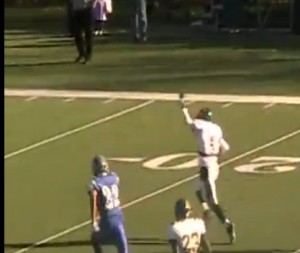
With 6 minutes remaining in the MIAA 4A Super Bowl (Boston), Matthew Owens faked an inside hand off, breaking free to the outside as he raced toward the endzone. Obviously overcome by emotion, understandable given that he was about to score the potential game- winning touchdown, which would send his school to the state championship, Owens began to “celebrate.” As he crossed the 20-yard line, he briefly raised his arm in celebration, prompting the referee to throw a flag, nullifying the touchdown. In the end, his Cathedral High School squad would fall short of their goal, losing 16-14 to Blue Hills. What Owens had imagined to be the perfect birthday present (he turned 18 on game day) and described, as the “play of his life,” has no happy ending. There would be no Hoosiers or Miracle ending, not surprising given the ways in which race, class and sports operate in contemporary America.

While clearly not a violation of the spirit of the rule (and even its written language), my interest here is not to debate the call or even the rule (you can go here for a longer discussion). What is revealing about the ensuing debate regarding the penalty assessed to Owens is how many people have used this moment to demonize Owens, and rouse the circulation of dominant stereotypes about blackness and the inner-city.

For example, in an article describing Boston Mayor Thomas Menino’s reactions to the penalty, commenters used this incident as evidence of the pathology and dysfunctional values of inner-city communities

Occumom: “It has now become a “diversity culture” issue. Mumbles will excuse the typical bad behavior

OccupyBoston: “Bottom line here is that the thug knew the rules, the ref spoke to the players before the game. And the thug broke the rules for whatever reason, immaturity, bad breeding, bad parenting, bad something. In life there are ramifications for bad conduct. Just because he’s black doesn’t mean he should get a free pass.”

IWuvAlienCahThieves: First he supports Liz Warren’s Occupiers, now he supports a thug behaving badly, in flagrant violation of rules that were explained to him very clearly before the game.

Is our Mayor becoming an anarchist in his advanced age? Or does he selectively enforce and judge people based on race or political affiliation? Yes that’s it. He is corrupt.

Alleging that Owens is a “thug” and his behavior results from “bad breeding” and “bad parenting,” and decrying that “because he’s black doesn’t mean he should get a free pass” makes the racial dimensions of these responses quite clear. Owens, and blackness in general, is rendered as both undesirable and suspect because of the cultural morals and values that “thugs” or inner-city youth supposedly bring into the arenas, fields and stadiums that saturate America’s cultural landscape. Given the danger and immorality practice by “thugs” these respondents celebrate the referee as providing the necessary punishment and discipline for those who otherwise are incapable of civilized behavior.

via The Layup Line » Zero Tolerance or Zero Conscience: Is High School Football Being Over-Policed?.