My two appearances on Left of Black from 2011 and 2012. Most recent appearance with Mark Anthony Neal and Bomani Jones
Category Archives: Popular Culture Musings
Paterno, White Patriarchy and Privilege – Entertainment & Culture – EBONY
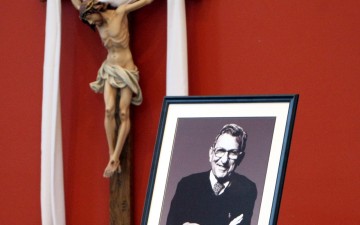
Paterno, White Patriarchy and Privilege
OPINION: The hero’s farewell given to the disgraced coach speaks volumes
By David Leonard Writer
When the news broke that Penn State’s football coach, Joe Paterno had died of lung cancer, one might have thought there had been some sort of great national tragedy based on the media coverage. The spectacle that began with this “breaking news” did not end with the initial reports, but has continued with ample columns, discussions, tributes, and memorials to a football coach. Described as an “icon” a “revered coach,” “a leader,” and “a legend,” Paterno has been further lionized the short time after his death. Ivan Maisel, in his tribute to Paterno, captures the hyperbolic tone of the post-death commentaries
The 409 victories, while record setting, are not the full measure of the man. The young men he left behind, the campus to which he devoted his life, a campus whose leaders shoved him aside in the panicky, feverish days after the scandal broke, also give testimony to the life of Joseph Vincent Paterno. The whole of his life renders the seismology of modern-day journalism moot. The facts of a 62-year coaching career were shaken. They did not topple over.
Eulogies citing his success on the field, his millions of dollars in donations, his “fatherly” relationship with his players, and his importance in the community, have sought to elevate Joe Paterno as saint. Despite everything that has happened, the sports punditry has sought to resuscitate a “the image of Joe Paterno,” one which Bomani Jones noted “is null and void.”
This is not to say that media coverage has erased his connection, involvement, and culpability for the alleged child molestation committed by assistant coach Jerry Sandusky (see here for discussion). The tragedy in his death rests with the cloud of uncertainty, contempt, and unease about Paterno’s legacy. The ubiquity of the memorials reflected a societal unease that “he was, like so many of the characters in the books he told us to read, unable to have a perfect ending.” The references to the scandal become the pretext for the celebration because without it, there would be no reasons for the story of redemption and hero worship to the extent we are seeing. His connection to the sex abuse scandal has thus been pushed aside, serving as little more than a footnote to justify the societal mourning of a great football coach. “I really do believe that the drama of his last two months has fueled the media barrage. There is a high-octane effort aimed at defining his legacy as positive. That takes a lot of sweat equity given the recent scandals,” noted Dave Zirin in a message to me.
In many regards, the discussion around his death is framed around the last few months, his firing, the scandal itself, and his involvement. This is why there is so much celebration and this is why it is breaking news. It is difficult to imagine the extent and scope of the commentaries and celebrations had the last two months not occurred; I would be hard pressed to come up with an athlete or sports figure (celebrity) whose death has provoked so much memorializing as we have seen with Joe Paterno.
The efforts to memorialize and the hyper celebration also reflect the power of White masculinity and nostalgia within the cultural landscape. Described as a “model of law-abiding sportsmanship,” “a disarming mix of a lofty diploma and Brooklyn-bred blue-collar grit,” and as someone committed to education and honor, Joe Paterno’s importance exists apart from titles, victories, or football within the national conversation. As noted by Rick Reilly, Paterno “was a humble, funny and giving man who was unlike any other coach I ever met in college football. He rolled up his pants to save on dry cleaning bills. He lived in the same simple ranch house for the last 45 years. Same glasses, same wife, same job, for most of his adult life.”
The celebration of Paterno as patriarch, as the embodiment of a White working-class ethic, as a coach of a different era, sits at the core of the demoralization of Paterno. The national mourning in this regard reflects both a desire to redeem him in the face of the sex abuse scandal and to celebrate nostalgia for a different era of college sports and a heroized White working-class masculinity.
Continue reading @ Paterno, White Patriarchy and Privilege – Entertainment & Culture – EBONY.
NewBlackMan: Sampling Again: Shawn Carter and the Moynihan Report Remix
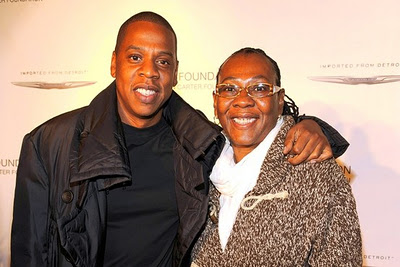
Sampling Again: Shawn Carter and the Moynihan Report Remix
by David J. Leonard | NewBlackMan
I have resisted the temptation to write about the media spectacle surrounding the recent birth of Blue Ivy Carter. The obsession has been striking on so many levels: (1) it seems to reflect a desire to represent Shawn Carter and Beyoncé as royalty. Their cultural visibility and power reaffirms a narrative about the American Dream and post racialness. Blue Ivey Carter becomes evidence of multi-generational wealth; her arrival in the world affirms the American Dream as Beyoncé and Shawn Carter now have millions of dollars AND the prescribed family structure (not sure about dog and picket fence). (2) There also seems an investment in constructing hip-hop as growing up as evident by a politics of respectability and through a patriarchal nuclear family. The media discourse has imagined a family (or children) as the necessary step toward becoming an adult.
Mark Anthony Neal brilliantly reflects on this particular aspect, noting how the media has constructed Carter as ushering in a new era for hip-hop. “There are of course other examples of rappers who do take parenting seriously.” More importantly, Neal works to disentangle lyrical flow from parenting:
To be sure, writing a song about your daughter is the easy part. Fathers are often lauded for the more celebrated aspects of parenting: playing on the floor, piggyback rides, the warm embraces after a long day at the job. Mothers, on the other hand, are often faced with the drudgery of parenting, like changing soiled diapers, nursing, giving up their careers to be stay-at-home moms, and the criticism that comes if they don’t live up to societal notions of what “good” mothering is.
The celebration of Shawn Carter’s fatherhood and the lack of commentaries regarding Beyoncé as a mother are telling on so many levels. At one level, it reflects the erasure of mother’s labor, as noted by Neal. Yet, at another level it reflects the desire to stage yet another referendum on black fathers and mothers within the public discourse. For example, Joanna Mallory recently penned: “Jay-Z anthem to fatherhood is music to the ears of black leaders and family advocates.” Arguing that, “72% of African-American kids are raised without a dad,” Mallory celebrates the birth of Blue Ivey Carter because she inspired her dad to write “Glory:
“But she is also rich in love, as Jay-Z exults in his song “Glory.” The best part? A lot of other babies are going to benefit. Because Jay-Z’s ecstatic reaction to being a dad will be the strongest boost yet to a growing movement in the black community encouraging responsible fatherhood.
Concluding that the song is a necessary remedy for absent black fathers is emblematic of the media discourse here: sensationalistic, simplistic, and wrapped up in a narrative of distortions, misinformation, and stereotypes. It is yet another reminder those critics should not wax sociological.
Having already written about this in regards to Colin Cowherd and Touré, I thought I might just recycle part of the “Blaming Black Families” piece, albeit with a little remix (I swapped out Cowherd’s name for Mallory). The fact that critics, politicians, and the public discourse continually recycles the same fallacious and troubling argument mandates that I merely recycle my work as well.
The efforts to recycle the Moynihan report, to define father as natural disciplinarian and mother’s nurturing, to link cultural values to family structures, and to otherwise play upon longstanding racial stereotypes, is striking.
Continue reading at NewBlackMan: Sampling Again: Shawn Carter and the Moynihan Report Remix.
Lose like a Man: Who is Really Losing in the new Weight Watchers Campaign? | The Feminist Wire
Lose like a Man: Who is Really Losing in the new Weight Watchers Campaign
By David J. Leonard
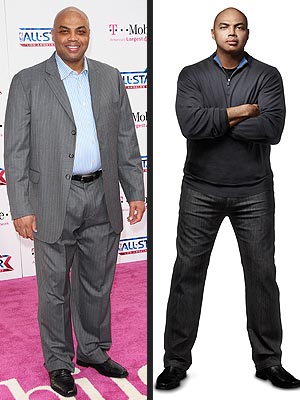
It seems that Charles Barkley is everywhere and that isn’t just because there are basketball games on each and every day due to the compressed post-lockout schedule. Whether appearing on Saturday Night live or Sunday Night Football, Barkley has emerged as a highly recognized figure since his retirement from professional basketball. Yet, his ascendance has reached new heights recently with the launch of his “Lose like a man” campaign with Weight Watchers.
Barkley’s struggle with his weight since his retirement has been well documented, often the butt of jokes on his TNT’s NBA Tonight. It would seem that this laughter and joking stops with his new Weight Watchers commercial. In front of an all-black screen and wearing all black clothes, Barkley announces:
I am still not a role model. But maybe I can change that. Maybe if I tell you that I am losing weight and getting healthy you will see that you can to. Maybe if I said I was stopping making excuses and started making progress, you’d do the same. And maybe if I told you I was doing it with Weight Watchers, you’d join me. Lose like a man.
Referencing Barkley’s “I am not a role model” NIKE commercial, the commercial establishes a firm binary between his past hypermasculine ways and his new more refined and skinny self.
The commercial presents Barkley as a role model because he is able to lose weight, to show his vulnerability, all while maintaining a clear articulation of manhood. Weight Watchers, in fact, allows for this successful balance. In an online spot, Barkley further articulates the gendered approach to weight loss:
Every guy thinks they can install the dishwasher themselves until they blow up the kitchen. And every guy thinks they can lose weight on their own. Look around guys, it ain’t working. Weight watchers has a plan for men; it has helped me lose 23 pounds already and gives me the tools to keep losing. I tried doing it myself; it didn’t go to well.
The efforts to capitalize on the ways in which weight-loss and body image have been feminized within the national discourse are fully evident here. In defining weight loss in gendered terms Weight Watchers reifies the boundaries of gender, ultimately concluding that men can remain men even if they are losing weight. The commercial, therefore, imagines weight-loss as a feminine domain, one that men can enter as long as there is a parallel masculine space. Lisa Guerrero, an associate professor in the Department of Critical Culture, Gender, and Race Studies at Washington State University, identifies the commercial as part of a larger process of gendering behaviors, objects, and processes. Like other examples of gendering of food – “man food” v.“chick food” – the Barkley spots are “yet another example of what Butler would call ‘girling’ or ‘boying’ discourse, which directs ‘appropriate’ gendered behaviors.
Continue reading @ Lose like a Man: Who is Really Losing in the new Weight Watchers Campaign? | The Feminist Wire.
Refusing Invisibility: ‘Pariah’ Challenges Social and Religious Norms | Urban Cusp
Refusing Invisibility: ‘Pariah’ Challenges Social and Religious Norms
by David J. Leonard
In exploring the dialectics between race, class, gender, and sexuality, Pariah examines the depths of “Otherness.” The film begins with a definition of a pariah, as “a person without status. A rejected member of society. An outcast.” Alike navigates many different worlds, seemingly unable to meet the demands and expectations of society and its members. At home, her sexuality and her gendered identity (her clothing choices) conflict with the demands and expectations of her parents. At the club, her lack of aggressiveness and her perceived limited confidence, positions her outside of peers. At school, she sits alone, as the “popular” girls gossip about both the boys and the “AGs” – the aggressive girls.
“The two worlds that ‘Pariah’ visits might as well be parallel universes, although they are within blocks of each other,” writes Stephen Holden in his New York Times review. “The raunchy women’s dance club to which Alike is drawn has nothing in common with her pious household, where a stiff, artificial cheer and tense formality pass for familial togetherness. Alike does a better job than many young women of negotiating life between the two while protecting herself until it is time to break free.” Yet, Alike is of course not the only pariah within the film.
Laura (Pernell Walker), Alike’s best friend, lives with her sister because she was kicked out of her house presumably because of her mom’s homophobia. Even Alike’s mom, whose pious and conservative demeanor renders her as an outsider, as alienated from her daughter, her husband, and her peers at work, is somewhat of a pariah. Summer M, at Black Youth Project, argues in fact that Audrey continues the historic representations of black mothers as “cold, irrational, and incapable of unconditional love.” Yet, in imagining her through a lens of middle-class and Christian respectability, and providing her with some depth, the film constructs Audrey as a different sort of pariah.
While a story of “simplicity,” Pariah offers a complex representation of identity. Evident in the narrative and in Alike’s recitation of her spoken word poetry, Pariah represents her as a trapped butterfly; her beautiful identity is confined by the demands that she behave and act in accordance with identity of a young, middle-class, heterosexual black woman. In one of the more powerful scenes from the film, Alike announces: “Heartbreak opens onto the sunrise. For even breaking is opening. I am broken. I am open. See the love shine in through my cracks. See the light shine out through me. My spirit takes journey. My spirit takes flight. And I am not running. I am choosing.” In other words, like a butterfly, Alike chooses to break free from the confines of her parents’ expectations, the homophobia of society, and even the requirements for acceptance within middle-class religious communities. She refuses their definition of the politics of respectability just as Dee Rees refuses the systemic erasure of black lesbian youth from the mainstream. Choosing her own path, her own flight, Alike’s beauty shines through with clarity and inspiration. Emphasizing her power and agency, Pariah represents Alike and her sense of identity as beautiful.
One of the most interesting and telling aspects of Pariah is the ways it uses music. Including a range of artists, from Khia, Daisha, and Kandi Cole to Honeychild Coleman, Audio Dyslexia, and Tamar-Khali. The efforts to highlight “underground” female artists reflect the efforts of the movie to make visible those experiences, voices, and identities that are ubiquitously rendered invisible. Yet, the music selection is telling in other ways, as the film disentangles black contemporary identity from hip-hop, arguing that black identity and artistic contributions include, but are not limited by hip-hop. The film includes Afro-Punk artists, those who embody a rock aesthetic, and a more R&B sound. The hegemonic inscription of black identity through mainstream rap music reflects the narrow constructions of blackness, the systemic definition of blackness through narrow notions of authenticity. The film explores and explodes this in both its musical choice and its narrative direction. In one scene, Alike and Bina (Aasha Davis) listen and discuss music; Alike is shocked that her presumably “normal” and “mainstream” friend listens to rock music. The efforts to disentangle social location (class, race, and identity) from music are emblematic of the larger purpose of the film, one that disrupts notions of authenticity.
Pariah leaves much unsaid. While clearly part of the overall effort is to focus the story on Alike and give voice to her identity formation, it challenges the belief that the viewers are entitled to every piece of information. Viewers are made to believe that Arthur is having an affair; it also hints at conflict between his relationship and Audrey stemming from past choices. Similarly, viewers are never told why Laura leaves home or the relationship between Laura’s sister and her mother. We know very little here, not so much because it is not important or illustrative to the story or character development, but because it is information that viewers are not entitled to know. It points to the power of the film, one that leads viewers to see and experience, yet doesn’t give audiences full-access defined by spectacle and the powerful gaze of the audience.
Continue reading Refusing Invisibility: ‘Pariah’ Challenges Social and Religious Norms | Urban Cusp.
Cinematic Politics and Passion: ‘The Black Power Mixtape’ As Timeless | Urban Cusp
Cinematic Politics and Passion: ‘The Black Power Mixtape’ As Timeless
By David J. Leonard
UC Columnist
Eye on Culture: Movie Review
In a recent New York Times article, Nelson George identifies an emerging group of promising black filmmakers that are challenging both the hegemonic representations and the recent scarcity of black-themed and black-directed films. Focusing on Dee Rees’ Pariah, while noting also Rashaad Ernesto Green’s “Gun Hill Road,” Andrew Dosunmu’s “Restless City,” Alrick Brown’s “Kinyarwanda” and Victoria Mahoney’s “Yelling to the Sky”, George offers an optimistic examination of the state of African Americans within Hollywood.
George describes Pariah as “not simply … a promising directorial debut, but also as the most visible example of the mini-movement of young black filmmakers telling stories that complicate assumptions about what ‘black film’ can be by embracing thorny issues of identity, alienation and sexuality.” Noting the ways in which these films challenge conventional notions of black authenticity and the hegemony of the “ghettocentric imagination,” George argues that these films move beyond the politics of respectability, beyond blaxploitation, beyond binaries, and beyond presenting narratives that reaffirm black fitness for assimilation and acceptance. Accordingly, he writes,
This current mini-movement has none of the certainty about black identity that defined previous periods. Identity — the search for it, the limitations of it, its fluidity — is at the core of all these dramas. Such themes speak to a sophistication that previous generations of filmmakers didn’t possess or rejected since rigid definitions of racial identity are much easier to market. Then again, none of these films have made a substantial dent at the box office.
Celebrating the great potential here, George misses an opportunity to reflect on the ways in which documentary films, which in recent years have been some of the most popular and widely circulated black films (minus those of Tyler Perry and Lee Daniels). These films have filled a gap left by a Hollywood increasingly unwilling to support black filmmakers (and those other films that don’t replicate the proven blockbuster strategies; that don’t have overseas potential; that don’t appeal to white suburban audiences). While there are countless examples in this regard – When the Levees Broke, Good Hair, The Black List, Letter to the President and Troubles of the Water – one of the most prominent examples from 2011 was The Black Power Mixtape 1967-1975.
Directed by Göran Hugo Olsson, a Swedish filmmaker, The Black Power Mixtape brings together footage from prominent Swedish television journalists and other individuals. Sampling from the idea of a mixed-tape, Olsson does not try to chronicle the definitive history of the black power movement, but instead pieces together the myriad of images and footage found buried in the archives of a Swedish television station. Instead, he uses interviews with Huey Newton, Angela Davis, Louis Farrakhan and countless other activists involved in various black power organizations and movements to highlight a sense of identity, political purpose, and ethos that emerged during the late 1960s and 1970s.
In repelling a traditional narrative, even as the film offers a linear presentation of the black power movement, The Black Power Mixtape relies on audio commentary from a host of individuals (Talib Kweli, Questlove, Erykah Badu, Robin Kelley, Sonia Sanchez, Angela Davis) to bind the footage together. Commenting on the history and the footage itself, the voice-overs provide needed depth and analysis; yet don’t function as an intrusion into the footages, the images of New York or Oakland in the late 1960s, or the sounds that emanated from this era. As a DJ might, they facilitate and remix, yet they never overwhelm and disrupt the visual representations available in the film.
The Black Power Mixtape starts with Stokely Carmichael describing black power, its relationship to the mainstream of the Civil Rights Movement, and the dialectics between identity formation and the politics of the late 1960s. In one of the films most dynamic scenes, Carmichael interviews his mother about their experiences growing up in New York and how racism limited opportunities for each member of the family. Stokely methodologically asks questions of his mother, leading her to share the profound and violent impact of white supremacy. Here, we see Carmichael’s brilliance not as a speaker but as an analytical thinker. Describing Carmichael as a “regular dude,” Talib Kweli captures the power of this scene in that it, like the larger film, challenges narrative that depicts the movement only through rhetoric and not the people involved in the movement.
Continue reading @ Cinematic Politics and Passion: ‘The Black Power Mixtape’ As Timeless | Urban Cusp.
The Layup Line » Are You From Here?

Are You From Here?
by David J. Leonard on January 4, 2012
As part of its efforts to expand its market share, and make inroads with basketball players in America’s inner cities, Under Armour recently launched its “Are you from here?” campaign.
Pairing commercials with exhibition basketball games in various American cities, Under Armour embraced a grassroots marketing strategy: “While established brands are able to market globally with ease, Under Armour is building from the ground up using unique grassroots schemes to become a player in the ultra competitive world of basketball endorsement,” writes Peter Walsh in Slam Magazine. Walsh goes on to add, “With this strategy, Under Armour is hopeful that they will be able to build relationships with younger players and fans to build for the future as their popularity continues to grow.” Featuring Kemba Walker, Brandon Jennings, and Derrick Williams, these commercials theoretically introduce the future generation of consumers to the future of the NBA. While the NBA lockout limited the exposure and visibility of these commercials, now that the season is in full swing and the campaign is getting a second life, it is worth noting the interesting representations of race, class, and basketball simmering in these ads.
These commercials reify the dominant narrative that most NBA players grew-up in inner-city communities. While this fiction continues to hold sway, in reality a majority of NBA players spent their formative years in suburban and outer-burban neighborhoods. It is more convenient and potentially lucrative to portray NBA players emanating “straight-out-of Compton,” Chicago’s Southside, Coney Island, Oakland, or Harlem. To wit Under Armour’s commercials are laced with shots of metal fences, graffiti and other signifiers of urban life play upon the hegemonic visual signifiers of blackness, urbanity, and the NBA.
The commercial featuring Kemba Walker for example features him saying, I “grew up in the projects” a place “where every kid dreams about winning.” Likewise, the one featuring Brandon Jennings, with countless visual representations of Compton and the urban streets of Los Angeles, has him saying, the “streets are filled with chance and choice and always one move from losing it all.” According to Kemba Walker, “We’re just trying to show our faces in the communities man, we hood guys.”
Imagining America’s inner-cities as spaces of violence and opportunity, as space of despair and play, these commercial erase the complex experiences of urban America. Historian Robin D.G. Kelley in discussion of media representation of street ball elucidates the harmful messages delivered here. Commercials such as “Are you from here?” “romanticize the crumbling urban spaces in which African American youth play.” Such “representations… are quite remarkable; marked by chain-link fences, concrete playgrounds, bent and rusted nettles hoops, graffiti-scrawled walls, and empty buildings, they have created a world where young black males do nothing but play.”
continue reading @ The Layup Line » Are You From Here?.
 Dr. David J Leonard