NewBlackMan: Permanent Markers: Race & The Cultural Politics of Tattoos


Permanent Markers: Race & The Cultural Politics of Tattoos

by Lisa Guerrero and David J. Leonard | NewBlackMan

We’re sports fans. We enjoy most sports, but basketball is really our true love. And typically during this time of year love is in the air. However, with the owners continuing to deny us our NBA (I want my, I want my NBA), we are forced to fill the void with something besides more football. Lucky for us, we’re also what’s known in the postmodern lexicon as “foodies,” so we have been distracting our lovelorn, NBA-deprived hearts with cooking shows. From the more competitive shows like Top Chef to the voyeuristic and instructional options on Food Network, we have found ourselves watching a lot more cooking shows than normal.

Besides becoming formidable cooks in our own right, our increased viewing of food television programming has brought to light interesting connections between the masters of the hard wood and the masters of the hard boil. Both are bound together by the shared creativity found in the kitchen and on the court, the competitive spirits, and the emphasis on spontaneity, but it is the prevalence of tattoos in both worlds that offers a particularly rich perspective on the popular discursive signs placed on racialized bodies, the continued absence of class in the framing of our understanding of pop culture, and the curiously linked, yet distinct place of the baller and the chef in the American consciousness of the 21st century.

In her 2010 story in LA Weekly: “Chefs with Tattoos: A colorful rebellion against kitchen rules,” Amy Scattergood says “Cooks turn to tattoos as a preferred expression of individualism, a form of rebellion against kitchen environments that demand conformity. For chefs, as for prisoners, soldiers, and NBA point guards, a tattoo is a mark that can be worn with the uniform.” And interesting list of tattoo aficionados, indeed; all in various ways are linked, albeit differentially, to notions of containment and discipline. Setting this differential aside for a moment, it is interesting to consider the sociocultural code of transgression mapped onto the very literal “markers” of tattoos. Focusing specifically on the popular trending of tattoo art in the late-20th century into the 21st century, the intersecting meanings of rebellion, creativity, and individualism are framed through selective lenses depending on who is “rebelling” or asserting their “individuality,” and against or for whom.

Chefs don’t typically invoke fear in the imagination of the public at large. Though the contemporary cliché surrounding the “chef narrative” is that they are the “new rock stars,” it is largely a romanticized version of professional chefs stoked by the ever-increasing fascination with commodified foodie culture, and is reified by a performative rebellion that isn’t linked to any substantive notions of danger (unless you count being afraid of a chef spitting in your food). Some trace this “bad boy” chef image to the emergence and popularity of Anthony Bourdain, whose own performative rebel persona, replete with foul mouth, cranky disposition, heavy drinking, and daredevil attitude toward food cultures, is actually elaborate window dressing for an articulate, thoughtful, passionate and skilled professional.

But the “bad boy” chef who is rude, rule-breaking, and crass, of which Bourdain is the originator, is a much hotter commodity than the staid notion of chefs as proper, regimented, and classy. And tattoos serve as a shorthand for this image. When you see a sleeve of tats peeking out from the crisp chef’s jacket the popular translation is that the food is somehow more adventurous, more desirable, more creative because there’s a dash of transgression in it. As Brendan Collins, chef-owner of Waterloo & City is quoted by Scattergood as saying: “We’re all degenerates at heart. If I hadn’t found cooking, I’d probably be in prison.” But of course, he’s not. He’s actually a classically-trained chef who, at 34, owns his own restaurant in Southern California. A real gangster.

This brings us back to the idea of the differential relationship to containment and discipline of various tattooed populations, and the two main reasons why the commodified image of the tattooed rebel chef is problematic. First, though it is true that many of today’s most popular and celebrated chefs have working class, hard-scrabble backgrounds, the elite training most (though not all) have, and the elite echelons they have reached professionally setting the palates of mainly monied classes, puts their tattooed markings in a very different light than those of prisoners, soldiers, and NBA point guards, just for example. For the chefs, it becomes a little like dress-up. Meanwhile, their rebel personas render invisible the class and labor realities of the line cooks, apprentices, and other kitchen staff who provide the central foundation for the success of the head chefs.

Continue reading @NewBlackMan: Permanent Markers: Race & The Cultural Politics of Tattoos.

My latest @NewBlackMan: Dehumanized and Dismissed: Bananas, the NHL, and the Rhetorics of White Racism

Dehumanized and Dismissed:

Bananas, the NHL, and the Rhetorics of White Racism

by David J. Leonard | NewBlackMan

During a recent exhibition game between the Philadelphia Flyers and the Detroit Red Wings, the larger history of racism within NHL and society at large showed its ugly head. Held in London Ontario, a fan (or multiple fans) threw not one but two bananas at Wayne Simmonds. One of the flying bananas in fact reached the ice as Simmonds, one of 28 blacks playing in the NHL, skated in on the goalie during a shoot-out. “I don’t know if it had anything to do with the fact I’m black. I certainly hope not,” Simmonds noted. “When you’re black, you kind of expect (racist) things. You learn to deal with it. I guess it’s something I obviously have to deal with – being a black player playing a predominantly white sport.”

Others connected to the sport were not so willing (despite their having greater power and privilege) to reflect on the racial realities and hostilities of the NHL in this moment or elsewhere. While describing it as a “stupid and ignorant action,” Commissioner Gary Bettman made clear that incident was “in no way representative of our fans or the people of London, Ontario.” Maxine Talbot, a teammate of Simmonds, summarily dismissed the incident as “isolated” that said little about the state of hockey: “It’s not like there’s a problem with racism in our league. It’s one person!”

Dismissing it as an aberration and the work of some ignorant fans, the response fails to see the broader history of the NHL, not to mention the larger racial issues at work. While Bettman and others sought to isolate the incidence as the work of a single person who isn’t representative of hockey culture or society at large, others pointed to the persistence of racism within the NHL. Kevin Weeks, who had a banana thrown at him during the 2002 Stanley Cup Playoffs, noted his lack of surprise that Simmonds was subjected to such racism: “I’m not surprised. We have some people that still have their heads in the sand and some people that don’t necessarily want to evolve and aren’t necessarily all that comfortable with the fact that the game is evolving.”

Weeks is not alone here, with Glen McCurde, vice-president of membership service for Hockey Canada, contextualizing Simmonds’ experience within a larger tension that has resulted from the growing diversity of the NHL and Canada at large: “We recognize there’s a changing face of the population in Canada and hockey needs to change too. We need to change too. We need to ensure our programs are welcoming of all Canadians.” Yet, this instance (among others) illustrates that both hockey and Canada itself are imagined through and protected of whiteness. According to Peter Donnelly, the history of hockey is where “the sport has been comfortable in its whiteness. Reflecting on the larger history of racism in the NHL, Weeks, McCurdie, and Donnelly situate this moment within a broader milieu of racism.

The incident itself, the broader history of the NHL, and the frequent practice of fans throwing bananas at black soccer players within the European leagues (or the hurling of other racial epithets), however, was unconvincing to many of the commenters that appeared below the ESPN article. Focusing on the over sensitivity of African Americans, the lack of evidence of racial animus, and otherwise denying the importance of this incident through their insertion of “jokes” the collective reaction can be best described as both denial and dismal. In many ways the reaction to the sight of a fan throwing a banana at a black athlete mirror the type of responses that followed the reports about ASU fans donning blackface during a football game. These moments, as with other instances of everyday instances of racism, have not led to sustained dialogues about the persistence of racial violence within the public square or even efforts to eradicate the daily penetrations of racial hostilities, but instead efforts to isolate, deny, and dismiss, constructing these instances as minor issues at worst, one that has very little impact on society.

Such a callous and simplistic understanding of racism is on full display with Thomas Chatterton Williams’ The Atlantic piece, “Racism Without Racists?” Writing about Oprah Winfrey and other middle-class (or upper-middle class) African Americans who have spoke out against daily confrontations of individual prejudices and systemic racism, Williams seems to dismiss the significance of these moments, reducing them to trivial and minor moments of inconvenience. “The looming problem in black America is not that Oprah Winfrey can’t go to Hermès after hours or that Dr. Alexander is being overlooked. The point of real concern, it seems to me, ought to be the significant and growing class divide within the black community itself–the widening gap in opportunity and access that separates blacks who have educations and resources from those who do not. Offering a very narrow construction of racism that erases the connections and interdependence of racism,” Williams continues with his argument:

If we are fortunate enough to find ourselves in or near that first category, it is our ethical obligation not to forget the sacrifice it took for us to get there. Beyond that, though, it’s difficult to see what advantage can be gained trying to prove a negative or lamenting what cannot be known. And this much is certain: In a world where there’s racism, whether with or without racists, living well–as all of the people under consideration here are clearly doing–is, and always will be, the best and only revenge.

What is striking about his discussion here is the concerted efforts to isolate the micro-aggressions, the white racial frames that emanate throughout society, and the consequences of everyday racism. Individualize racism doesn’t exists in a vacuum but instead illustrates a larger history and ideological framework. A fan throwing a banana at a black player isn’t merely an affront to the player, an example of individualized racism, but a window into a larger history of racism inside and outside of hockey. It reflects the nature of white supremacy; it embodies the ways in which racism dehumanizes blackness and imagines black bodies as both pathological and savage.

To deny the importance of the systematic dehumanization of blackness, given its consequences, evidence by the state-sponsored murder of Troy Davis and the persistence of the war on drugs, is troubling. The everyday racism of white supremacy whether it be with fans throwing bananas, college students donning blackface or attending ghetto parties, or the dissemination of racist jokes and epithets, is violent itself; yet, at another level, the constant intrusion of dehumanizing rhetorics, representations, and behaviors contributes to a process where both equality and full citizenship for people of color remain a dream deferred.


Post Script

In recent days, Wayne Simmonds has found himself under the spotlight again following accusations from Sean Avery that he used a “homophobic slur during the first period of the bitter preseason contest.”  Although the NHL was unable to confirm Avery’s accusation   (“since there are conflicting accounts of what transpired on the ice, we have been unable to substantiate with the necessary degree of certainty what was said and by whom. […] In light of this, we are unable at this time to take any disciplinary action with respect to last night’s events”) irrespective of Avery’s claims, video evidence showing Simmonds “hurling the epithet toward Avery” or Simmonds non-denial to the media, the incident should give us pause.  As Mark Anthony Neal noted on twitter (and thanks to @IyaOmotinuwe for raising this issue), it is the ultimate irony here.  Just as a tossed banana must be understood with a larger history and process of dehumanization, so does the language of homophobia.  Homophobic slurs perpetuate the denied humanity and rights afforded to members of the GLBT community.  In a statement to the NHL, Mike Thompson, acting president of GLAAD, made this clear:

Hate speech and anti-gay slurs have no place on the ice rink. The word that Simmonds used is the same word that is hurled at LGBT youth on the playground and in our schools, creating a climate of intolerance and hostility. He should not only apologize for this anti-gay outburst, but the Philadelphia Flyers and the NHL have a responsibility to take action and educate their fans about why this word is unacceptable.

A further irony and complication comes from the fact that Avery himself has been accused of racism, and more specifically that he uses racial slurs /epithets while on the ice (Alex Forlov, who made one accusation, subsequently backtracked).  All of this points to the larger issue of dehumanizing language and actions, all of which must thought of in relationship to large systems and ideologies that circumscribes equality and inclusion for all

via NewBlackMan: Dehumanized and Dismissed: Bananas, the NHL, and the Rhetorics of White Racism.

Lewis Gordon: The Problem With Affirmative Action | Truthout

The Problem With Affirmative Action

Monday 15 August 2011

by: Lewis R. Gordon, Truthout | Op-Ed

(Photo: _Davo_)

Henry Louis Gates Jr., the famed African-American literary scholar and director of the Du Bois Institute at Harvard University, recently reflected the following in an interview on National Public Radio: If it weren’t for affirmative action, he would not have been admitted to Yale University, regardless of how high his credentials were and he would not have had the opportunities to demonstrate his talent over the past four decades.(1)

Gates’ admission reflects a fundamental problem with affirmative action. It works. I had the opportunity to reflect on that out loud in a discussion at the Race and Higher Education conference in Grahamstown last month when I asked: “Are there no mediocre white people in South Africa? Is every white person hired, every white person offered admission to institutions of learning, an excellent candidate?”

My rhetorical question was premised upon what Gates and many other highly achieved blacks know and that is the myth of white supremacy is the subtext of the “qualifications” narrative that accompanies debates on affirmative action.

When I was tenured at Brown University, the process required evaluations of my work from five referees. Expected performance was a published monograph, several articles, satisfactory teaching, service and signs of international recognition. My dossier had the following: three monographs (one of which won a book award for outstanding work on human rights in North America), an edited book, a co-edited book, 40 articles (several of which had gone in reprint in international volumes), two teaching awards and service that included heading a committee that recruited 23 scholars of color to the university. The process for my promotion and tenure was dragged out because of continued requests for more referees. The number grew to 17.

There was a comparable white candidate in the philosophy department. He also supposedly worked in existentialism, one of my areas of expertise. His dossier? A contract for his dissertation and a few articles. His case was successful. His contracted dissertation was published several years later. He has since then not published a second book. He is now a full professor at that institution. Over the years, I have only met one person in his field who knew of and spoke well of his work. That person was a classmate of his in graduate school.

Was affirmative action necessary for my promotion and tenure? Yes. But as should be evident in this example and no doubt Gates’ and many others, there is another truth. Was investment in white supremacy necessary for less than stellar whites to be promoted? Yes.

Affirmative action, which brought people of color to the table to learn first-hand about the level of performance of their white predecessors and contemporaries, stimulated a reflection on standards in many institutions. As more people of color began to meet inflated standards, what were being concealed were the low standards available to the whites who preceded them (and no doubt many who continue to join them as presumed agents of excellence).

To continue reading click here: The Problem With Affirmative Action | Truthout.

From feministing.com: Nikki Haley’s got “white girl” problems

Nikki Haley’s got “white girl” problems

By Samhita Mukhopadhyay | Published: August 11, 2011

Growing up South Asian in the United States in the last few decades was not exactly awesome if fitting in was central to your identity development. If you grew up in the city, you probably didn’t feel like you belonged to the other more populated immigrant communities around you and if you grew up in the ‘burbs or rural areas there’s a good chance you were one of the only non-white people in your town (like me).

In a country where the diversity model is either you are white or you are added to the diversity salad by claiming a racial and ethnic identity in it’s most “authentic” sense–growing up at a time when there weren’t a lot of South Asians didn’t leave you with many options. It also dictated the choices and values South Asian Americans came to hold (think “model minority” and all its discontents).

Which is why, Nikki Haley’s decision to mark herself as white, despite her South Asian origins, on her voter registration card is indicative of much larger cultural forces than a personal moment of ambivalence, dissonance or confusion. Her decision to identify as white is part of a system of racial categorization.

Amardeep Singh, a writer for South Asian political blog Sepia Mutiny, writes on his own blog in response to Taz at SM, two points about what he thinks is wrong about calling Haley out for this racial categorization of herself:

Continue reading here:  Nikki Haley’s got “white girl” problems (feministing.com).

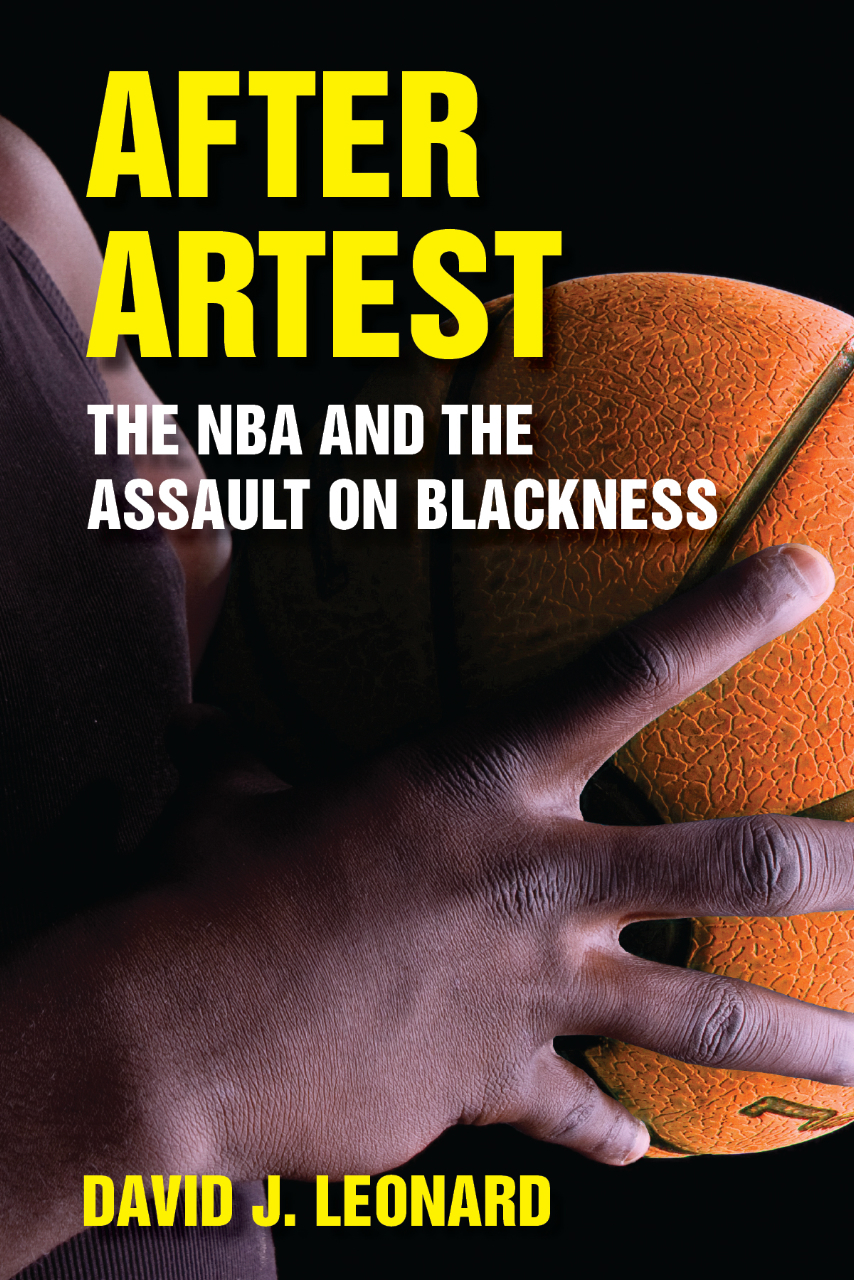
NewBlackMan: Locked Out and Demonized: Challenges Facing the NBA’s Black Players

This has

Led to that

Locked Out and Demonized:

Challenges Facing the NBA’s Black Players

by David J. Leonard | special to NewBlackman

Deron Williams made it official, signing a contract with Besiktas, a top tier team in Turkey. While not the first NBA player to sign a contract as a result of the lockout, he is clearly the most high profile (superstar) to do so thus far. Others may follow suit, with Kobe Bryant, Dwight Howard, Kevin Durant, Rudy Gay and Stephen Curry all noting interest in the prospects of playing overseas. Having already written on the larger implications here, in terms of both the lockout and the globalization of basketball, what is striking is how Williams’ decision to sign overseas and the possibilities from other superstars has provoked a backlash from fans and media commentators alike.

Not surprisingly the patriotism and loyalty of players has been questioned, as his been their commitment to the American fans. Similarly, players have been criticized for being greedy, whose sole motivation is to “get paid” (the fact that players were locked out by the owners often gets OBSCURED – ignored – within these discussions). Yet, what has been most striking is the systematic questioning about these players willingness to play overseas. Recycling longstanding arguments about athletes as pampered, over indulged, and spoiled, a charge that has commonplace against black athletes, these commentators both question the willingness of these players to play in non-NBA conditions all while questioning their mental toughness.

For example, Berry Tramel, in “NBA players’ threat to go overseas is weak,” seems to question the seriousness of threat, asking if, “The players want us to believe they’ll sign on to play in venues and under conditions wholly inferior to the NBA standard? In case no one has noticed, the NBA is lavish living. First-class travel. First-class accommodations. First-class officiating. First-class training staffs.” Similarly, David Whitley, with “NBA stars would get rude awakening playing overseas” further emphasizes how the NBA lifestyle that players are accustomed to, would not be available to them in Europe or China. “It would also give players a taste of how 90 percent of the hoop world lives. It isn’t finger-lickin’ good. There aren’t a lot of charter flights, much less extra-wide leather seats or five-star meals.” In “NBA lockout causing European exodus?”

Umar Ali, while acknowledging the possibility of NBA players going overseas, focused on the horrid conditions there and the spoiled nature of the players themselves.

Though the accommodations pale in comparison to what the average player receives while playing in the NBA – five-star hotel rooms, luxury vehicle transports and catered food compared to second rate rooms on the road, cramped buses and whatever is provided for sustenance – there is still enough to sway players to consider making the transition.

Ali seems to be alone with the majority of the commentaries depicting today’s players as high maintenance divas who would not accept the conditions overseas. Skip Bayless, on “First and Ten,” scoffed at the prospect of the NBA stars playing in China or Europe longer than a week “because they will not like it. They will not like the conditions; they will not like the travel; they will not like the food, the TV they aren’t able to watch.” His “debate” adversary, Dan Graziano, not surprisingly agreed, adding “The lifestyle these guys lead over here . . . if they think that will follow them to Europe or Asia . . . it will be a very short period of time before they realize they were mistaken.”

Continue reading at  NewBlackMan: Locked Out and Demonized: Challenges Facing the NBA’s Black Players.