Marc Lamont Hill: Why we must stand in solidarity with the Pelican Bay prisoners | Philadelphia Daily News | 07/20/2011

Marc Lamont Hill: Why we must stand in solidarity with the Pelican Bay prisoners

By Marc Lamont Hill

Philadelphia Daily News

FOR NEARLY three weeks, inmates at Pelican Bay State Prison, in California, have been on a hunger strike. They plan to continue until officials agree to improve the conditions and prison policies.

Contrary to what prison officials have suggested, the prisoners’ demands are far from numerous or extravagant.

To the contrary, the inmates have made five reasonable requests: individual accountability, so that entire groups (or races) aren’t punished for the acts of one person; abolishing the policy that forces prisoners to snitch (thereby risking their lives) in order to avoid punishment; ending long-term solitary confinement, a practice that has been deemed torture by the United Nations; no longer withholding food as punishment; and providing reasonable programming and privileges, such as being allowed to have one photo per year.

I stand in solidarity with them. And so should you.

In Pelican Bay, and nearly every other prison in the country, inmates are beaten, raped, tortured and denied their constitutional rights. As prisons continue to expand at a rapid pace – Pennsylvania’s prison spending grew by another 10 percent this year – these problems are becoming more prevalent and extreme.

At this point, many of you are rolling your eyes in disgust. You may even be asking, “Why should I care about how murderers and rapists are treated?”

First of all, the majority of prisoners are not there for violent crimes, nor are they even threats to society. Most are incarcerated due to crimes related to the failed War on Drugs, such as simple drug possession, petty theft and parole violations. More often than not, these are people who would not be incarcerated if they could have afforded to live in a better neighborhood or hire a better lawyer.

These are people who belong in rehab or mental-health facilities rather than buried in cages. The suffering they incur in prison only exacerbates their problems, making them more likely to commit crimes again.

Regardless of a person’s crimes, however, no one deserves to be raped, tortured, starved or otherwise mistreated in prison. But, sadly, this is exactly what happens every day. Unfortunately, the abuse of prisoners goes largely unaddressed because of our refusal to see prisoners as people.

Consider, for example, all the jokes that are made in movies, TV and everyday life about prison rape. These jokes are rooted in truth, as nearly 2 percent of all U.S. inmates are raped while incarcerated. Such humor can be considered “funny” only if the people being hurt are not understood as full human beings.

Continue reading at  Marc Lamont Hill: Why we must stand in solidarity with the Pelican Bay prisoners | Philadelphia Daily News | 07/20/2011.

NewBlackMan: Death Isn’t a Slave’s Freedom: The Historic Erasure of Curt Flood’s Life

Death Isn’t a Slave’s Freedom: The Historic Erasure of Curt Flood’s Life

by David J. Leonard

| special to NewBlackMan

Nikki Giovanni once write that “death is a slave’s freedom” aptly surmising elements of Curt Flood’s life and his struggle against America’s white baseball establishment. Denounced for his efforts to challenge baseball’s slave-like conditions and crucified for his efforts to connect baseball to slavery, to American racism, Flood experienced neither vindication nor compensation in part until his death, at which time Flood tasted freedom in a certain way – freedom from the death threats, abuse, ridicule, and American racism.

Yet after watching HBO’s recent documentary The Curious Case of Curt Flood, I am less sure that “death is a slave’s freedom” in that Flood was unable to escape demonization and ridicule, as the film turned his life into a spectacle of sorts. In an effort to illustrate how the human cost faced by Flood and his family, to highlight the difficult path to redemption, the film spends an overwhelming amount of time on Flood’s personal tragedy. Evidence in the divorce from his initial wife shortly after he fought to live in an Alamo neighborhood and the financial, emotional, and physical impact on Flood during and after his suit against Major League Baseball, Curt Flood’s life is a testament to the costs of resistance and struggle.

Yet, the film goes too far in this respect, turning Flood’s life into a spectacle, a train wreck that the audience is suppose to stare and marvel at for the duration of the film. Focusing on alcoholism, fraudulent paintings and the personal demons that haunted Flood, The Curious Case of Curt Flood highlights the narrative grip that confines Flood in our contemporary moment. In “The Way It Is: HBO’s The Curious Case Of Curt Flood,” Nasir Muhammad & Stephane Dunn elucidate the film’s flaws in this regard, seemingly questioning its narrative focus on the tragedies experienced by Flood and his ultimate redemption, turning an important history into a “E’ Hollywood” story. They quote Stan Hochman, whose critiques of the film illustrate the powerful ways that death is not a slave’s freedom:

The courageous athlete who dared to challenge an unfair system is depicted as an alcoholic, a womanizer, a woeful husband, a dreadful father, a lousy businessman and a fraud who never really painted those portraits he churned out that enhanced his image as an artist . . . .In the history of warts-and-all biographies, this one slithers near the top of the list.Curt Flood was a freedom fighter. That didn’t begin with his challenge to Major League’s Baseball Reserve clause or his rhetorical links to a larger history of slavery

To continue reading head to NewBlackMan: Death Isn’t a Slave’s Freedom: The Historic Erasure of Curt Flood’s Life.

White Boy Remixed: Whiteness and Teaching Race

White Boy Remixed: Whiteness and Teaching Race
| special to NewBlackMan

This summer I have dedicated to reading that stack of books I have been wanting to read. The 4th installment (I will write about the other three books on my blog) was Mark Naison’s memoir – White Boy. Naison, a professor of African American Studies at Fordham University, chronicles his personal, political and academic journey, responding to those who have ubiquitously asked how he as a white man became a professor of African American Studies. With a tremendous amount of honesty, openness, complexity, and vulnerability, Naison explores his own history as a teacher, activists, and source of community empowerment. While the book chronicles a powerful story of the 1960s – the anti-war movement, the Panthers, Columbia, identity politics – it is a story of a dynamic man whose life and insights teach us just as he has taught his students for several decades. In telling the story of the “white African American Studies professors, Naison offers a narrative that highlights how whiteness matters but how it does not define or over-determine the arch of his life or career. It is a story that resonates with me on so many levels, leading me to want to share my own story.

Like Mark Naison, I have been consistently asked about my entry into Ethnic Studies. In my first class at Washington State University, I had a student that constantly wanted to know my story. The student could not understand why this White guy was teaching African American film – what had lead me to be me – In the course of the class, he asked “How I can to be the Eminem of Ethnic Studies?” While the class oohed and aahed, some thinking it was a slight against me and others thinking it was a point of celebration, I saw it as a good question, one that could lead (and did) into some important conversations. Another day I had a group of students who came to my office asking me to settle a bet about how I came to Ethnic Studies, each having a different theory – (a) I grew up in the Black community; (b) I had a Black girlfriend or a Black wife who had taught and encouraged me to learn; (c) I was just down. In fact, I have been asked several times if I have a Black girlfriend who educated me about blackness, taught me to be committed and down, and pushed me down my educational and career path.

On another level, I have been asked if I am a “culture vulture,” in the tradition of Elvis, in that I am “taking” and “impersonating” something that I am not, in my educational and professional choices. I have also experienced much celebration being a white guy in ethnic studies. Most often such comments reflect desires for colorblindness as a presumed end goal; that is, my presence in Ethnic Studies supposedly embodies the fulfillment of King’s dream or a sign of progress. A student once sent me an e-mail that said that world was changing racially, for the better, because the best rapper was white, best golfer is black, best basketball player was Asian …and their ethnic studies teacher was white. Not to be outdone, a student cited my presence in Ethnic Studies as evidence of colorblindness, to discount our discussions about racism and inequality. However, what the student failed to see is whether or not their teacher was White, or the president is Black, racism remains a constant.

I am certainly defined by my whiteness, whether teaching ethnic studies or driving through Colfax; yet my relationship to Ethnic Studies, social justice struggles, my scholarship, my pedagogy, my ideology, my gaze upon the world, and my understanding of racism/privilege/inequality is not overly determined by a monolithic white identity formation. As Bakari Kitwana argues in Why White Kids Love Hip Hop, “Each Person has a unique story that brought him or her to hip-hop. Looking at the micro reasons as well as the macro ones helps us make sense of a contemporary hip-hop scene in which a new generation is affected by America’s racial history and in the process is constructing a new politics.” In others words, my arrival to and place within the field of Ethnic Studies (or a larger racialized discursive field) reflects a myriad of factors and experiences, ones that are neither defined exclusively by nor immune from the realities of whiteness, racism, and contemporary racial politics.

I grew up in Los Angeles in a middle-class family that spent most of its income on schools, not so much because of concerns of “safety” or even the quality of education available in the public school system. I went to an elementary school founded by Hollywood Communists, including Charlie Chaplin. During my life, I have never gone to school where we did not call our teachers by their first name; I did not receive “grades” until the 9th grade. More instructive, both detention and the pledge of allegiance were completely foreign concepts to me until high school. This educational background clearly established a foundation but this only tells part of the story.

Continue reading at New Black Man

Yao Ming’s Exit: Globalization and All Its Possibilities

  MY LATEST BLOG POST FOR NEW BLACK MAN


Yao Ming’s Exit: Globalization and All Its Possibilities  | Special to NewBlackMan
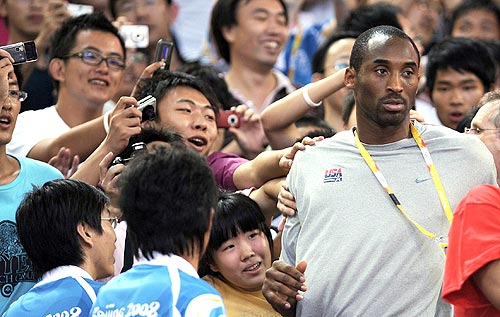
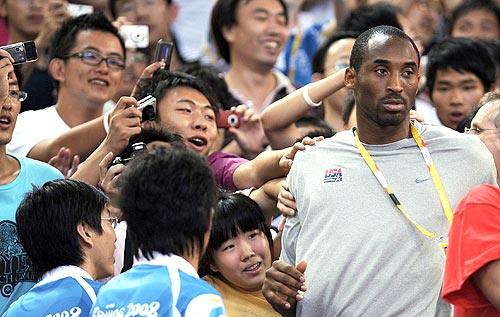
   Yao Ming is reportedly retiring from the NBA.  A player of immense talent and potential, his career for some will be a disappointment.  While debating his on-the-court successes, whether or not he is a hall-of-famer, and the large basketball significance are interesting, I think his retirement should elicit thought and reflection about the globalization of the NBA.  His importance to the game, in global sports marketing, and in terms of larger social forces transcend the game and that has always been the case.  In 2003, when Yao’s statistics were pedestrian at best, I wrote in Colorlines about the larger significance of his arrival to the NBA.
   The star power of Yao Ming is not the result of his extraordinary stats for the Houston Rockets. He averages a respectable 13 points and 8.2 rebounds per game. The flurry of magazine covers, billboards, and television commercials featuring Yao reflect the desires of American and Chinese companies to cash in on Yao’s popularity. Beyond the efforts to sell basketball to more than 2 billion Chinese nationals, the NBA hopes to capitalize on the sudden explosion in ticket sales to the Asian American market. Asian Americans buying group packages for Rockets games represent 11 percent of the buying public, 10 percent more than last year. In cities across America, Yao attracts fans to the Rockets’ away games to such an extent that a number of stadiums, in places like Detroit, Boston, and Oakland, have offered special “Asian American nights.” When the Rockets played the Golden State Warriors this spring, the Oakland arena announced parts of the game in Mandarin. Rockets’ coach Rudy Tomjanovich frequently boasts of Yao ‘s importance in bridging cultural and political gaps. In other words, Yao is presumably schooling America about Chinese culture and history.
    Since 2003, Yao Ming’s economic, social, and cultural importance has increased tenfold.  According to a 2007 study, 89 percent of Chinese between the ages of 15 and 54 were “aware of the NBA,” with 70 percent of youth between the ages of 15 and 24 describing themselves as fans.  More recent numbers show a game increasing in popularity, despite Yao’s diminished presence.  On average, NBA games (despite being aired early in the morning) deliver 558,100 viewers; NBA.com/China generates roughly 12 million hits per day. A two billion dollar market, China has proven to be immensely important to the NBA’s global expansion and its overall financial success.

Neshoba: A documentary about the past that teaches us about the present

My plan for the summer is to watch many documentaries and to read an equal number of books.  First up, I watched Neshoba: The Price of Freedom, a documentary by Micki Dickoff and Tony Pagano about the murders of James Chaney, Andrew Goodman and Michael Schwerner.  While the film documents what happened to these civil rights workers, and the broader struggle for civil rights in Mississippi, it is very much a story of the families of these three men.  It brings to life how their murders and the failure to secure justice on their behalf impacted family, friends, and the community at large (society as a whole).  Pushing the discussion beyond their place as icons and symbols, the film depicts them as sons, fathers, husbands, and brothers, giving voice to pain and suffering endured by their families.   Like Spike Lee’s Four Little Girls, the film challenges those who depict the civil rights movement as so far removed from our current moment, illustrating how the violence and injustice that took place during the 1960s continues to impact families and communities, elucidating how this history remains with us.

The film doesn’t merely focus on their murders and the civil rights movement, highlighting the struggle for justice.  While at times the film focuses too much attention on the trial of Edgar Ray Killen, who was found guilty of three counts of manslaughter in 2005 41 years after these three civil rights workers went missing, the emphasis here is important because it shows how the fight for justice was a fight for accountability, justice and racial reconciliation.

Beyond this, the film makes two really important points. (1) The civil rights movement was immensely violent.  Even as civil rights activists engaged in nonviolence, resisting Jim Crow through passive resistance, the movement itself was extremely violent.  Civil rights workers and those African Americans living under American Apartheid faced violence each and every day.  The film, in this regard, highlights the ways in which the civil rights movement engaged in “unviolence” (a term Charles Payne uses that he attributes to SNCC activist Worth Long), in that in the face intimidation, economic reprisals, physical abuse, torture, terror, sexual violence, and murder, “the movement” (those freedom fighters) choose not to respond in kind, to engage in self-defense, but to unviolent resist.  Neshoba reminds us about the violence endured and how that impacted lives.

(2) The film successfully highlights how race and racism impacted the societal reaction to these murders.  In the film, Rita Bender notes that media spotlight (and now historical focus) forced people to think “Whose son matter’s more.” The film makes clear that national attention about James Chaney and his violent death came about because he died alongside of Michael Schwerner and Andrew Goodman.  The fact that as authorities dragged the Mississippi River in search of the three civil rights workers only to discover 9 bodies lead many blacks to ask, “Who are these people,” and “where was the search parties, national attention, and overall concern about their well-being when they went missing.”  Looking at this historically, whether the murder of these civil rights workers, or the violence experienced by the Freedom Riders, we see white supremacy in action: violence carried out in the name of white supremacy but also in the value placed upon a white life over that of African Americans.  The historical illustration here got me thinking about how often a black life (or that of a person of color) is devalued.  We can see in the lack of media attention and national discourse concerning the noose at Santa Monica High School or the brutality experienced by Jordan Miles. In the war on drugs or in differential media coverage about the abduction of white women and women of color  we see how race impacts narratives.  We see whose life matters, whose humanity is highlighted, and whose experience is given public consideration, public concern, public outrage, public sympathy, and societal action.  While Neshoba brings to light the historic atrocity involving the civil rights movement, it powerfully documents the ways in which racism affords and denies humanity along racial lines not only in the past but also in our present moment.  We see not just the legacy of racism but its continued grip on society.