Noose in the Locker Room: Racism Inside and Outside of the Santa Monica High School

My blog post at New Black Man (http://newblackman.blogspot.com/2011/06/noose-in-locker-room-racism-inside-and.html)

Tuesday, June 28, 2011

A Noose in the Locker Room: Racism Inside and Outside of the Santa Monica High School

by David J. Leonard

It was likely just another day for a Santa Monica High (CA) student when he headed to wrestling practice. Entering the locker room, things were anything but “normal.” A noose was inside the room nearby a wrestling practice dummy (the specifics are unclear based on current reporting). When an African American wrestler entered the room, he was then accosted by two teammates. According to a report from the Santa Monica Daily Press, “One grabbed him in what” was “described as a ‘bear hug,’ while the other slipped a lock through his belt loop and connected it to a nearby locker.” As they left the room, with the boy still attached to the locker, they shouted, “slave for sale.”

The noose, the reference to the boy as a “slave for sale” and the attack on the African American student did little to set off alarm bells from the school administration beyond damage control. According to the above newspaper account, they failed to notify the boy’s mother even while they contacted other parents connected to the wrestling team. Seemingly unconcerned about the impact of this attack on the boy, his family and the larger community of students of color at Santa Monica High School, their efforts appeared to be directed at helping (rather than punishing) and protecting the students who perpetrated these shameful acts. Some reported that at the request from school officials, pictures of the noose, for example, were erased from several student cell phones.

To read the complete post go to: NewBlackMan: A Noose in the Locker Room: Racism Inside and Outside of the Santa Monica High School.

Just because he is a bit wrong, doesn’t mean you are right: Jon Stewart, Chris Wallace, Herman Cain, and the politics of race

Vs.

Vs.

Vs.

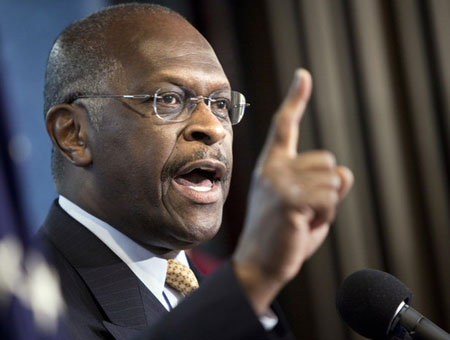
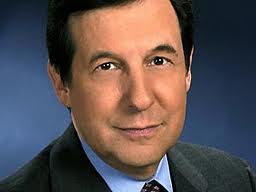
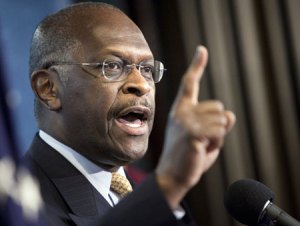
During a contentious exchange between Jon Stewart and Fox’s very own Chris Wallace (Part 1 and Part 2), this past Sunday, Wallace criticized Stewart for the voice he used while doing a bit on Herman Cain.  He asked Stewart if he planned to make a remake of “Amos n’ Andy.”  Not to be out-done, Herman Cain seized the moment: “As far as [Stewart] mocking me, look, I’ve been called every name in the book because I’m a conservative, because I’m black,” noted Cain during a public speech.  “I have been called ‘Uncle Tom,’ ‘sellout,’ ‘Oreo,’ ‘shameless.’ So the fact that he wants to mock me because I happen to be a black conservative, in the words of my grandfather, ‘I does not care. I does not care’” (see here for video)

To say there is something ironic in this accusation would be an understatement.  “Cain’s comments about Stewart are a bit odd,” noted Boyce Watkins.  “Given that Cain feels an inexplicable degree of comfort around men like Bill O’Reilly, Sean Hannity, Glenn Beck and Rush Limbaugh, who have insulted people of color in ways were previously unimaginable in the new millennium [sic].” Beyond odd, the accusations, given the accepted deployment of racism, against Stewart meet the definition of Chutzpah.

While the criticisms in this case are disingenuous and evidence of double standards, Stewart’s vocal intimations in this bit are disconcerting.  Given the history of racism in this country, it does play upon longstanding white racial frames of African Americans.  When I initially watched this bit, it made me uncomfortable.  Just as Stephen Colbert “impression” of a Chinese man (I know it is satire, but still) makes me uncomfortable even thought he is criticizing Rush Limbaugh for his own anti-Chinese prejudice, and Bill Maher calling Barack Obama a “’Black Ninja Gangster President’” elicits contempt from me, Stewart’s decision to mock Cain linguistically is troubling especially given its larger historic place.  Likewise, his explanation to Wallace (“Why don’t you show — do you want to show me doing the voices for all the other people that we do? You want to see my New York voice? My Chinese guy voice?’) is equally unsatisfying because it doesn’t reveal a lot of self-reflection as to the larger history of race in this country.  This instance got me thinking about a piece I wrote for Colorlines some years back about how white populism within progressive pundits/entertainers maintained a larger history of white anti-racist activists who have struggled to reflect on white privilege and how longstanding racial images/narratives impact white progressive as well.  As such, I thought I would call attention to this piece in hopes that it provides some greater thought about the current criticism surrounding Stewart.  Just because the (disingenuous) criticism has been brought by Chris Wallace and Herman Cain doesn’t mean there isn’t some basis to the criticism.

From Colorlines (September 21 2004)

“Popularity, Privilege, and the White Populists Who Populate the Airwaves”

After the sixth book arrived in the mail, I realized something might be going on here. Stupid White Men; Rush Limbaugh is a Big Fat Idiot, Does Anyone Have a Problem With That: The Best of Politically Incorrect; Lies and the Lying Liars Who Tell Them: A Fair and Balanced Look at the Right; When You Ride Alone You Ride With Bin Laden: What the Government Should Be Telling Us to Help Fight the War on Terrorism; Dude, Where’s My Country? Turn on the TV, and there’s Jon Stewart sneering at Trent Lott, Strom Thurmond or the bigoted Republican Party. Listen to the radio, and there’s Al Franken talking about the racist plot to disenfranchise black voters during the 2000 election. Liberal pundits, while not as ubiquitous as conservative talk radio and TV warriors, nevertheless seem to be coming out of the woodwork these days.

In addition to excoriating the Christian right, the gun lobby, and evil corporations in general, these liberal pop-culture icons-in-the-making also talk about race on occasion.

In his corporate speeches, Al Franken likes to offer the following commentary on U.S. racism: “Looking at your faces today, I can see that this group hasn’t caved in to that whole affirmative action nonsense. Look around, see all the white faces and laugh. ”

Bill Maher, who has a new HBO show “Real Time With Bill Maher” since the canning of his “Politically Incorrect” post-Sept. 11, made this remark during a March 2004 segment: “Nothing gets white people to the polls like fear. In fact, the right wing is so fired up about Jews and gays and the potty mouth, they’ve almost forgotten who the real enemy is —brown people.”

Like the white populist movements of olden days, the new white populists of today claim allegiance with people of color and supposedly represent a solidarity of common white folk and communities of color against the establishment.

Continue reading here
Metta World Peace: Leave the Baller formerly known as Ron-Ron alone

Metta World Peace

Described as crazy, as a publicity stunt from a man seeking attention, as evidence of his weirdness, and countless other not-to-mentioned racist and derogatory comments, the Internet was set ablaze after Ron Artest announced his plans to change his name to Metta World Peace.

Commentators also used the instance to rehash Artest’s past, postulating that the name change reflected a deliberate attempt to continue to change his image.  For example, Andy Kamenetzky, offered the following as explanation for his name change:

In any event, the identity change falls in line with recent steps Ron has taken while bettering himself as a person and revamping his formerly tarnished image:

– Opening up about his time in therapy, while becoming an outspoken advocate for the mental health issues. (A matter we discussed at great length earlier this season.)

– Winning the 2011 J.Walter Kennedy Citizenship award for outstanding service and dedication to the community.

– Launching a new reality TV show, “Last Second Shot,” in which he’ll mentor parolees.

Thus, why not change his name to “Metta World Peace?” (“Metta,” by the way, is defined as the Buddhist virtue of kindness.”)

The one concern I might have for Ron is perhaps appearing like he’s on the verge of jumping the shark. It’s one thing to thank your psychiatrist before conducting a freewheeling, heartfelt press conference for the ages. It’s another to adopt a very unusual moniker. Too many moves at once, however well-intentioned, could come off as cartoonish.

The fact that his decision to change has led to ample ridicule and criticism, leaving one to wonder how this was an attempt to reform his image, is revealing.  Unable or unwilling to accept the name change on his terms, analysts and the many people who offered comments on various pages took the opportunity to once again deconstruct, analyze, psychologically prod Artest.  In my forthcoming book – After Artest (SUNY Press) – I argue that Artest (and the NBA’s black bodies) were unable to transcend and move beyond the prism of the Palace Brawl.  That is, the 2004 Palace Brawl overdetermined the media discourse surrounding and public consumption of the NBA; and both the Palace Brawl and the representations of the NBA were overdetermined by the blackness associated with the league.  The spectacle surrounding his name change, the demonization, the ridicule, and the efforts to psychologically analyze Artest demonstrates how both blackness and the Palace Brawl overdetermine this reaction.   The level of animosity and judgment is not only evidence to the impossible path to redemption, but also how we as a society might grow a bit if we simply thought about what Metta (Ron Artest) is trying to tell us.  According to Acharya Buddharakkhita, Metta means the following:

The Pali word metta is a multi-significant term meaning loving-kindness, friendliness, goodwill, benevolence, fellowship, amity, concord, inoffensiveness and non-violence. The Pali commentators define metta as the strong wish for the welfare and happiness of others (parahita-parasukha-kamana). Essentially metta is an altruistic attitude of love and friendliness as distinguished from mere amiability based on self-interest.

If people could simply hear and practice what is in his name, I can only imagine what the sporting world would look like (not too mention the comment) as well as every other institution within our society.

$1 bank robbery doesn’t pay off for man who said he was desperate for healthcare – latimes.com

$1 bank robbery doesn’t pay off for man who said he was desperate for healthcare

A $1 bank robbery was what Richard James Verone thought would get him thrown in jail so he could get the medical attention that he needs.

The unemployed, uninsured 59-year-old has a growth on this chest, two ruptured disks and something wrong with his left foot. He figured if he held up a bank for a dollar, he’d get thrown in the slammer and be seen by a doctor.

So, earlier this month, he walked into the RBC bank in North Carolina and handed the teller a note that said, “This is a bank robbery. Please only give me one dollar.”

It was Verone’s first attempt at crime. After he held up the bank with his note, he sat on a couch, unarmed, as the teller called 911, and they waited patiently and peacefully for the police to arrive.

For more Read here

New Media Literacy and Sporting Cultures

Call for Papers

New Media Literacy and Sporting Cultures

Special Issue of Journal of Sport and Social Issues

David J. Leonard and CL Cole

Challenging those who blamed Twitter for the recent controversy surrounding Rashard Mendenhall, LZ Granderson celebrated the possibilities of new media technologies within American sports culture: “Twitter empowers them to show they are more than just the sport they play, to show they have a sense of humor, are aware of the world around them and are not afraid to try new things, like ballet classes. In other words, they are real people — not product-pushing puppets or faces of the franchise, walking around without thoughts or souls.”

Despite the humanizing possibilities, new media technology, evident in the power of sports video games, fantasy sports, and the often-hateful online discussions, simultaneously dehumanizes today’s athletes.  Reimagined as an object of play, consumption, ownership, and derision, the shifting technological tools exposes and disempowers today’s athletes all while enhancing agency and control. Breaking down boundaries, changing the relationship between athletes-fans-the media, and otherwise reconstituting the ways the sports operates; these technological-cultural-social shifts are changing the nature of sports itself.  We seek to reflect on the ways in which new sports media technologies simultaneously humanize and dehumanize across time and space.

This special issue works to highlight the dynamic nature of sporting cultures and the transformative possibilities resulting from new media technologies.  It attempts to build upon the existing literature all while engaging ongoing debates and discussions.  It seeks to foster critical new media literacy in a sporting context, all while elucidating the social, cultural and political significance resulting from the changing sports landscape.

In an effort to expand the conversation and engage the issues of new media and sports through alternative formats, we seek to publish editorial-styled essays.  We look for pieces that are theoretically rich, those focused on asking questions and expanding the discussion, and those dedicated to critical analysis.  We seek pieces that offer commentary and those committed to advancing and promoting new media literacy within a sporting context.

Authors should follow the ‘Manuscript Submission’ found at the JSSI website. Essays should be roughly 4,000-5,000 words, excluding endnotes and reference list. Questions should be sent to CL Cole – clcole@illinois.edu – or David J. Leonard, – djl@wsu.edu. All submissions are due by February 1, 2012 and should be submitted in electronic format to http://mc.manuscriptcentral.com/jssi

Welcome

Welcome to my first blog post at my first blog.  For the sake of introduction, I am an associate professor in the department of critical culture, race, and gender studies at Washington State University.  My work examines contemporary representations within popular culture, examining the broader social, political, and cultural meaning.  His research agenda focuses on the systematic treatment of the politics of representation in post-civil rights America. It explores the complex linkages and slippages, intersections and ruptures, that dialectically tie together racialized bodies with political, social, cultural, and economic identities, structures and discourse.

My work explores, documents, and illustrates the various manifestations of the narrative, ideological, and financial commodification of black bodies within popular media all while highlighting the dominant frames that facilitate, fuel, and in turn generated through the broader discursive field.

While disparate in topic, ranging from the prison industrial complex to the NBA, from the video games to the history of African American television, his work is linked by its commitment to examining the ways in which blackness is constructed, transformed, and challenged across time and space; within a multitude of institutions and affecting a number of communities.  It is linked together by the ways in which blackness is imagined and represented within contemporary popular culture and how those representations connect to fear, violence, and institutional formation.