NewBlackMan: The Frontstage is the New Backstage: Racism in the Public Square

The Frontstage is the New Backstage: Racism in the Public Square

by David J. Leonard | NewBlackMan

Three stories have captured the imagination of social media recently.

A Buffalo High school suspended several members of the basketball team because its members allegedly regularly chant racial epithets prior to each game. As reported in the Buffalo News, “Tyra Batts, the sole African-American on the Kenmore East High School’s squad,” said “her teammates would hold hands before the game, say a prayer and then shout “One, two, three (n——).’” Batts, who was suspended because of her involvement in a fight resulting from the repeated use of the N-Word by her teammates, disputed claims that it “was just a joke.” The efforts to defend its usage and to deny the racist and violent history have set off anger and debate throughout the web.

“Remember all of those debates we’ve had about whether or not the n-word is just another word?,” writes Britini Danielle. “Usually, our conversations dealt with white and non-black rappers and entertainers using the word ‘as a term of endearment,’ but this time we’re heading into the tricky world of high school.”

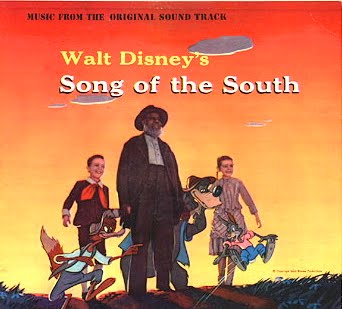
Not to be outdone, a P.h.D student at Rutgers University invited her white classmates to a screening of the Disney Classic Song of the South. An editorial in The Daily Targum describes the circumstances as follows:

This email invited “her fellow non-racist racists” to a private, guilt-free viewing of 1946 musical Song of the South in her home, where together they could engage in celebratory mocking of stereotyped 1940’s images of southern blacks. This was an event hosted by a “ragtime/minstrel loving fool” who was due “for some rollicking Disneyfied Ole Darkeyism.” The postscript read, “If you do come, hooch is most welcome, as are straw hats and other Darkeyisms. I might even buy a watermillyum if I get enough interest.” It specified who invited guests should bring, given that “I might yell racist things at the TV.” The author of this email articulated the hope that the experience would be a “communion with her shamefully preferred era of Disney.”

The celebration of dehumanizing representations, the efforts to create a segregated space, and the replication of longstanding stereotypes provoked outrage, condemnation, and ample conversation on Facebook and Twitter. Citing it as evidence of the absurdity of a “post-racial America,” the instance became another moment to protest the persistence of white supremacist ideologies within contemporary America.

Yet, none of the outrage would compare to the anger, protests, and denunciation that has followed Gene Marks ode to paternalism in Forbes Magazine. In “If I Were A Poor Black Kid,” Marks provides “advice” that rehashes bootstraps ideology all while playing on longstanding stereotypes about black laziness and disinterest in schooling. Following in the footsteps of Newt Gingrich and Donald Trump, Marks recycles those arguments that link black unemployment and poverty rates to work ethic and personal choice.

His comments have produced a strew of commentaries that have condemned the article for its arrogance, paternalism, and overall erasure of structural inequalities. “Mr. Gene just wants to give us some of that patented #WhiteLove™ that he has laying around the house,” writes Elon James White. “With a healthy sprinkling, poor ignorant black children can rise above their station into the magical world of reasonable participation in society! Mr. Marks has a step-by-step booklet for you to get your school game on track, not your wig pushed back … by poverty.” James, like so many of the responses, identified the arguments offered in Forbes as not a peripheral aberration but instead a central white racial frame within contemporary culture. Evident in The Help and The Blindside, reflected in political and academic discourses, and central to white racial framing, the narrative focus on black pathological failures and the potential through better parenting, better choices, and better work ethic, guides American racial discourse.

via NewBlackMan: The Frontstage is the New Backstage: Racism in the Public Square.
The Tim Tebow Affect or Celebrating Whiteness? | Loop21

The Tim Tebow Effect or Celebrating Whiteness?

By David J. Leonard and James Braxton Peterson

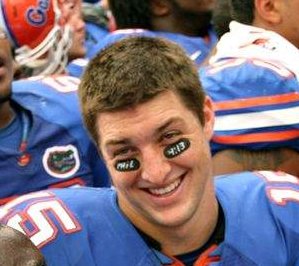
Tim Tebow is ubiquitous. Everywhere we look, Tim Tebow is there. Whether celebrating his “accomplishments,” attributing the Broncos season to his comeback heroics, reflecting on his now famous on-field genuflections, or debating his treatment by media and fans alike, Tim Tebow has captured the national imagination.

In many ways, the national fascination with Tebow reflects the power of whiteness. Historically the quarterback has been a positioned reserved for white men. Seen as a position that requires intelligence, leadership qualities, and proper mechanics, the NFL has historically engaged in, position segregation, and more than a little bit of Jim Crow on the field. That said, Tebow doesn’t follow in this tradition; he plays the position in a gritty running style that has long been associated with blackness.

In Am I Black Enough for You, Todd Boyd identifies a dialectical relationship between racialization and styles of play where whiteness represents a “textbook or formal” style, which operates in opposition to “street or vernacular” styles that are connected to blackness within the collective consciousness. As such, he describes a hegemonic narrative where “white” players adhere to “ . . . a specific set of rules [that] determines one’s ability to play successfully and ‘correctly’” (1997, p. 115). In both styles of play, notions of intelligence, mental toughness, and mental agility are all at work.

Tebow embodies a vernacular or extemporaneous style that has (historically) been associated with blackness and as a result of this association that same style has been devalued. Yet, for Tebow it has been embraced, celebrated as both innovative and as an example of athletic heroism. The celebration of Tebow, like the praise for some receivers, or safeties, comes from the shock and awe of white success in areas that are generally (assumed to be) dominated by black bodies.

Writing about Jordy Nelson, a white receiver with the Green Bay Packers, Ron Demovsky attributes his success to racial stereotypes: “There’s a joke in the receivers meeting room that Nelson benefits by being the only white receiver on the team because perhaps opposing defensive backs don’t take him seriously.” So while Tebow may only complete a few passes per game, the power in his athletic narrative rests with his ability to play quarterback in a style not associated with whiteness; the beauty for many commentators is in the spectacle and in his ability to convert this style of play into victories.

Continue reading @ The Tim Tebow Affect or Celebrating Whiteness? | Loop21.

NewBlackMan: What’s in a Name? The ‘Plantation’ Metaphor and the NBA

What’s in a Name? The ‘Plantation’ Metaphor and the NBA

by David J. Leonard | NewBlackMan

Several weeks back, at the conclusion of HBO’s Real Sports, Bryant Gumbel took David Stern to task for his arrogance, “ego-centric approach” and eagerness “to be viewed as some kind of modern plantation overseer, treating NBA men, as if they were his boys.” Highlighting the power imbalances and the systematic effort to treat the greatest basketball players on earth as little more than “the help,” Gumbel invoked a historic frame to illustrate his argument.

If the NBA lockout is going to be resolved anytime soon, it seems likely to be done in spite of David Stern, not because of him. I say that because the NBA’s infamously ego-centric commissioner seems more hell-bent lately on demeaning the players than resolving his league’s labor impasse.

How else to explain Stern’s rants in recent days? To any and everyone who would listen, he has alternately knocked union leader Billy Hunter, said the players were getting inaccurate information, and started sounding Chicken Little claims about what games might be lost, if players didn’t soon see things his way.

Stern’s version of what’s been going on behind closed doors has of course been disputed. But his efforts were typical of a commissioner that has always seemed eager to be viewed as some kind of modern plantation overseer, treating NBA men, as if they were his boys.

It’s part of Stern’s M.O. Like his past self-serving edicts on dress code or the questioning of officials, his moves were intended to do little more than show how he’s the one keeping the hired hands in place. Some will of course cringe at that characterization, but Stern’s disdain for the players is as palpable and pathetic as his motives are transparent. Yes the NBA’s business model is broken. But to fix it, maybe the league’s commissioner should concern himself most with a solution, and stop being part of the problem.

Not surprisingly, his comments have evoked widespread criticism and scorn. Even less surprising, commentators have chastised Gumbel for inserting race into the discussions, as if race isn’t central to the lockout, the media coverage, and fan reaction. As evidence, the response to Gumbel, and the ubiquitous efforts to blame the lockout and the labor situation on the players through racialized language (see here for example – h/t @resisting_spec), illustrates the ways in which race and hegemonic ideas of blackness operates in this context.

Also revealing has been the response to Jeffrey Kessler, a lawyer for the NBA players Association, who similarly described David Stern’s treatment of the players. He told the Washington Post: “To present that in the context of ‘take it or leave it,’ in our view, that is not good faith. Instead of treating the players like partners, they’re treating them like plantation workers.” While his comment elicited some backlash along with an apology, the vitriol and the level of indignation didn’t match the reaction to Gumbel.

Beyond the power of white privilege in this regard, what has been striking has been the references to history by the anti-Gumbel/Kessler crowd; much of the criticism at Gumbel and Kessler has focused on their historic amnesia. That is, their comments, while being inaccurate, unfair, and infusing race into otherwise colorblind situation, are disrespectful towards the history of slavery in America. References to slavery in this context betray the violent history of American slavery. In “Occupy the NBA: A Plea from an Avid Basketball Fan” Timothy Jones takes Gumbel to task for the historic slight here:

I’m appalled that anyone would compare this situation to slavery. I have great respect for Bryant Gumbel, but his quote that David Stern sees himself as a modern day plantation overseer is not only disrespectful to our ancestors, but it also did nothing to help this situation. Stern may not be handling this situation well, he may not have the best interest of the players in mind, he may be a mean person (I really have no clue), but I do know that brothers making millions of dollars are nothing like slaves on a plantation.

Charles Barkley agreed, referring to Gumbel’s comments as “stupid” and “disrespectful to black people who went through slavery. When (you’re talking about) guys who make $5 million a year.” Likewise, Scott Reid questioned the use of such an analogy given history: “The point is that too many people inappropriately use slavery and enslaved people to make points about things that are nowhere close to comparison. All of these casual slavery analogies do nothing but diminish one of the worst crimes against humanity in human history. Comparing enslaved Africans, or anyone else for that matter since slavery still exists for many enslaved people, is not only absurd, it is just plain disrespectful to the memory of the millions who perished under the worst kind of injustice.”

Continue reading @ NewBlackMan: What’s in a Name? The ‘Plantation’ Metaphor and the NBA.

NewBlackMan: Protecting the (White Male) Gaze: Homophobia of Sports Talk Radio Goes Unchallenged

Protecting the (White Male) Gaze: Homophobia of Sports Talk Radio Goes Unchallenged

by David C. Leonard | NewBlackMan

During his ESPN show on Tuesday, Bruce Jacobs described the Los Angeles Sparks and the Phoenix Mercury as “the “Los Angeles Lesbians” and the “Phoenix Dyke-ury.” He returned to the air the following day to offer the following “apology”: “My comments yesterday were ridiculous, stupid and amateurish. I apologize for even uttering the comments, whether you heard them or not, whether you were offended or not.”

To date, little has been made about either his comments or his half-hearted apology that neither apologizes for the spirit of his remarks nor the ideological underpinnings that led to such comments. His apology does not repudiate his own homophobic stereotypes nor does it challenge the ideological assumptions evident here, but instead apologizes for vocalizing them. It isn’t the homophobia that warrants the apology, but expressing it on his show.

While Mr. Jacobs needs to be held accountable for his remarks, along with ESPN, which has failed to publicly condemn the comments, it would be a mistake to isolate this rhetoric as that of a “bad apple.” The homophobia and sexism on display here is reflective of sport talks radio. As with talk radio in general, sports talk radio emerged as a movement to “restore” the hegemony of white male heterosexism. The homophobic remarks of Bruce Jacobs represents a systemic and longstanding effort to restore the normalized vision of sports as a space of male dominance.

Like the efforts to sexualize female athletes, the construction of female athletes as lesbians reaffirms the “normalcy” of sports as a male domain. According to David Nylund (2004), “With White male masculinity being challenged and decentered by feminism, affirmative action, gay and lesbian movements, and other groups’ quest for social equality, sports talk shows, similar to talk radio in general, have become an attractive venue for embattled White men seeking recreational repose and a nostalgic return to a prefeminist ideal.” As argued by Trujillo (1994) and quoted in Nylund:

Media coverage of sports reinforces traditional masculinity in at least three ways. It privileges the masculine over the feminine or homosexual image by linking it to a sense of positive cultural values. It depicts the masculine image as “natural” or conventional, while showing alternative images as unconventional or deviant. And it personalizes traditional masculinity by elevating its representatives to places of heroism and denigrating strong females or homosexuals. (p. 97)

His comments, thus, embody the efforts to silence, surveil, demonize, and ultimately discipline and punish any challenges to the white male heterosexuality of sporting cultures. Those perceived threats to this hegemony are met with efforts to reclaim the sporting space as one of masculinity. From the ubiquity of images of hypersexual female athletes on various sports websites to the commonality of homophobic, sexist, and racist rhetoric, we see that despite the increased levels of diversity, the hegemony of white male heterosexuality remains a central facet within to contemporary sports culture.

The relative silence about this instance of homophobia (as of writing there has been only 9 articles about Jacobs’ comments) and the culture of homophobia within the sports media is especially telling given the widespread condemnation of various players for homophobic slurs during the 2011. Others may cite the varied levels of celebrity and the divergent platforms as reasons for why the comments of Kobe Bryant, Joakim Noah, and Wayne Simmonds received ample media attention. Yet, the comparative silence here reflects a level of comfort in isolating homophobia as a symptom of athlete culture, hip-hop culture and blackness.

Continue reading @ NewBlackMan: Protecting the (White Male) Gaze: Homophobia of Sports Talk Radio Goes Unchallenged.

The Layup Line » Will Injuries Derail 2011 NBA Season?

Will Injuries Derail 2011 NBA Season?

by David Leonard

In a much-hyped preseason game between the Los Angeles Lakers and their cross-the-hall “rivals,” the worst possible scenario confronted the 16-time NBA champion: Kobe Bryant was hurt. Falling awkwardly, Bryant tore the lunotriquetral ligament in his right wrist. Less than a week later, the New Jersey Nets announced that Brook Lopez broke his foot during the first half of their game with the New York Knicks. With the Lakers potentially losing a Bryant at full-strength, and the Nets likely without the services of Lopez for 4-6 weeks, the injuries are potentially devastating to both teams, particularly the Nets whose ability to trade for Dwight Howard will be severely limited with the loss of this cornerstone trade asset.

Yet, more than the impact on the respective teams, these injuries highlight both the potential consequences of the NBA’s lockout. While injuries are commonplace, a rushed preseason and a compressed training camp represent a threat to the physical wellbeing of the players themselves. Stephen Smith, in “Expert warns of NBA lockout-related injuries,” compares the injuries that came about as a result of the NFL with the potential with the 2011-2012 season. There, he quotes Timothy Hewett, who is Director of Research at The Ohio State University Medical Center’s Sports Medicine Department: “Extrapolate what we’ve seen in the NFL, and I could see in the NBA in the range of 2, 3, 4 times higher rates of injury. This could be a historic event, where we start to think, ‘Is there a potential for really putting players at risk by these legal wranglings?’”

As evident, the injury bug has not been limited to the league’s stars, with Darrell Author (out for the year), Stephen Curry, and Marcus Camby all facing significant injuries. Celtics forward Jeff Green will also have to sit out this season because of a heart ailment discovered during his preseason physical. There’s also the improbable case of Sacramento Kings forward Chuck Hayes who in the span of two weeks went from the brink of having to end his NBA career after he was released by the Kings because of a heart condition diagnosed during his initial physical, only to be resigned by the Kings when Hayes’ doctors concluded that his diagnosis was not as severe as earlier believed.

While unable to blame these injuries on the lockout, it is hard not to think about the connection. And as the Hayes situation reveals, an incident in years past that might have taken a month or so to resolve, appeared to have been hastily resolved in two weeks all in an effort to get the show on the road. Contrary to all the speculation about “Will Kobe Play on Sunday,” these injuries, the rush to push the lockout behind, and the determination to start the season on Christmas/NBC/National TV days all point to the central focus anywhere and everywhere except on the physical health of the NBA’s players.

These injuries also point to the absurdity of the league’s best effort to cultivate rivalries and to manipulate and change the rules to guarantee parity. David Stern is unable to veto the injuries of Bryant, Lopez, or Curry for basketball reasons; just as he wasn’t able to veto the injury of David Robinson in 1997, which ultimately led the Spurs to draft Tim Duncan. Success, rivalries, and dynasties all organically happen; they won’t be the result of the manipulation and rule shifting policies of the league.

No matter how the rules are changed to “spread the stars” around the league, no matter how restrictive the system is on player movement, and no matter how much the NBA and ESPN tries to sell the game as one of rivalries rather than superstars, the league cannot control everything. They cannot control injuries, they cannot control players’ willingness to take less money, they cannot control for up-and-coming players (Marc Gasol; Kevin Love; Danny Granger) nor can the league guarantee that the next superstar will indeed deliver. The league cannot prevent injuries for its stars, but if they could they would certainly do it to protect its financial interests.

via The Layup Line » Will Injuries Derail 2011 NBA Season?.

SLAM ONLINE | » The Dribble Drive-By in the New NBA

The Dribble Drive-By in the New NBA

The misguided obsession with rivalries.

by James B. Peterson and David J. Leonard

Since the announced trade of Chris Paul to the Los Angeles Clippers (yes, L.A. has two basketball teams), the NBA punditry has been abuzz, focusing almost exclusively on the trade as it relates to the future of the Lakers. Asking if the Clippers are now better than the Lakers, if Los Angeles is a Clippers city, and otherwise playing up the rivalry, media outlets have turned the Chris Paul trade into a source of conflict between the Clippers and the Lakers. SLAM’s Dave Zirin captured the essence of a media narrative that portrayed the trade as a Clipper victory over the Lakers:

The morning buzz in sports is about the greatest point guard of our generation, Chris Paul, joining the Los Angeles Clippers. It’s a dizzying thought, but the Clippers, the much-mocked baby brother to the mighty Lakers in L.A., now have the city’s better basketball team. This is a day for Frank Stallone, for Billy Carter, for Roger Clinton…. the day that your little bro with the runny nose and the toilet paper stuck to his shoe inherited the earth.

The near obsession of manufacturing a rivalry between these two teams is emblematic of the League’s direction. Concerned about a future where superstars join forces in a few select locations, owners sought to reconfigure the League so that rivalries and teams sell the game to the future fans. A league whose motto was once “Where Amazing Happens” is being transformed to one where the motto might as well be “Where Rivalries Happen.”

The efforts to build-up other franchises—and now play-up the Lakers-Clippers feud—reflect this trend, despite their absurdity. The Clippers didn’t trade for Chris Paul to “punk” the Lakers; they didn’t do it to beat L.A. or become the best team in Los Angeles. They did it to make money and win games (which will lead them to make more money). If anything, it elevates the Clippers into contention for the Western Conference title.

At the core of the media coverage has been the idea that the Clippers will dominate the Lakers because, in the battle for Chris Paul, they won. Imagined as David defeating Goliath, the sports punditry is celebrating the trade as a victory for the “little guy.” Yet, the Chris Paul trade has everything and nothing to do with the Lakers. The Clippers didn’t defeat the Lakers. David Stern and the League’s owners defeated the Lakers, with the Clippers ultimately benefiting. The celebration of the Clippers as victors embodies a fallacious belief in free markets and neoliberal capitalism.

The celebration of the trade, establishment of a binary between the Lakers and Clippers, erasure of David Stern and the League itself, and the overemphasis placed on one team is on full display in Bill Simmons’ post-trade column. Despite previously lamenting David Stern’s decision, Simmons used this column to play up the rivalry. In an article about the Lakers and Clippers, Chris Paul and the future of both franchises, Bill Simmons invoked the following analogy:

Yesterday, the Lakers were hanging out in front of the Staples Center, twiddling their thumbs and coming to the depressing realization that Josh McRoberts was their fourth-best player, when suddenly the Clippers did a drive-by shooting, popped them in the leg and sent them limping away. It wasn’t a fatal blow, but the Lakers definitely lost a ton of blood. And they might spend the next few years walking with a lif

Simmons’ comparison is off by more than a few coordinates. First, if one insists on this analogy, it’s the NBA doing the drive-by and Stern is the trigger man. This simply would not have taken place if the NBA/New Orleans Hornets had not flexed their hegemonic muscle to derail L.A.’s bid to bring Chris Paul into the purple and gold fold. The Lakers’ “limp” was initiated by the move to send Lamar Odom to Dallas for future picks—a move made in anticipation of acquiring Superman, which is now about as likely as the owners exposing their earnings/holdings. Funny how the super-rich understand resource equality when it’s about divvying up resources among the 1 percent.

But the Simmons analogy is off in other ways as well. It reflects an abiding disregard for professional athletes and a pervasive misunderstanding of their success and status in (and out) of black/brown/urban communities. Most sports commentators believe(d) that Plaxico Burress was a fool for carrying a loaded gun with him on a night out in New York City.

Continue reading @ SLAM ONLINE | » The Dribble Drive-By in the New NBA.

Why the NCAA Should Pay Student-Athletes and Pay Them Fairly (Part 2 of 2) | Urban Cusp

Why the NCAA Should Pay Student-Athletes and Pay Them Fairly (Part 2 of 2)

By David J. Leonard

UC Columnist

Beyond graduation rates and the compromised quality of the education provided in exchange for athletic participation, it is crucial to think about the overall value of an education and degree in the twenty-first century. Remember, this is the unit of exchange. The national unemployment rate for college graduates is roughly 5%. While significantly lower than those without a college degree (or a high school diploma), the increased unemployment amongst college graduates along with underemployment illustrates the increasingly shrinking value of a scholarship. Worse yet, the 5% unemployment rate includes all college graduates, a figure of limited value when reflecting on compensation levels of current and future student-athletes. In “Jobless College Graduates Struggle Under Ongoing Recession” Amanda Fairbanks and Andrew Lenoir elucidate the profound issues facing today’s college graduates:

College graduates still fare better than their peers with only a high school diploma, but even their job prospects show signs of fatigue. According to the U.S. Bureau of Labor Statistics’ Current Population Survey, the unemployment rate for college graduates between the ages of 20 to 24-year-olds soared five percentage points in the past month — from 7.1 percent in May to 12.1 percent in June, compared with a three percent jump during the same period last year.

The rates of unemployment, the limited opportunities in career-track jobs, and heightened underemployment are all evident in the number of college graduates moving back home upon graduation. Since the recession began in 2007, there has been a 25% increase in students moving back home after college. As the value of college education has declined, the profits within collegiate sports have grown dramatically, illustrating the growing gap between revenue generated and the level of compensation provided to “student-athletes.” It points to the heightened level of exploitation, so much so that it might be time to renamed the NCAA: NEAA – National Exploitation Athletic Association.

Sports, particularly basketball and football, and its athletes generate millions for the NCAA, its representative schools, coaches, and a number of corporate partners. It is a billion dollar industry. Yet, the wages paid are dubious at best and the value of that compensation is in steady decline. This becomes even more striking as we focus our attention on the disproportionate number of African American student-athletes within revenue sports. The level of exploitation is certainly aggravated by the amounts of money generated by these athletes within these sports. Worse, yet given the continued significance of race, the level of compensation provided to black “student-athletes” is that much worse. The unemployment rate for black college graduates over 25 is almost twice the national average for blacks compared to whites (8.4 versus 4.4)

Michael Luo, with “In Job Hunt, College Degree Can’t Close Racial Gap,” highlights the grim economic prospects facing black graduates.

But there is ample evidence that racial inequities remain when it comes to employment. Black joblessness has long far outstripped that of whites. And strikingly, the disparity for the first 10 months of this year, as the recession has dragged on, has been even more pronounced for those with college degrees, compared with those without. Education, it seems, does not level the playing field — in fact, it appears to have made it more uneven.

Presumably worse for those recent college graduates, the value of scholarship for a black “student-athlete” remains in steady decline even as coaches salaries and television contracts have skyrocketed. Attributable to persistent discrimination, denied access to social networks, and other issues, black college graduates face a bleak future upon the conclusion of school.

Continue reading at Why the NCAA Should Pay Student-Athletes and Pay Them Fairly (Part 2 of 2) | Urban Cusp.