Kobe Bryant: Where Amazing Happens – Entertainment & Culture – EBONY

Amazing Happens

Doubters Beware- Bryant Isn’t Going Anywhere

By David Leonard Writer

The Kobe haters have been out with full vengeance as of recent. Hyperventilating about the number of shots he is taking, his unwillingness to defer to Andrew Bynum, his debilitating body, and his off-the-court problems, critics have spent early parts of the season predicting Bryant’s forthcoming demise. Following an opening day loss to the Chicago Bulls, Alex Kay, in “Kobe Bryant: Failure to Close vs. Bulls Proves Black Mamba Has Lost a Step” describes KB24 as “a superstar at the end of his prime ready to fade into the twilight.” Dave Zirin has similarly wrote his basketball obituary, noting how “old and exposed he looked during the 2011 playoffs”. Dave McMenamin voiced similar skepticism about his status as an elite player, reiterating Charles Barkley proclamation that “Father Time is undefeated.”

The criticism of Kobe hasn’t focused simply on his being “over-the-hill;” instead his critics of recycled longstanding narratives about his arrogance and ego combined with his age to doubt Kobe’s future success. In “Shoot first, Ask Kobe,” Rick Reilly offers this argument, highlighting the danger of Kobe’s “me/shoot-first attitude” and a declining skill set: “Bryant believes in shot selection. He selects them all. Unfortunately, he’s making fewer of them.”

In “Person of Interest: Kobe Bryant,” Jay Caspian Kang furthers the assault on Kobe, recycling tired arguments of years past. Like so many, Kang fixates on the number of shots and “bad shots,” calling him a “one man side show.” Worse yet, he seems to link Bryant’s selfishness to the absence of his benevolent white father: Phil Jackson. Yet again, Kobe’s greatness and the beauty of his game are called into question.

Through 15 games of the season, Kobe (and the Lakers) has answered these critics. With a record of 10-5 (exceeding expectations of most of the prognosticators), Kobe’s start has been spectacular. Playing with a wrist injury, in a new system and with several new teammates, all without adequate time for training camp, practice, and treatment, Kobe Bean Bryant has responded to his critics with greatness. Following a 48-point output against the Suns, Bryant told reporters: “Not bad for the seventh best player in the league.”

His 48-point game, while his best during the early campaign, has been the norm thus far: he has surpassed the 30 point plateau three times and the 40 point plateau an astonishing four times. Add to this, he is averaging almost 6 assists and rebounds per game. Leading the league in scoring at 30.8 points per game (shooting 46%), fans have seen his greatness in the box score. But unless you watch Kobe each and every night, it is hard to appreciate the beauty of his game.

Yet, his success, the beauty of game, isn’t central to the narrative we are getting now nor has that been the predominant narrative throughout his illustrious career.

Continue reading @ Kobe Bryant: Where Amazing Happens – Entertainment & Culture – EBONY.

CODE BLAH: Racism in Republican Politics | Racialicious – the intersection of race and pop culture

CODE BLAH: Racism in Republican Politics

By Guest Contributors

James Braxton Peterson and David J. Leonard

Some days it seems as if the GOP candidates are competing to be the governor of Alabama, circa 1960, rather than running to be President of the United States in 2013. Since the republican process to elect a nominee commenced, we have been treated to an endless string of racially awkward moments. Whether instances of ignorance or ignorant instances of institutionally racist ideology, too many of the republican Presidential candidates have re-revealed for us the colorblind fact that we are NOT post-race. In fact, judging from some of the candidate’s miscues and the underhanded pandering directly to the racial Right, we might actually be Pre-Race.

During a campaign stop in Sioux City, Iowa, Rick Santorum, responded to a familiar question about government spending with a longwinded diatribe that ultimately led him back to the GOP’s sweet spot: demonizing (and tacitly racializing) the social safety net. Focusing on the size of government and spending, Santorum stated:

It just keeps expanding—I was in Indianola a few months ago and I was talking to someone who works in the department of public welfare here, and she told me that the state of Iowa is going to get fined if they don’t sign up more people under the Medicaid program. They’re just pushing harder and harder to get more and more of you dependent upon them so they can get your vote. That’s what the bottom line is.

But this was not the “bottom line.” Santorum went on to ‘clarify’ the links between government spending and race, rehashing the accepted argument of the right that the federal government, especially under President Obama, is dedicated to taking money from hardworking white Americans and giving it to lazy and nonworking African Americans. He argued, “I don’t want to make black people’s lives better by giving them somebody else’s money; I want to give them the opportunity to go out and earn the money. And provide for themselves and their families. The best way to do that is to get the manufacturing sector of the economy rolling again.”

Santorum’s seamless transition from government spending to blacks on welfare is a non sequitur; it is indicative of the power of a white racial framework that consistently imagines African Americans as welfare queens and unproductive parasites on/in society. These stereotypes of African Americans stand in juxtaposition to the vision of middle and working class white folk as the racial model of hard work, virtue and dedication. While only 9% of African Americans in Iowa are on food stamps (nationally, 39% of welfare recipients are white, whereas 37% and 17% are black and Latino), Santorum’s comments resonate with the GOP’s vision of race and policy. His comments complemented Newt Gingrich’s recent lamentation of the deficient work ethic of black youth, his recycling of the culture of poverty/Moynihan Report, and his constant references to President Obama as a “food stamp president.”

Not surprisingly, Santorum and his fellow candidates have denied the racial implications here. Arguing that he did not actually say “black,” that some of “his best friends are black,” and that he was merely giving voice to the issues raised in Waiting for Superman, Santorum his been dealing the race-denial card from the top, bottom, and middle of the deck.

Despite the denials, the comments fit a larger worldview seemingly shared by Santorum and the entire field. Earlier in his campaign, Santorum argued that President Obama, as a black man, should understand the dangers of the government deciding who is and isn’t a person. “The question is — and this is what Barack Obama didn’t want to answer — is that human life a person under the Constitution? And Barack Obama says ‘no,’” Santorum argued during a television interview. “Well if that person — human life is not a person — then I find it almost remarkable for a black man to say, ‘we’re going to decide who are people and who are not people.’” This effort to invoke race and to analogically integrate his pro-life agenda with anti-black racism isn’t just a campaign strategy.

Continue reading @ CODE BLAH: Racism in Republican Politics | Racialicious – the intersection of race and pop culture.

Not Another T**** Column: Waking Up from the National Nightmare | The Starting Five

Not Another T**** Column: Waking Up from the National Nightmare

David J. Leonard

I am resisting the temptation to write a column about you know who. As with Charles Barkley, I am sick of hearing about him; I am sick of the celebration and the double standards; I am tired of “the national nightmare” and am ready to wake up to talk about something else within the sports world.

As both men are playing this weekend, I thought I would wish the best of luck to Joe Flacco and Alex Smith. Yes, Flacco was recently described as “mediocre” on Around the Horn and described as one of the “worst quarterbacks on a good team” by The Bleacher Report. Sure Alex Smith is routinely ridiculed, called a bust, and otherwise doubted. What’s not to like about Flacco and Smith

In 2011, Flacco saw a slight dip in his numbers, with a quarterback rating of 80.9 and a completion percentage of almost 58%. Statistically, Smith finished with a higher quarterback rating of 90.7, having completed 61% of his passes. Most importantly, Flacco led his team to a 12-4 record, with Smith taking the 49ers into the playoffs with an impressive 13-3. Of course, you can focus on their struggles and their uneven performances, but “they just win”; all they do is win.” Isn’t that the only thing that matters? I think I heard that sometime before.

As we are in the midst of the NFL playoffs, it is important to remember those great performances. Remember Timmy Smith who ran for 204 yards, leading the Redskins to victory in Super Bowl XXII. So what if he last one more year in the league, and that some call him the one-hit wonder of the NFL, does a great playoff game make a career? I mean Larry Brown and David Tyree also had amazing performances during Super Bowl victories and didn’t they get elevated to national heroes, on the cover of every sports magazine, and the key endorsement for those running for president?

I also want to pay homage to those quarterbacks, who despite having OK or not so good careers were given little opportunity to even be a backup in the NFL. Remember Akili Smith, Dennis Dixon (third string in Pittsburgh), and JaMarcus Russell. Where are they now? You would think a team like the Colts or the Broncos could have used one of them as a backup.

With the King holiday on Monday, I have found myself thinking about politics off-the-field and the history of resistance in sports.

Toni Smith, a graduate of Manhatanville College, used her platform as a collegiate basketball player, to protest the injustices and inequalities of society. Prior to each game, as the National Anthem played, she turned away from the flag, bowing her head toward the floor. She described her motivation as follows: “For some time now, the inequalities that are embedded into the American system have bothered me. As they are becoming progressively worse and it is clear that the government’s priorities are not on bettering the quality of life for all of its people, but rather on expanding its own power, I cannot, in good conscience, salute the flag.” Not surprisingly, her courage and her desire to express her political views were met with condemnation. Told “to leave our country, called “disgraceful,” and other demonized, Smith remains a powerful example of a person who challenged the status quo, who refused to cow-tow to the dominant expectations of her as an athlete, as a women of color, and student. She stood tall and said with her actions that progressive politics have a place in sports.

Continue reading @ Not Another T**** Column: Waking Up from the National Nightmare | The Starting Five.

Refusing Invisibility: ‘Pariah’ Challenges Social and Religious Norms | Urban Cusp

Refusing Invisibility: ‘Pariah’ Challenges Social and Religious Norms

by David J. Leonard

In exploring the dialectics between race, class, gender, and sexuality, Pariah examines the depths of “Otherness.” The film begins with a definition of a pariah, as “a person without status. A rejected member of society. An outcast.” Alike navigates many different worlds, seemingly unable to meet the demands and expectations of society and its members. At home, her sexuality and her gendered identity (her clothing choices) conflict with the demands and expectations of her parents. At the club, her lack of aggressiveness and her perceived limited confidence, positions her outside of peers. At school, she sits alone, as the “popular” girls gossip about both the boys and the “AGs” – the aggressive girls.

“The two worlds that ‘Pariah’ visits might as well be parallel universes, although they are within blocks of each other,” writes Stephen Holden in his New York Times review. “The raunchy women’s dance club to which Alike is drawn has nothing in common with her pious household, where a stiff, artificial cheer and tense formality pass for familial togetherness. Alike does a better job than many young women of negotiating life between the two while protecting herself until it is time to break free.” Yet, Alike is of course not the only pariah within the film.

Laura (Pernell Walker), Alike’s best friend, lives with her sister because she was kicked out of her house presumably because of her mom’s homophobia. Even Alike’s mom, whose pious and conservative demeanor renders her as an outsider, as alienated from her daughter, her husband, and her peers at work, is somewhat of a pariah. Summer M, at Black Youth Project, argues in fact that Audrey continues the historic representations of black mothers as “cold, irrational, and incapable of unconditional love.” Yet, in imagining her through a lens of middle-class and Christian respectability, and providing her with some depth, the film constructs Audrey as a different sort of pariah.

While a story of “simplicity,” Pariah offers a complex representation of identity. Evident in the narrative and in Alike’s recitation of her spoken word poetry, Pariah represents her as a trapped butterfly; her beautiful identity is confined by the demands that she behave and act in accordance with identity of a young, middle-class, heterosexual black woman. In one of the more powerful scenes from the film, Alike announces: “Heartbreak opens onto the sunrise. For even breaking is opening. I am broken. I am open. See the love shine in through my cracks. See the light shine out through me. My spirit takes journey. My spirit takes flight. And I am not running. I am choosing.” In other words, like a butterfly, Alike chooses to break free from the confines of her parents’ expectations, the homophobia of society, and even the requirements for acceptance within middle-class religious communities. She refuses their definition of the politics of respectability just as Dee Rees refuses the systemic erasure of black lesbian youth from the mainstream. Choosing her own path, her own flight, Alike’s beauty shines through with clarity and inspiration. Emphasizing her power and agency, Pariah represents Alike and her sense of identity as beautiful.

One of the most interesting and telling aspects of Pariah is the ways it uses music. Including a range of artists, from Khia, Daisha, and Kandi Cole to Honeychild Coleman, Audio Dyslexia, and Tamar-Khali. The efforts to highlight “underground” female artists reflect the efforts of the movie to make visible those experiences, voices, and identities that are ubiquitously rendered invisible. Yet, the music selection is telling in other ways, as the film disentangles black contemporary identity from hip-hop, arguing that black identity and artistic contributions include, but are not limited by hip-hop. The film includes Afro-Punk artists, those who embody a rock aesthetic, and a more R&B sound. The hegemonic inscription of black identity through mainstream rap music reflects the narrow constructions of blackness, the systemic definition of blackness through narrow notions of authenticity. The film explores and explodes this in both its musical choice and its narrative direction. In one scene, Alike and Bina (Aasha Davis) listen and discuss music; Alike is shocked that her presumably “normal” and “mainstream” friend listens to rock music. The efforts to disentangle social location (class, race, and identity) from music are emblematic of the larger purpose of the film, one that disrupts notions of authenticity.

Pariah leaves much unsaid. While clearly part of the overall effort is to focus the story on Alike and give voice to her identity formation, it challenges the belief that the viewers are entitled to every piece of information. Viewers are made to believe that Arthur is having an affair; it also hints at conflict between his relationship and Audrey stemming from past choices. Similarly, viewers are never told why Laura leaves home or the relationship between Laura’s sister and her mother. We know very little here, not so much because it is not important or illustrative to the story or character development, but because it is information that viewers are not entitled to know. It points to the power of the film, one that leads viewers to see and experience, yet doesn’t give audiences full-access defined by spectacle and the powerful gaze of the audience.

Continue reading Refusing Invisibility: ‘Pariah’ Challenges Social and Religious Norms | Urban Cusp.

Cinematic Politics and Passion: ‘The Black Power Mixtape’ As Timeless | Urban Cusp

Cinematic Politics and Passion: ‘The Black Power Mixtape’ As Timeless

By David J. Leonard

UC Columnist

Eye on Culture: Movie Review

In a recent New York Times article, Nelson George identifies an emerging group of promising black filmmakers that are challenging both the hegemonic representations and the recent scarcity of black-themed and black-directed films. Focusing on Dee Rees’ Pariah, while noting also Rashaad Ernesto Green’s “Gun Hill Road,” Andrew Dosunmu’s “Restless City,” Alrick Brown’s “Kinyarwanda” and Victoria Mahoney’s “Yelling to the Sky”, George offers an optimistic examination of the state of African Americans within Hollywood.

George describes Pariah as “not simply … a promising directorial debut, but also as the most visible example of the mini-movement of young black filmmakers telling stories that complicate assumptions about what ‘black film’ can be by embracing thorny issues of identity, alienation and sexuality.” Noting the ways in which these films challenge conventional notions of black authenticity and the hegemony of the “ghettocentric imagination,” George argues that these films move beyond the politics of respectability, beyond blaxploitation, beyond binaries, and beyond presenting narratives that reaffirm black fitness for assimilation and acceptance. Accordingly, he writes,

This current mini-movement has none of the certainty about black identity that defined previous periods. Identity — the search for it, the limitations of it, its fluidity — is at the core of all these dramas. Such themes speak to a sophistication that previous generations of filmmakers didn’t possess or rejected since rigid definitions of racial identity are much easier to market. Then again, none of these films have made a substantial dent at the box office.

Celebrating the great potential here, George misses an opportunity to reflect on the ways in which documentary films, which in recent years have been some of the most popular and widely circulated black films (minus those of Tyler Perry and Lee Daniels). These films have filled a gap left by a Hollywood increasingly unwilling to support black filmmakers (and those other films that don’t replicate the proven blockbuster strategies; that don’t have overseas potential; that don’t appeal to white suburban audiences). While there are countless examples in this regard – When the Levees Broke, Good Hair, The Black List, Letter to the President and Troubles of the Water – one of the most prominent examples from 2011 was The Black Power Mixtape 1967-1975.

Directed by Göran Hugo Olsson, a Swedish filmmaker, The Black Power Mixtape brings together footage from prominent Swedish television journalists and other individuals. Sampling from the idea of a mixed-tape, Olsson does not try to chronicle the definitive history of the black power movement, but instead pieces together the myriad of images and footage found buried in the archives of a Swedish television station. Instead, he uses interviews with Huey Newton, Angela Davis, Louis Farrakhan and countless other activists involved in various black power organizations and movements to highlight a sense of identity, political purpose, and ethos that emerged during the late 1960s and 1970s.

In repelling a traditional narrative, even as the film offers a linear presentation of the black power movement, The Black Power Mixtape relies on audio commentary from a host of individuals (Talib Kweli, Questlove, Erykah Badu, Robin Kelley, Sonia Sanchez, Angela Davis) to bind the footage together. Commenting on the history and the footage itself, the voice-overs provide needed depth and analysis; yet don’t function as an intrusion into the footages, the images of New York or Oakland in the late 1960s, or the sounds that emanated from this era. As a DJ might, they facilitate and remix, yet they never overwhelm and disrupt the visual representations available in the film.

The Black Power Mixtape starts with Stokely Carmichael describing black power, its relationship to the mainstream of the Civil Rights Movement, and the dialectics between identity formation and the politics of the late 1960s. In one of the films most dynamic scenes, Carmichael interviews his mother about their experiences growing up in New York and how racism limited opportunities for each member of the family. Stokely methodologically asks questions of his mother, leading her to share the profound and violent impact of white supremacy. Here, we see Carmichael’s brilliance not as a speaker but as an analytical thinker. Describing Carmichael as a “regular dude,” Talib Kweli captures the power of this scene in that it, like the larger film, challenges narrative that depicts the movement only through rhetoric and not the people involved in the movement.

Continue reading @ Cinematic Politics and Passion: ‘The Black Power Mixtape’ As Timeless | Urban Cusp.

NewBlackMan: Black Athletes and the Racial Politics of Sickle Cell

Black Athletes and the Racial Politics of Sickle Cell

by David J. Leonard | NewBlackMan

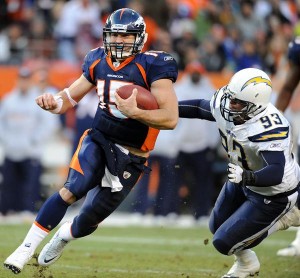
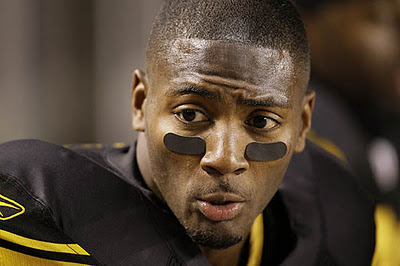
With the Raiders losing on Sunday, the Denver Broncos backpedaled their way into the 2012 NFL playoffs. Although guaranteeing one more week of conversations about Tim Tebow, a fact that no one should wish for, their playoff birth is dramatically impacting the Pittsburgh Steelers and more specifically their safety Ryan Clark. On Monday, Tomlin announced that Clark would be unable to play with the team because he has a sickle-cell trait, which can cause problems in high altitude situations. During a 2007 game in Denver, Clark became terribly ill. Doctors had to remove his spleen and gallbladder; as a result of his organs being deprived of oxygen, Clark lost an astounding 30 pounds.

While the threat to his life is significant, and the decision to skip the game would seem to be a no-brainer, Clark had planned to play. “I mean, everybody knows I want to play and I would have played,” Clark told ESPN. “I talked to my doctors and we actually had a plan in place for me to play. All things pointed to me going until (Tomlin) told me I can’t. He said he wouldn’t have let his son play and so I’m not playing either.” It would be easy to dismiss Clark’s comments, assuming that his plans to play were never realistic or possible. Yet, it is not hard to imagine an NFL player risking life and limb to play “on any given Sunday.”

In an Associated Press story on San Diego Charges offensive Lineman, Kris Dielman, acknowledged a willingness to risk his health in his pursuit to win a Super Bowl title. Dielman, who missed 10 games as a result of a concussion, had a seizure during a post-game team flight, resulting in him being rushed to the hospital. “This was definitely a scare. Waking up in the hospital with my wife standing over me, that was pretty scary. I don’t scare easy, but that was something different.” Neither this scare nor his 2 kids at home changed his approach to the game. He is not alone. Two weeks ago, the Associated Press reported that half of the players (23/44) of the players they interviewed admitted that, “they would try to conceal a possible concussion rather than pull themselves out of a game.” So it should surprise no one that Clark wants to play.

In a sport and a culture that defines masculinity through toughness, invincibility, and competitive fire. In a world of sports that values “winning at all costs” and “a never quit attitude,” Clark’s response reflects the masculinist orientation of sports culture. This is why Coach Mike Tomlin’s decision to hold Clark out of the game, and his unwillingness to ask his players to do anything he wouldn’t feel comfortable asking his children to do, is one worth celebrating. It challenges the culture of masculinity and the ways in which a football culture puts victories and a particular vision of masculinity ahead of everything else.

What has also been striking in the media coverage of Clark’s situation is the absence of any discussion of sickle cell/sickle cell trait in relationship to African Americans. There is a missed opportunity here to differentiate between the trait and disease; Clark has the trait and not the disease. While some articles discussed the medical science related to sickle-cell and how it put him at risk in high altitude settings, with most treating his inability to play as another sports-related “injury story,” there is bigger story here as it relates to sickle cell and African Americans.

This erasure fits with a larger history whereupon the health issues faced by people of color are rendered invisible. Writing about the Black Panther Party and its efforts “to raise public consciousness about sickle cell anemia,” Alondra Nelson states in Body and Soul: The Black Panther Party and the Fight against Medical Discrimination. “The condition became a rallying cry for other representatives of the black community.” The media missed an opportunity to highlight how this disease disproportionately impacts African Americans. In the United States, 1 in 12 African Americans carries the sickle cell trait (1 in 500 have the disease).

The missed opportunity reflects an overall failure to acknowledge the ways in which sickle cell disproportionately impacts African Americans. As Imani Perry told me, “Being at higher risk, because one belongs to a particular ethnic group, has to be distinguished from the idea that the disease is actually a consequence of race, which is a social construct” notes the Professor of African American Studies at Princeton University, “Some diseases are more likely to be found in particular ethnic or racial groups, but that may be a product of environmental conditions or history rather than some genetics that correlate to what we call race.”

While race is a social construction, with zero biological imperative, this disease effects African Americans in devastating ways. In “Dying in the City of the Blues: Sickle Cell Anemia and the Politics of Race and Health,” Keith Wailoo argues that “history of sickle cell anemia in the United States,” is a story of “transformation from an ‘invisible’ malady to a powerful, yet contested, cultural symbol of African American pain and suffering.”

Continue reading @ NewBlackMan: Black Athletes and the Racial Politics of Sickle Cell.

NewBlackMan: Serena Williams and the Politics of Hate(rs)

Serena Williams and the Politics of Hate(rs)

by David J. Leonard | NewBlackMan

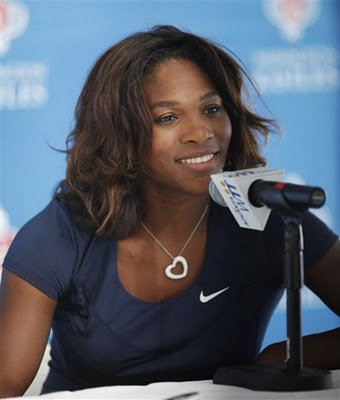
Following a first-round victory in the Brisbane International tournament, Serena Williams expressed her sentiments about tennis, sport, and her labor of unlove. “I mean, I don’t love tennis today, but I’m here, and I can’t live without it … so I’m still here and I don’t want to go anywhere any time soon,” she explained. “It’s not that I’ve fallen out of love; I’ve actually never liked sports, and I never understood how I became an athlete. I don’t like working out; I don’t like anything that has to do with working physically.” Williams comments, not surprisingly, elicited widespread commentary, most of which used her confession as a source of criticism and demonization.

In “Woe is Serena: Tennis star says she doesn’t love tennis,” Chris Chase criticizes Williams as narcissistic and otherwise incapable of being self-reflective and self-critical. While acknowledging her candor, he uses that candor as a source of condemnation:

From one view, her candor could be seen as refreshing. Here’s a top athlete discussing the delicate balance of passion and obligation and fear of the unknown. She’s revealing herself to the press, something she rarely has in the past. Then you step back and realize Serena has the least self-awareness of any great athlete of the past decade. Two years later, she can’t bring herself to acknowledge that she was wrong to threaten a lineswoman at the U.S. Open. She’ll likely never admit her actions in last year’s U.S. Open final crossed the line. Unless she gained some insight in the past four months, these quotes are selfish nonsense.

Chase, unwilling to limit the criticisms to the quote, rehashes and recycles those previous incidences that in his mind provide context for understanding Serena’s dislike of tennis. In other words, just as she violated the rules of tennis, just as she has been unable to apologize for her past missed deeds, and just as she hasn’t been able to acknowledge her own faults, these comments are construed as evidence of her deficiencies as a person and athlete. Chase goes on to argue:

Nobody is surprised Serena doesn’t like tennis. Like Andre Agassi before her, she seems to only love the winning and is willing to put up with what it takes to get there. The grind doesn’t interest her much. These aren’t new insights into her soul. The underlying tone isn’t that Serena is a reluctant sports hero, it’s that she’s able to be so much better than the rest of the tour without caring about the game like they do. Her “I don’t love tennis” quote isn’t a revelation, it’s a self-congratulatory declaration. It’s as if she’s saying, “Just imagine what I could do if I cared.

Pete Bodo, with “The real question facing Serena Williams,” expresses a bit more sympathy given Williams’ litany of injuries. Yet, he still concludes: “Serena’s problem appears to be that she likes the reward (celebrity and money) but not the process. She would like to win the Australian title and any number of other tournaments, but she hates having to go through the motions – you know, the long practice sessions, the diet, the gym workouts and even that messy business of playing matches. It’s not a good problem to have, at least not for an athlete.” Beyond the efforts to link her comments to selfishness and a sense of victimhood, several commentaries link her disinterest with tennis to her diverse interests (fashion specifically), as if that is a shortcoming.

Continue reading @ NewBlackMan: Serena Williams and the Politics of Hate(rs).