NewBlackMan: Pride and Prejudice: Jeremy Lin and the Persistence of Racial Stereotypes

Pride and Prejudice:

Jeremy Lin and the Persistence of Racial Stereotypes

by David J. Leonard | NewBlackMan

The recent success and national visibility afforded to Jeremy Lin has both inspired Asian Americans and has been driven by the adoration and pride he elicits from some within the community. Whether on twitter, Facebook, or in the stadiums, it is clear that Lin is not simply a national phenomena but a treasure for the Asian American community.

According to Jamilah King, “regardless of how the rest of the season goes for Lin, and the Knicks, his moment in the spotlight is an important time to reflect on how the country views its Asian American athletes.” Whereas past Asian athletes, whether it be Yao Ming or Ichiro captured the global Asian Diaspora’s imagination, Lin is the most widely recognized Asian American athlete on the American team sport scene. Timothy Dalrymple highlights the appeal of Lin to Asian American males:

He particularly has a following amongst Asian-Americans. And some Asian-American young men, long stereotyped as timid and unathletic, nerdy or effeminate or socially immature — have fought back tears (which may not help with the stereotype, but is understandable under the circumstances) as they watched Jeremy Lin score 25 points, 7 assists and 5 rebounds for the New York Knicks.

In “Asian Americans energized in seeing Knicks’ Jeremy Lin play,” J. Michael Falgoust elucidates his cultural power within the Asian American community in quoting the thoughts of several different people:

“I don’t care about the outcome. I just want to see him in action. He’s as good of an Asian American athlete as there is” — Rose Nguyen

“I’m so proud. I don’t care if he is Chinese or Korean. I had to see him … my boyfriend has been talking about him so much” — Christine Lee

“I’m really excited. He breaks so many stereotypes. And my friends are just as excited. If you go to my Facebook feed, it’s all Jeremy Lin. I like that he plays smart. But then he’s from Harvard. So that is expected. He is also humble. He reminds me a lot of Derrick Rose, who’s always crediting teammates” — Andrew Pipathsouk

Andrew Leonard similarly argues that Lin’s popularity amongst Asian Americans is emblematic of the power of social media and also the pride that athletic success garners for Asian Americans, otherwise seen as “nerds” not “jocks.” While problematically invoking the language of “genetics” that erases Lin’s tremendous athleticism/speed, Leonard concludes that Lin inspires Asian American kids who yearn for a masculine role model given persistent invisibility and anti-Asian racism within the public square. “He’s a triumph of will over genetic endowment, a fact that makes him inspiring to an entire generation of Californian kids restless with their model minority shackles,” he notes.

On Monday, the social media world was also getting worked up about Michigan Republican Senate hopeful Pete Hoekstra’s racist Super Bowl ad, featuring a Chinese woman (labeled “yellowgirl” in the HTML code for the Web version) gloating over all the jobs her country was taking from the U.S. Once thrown into the 24/7 crazy cultural mashup perpetual motion machine, it didn’t take long before anger about that ad ran head on into Jeremy Lin pride. I have seen tweets urging Jeremy Lin to run for the Republican nomination for the Michigan senate seat, tweets warning that the only American jobs in danger from Asians are those belonging to New York Knick starting point guards, and even a tweet riffing off Kobe Bryant’s self-identification as “black mamba” — Jeremy Lin is suddenly the “yellow mamba.”

Lin has trended #1 on twitter on three successive game days, was top-10 searched items on Sina Weibo and is all the talk of the sports world. For the moment, it is Jeremy Lin’s world and we are all just living in it.

The pride and possibility reflects the broader erasure and invisibility of Asian Americans within popular culture (minus this year’s Top Chef). “Asians are nearly invisible on television/movies/music, so any time I see an Asian on TV or in the movies, I feel like I’ve just spotted a unicorn, even though usually, I see them being portrayed as kung-fu masters/socially awkward mathematical geniuses/broken-English-speaking-fresh-off-the-boat owner of Chinese restaurant/nail salon/dry cleaners,” writes one blogger. “Anyway, this phenomenon is 10x worse in sports. While there has been some notable progress with Asians in professional baseball, Asians are all but non-existent in the big three sports in the US (football, basketball, baseball).”

Continue reading @ NewBlackMan: Pride and Prejudice: Jeremy Lin and the Persistence of Racial Stereotypes.

The God Squad: Tim Tebow, Jeremy Lin, And Religiosity Of Sports | Racialicious – the intersection of race and pop culture

The God Squad:

Tim Tebow, Jeremy Lin, And Religiosity Of Sports

By Dr. David J. Leonard

Among the virtual saturation of Jeremy Lin online has been a poster of him with the words “We are all witnesses.” At Monday’s New York Knicks game, fans donned “black T-shirts that read “The Jeremy Lin Show” on the front” and “We Believe” painted on the back.

Encapsulating the hoopla and hype, while referencing the similar promise that LeBron James brought to Cleveland and the NBA (how’d that work out?), not to mention the spectacle of his meteoric rise, “the witness” iteration illustrates the religious overtones playing through the media coverage.

Since Lin emerged on the national scene while at Harvard, he has made his faith and religious identity quite clear. While refusing to abandon the “underdog” story, Cork Gaines focuses readers attention on his religious beliefs: “But there is more to Jeremy Lin than just being an undrafted Asian-American point guard out of Harvard. He is also a devout Christian that has previously declared that he plays for the glory of God and someday hopes to be a pastor.” Noting how post-game interviews often begin with Lin announcing his faith – “just very thankful to Jesus Christ, [his] Lord and savior” – Gaines uses this opportunity to deploy the often noted comparison that Jeremy Lin is the NBA’s Tim Tebow.

While making the comparison through the Cinderella/overlooked narrative, the media celebration of their faith and evangelical beliefs serves as the anchor for the Lin as Tebow trope. “Tebowmania? That was so 2011. It’s time for a new cult-hero phenomenon: Linsanity,” writes Ben Cohen in “Meet Jeremy Lin, the new Tim Tebow.”

Then there’s their shared religious values. ‘I’m just thankful to God for this opportunity,’ Lin said in an on-court interview Saturday before tweeting, “God is good during our ups and our downs!” His Twitter avatar is a Jesus cartoon. Tebow’s, for the record, is his autobiography’s cover.

Described as Taiwanese Tim Tebow, as resembling “Denver Broncos Quarterback Tim Tebow,” as filling the mold that Tebow “patented,” Lin’s identity (meaning/significance) is ascribed by his connection to Tebow. Tebow defines him.

In “From Unknown To Phenom In 3 Games: Harvard Grad Jeremy Lin Saves The New York Knicks,” Les Carpenter makes the comparison clear: “He is a Christian, vocal in his belief. And because of this and because he is a flawed player proving the experts wrong, people are comparing him to Tim Tebow.” According to Gaines, “Lin and Tebow are not the first athletes to make their faith a key component of their athletic persona. But if Lin, another unconventional player fighting an uphill battle against haters and doubters, continues his spectacular play in The World’s Most Famous Arena, the NBA may soon experience their own Tebowmania. And the fans are already calling it “Linsanity.”

While dismissing the links beyond the uber-hype afforded to Tebow (and now Lin), Bethlehem Shoals furthers the comparison: “Tim Tebow, whose religious views are no secret, probably considers luck the pay-off for faith; Lin is also an enthusiastic Christian. Whether you feel like pushing things in that direction is your business. The bottom line is that, thus far, Lin has been a welcome surprise, a Cinderella story that no one wants to see end.”

The comparison is instructive on multiple levels (see here to understand problems with comparison in a sporting context). Each exists in juxtaposition to blackness. The “underdog” narrative, the focus on hard work and intelligence, and the claims of being overlooked and discriminated against all elucidates the ways in which their bodies are rendered as different from the hegemonic black athletic body.

Religion, thus, becomes another marker of difference, as a means to celebrate and differentiate Lin and Tebow. Whereas black athletes are seen within the national imagination to be guided by hip-hop values rather than religious values, Lin and Tebow practice an evangelical ethic on and off the field/court. Tebow and Lin operate as “breath of fresh air.” Writing about Tiger Woods in Sports Stars: The Cultural Politics Of Sporting Celebrity, C.L. Cole and David L. Andrews argue that Woods’ emergence as a global icon reflected his power as a counter narrative. As “a breath of fresh of air,” his cultural power emanated from his juxtaposition to “African American professional basketball players who are routinely depicted in the popular media as selfish, insufferable, and morally reprehensible.”

Continue reading at The God Squad: Tim Tebow, Jeremy Lin, And Religiosity Of Sports | Racialicious – the intersection of race and pop culture.

NewBlackMan: Silence, Innocence, and Whiteness: The Undemonization of Kevin Love

Silence, Innocence, and Whiteness:

The Undemonization of Kevin Love

by David J. Leonard | NewBlackMan

The Minnesota Timberwolves battled the Houston Rockets this past Saturday. Normally not on my radar, an incident involving Kevin Love and Luis Scola compelled inquiry even as the media remained silent. Purportedly frustrated over a non-call, Love not only fouled Scola, but as the Houston power forward lied on the ground Love proceeded to step on his face as he ran back to the offensive end of the court. “I fell down. He was kind of right there,” Love explained. “I got Size-19 feet. He just happened to be there. I had nowhere to go. I got tripped up. I had nowhere to step. It is just heat of the moment-type play.” The non-explanation aside, Love simultaneously identifies the incident as an accident and justifiable.

If an accident, why does he feel necessary to describe it as an unfortunate situation or to reference what happen between the two of them in game on Monday? “Love also referenced an unfortunate incident in Houston on Monday, when Scola attempted to throw a ball to deflect it off of Love out of bounds but the ball hit Love square in the groin.” Offering an explanation that seemingly justified his accidental behavior, Love was not alone in the exoneration process.

What followed the game, and the several days since there, has been silence – crickets in fact. Despite the fact that one of the league’s emerging stars stepped on an opponent’s face, the media has found little reason to write about the event. References to the event notwithstanding and a series of articles that have asked viewers to weigh in whether it was intentional or not, the overall media discourse has rendered Love’s stomping on an opponent’s face insignificant by its relative silence.

Even after the NBA announced a 2-game suspension for Love, the sports punditocracy has been muted in its criticism of Love, choosing rather to focus on his apology. Several headlines noted that in wake of the suspension, he has apologized yet again, having already apologized to Luis Scola following the game. In headline after headline, Love is constructed as apologetic, even though there is no specific apology provided by any of the news outlets (example #1, example #2). Instead they reference his statement issued on the team’s website:

“We got to talking about it, and as long as Luis and the Rockets are OK, then I’m OK with it,” Love said. “I feel like it was a learning experience, and it won’t happen again. There were no ill-intentions. I was trying to get him on a foul on the way up. I wasn’t trying to stomp him or anything like that. Just moving forward, and hopefully we win these next few games.

His post practice comments are further illustrative of a lack of contrition and a desire to give explanation rather than apology:

I don’t want to be known for that. I want to be known as a stand-up guy who happened to make a mistake with a size 19 shoe and just move on. So everybody knows there were no ill intentions there. It’s been a chippy year. It’s not only us. It’s not only the Pacers, the Rockets or anything like that. It’s a lot of games. The guys are tired. Games are being drawn out and guys are worn down.

Denying any “ill-intentions,” while describing it as a learning experience, doesn’t constitute an apology. The lack of criticism, the efforts to explain Love’s actions as resulting from his emotions, out-of-the-ordinary behavior, and otherwise not indicative of Love’s character reflect an overall effort to downplay the importance of his stomping on an opponent’s face.

Compare this response to the recent media criticism directed at Andrew Bynum. Following Game 4 of the 2011 NBA playoffs, which saw Bynum knock JJ Berea to the floor with a very hard foul, he was lambasted in the media. Called a thug, as player who was ejected for “dirty hits,” and as a player who exhibited, “stupidity, cowardice and unprofessionalism”;

Continue reading @ NewBlackMan: Silence, Innocence, and Whiteness: The Undemonization of Kevin Love.

Paterno, White Patriarchy and Privilege – Entertainment & Culture – EBONY

Paterno, White Patriarchy and Privilege

OPINION: The hero’s farewell given to the disgraced coach speaks volumes

By David Leonard Writer

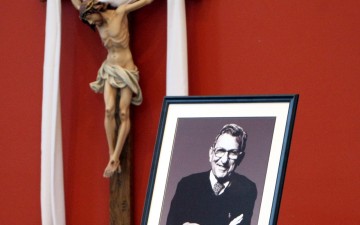
When the news broke that Penn State’s football coach, Joe Paterno had died of lung cancer, one might have thought there had been some sort of great national tragedy based on the media coverage. The spectacle that began with this “breaking news” did not end with the initial reports, but has continued with ample columns, discussions, tributes, and memorials to a football coach. Described as an “icon” a “revered coach,” “a leader,” and “a legend,” Paterno has been further lionized the short time after his death. Ivan Maisel, in his tribute to Paterno, captures the hyperbolic tone of the post-death commentaries

The 409 victories, while record setting, are not the full measure of the man. The young men he left behind, the campus to which he devoted his life, a campus whose leaders shoved him aside in the panicky, feverish days after the scandal broke, also give testimony to the life of Joseph Vincent Paterno. The whole of his life renders the seismology of modern-day journalism moot. The facts of a 62-year coaching career were shaken. They did not topple over.

Eulogies citing his success on the field, his millions of dollars in donations, his “fatherly” relationship with his players, and his importance in the community, have sought to elevate Joe Paterno as saint. Despite everything that has happened, the sports punditry has sought to resuscitate a “the image of Joe Paterno,” one which Bomani Jones noted “is null and void.”

This is not to say that media coverage has erased his connection, involvement, and culpability for the alleged child molestation committed by assistant coach Jerry Sandusky (see here for discussion). The tragedy in his death rests with the cloud of uncertainty, contempt, and unease about Paterno’s legacy. The ubiquity of the memorials reflected a societal unease that “he was, like so many of the characters in the books he told us to read, unable to have a perfect ending.” The references to the scandal become the pretext for the celebration because without it, there would be no reasons for the story of redemption and hero worship to the extent we are seeing. His connection to the sex abuse scandal has thus been pushed aside, serving as little more than a footnote to justify the societal mourning of a great football coach. “I really do believe that the drama of his last two months has fueled the media barrage. There is a high-octane effort aimed at defining his legacy as positive. That takes a lot of sweat equity given the recent scandals,” noted Dave Zirin in a message to me.

In many regards, the discussion around his death is framed around the last few months, his firing, the scandal itself, and his involvement. This is why there is so much celebration and this is why it is breaking news. It is difficult to imagine the extent and scope of the commentaries and celebrations had the last two months not occurred; I would be hard pressed to come up with an athlete or sports figure (celebrity) whose death has provoked so much memorializing as we have seen with Joe Paterno.

The efforts to memorialize and the hyper celebration also reflect the power of White masculinity and nostalgia within the cultural landscape. Described as a “model of law-abiding sportsmanship,” “a disarming mix of a lofty diploma and Brooklyn-bred blue-collar grit,” and as someone committed to education and honor, Joe Paterno’s importance exists apart from titles, victories, or football within the national conversation. As noted by Rick Reilly, Paterno “was a humble, funny and giving man who was unlike any other coach I ever met in college football. He rolled up his pants to save on dry cleaning bills. He lived in the same simple ranch house for the last 45 years. Same glasses, same wife, same job, for most of his adult life.”

The celebration of Paterno as patriarch, as the embodiment of a White working-class ethic, as a coach of a different era, sits at the core of the demoralization of Paterno. The national mourning in this regard reflects both a desire to redeem him in the face of the sex abuse scandal and to celebrate nostalgia for a different era of college sports and a heroized White working-class masculinity.

Continue reading @ Paterno, White Patriarchy and Privilege – Entertainment & Culture – EBONY.

A Super Failure: Domestic Violence and Football’s Big Game | The Feminist Wire

A Super Failure: Domestic Violence and Football’s Big Game

February 3, 2012

By David J. Leonard

For the longest time I have heard that Super Bowl Sunday was a day of heightened domestic violence. Linked to alcohol consumption, frustrations over the game outcome, and a day of uber masculinity (as opposed to hyper masculinity), the narrative has identified Super Bowl Sunday as one particularly dangerous to women. Thus, with the Super Bowl approaching, I decided to look into this issue in broader detail.

As one searches Super Bowl and domestic violence, one is confronted with a clear theme: that any connection between the two is a myth and a hoax. Citing a 2007 study from Oths & Robertson that “examined 2,387 crisis call records covering a previous 3-year period,” Dr. John M. Grohol identifies the claim as urban legend, a “largely debunked myth that domestic violence calls spike around Super Bowl Sunday.” Similarly, in “Super Bowl or Super Bull? Six Super Bowl Myths Busted,” Sarah Weir disputes the often-uttered claim:

This story stemmed from a Public Service Announcement that aired at the beginning of the televised broadcast of the 1993 Super Bowl match between the Dallas Cowboys and the Buffalo Bills that warned, “Domestic violence is a crime.” Although a number of articles debunking the claim appeared in various newspapers, the idea has persisted. Football is so overtly macho and physical it’s no wonder that it gives some people, especially those who don’t enjoy or understand the game, the chills. However, in 2006, Richard Gelles, an expert on domestic abuse from the University of Pennsylvania said, ‘This kind of ‘urban legend’ trivialized the causes and consequences of domestic violence.’

The efforts to dismiss, deny and minimize the issue of domestic violence and its relationship to hyper masculine sports spectacles is revealing; the efforts to oversimplify it as a source of opposition is reflective of the right’s anti-feminist agenda. For example, according to Christina Hoff Sommers, who the Daily Caller identifies as the “American Enterprise Institute resident scholar and equity feminist,” an oxymoron to say the least, “Women who are at risk for domestic violence are going to be helped by state of the art research and good information,” she said. “They are not going to be helped by hyperbole and manufactured data.” Similarly in “Super Bowl Sunday and domestic violence: A hoax,” Dr. Charles Corry laments the Super Bowl myth is yet another example of how feminism is corrupting society through denying the attacks on men.

Unfortunately, the Super Bowl Sunday violence myth is just one of many myths surrounding domestic violence. Most studies are suspect and highly skewed. Men and women initiate domestic violence in roughly equal proportions, yet judges and police are trained and intimidated politically not to question a woman’s claim of domestic violence, effectively passing judgment on the accused man.

Ignoring facts, such as “One in every four women will experience domestic violence in her lifetime,” or “majority (73%) of family violence victims are females,” Corry, whose National Justice Foundation focuses its attention on seeing men as victims of sexism, is reflective of the anti-feminist opposition discourse.

In examining the reports and the literature, it is unclear as to the relationship between domestic violence and Super Bowl Sunday. While there is no causal relationship, there is clearly anecdotal evidence from shelters that suggest that Super Bowl is a day where domestic violence is an issue. Yet, it is important to look beyond causal relationships to reflect on the structural factors that contribute to the issue of domestic violence. As Jackson Katz, co-founder and director of MVP Strategies, noted to me, the issues of alcohol abuse, gambling, the ubiquity of parties and social interactions increasing the opportunity for conflict, and the presence at home (people are less likely to be working on the weekend), provides a structural reality to reflect on the issue of domestic violence.

Continue reading @ A Super Failure: Domestic Violence and Football’s Big Game | The Feminist Wire.

NY GIANT Victor Cruz: Salsa, Sadness and the American Dream – Entertainment & Culture – EBONY

NY GIANT Victor Cruz: Salsa, Sadness and the American Dream

 The story of the Giants star is too often framed by racial stereotypes

By David Leonard Writer

The tremendous “rookie” season of Victor Cruz will come to an end on Sunday. While in his 2nd official year, the 2011-2012 campaign was ostensibly his first go-round in the NFL, and what a year it has been. While the nation obsessed over a mediocre quarterback at the expense of other players, Cruz had an amazing season. Rivaling the historic rookie season of Cam Newton, Cruz has been spectacular with 82 receptions, 1,536 receiving yards and 9 touchdowns, dominating during the postseason. Yet, that hasn’t been the story of Victor Cruz, nor has the media discourse sought to highlight his Black-Puerto Rican identity, forsaking for a narrative of sports as a great equalizer, of football as the melting pot, and ultimately the NFL story as evidence of the American Dream and American exceptionalism.

The media narrative surrounding Cruz has been simple, if not misleading. He rose from the ashes of poverty, despair and mistakes to NFL stardom. Focusing on disciplinarity and the efforts to pull himself up by his bootstraps, the celebration of Cruz has been much more a celebration of the American Dream and those in his life who made all of it possible. According to Ohm Youngmisuk, Cruz “nearly became another academic cautionary tale of a talented athlete who never made it because he didn’t take school seriously.” Reflecting tough love and an accountability, he was dismissed from University of Massachusetts because of his GPA and other academic failures. After attending Passaic County Community College and County College of Morris, he was able to reenroll back at UMASS. The media has eaten up the narrative, framing this path as unusual and part of his maturation process.

Equally telling, the story emphasizes how those adults outside of his family, helped him, demanding that he change his attitude and approach: “At any point, he could have strayed and never made it back to college — like so many others. But Marsh-Williams’ [the school’s assistant dean/provost of undergraduate advising] message stuck with him like a stingy cornerback,” writes Youngmisuk. And he adds: “Marsh-Williams demanded accountability, had little sympathy for one of UMass’ best athletes….(he)lectured Cruz with more tough love than the no-nonsense Tom Coughlin ever could.”

As part of the celebrated immigrant, bootstraps narrative, several stories chronicle his upbringing as one where he was “raised by a single Puerto Rican mother.” Playing on stereotypes of absentee Black fathers, the narrative erases the complexity and tragedy of Cruz’s life, turning him to a caricature of sorts. While his parents never married, it is clear that his father was part of his life. Mike Walker, a firefighter in Paterson, New Jersey, committed suicide in 2007 following a car-accident and a battle with depression.

The failure to talk about his relationship with his father (or to provide context about mental health, suicide and the African American community), and the efforts to celebrate how coaches, administrators and to a lesser extent his mom provided him with the necessary tough love and disciplinarity, is particularly disconcerting. Cruz is reduced to an advertisement for the American Dream, for the idea that hard work, discipline and proper values will lead to stardom.

Although much has been talked about in relation to his Latino/immigrant background, little has been said about his Black ancestry or even his Nuyorican identity. At one level, the media focus on his Latino background given their scarcity within sports culture. Among a group of 31, including the Patriots’ Aaron Hernandez, Arian Foster, Marc Sanchez, and Tony Romo, Cruz has come to embody a generation of Latino football players. Yet, the narrative surrounding Cruz seems more interested in celebrating his story as an immigrant story, a story of opportunity for Cruz and others to learn “the American way.” “It is a telling example of the natural progression the sport has made in Hispanic communities across the United States,” writes Jorge Castillo. “As the generations following immigrants from Latin American countries assimilate into American culture and, with it, take up America’s sport.”

via NY GIANT Victor Cruz: Salsa, Sadness and the American Dream – Entertainment & Culture – EBONY.