DEAR WHITE FOLKS: You Don’t Know How Easy You Have It – News & Views – EBONY

DEAR WHITE FOLKS:
You Don’t Know How Easy You Have It

by David J. Leonard

Dear White folks:

Between the racist comments, the constant use of the race denial card (this country’s most frequently used “race card”) and the absurd claims of White victimhood, you have really grated my last nerve.

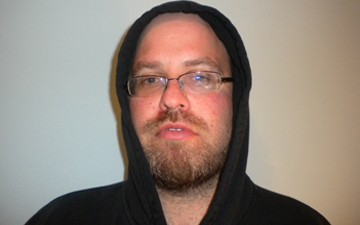
Sure, we got teary during The Blind Side and Antoine Fisher; we maybe even gave money to KONY2012 and after Hurricane Katrina; we maybe even donned a hoodie to protest the murder of Trayvon Martin. I don’t even doubt there are individuals out there who are genuinely concerned about racism and injustice; I don’t doubt that there are many Whites that marched with Dr. King and whose “best friends” might be Black. None of this matters if African Americans continue to die at the hands of guns held by security guards and police officers all without justice

I have heard that “we are all Trayvon Martin” over the last few weeks, yet we are not Trayvon Martin – and we never could be. White America is never suspicious. White America can walk to the store without fear of being hunted down. White America can count on justice and a nation grieving at the loss of White life. We aren’t Trayvon Martin, we are George Zimmerman: presumed innocent until proven innocent.

I want you to close your eyes for a second, and imagine that your son or daughter, sister or brother, granddaughter or grandson, ventured to the corner store for some Skittles and tea but never returned? Can you imagine if Peter or Jan were gunned down right around the corner from your house and the police didn’t notify you right away? Can you imagine if little Sydney or Bobby sat in the morgue for days as you searched to find out what happened them? Can you even imagine the police letting the perpetrator go or the news media remaining silent? Can you even fathom learning about background and drug tests on your child? Can you imagine the news media demonizing your child, blaming your child for his own death?

Can you imagine the outcry if seven White youths had been gunned down by police and security guards in a matter of months? Can you imagine the extensive political interest, the media stories that would saturate the airwaves? Can you imagine Fox News or any number of newspapers reporting about a school suspension for one of the victims or doctoring pictures in an attempt to make these victims less sympathetic? Can you imagine a person holding up a sign calling these victims “thugs” and “hoodlums.”Just think about the media frenzy, the concern from politicians, and the national horror every time a school shooting happens in Suburbia or every time a White woman goes missing…can you imagine if women routinely went missing from your community and the news and police department simply couldn’t be bothered?

No, you can’t. And you don’t have to.

Yet, from Florida to Los Angeles, from Atlanta to Wisconsin, from Chicago to Ohio, Black families are burying the innocent and the future. Doesn’t that make you sad; doesn’t that make your angry? Our silence is telling. We can barely say their names much less acknowledge the epidemic in our midst: Stephon Watts. Trayvon Martin. Ramarley Graham. Wendell Allen. Dante Price. Bo Morrison. Rekia Boyd. Kendrec McDade.

All have lost their lives; and we don’t even say their names. All have died under similarly disturbing circumstances. All should have prompted national outrage and action; or at the least for us to say their names.

I don’t care if you cried during The Help and if the ‘feel good’ movie of the year featuring chicken-frying maids and affluent White women made you feel all post-racial tingly on the inside. Did you cry at the report of yet another lost Black life? If so, what have those tears done – have they led you to join a rally, to demand justice? I don’t care if you voted for President Obama; have you demanded dramatic changes to our criminal (in)justice system? It is time for us to check ourselves, to listen and demand a better America starting with ourselves. It is time to stop denying racism and defending White privilege, distracting and deflecting with “what ifs” and excuses. It is time to demand justice for the Trayvons and the Rekias, not because it could have been one of our sons and daughters–it couldn’t–but because it is simply the right thing to do.

Continue reading @ DEAR WHITE FOLKS: You Don’t Know How Easy You Have It – News & Views – EBONY.
Under The Hood: A New Take On Activism In Sports | Racialicious – the intersection of race and pop culture

Under The Hood: A New Take On Activism In Sports

By Guest Contributor David J. Leonard

As individuals from throughout the United States and in other parts of the world voiced their anger and outrage at the murder of Trayvon Martin, there was an initial frustration from many in the social media world about the reticence and silence from today’s (black) athletes. The wish that athletes, and really black athletes–since it is rare to hear about the failure of white athletes–would uses their platform to shape change has become commonplace. So when the Miami Heat and several other players joined the calls for justice, there was certainly a level of joy and satisfaction.

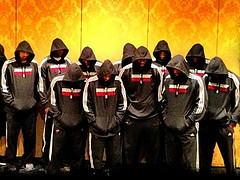
Whereas individual athletes have a long tradition of protest and using the platform of athletes to express political sentiments, from Tommie Smith and John Carlos to Toni Smith, few teams have collectively taken a stand. Donning hoodies, the Heat stood in solidarity with Trayvon, shining a spotlight on the deferred justice in his case and the real-life dangers of racial profiling. As a team, they stood together as one, although it is clear that both Dwyane Wade and LeBron James were the ringleaders beyond this effort. The picture and the tweet, under the hashtag of #wewantjustice, were in fact the impetus of James himself.

Many have expressed surprise at the involvement of James and even Wade, given their emergence as America’s team to hate, as emblematic of the me-first baller generation. This is particularly the case for James, who has been subjected to endless criticism since high school. While much of the condemnation often focuses on his unwillingness to take the “big shot” in important games or his attitude, some progressives have lamented the lack of political engagement from James. While not unique in their eyes, his power and status elevates him in this regard. Writing about James’ refusal to sign a letter from teammate Ira Newble concerning China’s role in the Darfur genocide, Dave Zirin took James to task for his refusal to join the fight:

At the tender age of 22, you have the galactic talent to make us wonder if a mad scientist had Magic and MJ genetically spliced. But talent ain’t wisdom. In a recent interview, you said that your goal in sports was to become “the richest man on earth.” You also told ESPN, “I’m trying to be a global icon … on the level of Muhammad Ali.”

These dreams are compatible only if you choose to emulate Ali the icon and not Ali the man. Ali the icon is used to sell books, computers, snack foods, and anything not nailed down. Ali the man sacrificed his health, future, and untold millions by standing up to racism and war. No one is demanding you do the same. No one is insisting you get in front of a microphone and say, “I ain’t got no quarrel with them Iraqis.”

But you should understand that the reason Ali remains a “global icon” is precisely because he didn’t define himself by his corporate sponsors. When his handlers told him to stop throttling the golden goose of fame he said, “Damn the money! Damn the white man’s money!”

Seemingly challenging James, Zirin highlights a clear choice for the NBA’s next great superstar.

“The choice you face is frankly quite stark: How free do you want to be?,” he asks. “Do you want to be ‘King James of Nike Manor’ or the King of the World? Only by refusing to be owned, only by displaying independence from the very corporate interests that enrich you, will you ever make the journey from brand to three dimensional man.” With his participation with the Million Hoodie March, and the efforts from other Heat players, it is clear that not only has James made clear how he “wants to be” but silenced his critics by highlighting his willingness to take the big shot, one far more significant than any last game heroics.

At one level, the response reflects the connection that James, Wade, and several other players felt with Trayvon. According to James, “I have two boys, D-Wade has two boys and a lot of our teammates have sons. This could be one of our sons someday. The thought of sending your son to the store and never having him return is an emotional one for any parent.” In reading their statements, it is clear that their statement didn’t merely reflect their being fathers but father of black boys.

Continue reading @ Under The Hood: A New Take On Activism In Sports | Racialicious – the intersection of race and pop culture.

[OPINION] Trayvon, Sports and Me – News & Views – EBONY

Trayvon, Sports and Me

David J. Leonard

I grew up in segregated Los Angeles. While often celebrated for its diversity, L.A. is community. Divided by freeways, inequalities, and policing, the Los Angeles I remember was defined by its segregation. For middle-class white kids such as myself I was in constant ignorance about the persistence of inequality and my own White privilege. I never thought a second about leaving my house to buy a bag of Skittles; I never contemplated how others – teachers, employers, and even the police – might interpret my saggin’ pants or my hoodie; I did not even give a second thought when I showed up to play basketball at my local park with my hair in braids. The ignorance of privilege and the power of Whiteness defined my youth. Yet, the privileges of Whiteness gifted me each and every day. I was able to move throughout the city without fear from driving while White, and without fear of being suspicious, because in America “the assumption is that the natural state of Black men is armed and dangerous.”

It took leaving Los Angeles for the Pacific Northwest to truly understand the nature of American racism. In the 20 weeks that I attended the University of Oregon, notions of colorblindedness and equality shattered before my eyes. Walks to the store, to dinner, or to class with African American friends often found us followed by the police, stared at by others. It was a lesson in the ways that Blackness equals suspicion whereas Whiteness protected me from prejudgments. Racism wasn’t just the daily assault on my Black friends, but the unearned privileges I was granted each day.

Looking back, these experiences taught me not just about racial profiling and “Walking While Black”, but the many contradictions that exist in an integrated country that never came to terms with its racism. Several of my friends on campus at the time were student-athletes (another issue, of course: the disproportionate number of Black students in the athletics program versus the few who were present at the school otherwise); these young men and women regularly experienced praise and adoration while on the court. Celebrated as heroes, cheered as superstars, and anointed as celebrities, they were desired, wanted, and cherished… as commodities. Yet, while walking the streets, while eating at restaurants, while in class, and while attending various parties, the desirability was replaced by suspicion, contempt, and surveillance.

The murder of Trayvon Martin speaks to this country’s fear of Black people, particularly males. It also reflects the country’s contradictory concept of Blackness. The fact that Trayvon ventured out during the halftime of the NBA All-Star game (taking place in Orlando as well) only to lose his life at the hands of George Zimmerman highlights the valuing of Blackness inside the arena and the devaluing of Black life elsewhere. As fans cheered Kobe, CP3, and King James, Trayvon lied in a pool of blood. Having seen pictures of Trayvon in his football uniform and read about his love of sports, his murder taking place during this grand celebration of Black athleticism speaks volumes. Like DJ Henry and Robert Tolan, both of whom were shot (Henry died) by the police, Marcus Dixon, Mychel Bell, and Genarlow Wilson, all of whom despite athletic prowess endured the grips of a Jim Crow justice system, the status as athlete, star or otherwise, did not protect Trayvon Martin.

The murder of Trayvon Martin speaks to this country’s fear of Black people, particularly males.

Even as millions of fans announce their love for Kobe and LeBron, even as tens of millions voted for Barack Obama, even as a growing Black middle-class has made inroads throughout society, the likes of Trayvon Martin, Oscar Grant, Sean Bell, and countless others remind us about the dangers of living while Black in America even in 2012. Essex Hemphill, in his brilliant poem “American Hero” describes a world where Black men can simultaneously be celebrated for dunking a basketball during a globally televised game while just miles a way a young Black male is dying at the hands of American racism:

Squinting, I aim at the hole fifty feet away. I let the tension go. Shoot for the net. Choke it. I never hear the ball slap the backboard. I slam it through the net. The crowd goes wild for our win. I scored thirty-two points this game and they love me for it. Everyone hollering is a friend tonight. But there are towns, certain neighborhoods where I’d be hard pressed to hear them cheer if I move on the block.

via [OPINION] Trayvon, Sports and Me – News & Views – EBONY.

NewBlackMan: In Conversation with History: Speaking Back to Trayvon

In Conversation with History: Speaking Back to Trayvon

by David J. Leonard | NewBlackMan

In wake of the murder of Trayvon Martin, in the face of anger, sadness, frustration, outrage, sadness, and more anger, I found myself returning to several quotes that reflect on racism, violence, injustice, and resistance. I found myself wanting to dialogue with these thinkers, these organic intellectuals, and those who continue to promote “freedom dreams.” This is my conversation within an experimental dialogue that emphasizes the continuity of violence and resistance throughout our history.

Sojourner Truth: “That man over there says that women need to be helped into carriages, and lifted over ditches, and to have the best place everywhere. Nobody ever helps me into carriages, or over mud puddles, or gives me any best place! And ain’t I a woman?”

DJL: Why does this continue to be so true for women, for people of color, for the poor? The parent over there sends their child out to play, without a worry; the child over can go to the park, walk to school, or go to the store, without any fears. Innocence is protected. Nobody can say that for Trayvon Martin; ain’t he a person; ain’t a child?

Frederick Douglas: “Where justice is denied, where poverty is enforced, where ignorance prevails, and where any one class is made to feel that society is an organized conspiracy to oppress, rob and degrade them.”

DJL: Mr. Douglas, your words remain true today. Where Trayvon’s was deprived of his humanity, where his rights were ignored, where his future was denied “neither persons nor property will be safe.”

Kahil Gibran: “Learnt silence from the talkative, toleration from the intolerant, and kindness from the unkind; yet, I am ungrateful to these teachers.”

DJL: Yes, in just three weeks, we have seen injustice from those responsible for justice, terror from those who claim to protect, and erasure from those responsible for education and informing the collective. We have once again seen the stains and violence of American racism. Yet, we have seen the apathy and ignorance concerning these painful realities.

Shirley Chisholm: “Most Americans have never seen the ignorance, degradation, hunger, sickness, and futility in which many other Americans live. Until a problem reaches their doorsteps, they’re not going to understand. . . Racism is so universal in this country, so widespread and deep-seated, that it is invisible because it is so normal.”

DJL: Ms. Chisholm, we are still seeing this today. When black and suspicious becomes normalized, racism is invisible; when the murder of black youth is not breaking news “it invisible because it is so normal.” When black death goes unnoticed it has become normal and acceptable. Only when fathers and mothers, grandmothers and grandfathers, brothers and sisters, and sons and daughters begin to contemplate “what if,” what if my family or friends couldn’t go to the store without fear, without threat, without potential death will we see change.

Albert Camus: “In such a world of conflict, a world of victims and executioners, it is the job of thinking people, not to be on the side of the executioners.”

DJL: Why do people continue to side with the executioners? But not in every case? It must stop. In a world where black youth can’t walk to the store to buy skittles and something to drink, where black youth are deemed suspicious for walking while black, in “a world of victims and executioners, it is the job of thinking people, not to be on the side of the executioners.” It is the job of thinking people not to silence the critics, the fighters of freedom.

Continue reading @ NewBlackMan: In Conversation with History: Speaking Back to Trayvon.

NewBlackMan: The “Reasonable Fear” of a Black Male: The Trayvon Martin Tragedy

The “Reasonable Fear” of a Black Male:

The Trayvon Martin Tragedy

by David J. Leonard | NewBlackMan

In 2008, 20/20 conducted an experiment to examine how people would respond to criminal activity. Inside a New Jersey park, three white youths gleefully vandalized a car. Without concern for the people walking throughout the park, they destroy the car with a bat and spray paint. In the course of the experiment, only a few individuals call the police or even challenge the kids, with some even joking around with them. When 20/20 swapped out the three white youth for three black youth, the public response was drastically changed, with many more calls to the police. Highlighting the ways race and criminality interact through stereotypes and daily behavior, the most telling aspect of the experiment resulted from an unplanned development. As the white youths wreaked havoc on the car, three black youth waited in another car. These boys, relatives of one of the black actors who were taking part in the experiment, were asleep. In the first instance, the caller suggests that the boys looked like they were going to rob someone. In a case of ‘sleeping while black’ there were two 911 calls (compared to one 911 call about the white youth).

Given persistent stereotypes, news media and popular culture, and a culture of dehumanization, it is no wonder that the 20/20 experiment found that irrespective of behavior black youth convey fear and animosity driven by their presumed criminality, an experience dramatically different from that of white youth. Writing about research on imagery and criminalization, Joe Feagin, in The White Racial Frame, highlights the profound issues at work here. “These researchers conclude that the visual and verbal dehumanization of black Americans as apelike assist in the process by which some groups become targets of societal ‘cruelty, social degradation, and state-sanctioned violence” (p. 105). From a history of slavery and lynching, up through the persistent realities of racial profiling, mass incarceration, and daily instances of violence, the connection between dehumanization and criminalization has been central to white supremacy.

I thought about this experiment when I first heard about the murder of Trayvon Martin. The connection became especially powerful after continually hearing references to “reasonable fear,” the fact that George Zimmerman called 911 because he saw a suspicious person in his gated community, and the purported “perceived threat”; all of this led me back to this study and the countless amount of research that illustrates the power and saturation of the “criminalblackman.” As evident here, it is hard, if not disingenuous, not connect this case and the ideas of fear, suspicion, and threat (and whiteness as innocence), to dominant ideologies of race.

On March 12, 2012, Stanford Police Chief, Bill Lee announced that Zimmerman’s claim of self-defense fit with the evidence of their investigation. During a press conference, he made this clear over and over again: “We don’t have anything to dispute his claim of self defense at this point with the evidence.” He additionally defended the decision not to issue an arrest warrant because of a lack of probable cause: “Until we can establish probable cause to dispute that, we don’t have the grounds to arrest him.” Given recent reports about the investigation, one has to wonder if this even possible.

Similarly, the news media has emphasized that Zimmerman had a bloody nose, that the back of his t-shirt was wet, and that reports indicate an argument all as potential explanation for what happen. We can see an emerging narrative that explains (rationalizes/justifies) the situation as if an argument or even a “fight” justifies the use of a gun on an unarmed teenager.

At the same time, likely responding to this growing anger about this injustice, the media coverage has increasingly emphasized the legal context. In Florida, because of the “stand your ground law,” which Jeb Bush signed into law in 2005, individuals who believe they are under attack can use deadly force. If a person feels in danger and if a person has “reasonable fear” they are legally allowed to use deadly force. According Joëlle Anne Moreno, “under the new law, if you are not engaged in an illegal activity, you can stand your ground by ‘meeting force with force, including deadly force’ if you ‘reasonably believe it is necessary’ to prevent death, great bodily harm, or the commission of a forcible felony.” In other words, if you reasonably believe you or others are in danger you are entitled and empowered to use force irrespective of the actual threat. It is about belief and perception.

Continue reading @ NewBlackMan: The “Reasonable Fear” of a Black Male: The Trayvon Martin Tragedy.

NewBlackMan: Two Visions of ‘Black’ Evil, One White Gaze: Reading Kony 2012 and the Murder of Trayvon Martin

Two Visions of ‘Black’ Evil, One White Gaze: Reading Kony 2012 and the Murder of Trayvon Martin

by David C. Leonard | NewBlackMan

In the wake of 9/11 and the ongoing war on terror, the United States has increasingly relied on national narratives that offer certainty, comfort, and security. In catchphrases and sound bites, pundits and politicians remind Americans of the importance of protecting the homeland, the role of all Americans in safeguarding national space and American democratic values, the need to guard against the enemies of freedom and civilization, and the promise of spreading democracy throughout the world. As countless bodies fell, injured and dying, shattering families and communities over here and over there, multinational corporations have profited on an increased militarism, diminishing natural resources, and public panics. Within this climate, many in the United States have sought refuge in comforting narratives of good versus evil, civilization versus savagery. The power and cultural importance of these narratives has been evident with the murder of Trayvon Martin and in the spectacle of Kony 2012.

Prior to the start of the 2012 All Star game (I previously wrote that it was at halftime but based on timeline that appears to be incorrect), Trayvon Martin, a 17-year African American, decided to walk to the local store to get some candy and drinks. Tragically, it appears that he died because he was walking while black in a gated predominantly white community in Florida. Shortly after calling 911 to report a “suspicious” person within his community, George Zimmerman, a neighborhood watch captain, confronted Martin, who was armed with skittles and an Arizona Ice Tea. What happened next is unclear, yet what is without much doubt is that Zimmerman shot Martin dead with a Kel Tek 9mm semi-automatic gun. Identified as a “threat” Martin fell victim at the hands of a gun.

In a world where African Americans, particularly black male youth, are consistently represented as threats, to the security, peace, culture, calm, and order, how can “threat” be seen outside of the context of race? In a world where racial profiling is routine and where explicit and implicit bias has created the criminalblackman, is it even possible to think about the confrontation and ultimate death of Martin outside of the paradigm of a criminalized of black body? The 911 call, the confrontation, and the ultimate death fits a larger pattern whereupon blackness is consistently imagined as threat, as danger, and as EVIL; as a cultural and social pariah blackness needs to be controlled, discipline, and ultimately punished. According to Michelle Alexander, “Just as African Americans in the North were stigmatized by the Jim Crow system even if they were not subject to its formal control. Black men today are stigmatized by mass incarceration and the social construction of the ‘criminalblackman’ whether they have ever been to prison or not” (p. 194). In a review of Alexander’s The New Jim Crow, Max Kanter describes the specter of criminalization as follows:

This is evidenced in part by dominant media and cultural narratives, institutionalized (and legalized) racial profiling, and police efforts to build mass databases of “suspected criminals” which contain information almost exclusively on racial minorities who have often done nothing criminal at all aside from having been born to black and brown parents. In addition to the numerous studies showing that most white Americans see crime in racial (nonwhite) terms, studies conducted by Princeton University also reveal that white felons fresh out of prison are more likely to get hired for jobs than equally qualified black men with no criminal record. African American men without criminal records are more ostracized and widely perceived as being more criminal than white men who have actually been convicted of felony crimes. That is how deeply black people have been stigmatized as criminals and social pariahs in our society.

This is the context that we need to understand what happened to Trayvon Martin not only on the fateful evening, but also in terms of police response and that of the media and general public.

The death of a child under suspicious circumstances would have thought to have led to Zimmerman’s arrest, yet no charges have levied against him to date. It represents another reminder of whose life really matters. Tracy Martin, Trayvon’s father, told the Huffington Post that the police basically saw Zimmerman as a good guy giving them reason not to arrest him at this point:

They respected [Zimmerman’s] background, that he studied criminal justice for four years and that he was squeaky clean.” He continued: “My question to them was, did they run my child’s background check? They said yes. I asked them what they came up with, and they said nothing. So I asked if Zimmerman had a clean record, did that give him the right to shoot and kill an unarmed kid?”

While Trayvon Martin is not trending on twitter nor eliciting 500,000 views on YouTube, much less 70 million, Kony 2012 has captured the national (global) imagination. With millions of views on YouTube and Vimeo, with ample donations directed toward the film’s producer – Invisible Children – and a national conversation about Joseph Kony and his crimes against humanity, Kony 2012 has elicited an outpouring from all corners of society.

Continue reading @ NewBlackMan: Two Visions of ‘Black’ Evil, One White Gaze: Reading Kony 2012 and the Murder of Trayvon Martin.