Violence On And Off The Ice

Violence On And Off The Ice:

Twitter Racism And The NHL

By Guest Contributor David J. Leonard

Courtesy Bossip.com

Moments after Joel Ward’s overtime goal secured a playoff victory for the Washington Capitals over Boston last month, the twittersphere exploded with a barrage of racial epithets, threats of violence, and stereotypes.

Editor’s Note: Trigger Warning under the cut–pictures of racist slurs

Here is but a sampling of the vitriol and hostility resulting from his goal (for complete list, go here):

Receiving national attention, such racism was dismissed through narratives of fan ignorance, fan drunkenness, fan anger, and a myriad of other excuses that explain the situation as of little importance to understanding race in contemporary society. For example, at DCist, shawnwhiteboy offered the following response to an article about these tweets:

The obvious problem with twitter is that any drunk asshole with a smart phone can use a hashtag and get ‘hits’. The problem with the media is that you cover these drunk assholes as news. When will this end? Is this comment I am typing news worthy? No! What’s worse, the last sentence of this article lumps all bruin fans together with those drunk assholes. Boston fans are passionate and sometimes obnoxious but not racist. Having lived in boston and dc for 5 years each, people are not more enlightened in one place over the other. Okay, rant over.. . Those racist comments are terrible, how server going to get back at those fuckers listed here?

In an ESPN story covering the backlash against Ward, another commenter offered a similar refrain, identifying the Internet as the reason for such outbursts: “It isn’t at all surprising to see the slew of racist comments after the game,” he wrote. “Social media allows total anonymity if the user desires; these things can be said with no fear of reprisal. Such bravery!” These explanations were commonplace not only in the aftermath of Ward’s game winning goal, but following a game less than two weeks later.

With less than a minute to go in a game versus the New York Rangers, with his team up by a goal, Ward committed a penalty that sent him to the box for four minutes. Before he would be able to step back onto the ice, the Rangers would score two power play goals, sending the Capitals to a crushing defeat. Less than two weeks after facing a barrage of racial taunts and epithets from Bruins fans, Ward now faced similar violence from Capitals fans.

A common response to both of these incidences has been to link them to hockey; that above all else, the hostility embodies racism in hockey culture. Seemingly ignoring and erasing online racism of all kinds and those particular to virtual sports landscapes, hockey fans have become the problem rather than a symptom. Ironically, such a narrative imagines hockey as the “South” of sports culture.

Given its whiteness and even the working-class demographic of its fan base, commentators have sought to identity this as reflective of hockey culture, rather than sports or even society at large. Race and nation have a particular history within hockey. As I wrote a couple months back following an incident where fans threw a banana at Boston’s Wayne Simmonds, whiteness, privilege, and racism are all part of the hockey story:

Others connected to the sport were not so willing (despite their having greater power and privilege) to reflect on the racial realities and hostilities of the NHL in this moment or elsewhere. While describing it as a “stupid and ignorant action,” Commissioner Gary Bettman made clear that incident was “in no way representative of our fans or the people of London, Ontario.” Maxine Talbot, a teammate of Simmonds, summarily dismissed the incident as “isolated” that said little about the state of hockey: “It’s not like there’s a problem with racism in our league. It’s one person!”

Dismissing it as an aberration and the work of some ignorant fans, the response fails to see the broader history of the NHL, not to mention the larger racial issues at work. While Bettman and others sought to isolate the incidence as the work of a single person who isn’t representative of hockey culture or society at large, others pointed to the persistence of racism within the NHL. Kevin Weeks, who had a banana thrown at him during the 2002 Stanley Cup Playoffs, noted his lack of surprise that Simmonds was subjected to such racism: “I’m not surprised. We have some people that still have their heads in the sand and some people that don’t necessarily want to evolve and aren’t necessarily all that comfortable with the fact that the game is evolving.”

Yet, it would be a mistake to link these visible instances of racism to the whiteness of hockey, its racial politics, or resistance to integration given the ubiquity of racism online and offline. While comforting to construct racial hostility through hockey in that it allows to preserve the myths of integration and breaking down social distance as a weapon against racism, similar racial hostility and tweeted racial epithets can be seen with other sports as well. In the last week, these tweets have been sent out:

While the incidents involving Ward have received ample coverage in parts because of the comfort of blaming hockey, online racism directed at black athletes is not particular to one sport. Integration or greater presence has not led to full acceptance.

Continue reading @ Violence On And Off The Ice: Twitter Racism And The NHL | Racialicious – the intersection of race and pop culture.

On Trayvon Martin: The U.S. School System’s Criminalization of Black Youth | Urban Cusp

On Trayvon Martin: The U.S. School System’s Criminalization of Black Youth

By David J. Leonard

UC Columnist

Eye on Culture

The efforts to defend George Zimmerman by disparaging and demonizing Trayvon Martin have become commonplace. The three-headed monster of the Sanford Police Department, Zimmerman’s attorney (and surrogates) and Fox News continue to push a narrative that seeks to justify Zimmerman’s actions. At the center of their distortions, distractions and lies has been an effort to paint Trayvon Martin as a “criminal,” as a “thug” and as a “menace” – as America’s nightmare: “young, black and don’t give a f*ck.”

Citing manufactured pictures and suspensions, like Geraldo’s reference to hoodies, the “blame the black kid” defense is intent on justifying his murder by substantiating Zimmerman’s fear and suspicion. Michelle Goldberg asked, “Why Conservatives Are Smearing Trayvon Martin’s Reputation,” concluding that “Conservatives are focusing on Trayvon’s tweets, appearance, school suspension over marijuana traces, and the hoodie he was wearing to blame him for his own death – and to show that his killing had nothing to do with racism.” These efforts have led to a shift in the media coverage and hyper emphasis on Martin’s demeanor, background, and behavior. According to Goldberg, “The media was flooded with the news, if one could call it that, that Martin was once suspended from school for possession of a plastic baggie with marijuana residue on it.”

For example, a story in the Orlando Sentinel took the lead in the character assassination, giving voice to defend Zimmerman by assassinating the character of Martin with its emphasis on most-recent school suspension: “[H]e had been suspended from school in Miami after being found with an empty marijuana baggie. Miami schools have a zero-tolerance policy for drug possession.” Likewise, a Miami Herald piece on Trayvon Martin provided a context to understand the shooting:

As thousands of people gathered here to demand an arrest in the Trayvon Martin case, a more complicated portrait began to emerge of a teenager whose problems at school ranged from getting spotted defacing lockers to getting caught with a marijuana baggie and women’s jewelry. The Miami Gardens teen who has become a national symbol of racial injustice was suspended three times, and had a spotty school record that his family’s attorneys say is irrelevant to the facts that led up to his being gunned down on Feb. 26.

The focus on his suspension is particularly revealing not only in Trayvon’s case, but also in the larger fabric of American racism. For the defenders of Zimmerman and much of the media, the reports of multiple suspensions, of a connection to an “empty marijuana bag,” are evidence that at best Trayvon was “complicated” and at worst he was a “thug” who therefore deserved to be killed.

While telling us nothing about Trayvon Martin and his murder, his suspensions do reveal the ways that profiling and his criminalization began long before Zimmerman. While white students are more likely to be in possession of drugs and possess guns while at schools, black and Latino youth are far more likely to face punishment. According to the Department of Education, black students are 3.5 times more likely to face either suspension or expulsion that their white peers. In Chicago, although whites account for 10 percent of students, they are only 3 percent of suspensions. Compare this to African Americans, who represent 42 percent of Chicago students, but 76 percent of suspensions. In Los Angeles, while only 9 percent of students, black students account for over 25% of suspensions.

“Disciplinary policies are racially profiling African American students,” notes Marqueece Harris-Dawson, an activist in Los Angeles. “It is not that African American students are lazy, unmotivated or not smart. These students are being pushed out of schools.” This is the same assumption that led George Zimmerman to follow and ultimately shoot Trayvon Martin; the same ideologies that imagined Martin as threatening, suspicious, and dangerous requiring discipline and punishment contributed to his suspension from school just as it played a role in his untimely death. In other words, his multiple suspensions are proof in that ways that race matters in material ways, which unfortunately became all too clear on February 26.

continue reading at On Trayvon Martin: The U.S. School System’s Criminalization of Black Youth | Urban Cusp.

Drug Culture on College Campuses and the Criminalization of Student Athletes | Urban Cusp


Drug Culture on College Campuses and the Criminalization of Student

By David J. Leonard

UC Columnist

Eye on Culture

In a world where the stigmas of drugs and the destructiveness of the war on drugs have been confined to the black community, particularly those segregated urban spaces, the recent announcement of the arrest of several students from Texas Christian University should cause pause. Following a 6-month investigation from the DEA, the police arrested 17 students, including 4 football players, selling a myriad of drugs – marijuana, cocaine, prescription drugs and ecstasy on and off campus. The inclusion of 4 football players resulted in widespread media coverage, few which made note that 3 of those arrested were white, an important fact given the media-produced stereotype about race, crime, and American athletes. Worse yet, the efforts to isolate the problem of drugs to student athletes, not only plays upon stereotypes about black athletes, even in instances such as this where only 1 person involved is African American, but once again exonerates whiteness from the discussion. In narrating the problem of drugs on college campuses through athletics, an identity difficult to disentangle from blackness within the white imagination, the media sensationalism perpetuates a racially-defined war on drugs.

Described as a “stain on the football program,” and “an especially embarrassing blow to the school because it included four members of the high-profile football team,” the media response focused on the arrest of the 4 student-athletes, simultaneously rendering the other students (at least 11) and non-students involved as insignificant to the larger story. Those from the football team became the story, the starting team, with the others involved reduced to peripheral bench players unworthy of media investigation or commentary. In “TCU Will Survive Shameful Day,” Jean-Jacques Taylor denounced the players as “shameful, embarrassing, stupid,” seemingly letting the other students involved, the school, and the coach off the hook. In fact, Taylor celebrates the coach for how he handled the situation even though according to the article, 80 players tested positive for drugs (other sources put this number between 5-16): “Perhaps he’s simply observed what’s happened at Ohio State and Penn State recently and decided the fallout from the cover-up is so much worse than the crime that it’s far better to come clean and deal with the consequences,” writes the reporter for ESPN Dallas. “Either way, Patterson should be applauded for having the gumption to reportedly order team-wide drug testing when a recruit told him that he was declining a scholarship offer because of the drug culture.” Like much of the media coverage, Taylor turns a 6-month investigation that netted the arrests of at least 17 people for narcotics distribution to the “drug culture” of the team.

He was not alone with a significant media emphasis on how the arrests were emblematic of an epidemic ravaging college athletes. Eric Olson, with “TCU Bust Sign of Increased Pot Problem,” sought to contextualize the arrests as evidence of a larger problem. Noting that 22.6% of student-athletes reported using marijuana once during the last 12 months, and how that number is up from 21.2% in 2005, Olson argues that these arrests are indicative of a larger problem for college sports. Yet, the “evidence” provided by this study is actually contradicted by the study itself, which argues that the slight increase in marijuana use reflects a societal shift rather than something specific to college athletics. Moreover, the study found that within the NCAA, marijuana use is least common amongst Division I student-athletes (16.9%), with Division II student-athletes (21.4%) and those from Division III having the highest level of usage with a number of 28.3%. In fact, while drug usage declined at the Division I level, those other two levels saw increases. Olson also references usage amongst student-athletes playing football and basketball, coincidentally those sports with the most visible number of African Americans, implying that the problem is acute within these sports. While basketball (22%) and football (26.7%) mirror widespread findings within all sports (the study doesn’t break the information down for each sport within each division), men’s lacrosse (48.5%), women’s lacrosse (30%) and women’s field hockey (35.7%) might as well get a feature article in High Times.

continue reading @ Drug Culture on College Campuses and the Criminalization of Student Athletes | Urban Cusp.

DEAR WHITE FOLKS: You Don’t Know How Easy You Have It – News & Views – EBONY

DEAR WHITE FOLKS:
You Don’t Know How Easy You Have It

by David J. Leonard

Dear White folks:

Between the racist comments, the constant use of the race denial card (this country’s most frequently used “race card”) and the absurd claims of White victimhood, you have really grated my last nerve.

Sure, we got teary during The Blind Side and Antoine Fisher; we maybe even gave money to KONY2012 and after Hurricane Katrina; we maybe even donned a hoodie to protest the murder of Trayvon Martin. I don’t even doubt there are individuals out there who are genuinely concerned about racism and injustice; I don’t doubt that there are many Whites that marched with Dr. King and whose “best friends” might be Black. None of this matters if African Americans continue to die at the hands of guns held by security guards and police officers all without justice

I have heard that “we are all Trayvon Martin” over the last few weeks, yet we are not Trayvon Martin – and we never could be. White America is never suspicious. White America can walk to the store without fear of being hunted down. White America can count on justice and a nation grieving at the loss of White life. We aren’t Trayvon Martin, we are George Zimmerman: presumed innocent until proven innocent.

I want you to close your eyes for a second, and imagine that your son or daughter, sister or brother, granddaughter or grandson, ventured to the corner store for some Skittles and tea but never returned? Can you imagine if Peter or Jan were gunned down right around the corner from your house and the police didn’t notify you right away? Can you imagine if little Sydney or Bobby sat in the morgue for days as you searched to find out what happened them? Can you even imagine the police letting the perpetrator go or the news media remaining silent? Can you even fathom learning about background and drug tests on your child? Can you imagine the news media demonizing your child, blaming your child for his own death?

Can you imagine the outcry if seven White youths had been gunned down by police and security guards in a matter of months? Can you imagine the extensive political interest, the media stories that would saturate the airwaves? Can you imagine Fox News or any number of newspapers reporting about a school suspension for one of the victims or doctoring pictures in an attempt to make these victims less sympathetic? Can you imagine a person holding up a sign calling these victims “thugs” and “hoodlums.”Just think about the media frenzy, the concern from politicians, and the national horror every time a school shooting happens in Suburbia or every time a White woman goes missing…can you imagine if women routinely went missing from your community and the news and police department simply couldn’t be bothered?

No, you can’t. And you don’t have to.

Yet, from Florida to Los Angeles, from Atlanta to Wisconsin, from Chicago to Ohio, Black families are burying the innocent and the future. Doesn’t that make you sad; doesn’t that make your angry? Our silence is telling. We can barely say their names much less acknowledge the epidemic in our midst: Stephon Watts. Trayvon Martin. Ramarley Graham. Wendell Allen. Dante Price. Bo Morrison. Rekia Boyd. Kendrec McDade.

All have lost their lives; and we don’t even say their names. All have died under similarly disturbing circumstances. All should have prompted national outrage and action; or at the least for us to say their names.

I don’t care if you cried during The Help and if the ‘feel good’ movie of the year featuring chicken-frying maids and affluent White women made you feel all post-racial tingly on the inside. Did you cry at the report of yet another lost Black life? If so, what have those tears done – have they led you to join a rally, to demand justice? I don’t care if you voted for President Obama; have you demanded dramatic changes to our criminal (in)justice system? It is time for us to check ourselves, to listen and demand a better America starting with ourselves. It is time to stop denying racism and defending White privilege, distracting and deflecting with “what ifs” and excuses. It is time to demand justice for the Trayvons and the Rekias, not because it could have been one of our sons and daughters–it couldn’t–but because it is simply the right thing to do.

Continue reading @ DEAR WHITE FOLKS: You Don’t Know How Easy You Have It – News & Views – EBONY.

When It Comes to Sports, Race Still Matters – Entertainment & Culture – EBONY

When It Comes to Sports, Race Still Matters

By David Leonard Writer

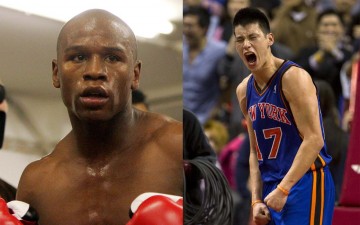
The emergence of Jeremy Lin as international superstar, and resulting tweets from Jason Whitlock and Floyd Mayweather, has prompted widespread debate about whether or not race matters in both the media representation and in understanding the arch of his career. Without a doubt, race matters when talking about Lin given his path to the NBA, prejudice experienced while on the court (see here for examples; see here broader discussion), and the larger context of anti-Asian racism. Lin is not evident of some post-racial fantasy, but instead a reminder of how race matters. It matters whether talking about sports, housing, education, foreign policy, economic inequality, media culture, and interpersonal relations.

Race matters when examining the media representations of Black athletes, whether were talking about the demonization of Michael Vick (the most despised athlete in America), Barry Bonds, or LeBron James; it matters in look at the stories of redemption afforded to Ben Roethlisberger and Josh Hamilton, or the lack of media attention directed at Kevin Love following his recent stomp. To deny the impact and significant of race with Lin is as absurd as deploying “the race denial card” in these contexts as well. To imagine Lin outside of the scope of race and racism, or to isolate race as something usual in this instance, especially given the ways that the NBA is associated with blackness (the subtext here feels as if the discussion is being reduced to anti-Asian prejudice from African Americans), represents an immense failure.

So race matters when thinking about Lin’s recruitment (or lack thereof) out of high school and his path to the NBA, as race matters when talking about employment discrimination.

Racism holds people back in every industry, from higher education to the business world. Researchers at the Discrimination Research Center, in their study “Names Make a Difference,” argue that racial discrimination represents a significant obstacle for employees. Having sent out 6,200 resumes with similar qualifications to temporary employment agencies, the authors found that those with names associated with the Latino and white communities received callbacks more frequently than those presumed to be African American or South Asian/Arab American (called back the least frequently).

Similarly, MIT professors Marianne Bertrand and Sendhil Mullainathan concluded that perspective applicants with “White sounding names” are 50 percent more likely to receive a callback after submitting a resume than were those with “Black sounding names.” They concluded that Whiteness was as much an asset as 8 years of work experience, demonstrating that race has a significant impact on one’s job future. In their study, “Are Emily and Greg More Employable than Lakisha and Jamal? A Field Experiment on Labor Market Discrimination,” the authors conclude, “While one may have expected that improved credentials may alleviate employers’ fear that African-American applicants are deficient in some unobservable skills, this is not the case in our data. Discrimination therefore appears to bite twice, making it harder not only for African-Americans to find a job but also to improve their employability” (“Employers’ Replies to Racial Names” 2003).

In a society where those with “Black sounding” and “Muslim sounding” names receive call backs from perspective employments with 50% less frequency, this an opportunity to talk about systemic racism.

Continue reading @ When It Comes to Sports, Race Still Matters – Entertainment & Culture – EBONY.

NewBlackMan: Whistling Dixie (the remix): The Southern Strategy in the Age of Color-Blind Racism

Whistling Dixie (the remix):

The Southern Strategy in the Age of Color-Blind Racism

by David J. Leonard | NewBlackMan

In recent weeks, with the GOP establishment coming to the aid of Mitt Romney and because of Newt Ginrich’s efforts to sell himself as an outsider, an increasingly visible narrative has emerged: as the anti-GOP establishment. Given Newt’s racial politics and his entire campaign strategy, it is hard to think of Newt as anything but the GOP establishment.

At the same time, there has been a growing sentiment about the hegemony of colorblind racism within the GOP. “Colorblind racism is the new normal in American conservative political thought,” writes Edward Wyckoff Williams. The “2012 Republican candidates are using egregious signals and dog whistles to incite racial divisiveness as an effective tool for political gain. But when confronted about the nature of their offensive rhetoric, the answer is either an innocuous denial or dismissive retort.” The codes or dog whistle politics are not new, nor is the denial. While the audacity of race denial may be on the rise, the clarity of the GOP’s race politics have been on full display. No secret decoder is necessary especially as we look at the larger history of race and the GOP.

Like so many of his fellow competitors, Newt’s racial demagoguery, his demonization of people of color, and his efforts to scapegoat have been a daily reality during the 2011-2012 GOP presidential primary. This is nothing new from Newt, who has made his career on the demonization of “welfare moms,” “illegals” and a “food stamp president.” In 2007, Newt took exception with bilingual education, announcing: “We should replace bilingual education with immersion in English so people learn the common language of the country and they learn the language of prosperity, not the language of living in a ghetto.”

This has continued during the current election cycle with his recycling of the Moynihan report and his policy initiatives focusing on teaching black kids a work ethic. The language, the policies, and the centrality of race illustrate the profound ways that Newt Gingrich is the GOP establishment. As the voice box for the racial ideologies and the torchbearer for the GOP’s southern strategy (demonizing people of color in hopes of galvanizing white voters to support a party that doesn’t represent their economic interests), Newt’s denied GOP credentials is almost laughable.

This is the party of Nixon, whose southern strategy sought to scapegoat African Americans. This is the same man, who talked about “Negro bastards” who “live like a bunch of dogs” on welfare rolls. This is the GOP that was led by Richard Nixon, who one said:

Bill Rogers has got — to his credit it’s a decent feeling — but somewhat sort of a blind spot on the black thing because he’s been in New York,” Nixon said. “He says well, ‘They are coming along, and that after all they are going to strengthen our country in the end because they are strong physically and some of them are smart.’ So forth and so on.

My own view is I think he’s right if you’re talking in terms of 500 years,” he said. “I think it’s wrong if you’re talking in terms of 50 years. What has to happen is they have be, frankly, inbred. And, you just, that’s the only thing that’s going to do it, Rose.

This is the party of Reagan, who described outrage from working Americans over the sight of a “strapping young buck using food stamps to buy T-bone steaks at the grocery store.” When not demonizing black men, he spoke about “welfare queens” in Chicago, “who drove a Cadillac and had ripped off $150,000 from the government using 80 aliases, 30 addresses, a dozen social security cards and four fictional dead husband.” This is the same Reagan, who started his presidential campaign in 1980 in Philadelphia, Mississippi with an “ode to state’s rights,” a theme that continued with his defense of segregationist Bob Jones University and his denunciation of the voting right act as “humiliating to the South.” As the patriarch of the party, it is no wonder that racist rhetoric and appeals are central to the 2012 campaign.

Continue reading @NewBlackMan: Whistling Dixie (the remix): The Southern Strategy in the Age of Color-Blind Racism.

Not Another T**** Column: Waking Up from the National Nightmare | The Starting Five

Not Another T**** Column: Waking Up from the National Nightmare

David J. Leonard

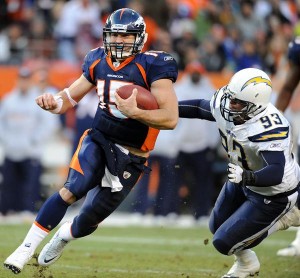
I am resisting the temptation to write a column about you know who. As with Charles Barkley, I am sick of hearing about him; I am sick of the celebration and the double standards; I am tired of “the national nightmare” and am ready to wake up to talk about something else within the sports world.

As both men are playing this weekend, I thought I would wish the best of luck to Joe Flacco and Alex Smith. Yes, Flacco was recently described as “mediocre” on Around the Horn and described as one of the “worst quarterbacks on a good team” by The Bleacher Report. Sure Alex Smith is routinely ridiculed, called a bust, and otherwise doubted. What’s not to like about Flacco and Smith

In 2011, Flacco saw a slight dip in his numbers, with a quarterback rating of 80.9 and a completion percentage of almost 58%. Statistically, Smith finished with a higher quarterback rating of 90.7, having completed 61% of his passes. Most importantly, Flacco led his team to a 12-4 record, with Smith taking the 49ers into the playoffs with an impressive 13-3. Of course, you can focus on their struggles and their uneven performances, but “they just win”; all they do is win.” Isn’t that the only thing that matters? I think I heard that sometime before.

As we are in the midst of the NFL playoffs, it is important to remember those great performances. Remember Timmy Smith who ran for 204 yards, leading the Redskins to victory in Super Bowl XXII. So what if he last one more year in the league, and that some call him the one-hit wonder of the NFL, does a great playoff game make a career? I mean Larry Brown and David Tyree also had amazing performances during Super Bowl victories and didn’t they get elevated to national heroes, on the cover of every sports magazine, and the key endorsement for those running for president?

I also want to pay homage to those quarterbacks, who despite having OK or not so good careers were given little opportunity to even be a backup in the NFL. Remember Akili Smith, Dennis Dixon (third string in Pittsburgh), and JaMarcus Russell. Where are they now? You would think a team like the Colts or the Broncos could have used one of them as a backup.

With the King holiday on Monday, I have found myself thinking about politics off-the-field and the history of resistance in sports.

Toni Smith, a graduate of Manhatanville College, used her platform as a collegiate basketball player, to protest the injustices and inequalities of society. Prior to each game, as the National Anthem played, she turned away from the flag, bowing her head toward the floor. She described her motivation as follows: “For some time now, the inequalities that are embedded into the American system have bothered me. As they are becoming progressively worse and it is clear that the government’s priorities are not on bettering the quality of life for all of its people, but rather on expanding its own power, I cannot, in good conscience, salute the flag.” Not surprisingly, her courage and her desire to express her political views were met with condemnation. Told “to leave our country, called “disgraceful,” and other demonized, Smith remains a powerful example of a person who challenged the status quo, who refused to cow-tow to the dominant expectations of her as an athlete, as a women of color, and student. She stood tall and said with her actions that progressive politics have a place in sports.

Continue reading @ Not Another T**** Column: Waking Up from the National Nightmare | The Starting Five.