Playing Field to Prison Pipeline?

Hank Willis Thomas – “Strange Fruit”

Playing Field to Prison Pipeline?
by David J. Leonard |

In our contemporary moment, sport does much of the ideological work of mass incarceration.  Even more than other forms of popular culture, which peddle in racial stereotypes, celebrate law and order, and turn police into righteous crime fighters, sports has increasingly become a space that is central to maintaining America’s prison nation.  Because of the visibility and cultural resonance of sports, because of the number of African Americans involved in professional sports, and because of the centrality of “American Dream” narratives, sports serve as the public relations wing of mass incarceration.

None of this should be surprising given the racist nature of America’s criminal justice system, and the centrality of race within contemporary discourses.  Public discourses around sports and criminal justice center race.

Writing about basketball, Todd Boyd argues that the NBA “remains one of the few places in American society where there is a consistent racial discourse,” where race, whether directly or indirectly, is the subject of conversation at all times (Boyd 2000, p. 60).  This is equally resonant with football and therefore it is not surprising that racialized conversations of sports and the criminal justice inform one another.

Of course this is nothing new.  According to Elizabeth Alexander, the history of American racism has always been defined by practices where black bodies are put on display “for public consumption,” whether in the form of “public rapes, beatings, and lynchings” or in “the gladiatorial arenas of basketball and boxing.”

Jonathan Markowitz highlights ways in which the sports media contributes to the widespread criminalization of the black body: “The bodies of African American athletes from a variety of sports have been at the center of a number of mass media spectacles in recent years, most notably involving Mike Tyson and O.J. Simpson, but NBA players have been particularly likely to occupy center stage in American racial discourse.”

Whether through the media spectacles surrounding Tyson, O.J. Kobe Bryant, Aaron Hernandez and countless other cases, or the adoration and fear imbued in physical bodies (that which is desired on the field is also that which rationalizes mass incarceration, stop and frisk, and law and order), we see the convergence of the front and back pages.

Not coincidently, the increased focus on law-breaking athletes mirrors the integration of sports (and the rise of America’s prison nation).  That is, as collegiate and professional sports became more integrated, sports media and fans began to show an increasing concern about “criminal athletes.”  This is especially the case in a post-1980s context, whereupon President Reagan seized upon the death of Len Bias to expand the racialized war on drugs.

Since then, and with proliferation of ESPN industrial complex, there has been an immense focus on crime and athletes, giving credence to the widely circulated ideas about the pathology of blackness.   The shared language of “discipline” and the administering of punishment for those who violate the rules of society/sports further illustrates the convergence of the sports and the (in)justice system.

If sports are central to the prison industrial complex, ESPN represents the CEO of its public relations firm. Given the longstanding role of the Disney Corporation in circulating dehumanizing images, it should be of little surprise that ESPN is doing the ideological grunt work of contemporary racism and mass incarceration.

Whether publishing articles about drugs and Oregon football, or sensationalizing each and every traffic stop involving a (black) athlete (never mind issues of pretext stops and racial profiling) or becoming the mouth piece for bringing law and order to a post-Palace Brawl NBA, ESPN has been a willing partner in the prison industrial complex.

In recent weeks, ESPN has turned this job over to Jason Whitlock. This is the same man who once refereed to Serena Williams as an “unsightly layer of thick, muscled blubber, a byproduct of her unwillingness to commit to a training regimen and diet that would have her at the top of her game year-round.”  Fear and loathing of black youth jumps off his pages; the same sort of stereotypes and narratives that rationalize stop and frisk, and shoot first mentality that plagues this nation.

The sustained nature of Whitlock’s discussion of personal/communal/cultural failures and mass incarceration (see Whitlock Gone Wild), raises the stakes here.  For example, in a recent column on Thanksgiving (never mind the history of genocide and white supremacy), where Whitlock denounced Professor Michael Eric Dyson, he once again peddled his simplistic vision of the world: the personal and cultural failures of African Americans, facilitated by intellectual and cultural enablers, has led to mass incarceration.

And while Mr. Whitlock wants to locate mass incarceration at the doorstep of hip-hop culture, at the feet of Jay Z, Allen Iverson, and Michael Eric Dyson, he is asking us to ignore history.  He wants to erase the linkages between mass incarceration and the history of slavery, between white supremacy, “Black Social Death,” and America’s prison system.  In turning the discussion into choices, values (respectability), culture, single-parented homes, and bad role models, he denies the links between deindustrialization and prison expansion, between the militarization of America’s police forces and the number of African American youth locked up.

As I read column after column that blames hip-hop or the N-Word for mass incarceration, I cannot help but wonder if Richard’s Nixon’s launching of the war on drugs, if the Rockefeller laws, the federal sentencing guidelines for crack, the disenfranchisement laws that saturate our nation, the centrality of racial appeals for law and order, President Bill Clinton’s massive expansion of America’s prison system, and the he investment in police and not schools, was all because of hip-hop.  If you live in Jason Whitlock’s world, and that of the vast number of celebratory commentators, that seems to be the conclusion.

Post Script (1/26/14)

In the aftermath of the sustained demonization of Richard Sherman I am struck by the continued role that sports as an instrument of mass incarceration.  The response to Sherman, the panics, and even the defense (“he is one of the good ones”) all points to the engrained nature of the criminalized/commodified black body within the dominant sporting imagination.

In 2011, C. Richard King and myself edited book – Criminalized and Commodified: New Racism and African Americans in Contemporary Sports –  on the anti-black racism that is central to American sports.  While including essays on different case studies, the cultural and media discourses that have been full display this week are prominent within this work.  The original title of this book  was “Thugs and Dollar Signs” in that black athletes are continuously subjected to the logics of racism and late twenty-first century capitalism – they are legible as criminals/”thugs” and dollar signs/source of profits.  And this is not a binary but rather indication that the criminalized black body is a source of profit – financial profit, ideological profit, political profit and indicative of the profits of racism. As evident in this instance (and before) Sherman has been imagined to be a “thug” all while the NFL, ESPN, and others found ways to continue to profit not only off his body but the “thug discourse.”  This represents a window into anti-black racism.  The rendering of Sherman as a “thug” and the profiting of his body and anti-black racism is ubiquitous.  The consequences of these ideological and material systems are daily.  It’s bigger than a play, it’s bigger than Sherman and it’s bigger than the game.

Akinyele Omowale Umoja and “We Will Shoot Back: Armed Resistance in the Mississippi Freedom Movement ” – A Review

During the spring semester, I am teaching a graduate course on social movements.  Each week, I will post a review of that week’s book (I will also occasionally include a review of a recent documentary that connects to that week’s book)

****

Reading Akinyele Omowale Umoja’s brilliant We Will Shoot Back: Armed Resistance in the Mississippi Freedom Movement (NYU Press, 2013), in the midst of the national celebration of Martin Luther King Jr.’s birthday, was striking to say the least.  Whereas the national narrative, from political speeches to ESPN commercials, imagines the civil right movement beginning and ending with King (and a sanitized and flattened history at that), while seemingly erasing the specter of white supremacist terrorist violence, Dr. Umoja chronicles the tireless organizing and agitation. He focuses on armed resistance, people who in the face of entrenched violence challenged white supremacist terror in Mississippi and beyond.

Dr. Umoja works from an expansive definition of armed resistance, which includes “individual and collective use of force for protection, protest, or other goals of insurgent political action and in defense of human rights… including armed self-defense, retaliatory violence, spontaneous rebellion, guerrilla warfare, armed vigilance/ enforcement and armed struggle” (7).  The willingness or the threat to respond to violence with violence, to protect life, liberty and property “by any means necessary,” was central to the fight for freedom.

Pushing back at linear narratives and those that deny the importance of armed resistance, Dr. Omoja speaks to the dialectics between “unviolent” (Payne) tactics and those more militant strategies.  The gun, like a mass meeting, the willingness to provide secured safe havens for Freedom Riders, like nonviolent training, were all crucial to building community, establishing trust, creating a sense of shared identity, and collectively generating “freedom dreams”; organizing was crucial irrespective of the tactic.  We Will Shoot Back highlights the centrality of organizing and collectivity, pushing back at the individual/non-violent narrative to tell a multi-layered and crucial part of this history.

We Will Shoot Back documents that the history of armed resistance is a narrative of a complex system of roles, organizations, identity formation and action.  Dr. Umoja notes:

Though not as visible as Evers, the Deacons, or the NAACP, the works of the enforcer squads, both that of Shields and that of the NAACP women was essential to the Movement.  The enforcer groups ensured accountability and respect for the decisions of the Natchez Movement.  If the boycott was almost 100 percent effective, recognition has to be given to the work of the enforcer groups.  While this has escaped most accounts of the Mississippi Movement, the participants, in the Movement, particularly those active in Southwest Mississippi, recognize the significance of Rudy Shields and the enforcer groups he organized” (139).

This organization and the importance of armed resistance are documented in a myriad of places, taking a multitude of forms.  The book chronicles the violence endured by the Hazelwood family, who after housing Freedom Riders experienced widespread economic reprisals and terrorist violence.  Refusing to back-down in the face of violence, the ability of Luella Hazelwood or Willie Hazelwood to push forward with their work as activists and organizers cannot be understood outside of history of armed resistance.  Luella spoke about how she did not even fear an arrest by the Belzoni police:

They never would hit nobody, when they pick them up like that. ‘Cause they had a war going on… ‘Cause these folks [Black people] was ready to fight some.  They wasn’t like martin Luther King. Get him on this side and turn the other.  Naw, we didn’t turn no jaws. No Lord.

We Will Shoot Back, thus, documents this history and others, including that of “Da Spirit” which made sure that Blacks were adhering to the boycott in Natchez. “Punishment by ‘Da Spirit’ ranged from public spankings to damage to home or vehicle to seizure of property” (169). It is a story of refusal, of challenging terror and fear, of accountability and justice.

While documenting the level of terror and violence that was part and parcel to Jim Crow and American Apartheid, and the level of violence employed in the name of white supremacy (compare historic understanding of shootings at Kent State to that of shootings at Jackson State College where “police fired hundreds of rounds into Alexander Hall, a form dormitory, killing two and wounding 12 others), We Will Shoot Back “documents the role that armed resistance played in overcoming fear and intimidation and engendering Black political, economic and social liberation” (1-2).

In this regard, one cannot understand the history of the Black Freedom Struggle outside of the simultaneous use of boycotts, other forms of direct action, self-defense, and organizing.  Dr. Umoja makes clear that to understand King’s “Beloved Community” or Lawson’s tools of direct action requires looking at the history of armed resistance throughout the movement.

Armed resistance and nonviolence were not in opposition but worked together.  Dr. Umoja highlights how these tactics and worldviews worked hand-in-hand?  That one cannot understand Freedom Rides outside of a history of armed protection; that we cannot understand voter registration movements outside of the role of the gun in conquering fear in the face of white supremacist terror. “Armed resistance must be included with litigation, mass organizing, nonviolence demonstrations and protests, as well as other forms of insurgent challenge to force federal intervention and a change in white attitudes and behavior toward Black humanity,” writes Dr. Umoja. “Moreover armed resistance contributed to giving activities and communities the confidence to challenge White supremacist terror even when the federal government did not have the capacity or will to protect them.  Without due attention to the role of armed resistance in Mississippi, either the agency of Blacks in the Civil Rights and Black Power Movements is denied or an inaccurate account of the Struggle is offered” (p. 258-259).

Reading the book alongside in the context of the King Holiday (and the 50th anniversary of the March on Washington) added layers to the book.  Likewise, thinking about the book in relationship to the ongoing debate about guns added another layer.  While some have sought to seize upon this history, and the broader story of armed resistance against white supremacy to justify unfettered access to guns, I am struck by the disconnect between the actual history.  We Will Shoot Back speaks to armed resistance to antiblack racism, to state violence, and to systems of white supremacy.  Within these mainstream discourses, the entrenched antiblack racism, the systemic state violence, the specter of police brutality and #every28hours, is nowhere to be found rendering these historic invocations problematic at best.  Akinyele Omowale Umoja’s We Will Shoot Back gives us lots to think about with the past but the present and future as well.

White and Wealthy = Free Pass Affluenza – Hip-Hop and Politics

Please go to Hip Hop and Politics to read the entire piece . . . this is just an excerpt:

******

White and Wealthy = Free Pass (Affluenza)

David Leonard & Jlove Calderon

While the outrage over the justice system’s decision to pat little Ethan on the head, sending him to bed with no dessert is warranted, it would be a mistake to see the judge’s decision as exceptional. Each and every day, institutions and individuals make decisions with special concern for not only affluenza, but whititis the consequences of white entitlement and masculenza the ailment of male privilege as well. The lack of accountability, compared to the harsh and unequal injustice felt by youth of color, is nothing new.

One such example is the case of Andrew Klepper, a 16-year old white male from Bethesda Maryland, who in 2002 plead guilty to three felonies, including charges that he sodomized a woman with a baseball bat, held her at knifepoint and stole $2,000 dollars from her. His sentence: probation and treatment at an out-of-state facility by 2011, after multiple arrests, he was finally sent to prison for 7 years – we guess three strikes of affluenza means you are out. His parents’ ability to pay for the “treatment” and his “potential” surely led to this sentence. We must put this latest sentencing of Ethan Couch in a historical context to really understand the depth of the implications.In a society where middle-class white youth pop Adderall with great frequency, reporting this illegal usage without any fear of punishment, it is clear that affluenza is systemic.

In a society where Bill Maher and others white celebrities take to the airwaves to tout their marijuana use, where college students at historically white institutions break laws with greater frequency than attending class, it’s a mistake to limit the conversation to Mr. Couch, Dr. Miller, or Judge Boyd.

Quoted in USA Today, Daniel Filler, a law professor at Drexel University who specializes in juvenile law broke it down; “The real truth is that our criminal justice system is suffering from ‘affluenza’ because affluent people can afford better attorneys and better get better outcomes,” Filler said. Numbers don’t lie how pervasive race and class privilege operate within the criminal justice system. As noted by Vijay Prashad, in Keeping up with the Dow Joneses, almost sixty percent of juveniles detained in correction facilities are black; an additional 21 percent are Latino. In total, half of the 700,000 youth in juvenile prison are there as a result of a first offense, usually a drug or property crime. Mr. Couch killed four people, stole alcohol from WalMart, drove drunk, and injured two more people, and was neither sent to a juvenile detention facility, much less tried as an adult.

via White and Wealthy = Free Pass Affluenza – Hip-Hop and Politics.

Illegible[1] Black Death: Denied Media, Mourning, and Mobilization – The Feminist Wire | The Feminist Wire

Please go to Feminist Wire to read entire piece (this is the conclusion of piece)

****

For these groups, race and racism is peripheral at best, but more likely a superfluous issue. For these groups, Black innocence and therefore Black Death remains out-of-focus, if not unworthy of attention. To all too many, Black innocence is illegible and therefore Black Death and humanity are invisible and impossible, thwarting media coverage, national mourning, and widespread mobilization.

The denied innocence/criminalization of Black bodies is commonplace and helps us understand the silence from gun rights activists groups. “African-Americans are not allowed such protections by the White Gaze. They are viewed as guilty until proven innocent, a criminal Other who is a priori categorized as ‘suspicious’ and ‘dangerous,’ writes Chauncey Vega. “While formal racism and Jim and Jane Crow were shattered and defeated by the Black Freedom Struggle, this ugly cloud continues to hover over the United States, some 400 years after the first Black slaves were brought to the country.” The hundreds dead in Chicago and the killing of Trayvon Martin lead to stories that seemingly turn victims into criminals; even those not criminalized are imagined as complicit and culpable for their own death. Whether citing past arrests, suspensions, drug use, clothing choices, or attitude, whether arguing that they should have known better than to go to strangers’ houses late at night or they should guard against prejudiced whites, the presumption of Black guilt shapes national conversations about gun violence. This group cannot be saved or helped. Such narratives are commonplace within the media, from the Right, from 2nd Amendment “birthers,” from defense legal teams, and countless others. Yet, the failure of liberals and gun-right advocates to spotlight these instances, to focus on race

As Eric Mann notes, “[d]eep in the white American psyche” rests the controlling belief and script that sees “the impossibility of Black innocence” (Mann 2013). This has been all too clear in the last 6 months (and beyond). From the “exoneration” of George Zimmerman and the criminalization of Trayvon Martin to the 20-year sentence of Marissa Alexander, Black innocence is both imagined and realized as a contradiction in terms. From the efforts to blame (and ignore) gun violence on single-mothers, welfare, and criminality in Chicago to the erasure of Black Death in Detroit, Baltimore, and New Orleans, Black innocence remains an unfulfilled promise in a post-civil rights, post-racial America. From Jonathan Ferrell to Renisha McBride, from Alex Saunders to Jonylah Watkins, lost lives are seen as not worthy of media, mourning, and mobilization from those purportedly concerned with gun violence. As noted by Ruthie Gilmore, “Racism is the state-sanctioned or extralegal production & exploitation of group-differentiated vulnerability to premature death.” The failure of gun-control groups to address racism, its consequences in Black Death, further contributes to “vulnerability to premature death.”

Post-script

The racism deniers are out in full force. So let me say this, it’s America, race matters. It matters given stereotypes of who is dangerous; it matters because studies have shown that the mere sight of black face elicits fear among whites (measurable in brain); it matters because Dearbon Heights is 84% white and has historically been a Sundown Town; it matters because she, like Trayvon, was drug tested following her death (which cannot be read outside the larger context of anti-Black racism. In one study, when asked to imagine a drug user, 95% of whites picture a black person). It matters because as noted by dream hampton, we are witnessing yet again the “‘criminalizing Black Corpses’.” Race matters given days it took for an arrest and the nonexistent media coverage; it matters given the inequality in the legal application of the stand your ground law, it matters because of history of racism as it relates to guns; it matters because of history, from Emmett till to Trayvon, from #every28 hours to Johnathan Ferrell; it matters because of fear and terror; and it matters because white America can deny race matters over and over again even when faced with rightful anger, justifiable protest, and tears of pain, loss, and fear.

To read the entire piece go here: Illegible[1] Black Death: Denied Media, Mourning, and Mobilization – The Feminist Wire | The Feminist Wire.

Hurricane Obvious or Not Incognito: The Destructive Pathology of White Male Pathologies | NewBlackMan (in Exile)

Hurricane Obvious or Not Incognito: The Destructive Pathology of White Male Pathologies | NewBlackMan (in Exile)

Hurricane Obvious or Not Incognito:

The Destructive Pathology of White Male Pathologies

by David J. Leonard | NewBlackMan (in Exile)

Just this week, Jason Whitlock returned to his familiar playbook: recycling culture of poverty narratives and those demonizing single-parented black homes. Responding to the sight of the Cowboys’ Dez Bryant passionately demanding that his team do better, Whitlock lamented “Dez Bryant\’s inability to control his emotions” which to him is “a family dysfunction issue.” Not satisfied, Whitlock continued this line of discussion:

But the reality is, Dez Bryant is swirling in a cultural tsunami every bit as destructive and powerful as climate change.

Let\’s call it \”Hurricane Illegitimacy.\” Its victims are primarily black and brown, but Hurricane Illegitimacy is a not black or brown problem. It\’s an American problem that is denied and exacerbated on the left and mischaracterized and exploited on the right.

Like climate change, Hurricane Illegitimacy is powered by man-made factors:

1. A lack of proper restraints on welfare entitlement programs for single mothers and fathers.

2. America\’s bogus war on poor people who use and sell drugs.

3. Turning incarceration into a for-profit business model.

4. A refusal to recognize that investment in the education of our poorest and weakest citizens could strengthen our entire society.

5. Our collective lack of courage and resolve to combat popular-culture forces that celebrate, normalize and profit from baby-mama and criminal culture.

Because of this melting-pot-country\’s history, we\’ve been conditioned to identify the race of a person misbehaving and examine the racial implications. We would be far better served looking at the family history.

Although there is much that can be said here, from its historic myopia (really, the “melting pot”? the 1980s wants your narrative back) to its misguided assault on social welfare and single-parented homes, I thought of a better way to respond to his new age Moynihan Sports Report.

I took the liberty of writing my own mini column in the tradition of Jason Whitlock. Just as Whitlock is obsessed with rap music, \”single mothers\” and \”hurricane illegitimacy,” I am inspired to write about \”two-parented suburban homes,\” white masculine entitlement, and a culture of violence/hazing with respect to Richie Incognito, whose rap sheet extends longer than his NFL career. Accusations of bullying, racism, hazing, and creating a hostile work environment are just the tip of the iceberg – hurricane obvious has been in development for many years.

The title of the piece captures a culture that has nurtured, sanctioned, and created Richie Incognito: Hurricane Obvious or Not Incognito: the destructive pathology of white male pathologies.

Like climate change, wealth inequality, and war, Richie Incognito is the result man-made factors. Hurricane Illegitimacy or Hurricane Obvious has produced America’s newest bully. We must talk about the root issues and the hurricane that produced him:

1. A lack of proper restraint on entitled white youth, whose sense of aggrievement and victimhood contributes to a societal tolerance. Where is the accountability for white youth who violate or laws and moral standards?

2. America\’s culture of tolerance for white males who violate rules and laws without consequences. Taking away milk and cookies or access to car and video games for 15 minutes is clearly not sufficient.

3. Turning football and sporting cultures into big business, which has fostered a jock culture defined by widespread pathologies, destructive values, and dangerous behavior. This is especially threatening when paired with the entitlement of children from suburban two-parented homes. How else can we explain multiple chances from college squads and NFL teams with respect to Richie Incognito?

4. Societal silence on the failures of two-parented homes to properly nurture kids who are loving, caring, and thoughtful boys. What lessons did his father teach him?

5. A refusal to recognize that destructive consequence of a masculinity defined by violence, physicality, abuse, and domination. Suburbia, we have a problem.

6. Our collective lack of courage and resolve to combat popular-culture forces that celebrate, normalize and profit from white masculinity. Rambo, and The Terminator – violent; Rush Limbaugh and Sean Hannity: where it’s OK to be a bully.

7. The failures of white suburbia to produce males who are accountable. Richie Incognito is yet another example of the failures of suburban American to produce adaptable kids.

Continue reading at Hurricane Obvious or Not Incognito: The Destructive Pathology of White Male Pathologies | NewBlackMan (in Exile).

More at Stake than Football in Grambling State Boycott | NewBlackMan (in Exile)

More at Stake than Football in Grambling State Boycott | NewBlackMan (in Exile)

More at Stake than Football in Grambling State Boycottt

by David J. Leonard | NewBlackMan (in Exile)

This week student-athletes at Grambling State University said enough is enough: refusing to practice and play their scheduled game against Jackson State University, during what was JSU’s Homecoming Weekend. Grambling Sate’s unified group stood up to denounce the lack of voice afforded them, the working conditions under which they practice, and the dangers associated with playing collegiate football at Grambling State University.

Yet, two narratives have emerged in response to the player boycott: that of entitled athletes and the dysfunction of Grambling State University. Deploying longstanding racial stereotypes, anchored by dominant white racial framing, and a narrative that inherently pathologizes and demonizes black bodies, the media discourse has conveniently erased the root issues. Look no further than the comments section, which consistently reflects the “shut up and play” reframe, noting that the student-athletes should be content with “whatever” since without football they would not even be on campus.

At one level, the dismissal of the players’ concerns and their boycott reflects a lack of understanding of collegiate sports. They are protesting their labor conditions, which include: having to purchase Gatorade themselves; being forced to hydrate from a hose under the stadium; 14 & 17 hour bus rides—making being a student and an athlete difficult, if not possible; and team facilities and player equipment covered in mold and mildew. According to a letter from the players, “The uniforms are poorly cleaned and contribute to the multiple cases (of) staph infection. Several players have been infected with staph multiple times.”

Despite media coverage that has for the most part glossed over the specifics, and a surface narrative that instead plays upon that of spoiled (black) student-athletes, the protest is about abysmal work conditions; it is about health and safety. Coverage that frames the story around entitled (black) student-athletes, who don’t deserve to be on a college campus except for football, contributes to a lack of national concern that ignores the broader issues at work.

On another level, the media discourse has focused on “in-fighting” and the “failures” of the administration. Seemingly reducing the issue to “black-on-black” conflict and the incompetence of HBCUs, the national media has erased the systemic contexts in which HBCUs function. Rather the conflict is symptomatic of the divestment from and privatization of education—it’s bigger than Grambling State University.

The state of Grambling football is a window into the larger neglect of higher education in Louisiana as well as the precarious situation facing many HBCUs. The situation at Grambling has everything to do with the decisions of Governor Bobby Jindal and a GOP-led state legislature.

Continue reading at More at Stake than Football in Grambling State Boycott | NewBlackMan (in Exile).

theSWAGspot | Dear Marissa,

theSWAGspot | Dear Marissa,

Dear Marissa,

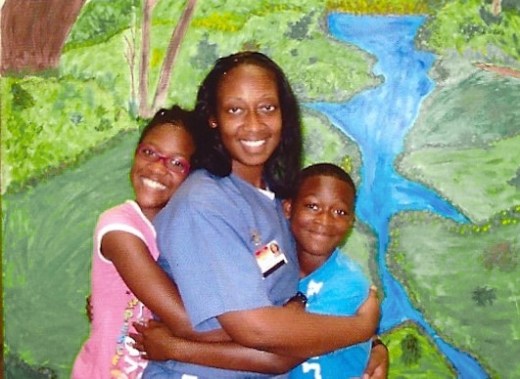
While we have never met, you have impacted me in ways you will never know. I think about you daily; a poster calling for your pardon hangs in my office. I think about you and the horror that you have endured. While the system has tried to make you disappear, you have not been forgotten. I often find myself thinking about how we as a society have failed you. While the injustices that have led you into a Florida prison have prompted national outrage, the entire nation should be outraged. Too many have failed to see you as their mother, as their sister, as their daughter, and their friend. We all should be demanding justice until your freedom is secured. We have failed to use our voices to shine a spotlight on the travesty of injustice; we have failed to walk from state house to courthouse, standing and sitting with you.

But our failure did not begin the day Florida decided to prosecute you for standing your ground; we did not fall short in the aftermath of a sham of a trial and the horror of a 20-year sentence. We, and by we here I am specifically talking about men, failed you long before you said enough to abuse. We have failed to create a culture that repels violence against women, which shuns and denounces every instance of domestic violence. We failed you in 2009 when your husband was arrested for abuse. The system has failed you over again. And we have failed in not holding that system accountable, in demanding a system that actual works to create a environment. In 2010, your husband said, “I got five baby mamas and I put my hand on every last one of them except one. The way I was with women, they was like they had to walk on eggshells around me. You know they never knew what I was thinking or what I might do. Hit them, push them.” Reading this hurts me because it is further evidence of our failure. We rear men who think this is ok, who are empowered to abuse. Where were we then? Where was the criminal justice system that is so concerned about protection and safety? We have failed you and for that I am sorry.

We have not just failed you, and the millions of women whose pain and voices are suppressed, but your kids as well. I think often about your sons and the impact of their witnessing violence. I think about the pain of seeing their Mom locked up; I think about your daughter and the years lost with her. We have failed them. We must do better for you; we must do better for them. Please know that many are working hard to hold justice accountable. Many are thinking about you and your family; many are working hard to stand with you because you should not have to sit alone in a prison any longer; many are working to secure justice because you should not have to stand your ground alone against violence.

Each day as I look at your picture, I think about what am doing in your march toward justice and freedom; what am I doing in the fight against abuse and violence? I think about you and your children, and how we cannot fail any longer. There is too much pain and it’s time to replace it with love. Looking forward to day that you can feel our collective love evident in your release and actual justice.

David

via theSWAGspot | Dear Marissa,.