NewBlackMan: No Heir Jordan: The NBA Lockout and the End of an Era

NewBlackMan: No Heir Jordan: The NBA Lockout and the End of an Era

No Heir Jordan: The NBA Lockout and the End of an Era

by David Leonard | NewBlackMan

The NBA lockout is over. With the players and the owners having reached an agreement, basketball will return beginning Christmas Day. Ushering in substantial structural changes to the league, which will likely restrict player movement and constrain middle-class player salaries, the NBA lockout will also go down in history as an end to the search for the next Michael Jordan. Since MJ’s retirement, the league, its marketing partners, and fans alike have pinned for someone to fill his AIR Jordans. Each anointed as the next Michael Jordan, Penny Hardaway, Grant Hill, Vince Carter and Harold Miner (“Baby Jordan”) all failed to deliver because of injuries, limited production, or a combination of both. Each in their own right was imagined as a player who could fill the shoes, whose talents, charisma, and athleticism would propel the NBA during its post-Jordan era. None of them met these expectations resulting in an NBA in continued search for a twenty-first century basketball God.

Kobe Bryant and LeBron James each took the mantle of the next Jordan to places none of the other NMJ (next Michael Jordan) had reached. Kobe, because of his talents, the ways in which he patterned his game and demeanor after Jordan, his quest for rings, and most importantly his competitiveness, all elevated the comparisons, leading many to argue that he was the NMJ. Yet because of Eagle County, Colorado, because of his conflicts with Shaquille O’Neal and the ultimate demise of the Lakers Dynasty, and because he is said to have demanded to get out of Los Angeles, Kobe has fallen short in other’s quest to find the next Michael Jordan. Like Kobe, LeBron James has delivered on the court, dazzling fans with his passing skills, his athleticism, and his ability to make his teammates better. Worse than struggling to secure a title, LeBron James fall short in the MJ sweepstakes when he decided to take his talents to South Beach.

While possessing the skills, charisma, and baller potential, the two most promising players to lead the NBA, to build upon the global popularity established by Jordan, have fallen short not because of their basketball talents but their inability (or our inability) to fill mythical shoes. The quest to find the Next Michael Jordan, thus, has nothing to do with basketball but rather is part of an effort to find a player who reinforces popular narratives about the American Dream, the protestant work ethnic, and post-racialness.

Jordan, only seen in public in his basketball uniform or a $3,000-dollar suit, Jordan embodied the politics of racial respectability on and off the court. He “allow[ed] us to believe what we wish to believe: that in this country, have-nots can still become haves; that the American dream is still working” (Ken Naughton quoted in Andrews 2000, p. 175).

continue reading @ NewBlackMan: No Heir Jordan: The NBA Lockout and the End of an Era.
My piece with James Braxton Peterson “Exceptional Brutality: Police Violence on Campus”

Exceptional Brutality: Police Violence on Campus

by David J. Leonard and James Braxton Peterson | NewBlackMan

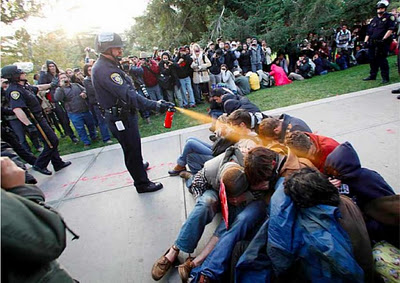
Like many, we have been outraged by recent episodes of police violence at UC Berkeley and UC Davis in recent weeks. The sight of police officers brutalizing men and women with batons and pepper spray is antithetical to justice. Yet, we have also become increasingly uncomfortable with the public discourse, one that has given an inordinate amount of attention to these instances, treating them as unique and exceptional rather than indicative of systemic state-sanctioned violence. The overall tone of shock works from an idea that police violence should not happen on American college campuses. But in the absence of a similar level of outrage resulting from police violence in urban communities throughout the United States we are left wondering about the dangers in this exceptional discourse. For example, in her otherwise powerful call for leadership, Cathy Davidson asks, “How could this be happening at Davis—and at other campuses too? Why are students who are peaceably protesting being treated like criminals?” Rather than asking how could this happen at college campuses, shouldn’t we be asking how could this happen anywhere? How can any person be subjected to repression, violence, and instruments of dehumanization? A discourse that imagines police violence, whether bully-club justice or pepper spray, as proper when dealing with criminals rather than students gives us pause because of its inability to advance justice for all.

Similarly Bob Ostertag, in “Militarization Of Campus Police,” furthers the denunciation of the violence at UC Davis through the systematic juxtaposition of students from real-criminals.

And regulations prohibit the use of pepper spray on inmates in all circumstances other than the immediate threat of violence. If a prisoner is seated, by definition the use of pepper spray is prohibited. Any prison guard who used pepper spray on a seated prisoner would face immediate disciplinary review for the use of excessive force. Even in the case of a prison riot in which inmates use extreme violence, once a prisoner sits down he or she is not considered to be an imminent threat. And if prison guards go into a situation where the use of pepper spray is considered likely, they are required to have medical personnel nearby to treat the victims of the chemical agent.

Apparently, in the state of California felons incarcerated for violent crimes have rights that students at public universities do not.

Beyond the establishment of a binary that situates students in an oppositional relationship to felons, the logic here leads one to conclude that students are subjected to more state violence than those subjected to incarceration within the Prison Industrial Complex. Worse yet, if anyone should be subjected to pepper stray, it should be felons who within the national imagination are both undesirable and dangerous, unworthy and suspect. In yet another layer of news media irony, these recent displays of brutal and inhumane police force reaffirm the reluctance of black, brown, and poor folk to enter into the Occupy movement in the first place. The specter of police brutality haunts poor, black, and brown communities. Students’ experiences – with this commonly experienced interface between citizens and those charged with protecting citizens – garner lead-story status while daily victims struggle to find any modicum of public support, or media coverage, much less – justice.

The sentiment of exceptionalism is not limited to the public reaction to police violence at UC Davis. It was equally evident in the wake of police brutally attacking members of Occupy Berkeley as part of their efforts to disperse the group and remove tents. Prompting widespread condemnation from the ACLU and the National Lawyers Guild, from various national commentators including Stephen Colbert, the police violence against Berkeley students elicited a disproportionate level of attention. In our estimation, the attention and the rhetorical tone reflects the presumed exceptionalism of these instances and the presumed innocence and humanity reserved for students.

Continue reading @ NewBlackMan: Exceptional Brutality: Police Violence on Campus.

Emancipate the NBA: Struggling for Justice in the NBA (New piece from @NewBlackMan)

Emancipate the NBA: Struggling for Justice in the NBA
by David J. Leonard | NewBlackMan


I have been trying to write this column for several days.  I have thought and thought, and spent several hours writing, resulting in nothing.  I am just too angry.  My anger about the NBA LOCKOUT has nothing to do with the players.  I am actually proud of their courage and their refusal to kowtow in the face of pressure to accept an unfair proposal.  I am happy they told David Stern to file his ultimatum under “U” for unacceptable.  In fact, when I heard the news on Monday that the players indeed rejected the proposal, I found myself giving a little fist pump.  The prospect of a lost NBA season is disheartening at one level, yet I am encouraged by their refusal to accept an unjust economic arrangement.

Despite a public narrative that continually focuses on money as the only issue of contention, the LOCKOUT isn’t simply about how to split NBA pie.  It isn’t about greedy, out-of-touch players that already make millions for playing a game (this idea is so disrespectful to not only their talents but their hard work and dedication).

Players have already given up billions of dollars when they apparently agreed to a 50/50 split (or thereabouts).   Yet that wasn’t enough for the owners.  Their proposal would dramatically restrict player movement, ostensibly ending much of free agency.  The LOCKOUT in many ways is an effort to roll back free agency, to overturn the legacies of Curt Flood and to create a system where owners don’t have to compete for the services of all players (Ric Bucher made this point eloquently).

The proposed structural changes would dramatically alter the landscape of the NBA, severely limiting the options and free agency potential of NBA players.  In 2010-2011, where the players received 57% of basketball related income, the salary cap was $58.044 million; that year teams paid a tax at $70.307 million.  If the owners have their way, these numbers would fall to $50,915,789 for the cap and $61,672,807 for the luxury tax.  So what does this mean?  It means, that only 10 teams would be under the salary cap (these calculations include potential rookie salaries).  It means that 14 teams would be paying a luxury tax, which would be higher in the new system.  It means that the many teams that have empty roster spots would have little or no money to spend on free agents.  Faced with a luxury tax and only able to use a reduced exception that allows teams to exceed the salary cap, the new system is an assault on free agency and “free-market capitalism.”  It allows teams to ostensibly eliminate player leverage in getting the most possible money.

Imagine if this system existed in other industries.  Imagine if every company in your respective field was restricted in how much money they could spend on salaries.  Imagine if these companies were taxed if they spent over a certain threshold.  How would it impact your ability to garner employment?  How would it impact your ability to move from one company to the next?  How would it impact your ability to increase your salary because two competitors were forced to compete for your services?  What the owners and David Stern are trying to do, through the reduction of the BRI, through the changes in the mid-level of exception, and the tax structure is to limit the power and choice of the players.  It will invariably depress wages, bolster profits for owners, kill the NBA’s middle-class, and otherwise limit player power.

The owners’ proposal will likely HURT many teams and the quality of their basketball.  Look at the Boston Celtics: they have 7 players under contract for the 2011-2012 year, meaning they would need 5 more players just to get the 12-person minimum (teams often carry 15 players).  Based on estimates of a 50/50 BRI split, the Celtics would be roughly $15 million dollars over the cap, meaning that in order to fill out their roster they would be limited to minimum veteran salaries and one exception (unless they sign players previously under contract in 2010-2011).  They would be forced to pay a tax for every dollar they spend.  How do you think that will impact player movement?  How will it impact jobs?  What team will be willing and able to sign players beyond 12-man roster?  As much as it pains me to say this (as someone born and raised in Los Angeles), the proposal would be horrid for a team like the Celtics.

The NBA LOCKOUT is not about fans, despite claims that it is about helping the small-market teams and their fans.  As I have said before, I don’t buy the parity argument.  I buy it even less as it imagines the LOCKOUT as a struggle to protect small market teams from future player exodus. Focusing on LeBron James, Deron Williams, and Carmelo Anthony, all of whom left their teams for “greener” pastures in big markets, this argument focuses on the lack of fairness to the fans in these respective cities.  They cite the potential exits of Chris Paul and Dwight Howard as further evidence that the NBA needs structural change.  I am angered that anyone accepts this seriously flawed argument.  Whether thinking about the success of the Mavs or Spurs, or the failures of the Clippers, Knicks and the Warriors, market size does not guarantee success or failure.  It isn’t about the fans or fixing a broken system, but enhancing owner profits and further creating a league where players are     treated as “the help.”  It is about owners asserting their power to control the players.

Continue reading @NewBlackMan

NewBlackMan: Permanent Markers: Race & The Cultural Politics of Tattoos


Permanent Markers: Race & The Cultural Politics of Tattoos

by Lisa Guerrero and David J. Leonard | NewBlackMan

We’re sports fans. We enjoy most sports, but basketball is really our true love. And typically during this time of year love is in the air. However, with the owners continuing to deny us our NBA (I want my, I want my NBA), we are forced to fill the void with something besides more football. Lucky for us, we’re also what’s known in the postmodern lexicon as “foodies,” so we have been distracting our lovelorn, NBA-deprived hearts with cooking shows. From the more competitive shows like Top Chef to the voyeuristic and instructional options on Food Network, we have found ourselves watching a lot more cooking shows than normal.

Besides becoming formidable cooks in our own right, our increased viewing of food television programming has brought to light interesting connections between the masters of the hard wood and the masters of the hard boil. Both are bound together by the shared creativity found in the kitchen and on the court, the competitive spirits, and the emphasis on spontaneity, but it is the prevalence of tattoos in both worlds that offers a particularly rich perspective on the popular discursive signs placed on racialized bodies, the continued absence of class in the framing of our understanding of pop culture, and the curiously linked, yet distinct place of the baller and the chef in the American consciousness of the 21st century.

In her 2010 story in LA Weekly: “Chefs with Tattoos: A colorful rebellion against kitchen rules,” Amy Scattergood says “Cooks turn to tattoos as a preferred expression of individualism, a form of rebellion against kitchen environments that demand conformity. For chefs, as for prisoners, soldiers, and NBA point guards, a tattoo is a mark that can be worn with the uniform.” And interesting list of tattoo aficionados, indeed; all in various ways are linked, albeit differentially, to notions of containment and discipline. Setting this differential aside for a moment, it is interesting to consider the sociocultural code of transgression mapped onto the very literal “markers” of tattoos. Focusing specifically on the popular trending of tattoo art in the late-20th century into the 21st century, the intersecting meanings of rebellion, creativity, and individualism are framed through selective lenses depending on who is “rebelling” or asserting their “individuality,” and against or for whom.

Chefs don’t typically invoke fear in the imagination of the public at large. Though the contemporary cliché surrounding the “chef narrative” is that they are the “new rock stars,” it is largely a romanticized version of professional chefs stoked by the ever-increasing fascination with commodified foodie culture, and is reified by a performative rebellion that isn’t linked to any substantive notions of danger (unless you count being afraid of a chef spitting in your food). Some trace this “bad boy” chef image to the emergence and popularity of Anthony Bourdain, whose own performative rebel persona, replete with foul mouth, cranky disposition, heavy drinking, and daredevil attitude toward food cultures, is actually elaborate window dressing for an articulate, thoughtful, passionate and skilled professional.

But the “bad boy” chef who is rude, rule-breaking, and crass, of which Bourdain is the originator, is a much hotter commodity than the staid notion of chefs as proper, regimented, and classy. And tattoos serve as a shorthand for this image. When you see a sleeve of tats peeking out from the crisp chef’s jacket the popular translation is that the food is somehow more adventurous, more desirable, more creative because there’s a dash of transgression in it. As Brendan Collins, chef-owner of Waterloo & City is quoted by Scattergood as saying: “We’re all degenerates at heart. If I hadn’t found cooking, I’d probably be in prison.” But of course, he’s not. He’s actually a classically-trained chef who, at 34, owns his own restaurant in Southern California. A real gangster.

This brings us back to the idea of the differential relationship to containment and discipline of various tattooed populations, and the two main reasons why the commodified image of the tattooed rebel chef is problematic. First, though it is true that many of today’s most popular and celebrated chefs have working class, hard-scrabble backgrounds, the elite training most (though not all) have, and the elite echelons they have reached professionally setting the palates of mainly monied classes, puts their tattooed markings in a very different light than those of prisoners, soldiers, and NBA point guards, just for example. For the chefs, it becomes a little like dress-up. Meanwhile, their rebel personas render invisible the class and labor realities of the line cooks, apprentices, and other kitchen staff who provide the central foundation for the success of the head chefs.

Continue reading @NewBlackMan: Permanent Markers: Race & The Cultural Politics of Tattoos.

NewBlackMan: Book Review | The John Carlos Story: The Sports Moment That Changed the World


Book Review | The John Carlos Story: The Sports Moment That Changed the World

Daring Then, Daring Now: The John Carlos Story

Book Review by David J. Leonard | NewBlackMan

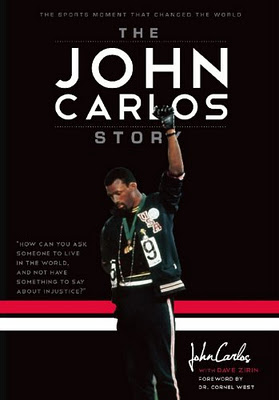
Having studied the 1968 Olympic protest, having conducted an interview with Harry Edwards on the revolt of the black athlete, and being someone dedicated to understanding the interface between sports, race and struggles for justice, I was of course excited about the publication of John Carlos’ autobiography, The John Carlos Story: The Sports Moment that Changed the World. Written with Dave Zirin, the book provides an inspiring discussion of the 1968 Olympics without reducing the amazing life of John Carlos to the 1968 Olympics. More than 1968 or the protests in Mexico City, it chronicles a life of resistance, of refusing to accept the injustices that encompass the African American experience.

John Carlos challenged American racism from an early age. Readers learn of a young man who “went around Harlem handing out food and clothes like Robin Hood and his merry men in Technicolor” (p. 21). Recognizing the level of poverty and injustice in Harlem, and refusing to stand idly by, a young Carlos would break into freight trains to steal food with the purpose of giving it to those who had been swallowed up by the system.

The experience of stealing groceries and good and giving the people something for nothing was positive. Just doing this kind of so-called work opened up my mind and got me to notice what was going on around me. I couldn’t turn my back when I saw evidence of discrimination in the community. I captured it in my mind every time I saw anyone in my neighborhood mistreated by the police (p. 27).

These experiences, like his having to give up on the dream of becoming an Olympic swimmer as a result of societal racism, not only politicized Carlos, but also instilled in him a passion and commitment to help others reach their dreams. It taught about the power and necessity of imagining and fighting for “freedom dreams.”

The John Carlos Story chronicles the ways he has lived a life guided by the philosophy articulated by Fredrick Douglas that “power concedes nothing without demand.” From his organizing a strike at his high school against “the nasty slop they called ‘food’” (p. 33) to his insistence that the manager at the housing protects where he lived address the problem of caterpillars in the courtyard, John Carlos demanded accountability and justice long before 1968.

His book illustrates the level of courage he has shown throughout his life. When the manager refused to address the caterpillar problem, which prevented his mother from joining others in the courtyard because of allergic reactions, Carlos once again lived by the creed: power concedes nothing without demand. John Carlos has lived a life of demanding justice and in the face of refusal demanding yet again. He describes his response in this case as follows:

Then I took the cap off the can and doused the first tree in front of me with gasoline. Then I reached for a box of long, thick wooden matches. After that first tree was soaked, I struck one of the stick matches against my zipper and threw it at the tree and watched. It was a sought: the fire just as that tree like it was a newspaper and turned it into a fireball of fried caterpillars (p. 41).

The compelling life that Carlos and Zirin document extends beyond his youth further reveals a life dedicated to justice. His refusal to accept the racism and the mistreatment experienced while living in Texas encapsulates how America’s racism and systematic efforts to deny both the humanity and citizenship of African Americans compelled Carlos’ activism as a young man and ultimately as an Olympian.

The protest at the 1968 Olympics should not be a surprise given the racial violence experienced by Carlos and his brothers and sisters throughout United States (and the world at large).

Continue reading @ NewBlackMan: Book Review | The John Carlos Story: The Sports Moment That Changed the World.

NewBlackMan: Putting the “Run Away Slaves” Ahead of the Plantation: Parity, Race and the NBA Lockout


“Basketball and Chain” by Hank Willis Thomas

***

Putting the “Run Away Slaves” Ahead of the Plantation:

Parity, Race and the NBA Lockout

by David J. Leonard | NewBlackMan

In wake of LeBron James’ decision to take his talents, along with those of Chris Bosh, to South Beach to join forces with Dwayne Wade, the NBA punditry has been lamenting the demise of the NBA. This only became worse with the subsequent trades of Deron Williams and Carmelo Anthony to New Jersey and New York respectfully. Described as a league “out of control in terms of the normal sports business model” where player power “kills the local enthusiasm for the customer and fan base,” where superstars leave smaller markets with no hope of securing a championship, where manipulating players and agents have created a game dominated by “players whose egos are bigger than the game,” much has been made about player movement.

Commentators have lamented how players are yet again destroying the game from the inside, thinking of themselves ahead of its financial security and cultural importance. In “NBA no longer fan-tastic,” Rick Reilly laments the changing landscape facing the NBA. Unlike any other sport, the NBA is now a league where “very rich 20-somethings running the league from the backs of limos,” are “colluding so that the best players gang up on the worst. To hell with the Denvers, the Clevelands, the Torontos. If you aren’t a city with a direct flight to Paris, we’re leaving. Go rot.” In other words, this line of criticism have warned that “the inmates are running the asylum,” so much so that the league “is little more than a small cartel of powerful teams, driven by the insecurities and selfishness of the players who stack them.”

While such rhetoric erases history (of trades – players of the golden generation have certainly demanded trades; the same can be said for other sports as well) and works from a faulty premise that parity is good for the economics of the NBA (the very different television monies for the NBA and NFL proves the faultiness of this logic), the idea that the league needs more parity remains a prominent justification for the NBA lockout. “The owners believe that the league should be more competitive and that teams should have an opportunity to make a profit,” notes David Stern. Similarly, Adam Silver, deputy commissioner, argues, “Our view is that the current system is broken in that 30 teams are not in a position to compete for championships.”

Such rhetoric and Stern’s ubiquitous statements about the NBA needing a dramatic restructuring builds upon argument that the NBA’s future is tied to its ability to thwart players like LeBron James, Carmelo Anthony, Deron Williams, and potentially Dwight Howard, Chris Paul, and others from taking their talents anywhere.

Continue reading @ NewBlackMan: Putting the “Run Away Slaves” Ahead of the Plantation: Parity, Race and the NBA Lockout.