REBIRTH OF GEEK: The NBA’s Nerd Swag Reigns – Entertainment & Culture – EBONY

REBIRTH OF GEEK:

The NBA’s Nerd Swag Reigns

David Leonard

With Kevin Durant and the Oklahoma City Thunder making a serious run for the title this year, interestingly talk has once again turned to his stylistic choices. With debate shows like Around the Horn and First Take, not too mention various content starved sports writers, pining for anything to debate, much has been made about Durant’s clothing choices. Watching Durant, along with Russell Westbrook, LeBron James, and Dwyane Wade at live post-game press conferences has become the NBA’s version of the red carpet. Part shock and awe, part celebration of the players’ purported back turning on hip-hop styles, and part curiosity, no piece of clothing has been left unremarked upon, making me wonder if Joan Rivers has a future on ESPN.

Noting how players wear “gingham and plaid and velvet, bow ties and sweater vests, suspenders, and thick black glasses they don’t need,” Wesley Morris celebrates their stylistic stances against racial stereotypes. It ain’t just an outfit, it’s an effort to stomp out racial bigotry: “Their colors conflict. Their patterns clash. Clothes that once stood as an open invitation to bullies looking for something to hang on the back of a bathroom door are what James now wears to rap alongside Lil Wayne. Clothes that once signified whiteness, squareness, suburbanness, sissyness, in the minds of some NBA players no longer do.”

Similarly, Sean Gregory identifies his clothing choices as a window into his broader appeal and demeanor: “In Durant, African-Americans are blessed with an ideal front man: a seemingly humble superstar” evidence by his “refusal to play the part of ego-driven hoops celeb” as well as clearly his propensity to wear glasses rather than chains, a backpack rather than headphones, and sweater in lie a hoodie. If you didn’t know that plaid and mismatched colors was a sign of humility and a lack of ego, now you know.

Commenting about the popularity of non-prescription glasses from NBA stars, Dave Hyde furthered the links between “nerds” and the sort of “style” embraced by several NBA stars: “That’s just it. No one’s sure what the statement these frameless glasses are other than, well, Urkel-R-Us. . . . .But wear the non-glass glasses? You don’t need to understand fashion to recognize a nerdy idea when it hits you right between the eyes.”

The efforts to celebrate “nerd style” are wrapped up in larger questions of identity. For several commentators, it is punctuates an expanded definition of Blackness (in the tradition of Touré’s post-Blackness theories) available in contemporary America. Under this logic our changing world allows for Allen Iverson and Kevin Durant, Kanye West and Little Wayne, Brittney Griner and Nicki Manaj, Michelle Obama and Cory Booker to exist under a larger umbrella of blackness. According to Touré, “I see [Black irony] in NBA star Kevin Durant’s penchant for nerd chic, wearing glasses and a schoolboy backpack and thereby taking the air out of the Black male imperative to be masculine, tough, and cool.”

Continue reading @ REBIRTH OF GEEK: The NBA’s Nerd Swag Reigns – Entertainment & Culture – EBONY.

Why Shouldn’t Diddy’s Son Get a Scholarship? – Entertainment & Culture – EBONY

Why Shouldn’t Diddy’s Son Get a Scholarship?

By David Leonard

The announcement that Justin Combs, son of Sean “Diddy” Combs, would take his talents – on the field and in the classroom – to UCLA has prompted widespread debate (err haterism). Despite excelling on the football field and with his academics, some have questioned whether he deserves or should be given a scholarship, especially in our current economic climate. More than the issue of the cost of collegiate athletics and rising tuition costs, the “controversy” surrounding his scholarship to UCLA comes from a belief that Combs is not entitled to an athletic scholarship because of his father’s wealth.

A blog post – “Should rich kids be ineligible for college scholarships?,” gives voice to those who have questioned the decision from UCLA and the Combs family:

Justin shouldn’t keep this money: Here’s the bottom line, says Dennis Romero at LA Weekly: “The son of a guy worth nearly half a billion dollars” doesn’t need a free ride to college, especially to “a school where student tuition and fees have nearly tripled in the last 10 years.” I mean, this is a kid who poses in front of “a $300,000-plus Maybach,” likely the car his dad got him on his 16th birthday. Now that’s “a free ride that could pay for half dozen full-ride scholarships to UCLA.”

The mere fact that this subject to debate on CNN or that CBS affiliate in Los Angeles sent a reporter to ask students their opinion is troubling and points to some larger issues at work. Justin Combs earned a scholarship; UCLA decided that his football skills and his academic preparedness were worthy of an athletic scholarship. That should be the end of the discussion yet for those who see his Diddy’s mogul status, his MTV Sweet 16 bash, his car, or his father’s stock portfolio as reasons to deny an earned, merit-based, scholarship, let me say a few things.

First off, the scholarship is “compensation” for his athletic labor; it is payment for not only his hard work but also a skill set that has proven to be valuable. It is compensation for the job of being a student-athlete, one that not only includes practice, games, media sessions, film sessions, workouts, travel, physical and mental wear and tear, and public appearances, along with being a college athlete. It is remuneration for the millions of dollars generated by collegiate football and basketball players, whose talents the NCAA, its partner institutions, and the sports media have converted into a billion dollar industry. While an exploitative relationship, this is still the “wage.” Unless the sons and daughters of America’s 1-percent are going to be asked to forgo wages at their various jobs, there is little one should say to Justin Combs.

Second, the idea that budgets or student fees are being impacted by athletic scholarships is without basis. Beyond the reality that state monies are not used for athletic scholarships, the efforts to link Combs to the budget is faux outrage. Where is the outrage over excessive salaries for coaches? High-price administrators? High cost tuition has nothing to do with scholarship athletes, or “overpaid professors” but an overall divestment in higher education. It reflects an unwillingness to invest public monies, to raise the necessary tax dollars, to maintain great universities. Blaming student-athletes and condemning Justin Combs is nothing more than a rhetorical weapon of mass distraction, one that so often cites hip-hop as the source of societal ills.

Additionally, if one is going to “mean’s test” scholarships, wouldn’t that ostensibly eliminate all merit-based scholarships? Does that mean all scholarships will be allocated based on need or just when involving the sons and daughters of hip-hop moguls?

For those who don’t think Combs deserves an athletic scholarship, are you willing to take the same position for a student who earns academic scholarship? If athletic excellence doesn’t matter for a student of wealth, should artistic or academic excellence matter either?

Continue reading @ Why Shouldn’t Diddy’s Son Get a Scholarship? – Entertainment & Culture – EBONY.

Violence On And Off The Ice

Violence On And Off The Ice:

Twitter Racism And The NHL

By Guest Contributor David J. Leonard

Courtesy Bossip.com

Moments after Joel Ward’s overtime goal secured a playoff victory for the Washington Capitals over Boston last month, the twittersphere exploded with a barrage of racial epithets, threats of violence, and stereotypes.

Editor’s Note: Trigger Warning under the cut–pictures of racist slurs

Here is but a sampling of the vitriol and hostility resulting from his goal (for complete list, go here):

Receiving national attention, such racism was dismissed through narratives of fan ignorance, fan drunkenness, fan anger, and a myriad of other excuses that explain the situation as of little importance to understanding race in contemporary society. For example, at DCist, shawnwhiteboy offered the following response to an article about these tweets:

The obvious problem with twitter is that any drunk asshole with a smart phone can use a hashtag and get ‘hits’. The problem with the media is that you cover these drunk assholes as news. When will this end? Is this comment I am typing news worthy? No! What’s worse, the last sentence of this article lumps all bruin fans together with those drunk assholes. Boston fans are passionate and sometimes obnoxious but not racist. Having lived in boston and dc for 5 years each, people are not more enlightened in one place over the other. Okay, rant over.. . Those racist comments are terrible, how server going to get back at those fuckers listed here?

In an ESPN story covering the backlash against Ward, another commenter offered a similar refrain, identifying the Internet as the reason for such outbursts: “It isn’t at all surprising to see the slew of racist comments after the game,” he wrote. “Social media allows total anonymity if the user desires; these things can be said with no fear of reprisal. Such bravery!” These explanations were commonplace not only in the aftermath of Ward’s game winning goal, but following a game less than two weeks later.

With less than a minute to go in a game versus the New York Rangers, with his team up by a goal, Ward committed a penalty that sent him to the box for four minutes. Before he would be able to step back onto the ice, the Rangers would score two power play goals, sending the Capitals to a crushing defeat. Less than two weeks after facing a barrage of racial taunts and epithets from Bruins fans, Ward now faced similar violence from Capitals fans.

A common response to both of these incidences has been to link them to hockey; that above all else, the hostility embodies racism in hockey culture. Seemingly ignoring and erasing online racism of all kinds and those particular to virtual sports landscapes, hockey fans have become the problem rather than a symptom. Ironically, such a narrative imagines hockey as the “South” of sports culture.

Given its whiteness and even the working-class demographic of its fan base, commentators have sought to identity this as reflective of hockey culture, rather than sports or even society at large. Race and nation have a particular history within hockey. As I wrote a couple months back following an incident where fans threw a banana at Boston’s Wayne Simmonds, whiteness, privilege, and racism are all part of the hockey story:

Others connected to the sport were not so willing (despite their having greater power and privilege) to reflect on the racial realities and hostilities of the NHL in this moment or elsewhere. While describing it as a “stupid and ignorant action,” Commissioner Gary Bettman made clear that incident was “in no way representative of our fans or the people of London, Ontario.” Maxine Talbot, a teammate of Simmonds, summarily dismissed the incident as “isolated” that said little about the state of hockey: “It’s not like there’s a problem with racism in our league. It’s one person!”

Dismissing it as an aberration and the work of some ignorant fans, the response fails to see the broader history of the NHL, not to mention the larger racial issues at work. While Bettman and others sought to isolate the incidence as the work of a single person who isn’t representative of hockey culture or society at large, others pointed to the persistence of racism within the NHL. Kevin Weeks, who had a banana thrown at him during the 2002 Stanley Cup Playoffs, noted his lack of surprise that Simmonds was subjected to such racism: “I’m not surprised. We have some people that still have their heads in the sand and some people that don’t necessarily want to evolve and aren’t necessarily all that comfortable with the fact that the game is evolving.”

Yet, it would be a mistake to link these visible instances of racism to the whiteness of hockey, its racial politics, or resistance to integration given the ubiquity of racism online and offline. While comforting to construct racial hostility through hockey in that it allows to preserve the myths of integration and breaking down social distance as a weapon against racism, similar racial hostility and tweeted racial epithets can be seen with other sports as well. In the last week, these tweets have been sent out:

While the incidents involving Ward have received ample coverage in parts because of the comfort of blaming hockey, online racism directed at black athletes is not particular to one sport. Integration or greater presence has not led to full acceptance.

Continue reading @ Violence On And Off The Ice: Twitter Racism And The NHL | Racialicious – the intersection of race and pop culture.

NewBlackMan (in Exile): The Savior Syndrome: Patrick Willis and the Mystique of #WhiteLove

Patrick Willis’ Two Dads | Ruth Fremson, NYTimes

The Savior Syndrome: Patrick Willis and the Mystique of #WhiteLove

by David J. Leonard | NewBlackMan

There is an epidemic of white love in America. From The Blind Side and The Help to Kony 2012, George Clooney saving Africa and countless white celebrities liberating black children via adoption, white love has become the antidote to the race problem of the twentieth century. Whereas “the race problem” defined the last years, the next 100 years are purportedly to be one of white love. While racial profiling and the prison industrial complex, persistent discrimination and poverty, education and health disparities continue to plague the nation amid a climate of heightened anti-black racism, immigrant scapegoating, and a rising tide of white nationalists movements, white love offers a ray of sunshine. Better than Barack Obama’s “hope we can believe in,” in the face of so much injustice “white love” is hope (white) society can believe in each and every day.

While watching The Blindside Elon James White highlighted the power of white love within the much celebrated film and society at large:

I DID NOT KNOW WHITE WOMEN COULD CREATE FOOTBALL STARS WITH 16 WORDS. THEY ARE MAGIC. THEY SHOULD BE TAUGHT AT HOGWARTZ!

See–poor Black dude is actually full of talent and wisdom–he just needs a healthy dose of White love to open his eyes. #WHITELOVE

What #TheBlindside teaches us is if White people find poor homeless Black dudes they can create highly sought after football stars.

Awww snap. Kathy Bates and Sandra Bullock are doing a Awesome White Lady TAG TEAM. Hitting him with #WhiteLove left & right…

Dear White People: Please bottle #WhiteLove & sell it. Then we could throw it out of car windows in the ghetto like malatov cocktails…

#WhiteLove is so magical the child of awesomely White Sandra Bullock is smarter & more savy than the poor black dude 10 yrs his senior.

Every White person in this family is AMAZING. The Dad who wasn’t even paying attention to poor black dude is now INSPIRING him.

I don’t want to watch this movie anymore. I HAVE DEADLINES–but #WhiteLove is drawing me in… I WANT SANDRA BULLOCK SAVE ME.

The power of white love isn’t unique to Hollywood fantasy but is commonplace within sport culture. This particular fantasy was on full display during a recently re-aired episode of ESPN’s E:60. Documenting the trials and tribulations of the 49ers Patrick Willis, whose life took him from a Trailer Park in rural Tennessee to the fame and fortune of the NFL; from poverty and abuse to the American Dream.

The “rags-to-riches” and pulling oneself up by shoelaces is nothing new to sports culture given the centrality of the American Dream and sports as economic escalator within sports media. Yet, the presented story of Willis is one less about the Protestant work ethic and more of white love. The story isn’t so much of his talent, hard work, intelligence, but the transformative power of whiteness, whereupon Willis life changed when he became part of a white family.

The story given on ESPN and elsewhere is rather simple: Willis and his siblings grew up poor in Tennessee. As a result of their mother leaving them and their father’s drug and alcohol problems, a difficult childhood became one of great pain and suffering because of physical abuse. Ultimately standing up to his father by first responding to the abuse and then telling school officials, the children faced the prospects of being split apart. This would never come to fruition as Willis’s coach, Mr. Findley, after a request from the school superintendant, agreed to take all 4 children into their home.

No longer subjected to violence and poverty, yet together as a family, Willis began to thrive on and off the field. According to E:60, he no longer needed to focus on “basic needs” because of his father’s addiction or fending him beatings but instead could be a “normal child.” He was now able concentrate on himself on and off the field. Allowing Willis for the first time to experience love and a true childhood, Willis blossomed into an exceptional football player and even better story. The narrative frame that imagines blackness as pollutant and danger, as problem, juxtapose to whiteness as savior, as help, as goodness, and love is wrought with history and meaning. The only better than Hollywood’s vision of white love is the purported real thing.

continue reading @ NewBlackMan (in Exile): The Savior Syndrome: Patrick Willis and the Mystique of #WhiteLove.

NewBlackMan: Bigger Than Rush: The Violence of Language and Language of Violence

Bigger Than Rush: The Violence of Language and Language of Violence


Bigger Than Rush: The Violence of Language and Language of Violence


by David J. Leonard | NewBlackMan


Rush Limbaugh has once again demonstrated the entrenched misogyny of American culture.  Calling Sandra Fluke a “slut” and a “prostitute,” among other things, is telling of both his own ideological foundation as well as society’s.  Unfortunately, the conversation and public outrage has often drifted away from the broader issues of violence, sexism, and misogyny, away from the broader attack on girls and women, instead focusing on “politics,” on removing Rush from the airwaves, on sponsors, and myriad other issues.  Increasingly, as Rush’s defenders cite double standards, whether in the form of societal acceptance of sexism within hip-hop or from liberal commentators, the debate is moving away from the issues of violence.  In focusing on only Rush (he is reprehensible), the politics, and in debating claims about hypocrisy, we are failing to see Rush and his comments as a symptom thereby obscuring the consequences of this language and its place within the broader war against young girls and women. 


Rush Limbaugh once again illustrated the reasons we need to “occupy” the airwaves.  As I wrote last month about Fox News and the soiling of already violent public discourse, the ubiquity of racism, sexism, homophobia, and xenophobia within the public square represents a major threat:


Racism, homophobia, immigrant bashing, misogyny and a general tone of violent rhetoric is almost commonplace at Fox.  Their motto of “Fair and Balance” seems apt at this point where they are fairly balance with comments of racism, sexism, homophobia, and xenophobia.  The saturation has produced an almost normalizing effect whereupon progressives and society at large don’t even notice at this point, simply dismissing as Fox being Fox.  Yet, the consequence, the pollution of the public discourse, the assault on the epistemology of truth, and an overall souring of the public airwaves with daily morsels of disgusting, vile, and reprehensible rhetoric, illustrates that “Fox being Fox” poses a serious threat to Democracy, not too mention justice and equality. 


Limbaugh’s recent comments are yet another example of “Rush being Rush” and the level of violence that “occupies” America’s airwaves.   The demonization of women, the criminalization of blacks and Latinos, and the overall climate of racial/gender pathologizing are as commonplace as the scapegoating of hip-hop within today’s media.  This is evident in the language of everyday life.   Violent rhetoric has consequences evident in ubiquity of sexual violence, racial profiling, and job and housing discrimination.  They matter not only because the words themselves are violent, but also because they provide a window into a larger structural reality; words matter because they hurt and because the sources of meaning, the history embedded in our language, and our sense of imagination all emanate from this place. 


In a recent Daily Beast column, Kirsten Powers, citing examples of misogyny from the likes of Bill Maher, Keith Olbermann and Chris Matthews, among others (not surprisingly as a Fox contributor she doesn’t cite any examples from her employer despite the following examples), argues that, “It’s time for some equal-opportunity accountability. Without it, the fight against media misogyny will continue to be perceived as a proxy war for the Democratic Party, not a fight for fair treatment of women in the public square.”


While not buying the narrative that seeks to directly or indirectly excuse Rush’s comments by noting the sexism of the “left” as evidence of both a double standard and a selective denunciation of sexism from the right (see here for example and here and here and here and here and here), any effort to transform public discourse must account for all forms of violence and the ways that racism, sexism, homophobia, and xenophobia pollute and define media culture.  Rush’s comments are not an isolated incident (for him or talk radio) given his consistent demonization of Michelle Obama (#1, #2).  Yet, Rush’s comments must also be understood in relationship to the disgusting comments from Michael Moore (among others), who responded to Limbaugh with the following tweets:


I guess Romney knew that Rush, who made the mistake of saying what most Republicans think (women as sluts), had cost him the Nov. election.


Or after losing 6 sponsors yesterday Rush decided he loved $ more than he loved calling women prostitutes. Musta been a tough call, eh Rush?


Some sponsors don’t care how much Limbaugh apologizes: mmflint.me/Awf562 (I know – what were they doing there in the 1st place?)


RT @pattonoswalt Ayn Rand would be very pleased with how the free market bitch-slapped Limbaugh today.


Dear Rush: Please don’t stop! You say what the R candidates don’t. Voters must hear every day til Nov what Republicans truly think of women.


Don’t give up, Rush! It’ s a WAR ON WOMEN & you’re the Supreme Leader. Keep reminding voters how hate & violence drives the Republican agenda


Rush – As soon as u started losing the big $$ from your hate speech, you caved & obeyed the men who pay u. Who’s the prostitute now, bitch?


And BTW Rush, your vile & vicious attacks on me over the years – I wear them as a badge of honor. You are sad & sick & I’ve always pitied u.


The use of “bitch,” “bitch-slapped” and prostitute here, just as the sexualization of women from the likes of Bill Maher, is not a cover for the likes of Limbaugh.  Sure, the ideological underpinnings and the larger visions of society are different, but that doesn’t sanction the language nor does it limit the consequences.  Limbaugh’s comment read inside of a larger context points to the necessity of not simply removing Rush Limbaugh from the airwaves but transforming a society that needs and props up the Rushes in our mix. 

Continue reading @ NewBlackMan: Bigger Than Rush: The Violence of Language and Language of Violence.

Super Spectacle: Race, Gender, and the Hawking of Products | The Feminist Wire

Super Spectacle: Race, Gender, and the Hawking of Products

February 15, 2012

By David J. Leonard

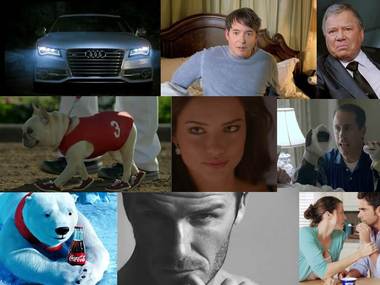
The Super Bowl is a spectacle. Whether talking about the pregame festivities, the hype, the halftime show, or the game itself, it is the embodiment of a spectacle. Its commercials, however, especially given the ways that gender, race, and sexuality are circulated, are the embodiment of our contemporary spectaclized society.

By spectacle I am not referring to the everyday use of spectacle as an important or memorable event that a sizable portion of the population views, but instead in the tradition of Guy Debord. Debord, whose Society of Spectacle identifies the dialectics between late capitalism and mass media in the production of mediated spectacles, highlights a condition whereupon the relationship between commodities and people take precedent over any other sort of relationship. According to Debord, “The spectacle is not a collection of images, but a social relation among people, mediated by images.” While the game itself embodies this ritualistic process, the commercials themselves embody and perpetuate the spectacle. “Spectacles are those phenomena of media, culture, and society that embody the society’s basic values, and serve to enculturate individuals into a way of life,” writes Douglas Kellner. Mediated spectacles “dramatize[s] our conflicts, celebrate[s] our values, and project[s] our deepest hopes and fears.”

The spectacle of Super Bowl commercials are evident in the ways in which consumers’ relationships are defined vis-à-vis products. Similarly, the hype, and extravagance is evidence of the ways in which the Super Bowl and the commercials operate as “weapons of mass distraction.” Yet, the existence of a spectacle, illustrated by the presence of Flav Flav and Elton John in a Pepsi commercial, is not limited to size and scope; as Kellner reminds us with the ways in which mediated spectacles “dramatize our conflicts, celebrate our values, and project our deepest hopes and fears.”

The denigration and sexualization of women during the Super Bowl is indicative of the ways in which spectacles operate within our cultural landscape. From the first quarter right until the end of the game, the place of women is made clear: as sexualized objects whose presence figures in eliciting pleasure from the male gaze. Those women who cannot or refuse to reaffirm male sexual pleasure, who deviate from the standards of sexual beauty, are rendered undesirable. While not limited to the Super Bowl, the “Go Daddy” commercials embody the sexualized spectacle of the Super Bowl. Virtually naked women are represented as little more than eye-candy, existing in the mediated space, ready, willing, and able to appeal to the sexual wants of (white) young men. Women enter the spectalized space to provide pleasure to both the males in the commercial and those watching at home. Equally important, the two most visible women of these commercials are Jillian Michaels and Danica Patrick, whose physical strength and presence in the masculine worlds of physical fitness and car racing are muted because they don’t disrupt the dominant values concerning femininity.

There is something revolting about a corporate sponsor taking a woman who has made it in a highly male-dominated and masculine field, car racing, and putting her back in a woman’s rightful place: in a skimpy costume under the male gaze. (Chloe from Feministing)

Dramatizing conflicts about the purported breakdown of male and female spaces, reflecting both hopes and fears, all while validating patriarchy, Go Daddy is the quintessential spectacle. A commercial from Kia further reinforces the sexualized place of women within the male world of sports, celebrating a narrative of female subservience:

The ad from Kia sends a pretty clear message that men and women are totally different species with totally different dreamworlds. A woman dreams of riding across a meadow on the back of a white horse with a handsome fairytale prince under a rainbow sky. But a man dreams of driving a race car while Adriana Lima and thousands of hot bikini-clad women cheer him and Motley Crue plays, and something about a giant sandwich and a boxing match. And these two worlds are so separate and different that a Kia is the only thing that can bring them together.

The sexualized representation of women, and specifically white women and those luminally white ethnic bodies (Italian, for example), is as central to the Super Bowl as the teams themselves. The absence of commercials that turn women into sexual objects would be as impossible as having a Super Bowl without a football. This is evidenced by the barrage of commercials, including an NFL prize commercial that defines the American Dream through access to millions of dollars and scantily clad cheerleaders, and a Valentine’s Day commercial that depicts this holiday as a simple relationship based on exchange. The idea is this: men exchange gifts for sex (“Give and you will receive”). Or there is the Fiat commercial that treats women as if they are interchangeable with cars–both objects to be consumed, sexualized, and fantasized about by men.

Continue reading at Super Spectacle: Race, Gender, and the Hawking of Products | The Feminist Wire.

An Open Letter to ‘Dear White America’: On Ignorance and White Privilege | Urban Cusp

An Open Letter to ‘Dear White America’:

On Ignorance and White Privilege

David J. Leonard

UC Columnist

I have been meaning to write this letter for a while, but just didn’t know to say it. I know how hard conversations about race can be, and how invariably these conversation lead to claims about the “race card” or it being “just a joke.” But after watching yet another disheartening video of mockery and disrespect, I have to make it plain.

There is no acceptable reason to ever don blackface. It’s not a joke, it ain’t funny, and it’s not some creative license that adds to the value of your artistic endeavors. Blackface has a long tradition that is part and parcel with white supremacy. It is part of a history of humiliation and dehumanization, of denied citizenship, and those efforts to rationalize, excuse, and justify state violence. From lynchings to mass incarceration, white supremacy has utilized dehumanization as part of its moral and legal justification for violence. Spare me your reference to “White Chicks,” the Chappelle Show. Spare me your dismissive arguments about intent and not being racially motivated, Blackface is part of the violent history of white supremacy. If you don’t know, now you know, and if you still don’t know, go here or here.

While we are on the subject, there is no place for racist costumes that dehumanize and demean, that mock and ridicule, that stereotype and otherwise reenact a larger history of racism. We should have listened to students at Ohio University when they reminded us this past year with the We’re a Culture Not a Costume Campaign. Were you not listening or just don’t care? The costumes have to go along with those racist themed parties. You, I am talking about “ghetto parties, “cowboy and Indian parties,” “pimp and ho parties,” “South of Border parties or any number gatherings that see humor in mocking and demeaning others. If dressing up “as janitors, female gangsters and pregnant women” for Cinco de Mayo is in your plans, or a Martin Luther King celebration that includes a “gangsta party,” or Black History Month that’s celebrated with the most disturbing stereotypes, it’s time to reevaluate. Just say no!

Can you also please stop with the so-called impressions of Black people? The racist caricatures, the imitations of Flav Flav are not cool; just stop saying “kicking ballistics, boy.” The sideways hats or saggin pants are not evidence that you know black people. Lets wipe the slate clean of “colored people”, “jungle fever”, “super-awesome afro,” and “my best friends are black.”

As long as we are having this conversation, can we stop with the pathetic, clichéd, and misinformed arguments about how whites are now the discriminated minority? BET is not a sign of black privilege nor is black history. No, you can’t have, nor do you need to have, White Entertainment TV (you have Fox and its network of friends) or white history month (that is every month in case you missed it). Let’s get real, white privilege is real and has material consequences so stop denying and let’s start dealing with the inequality.

While we are talking about Black History Month, let’s get some things straight: (1) Black History Month is February. It isn’t funny; if you didn’t know, now you do know, so stop feigning ignorance. (2) Black history has nothing to do with fried chicken and grape juice, 40s or pancakes. (3) It is not appropriate to celebrate Black History Month with Kool Aid sales or hair care products or collard greens. (3) And if you don’t know more about black history than Martin Luther King (and “I Have a Dream”), and think Malcolm X is the leader of the Black Panther Party, you should first ask for your money back from whatever educational institution you have gone through. Second, spend February, March, and the rest of the year reading about Ella Baker and Ida B. Wells, Amzie Moore and Nathaniel Bacon and so many other people, experiences, creative endeavors.

To imagine blackness through popular culture icons, through celebrities is not only disrespectful to the beauty, rich history, and dynamic diversity of black life, but it is a missed opportunity to learn and grow.

Tim Wise (who recently wrote Dear White America) notes that talking about privilege is like asking a fish about water. Yet, white privilege surrounds us. It is evident in the ease of donning blackface, with the comfort of mocking black people and other communities of color, and with the professed ignorance about black history and culture. It isn’t that we don’t know, it is the pride in not knowing that embodies an attitude of disrespect and devaluing. White privilege is the acceptance of racist jokes and in the perpetuation of false ideas about race.

White privilege doesn’t have to enable blackface, dehumanizing impressions and commercialization of the Other. It can be resistance, refusal to be silent, and an unwillingness to sit idly by amid a culture of disrespect and violence. So, next time you hear a racist joke or think about donning blackface, or have friends who are planning some SMH event, do something! Next time you see discrimination or read about inequalities within our health care system, housing, employment or prisons, just say no! None of it is funny and it ain’t a joke.

Just so you don’t leave all mad shouting he is “calling me a racist.” I ain’t playing that game. This isn’t a “what you are” conversation but better “what you did” conversation. So, if what I am writing about here doesn’t connect with you, because you have never said or supported a racist joke, because you haven’t accepted a stereotype, because you haven’t dressed up or been at a party with racist costumes, I guess I am not writing to you.

Seriously, I am tired of that conversation and am hoping it is time for the “what can we do conversation” and “maybe we should start listening conversation” because the conversations we are having are getting tiresome, but not as much as the daily reminders that we are closer to Newt’s moon colony than to a post-racial America

via An Open Letter to ‘Dear White America’: On Ignorance and White Privilege | Urban Cusp.