What I Learned This Summer (or What I Already Knew):
The Uncompassionate Conservative Movement
by David J. Leonard | NewBlackMan
Kids have made their way back to school, with many writing and reporting about what they did last summer. I thought I would do something similar, writing about what I have learned about “conservatives” in the last few weeks.
Lesson (1) At a recent Republican Debate, audience members made their support for state-sponsored executions clear. What I learned is that they think it is a beautiful thing that Texas executes so many people; the mere mention of execution resulted in cheers and ovations. They must think that being part of a group of nations (including China, Iran, North Korea and Yemen) that carries out a great number of the world’s execution is worthy of applause. I guess some find pride in the fact that Texas executed more people in 2010 (17) than Bangladesh and Somalia and as many as Syria (one less than Libya and about 10 behind Saudi Arabia). While I am appalled by the barbaric practice of state-sponsored murder, I am equally disgusted by the reaction that I witnessed that day. I would guess many of them are unhappy with the U.S. Supreme Court, who issued a stay of execution for Duane Buck, who was convicted of double murder in 1985. According to Tim Murphy:
In order to “secure a capital punishment conviction in Texas they needed to prove “future dangerousness”—that is, provide compelling evidence that Buck posed a serious threat to society if he were ever to walk free. They did so in part with the testimony of a psychologist, Dr. Walter Quijano, who testified that Buck’s race (he’s African American) made him more likely to commit crimes in the future. (Quijano answered in the affirmative to the question of whether “the race factor, [being] black, increases the future dangerousness for various complicated reasons.”)
Governor Perry’s death penalty record (particularly questions raised about his execution of an innocent man) and the applause given for executions give me pause. It is yet another reminder of the hypocrisy in the term “compassionate conservative.”
Lesson (2) The members of the Republican Party think a person without insurance in need of health care should be left to die because “choices have consequences.” Danielle Belton, from The Black Snob, describes the situation in the following way:
The most startling moment was during a hypothetical question posed by Wolf Blitzer about a 30-something, once healthy uninsured guy who didn’t buy insurance when he could afford it, but got really sick and might die. Should we let him die? While Ron Paul was trying to give his “go to a church for help if you’re uninsured and dying of an illness answer” (more on that later), the crowd got a little restless and cheered for letting the dude die.
On top of the last debate where folks cheered Gov. Rick Perry’s death penalty rate in Texas — even when some of those folks killed were likely innocent — has demonstrated a bloodlust among the conservative, “pro-lifer” crowd. Once again proving, the best thing you can do as a human being with these folks is stay a fetus as long as possible.
I guess executions (of some people) are good and allowing some people to die is also fine. These first two “lessons” were just from this month, followed-up on lessons learned throughout the summer
Over the summer, Ben Shapiro, while making an appearance on Fox News’ Hannity, “jokingly” announced his desire to “cap” the characters of Sesame Street. He followed this up with more “serious” criticisms, denouncing America’s favorite kid’s show because of its “soft bigotry of low expectations,” its promotion of “gender neutral language,” and its advocacy to “give boys dolls and girls fire trucks.” The other members of Hannity’s “great all-American” panel similarly spoke about the downgrading of America’s moral fabric, seemingly linking the messages of Sesame Street to the cultural wars. The Huffington Post describes his criticism of Sesame Street in the following way:
Chief amongst Shapiro’s alleged liberal offenders is Sesame Street, the Jim Henson-created educational show carried on PBS, the public network with few conservative fans or defenders.
Citing interviews with one of the show’s creators, early episodes of the show featuring hippies and racial reconciliation and, more recently, incidents such as 2009’s “Pox News” controversy, Shapiro writes that “Sesame Street tried to tackle divorce, tackled ‘peaceful conflict resolution’ in the aftermath of 9/11 and had Neil Patrick Harris on the show playing the subtly-named ‘fairy shoeperson.'”
Patrick Harris, to Shapiro’s chagrin, is gay. And, even scarier, Cookie Monster says cookies are only a sometimes food now; the venerable sweets machine has added fruits and vegetables to his diet, indicating a major liberal plot.
On Martin Bashir’s show on MSNBC, Shapiro similarly denounced children’s television for promoting “a self-esteem ethos, the idea that, to paraphrase Barney ‘everyone is special’; an unearned self-esteem.”
The attacks on Sesame Street (and by extension the liberal media and big government intrusion in family matters) are nothing new. A 1992 column in The Economist similarly denounced Sesame Street as a liberal assault on American values:
The problem comes when the sensible tolerance and respect of “Sesame Street” are mutated into something less appealing. First, it becomes a kind of hypertolerance (which argues, for example, that the canon of black female authors is as rich as that of white male authors); which is merely silly. Second, it becomes an intolerance of those who do not practice this hyper-tolerance (so that anyone who argues that a canon of authors who happen to be white and male is better than the one picked by sex and skin color is a racist sexist); which is pernicious. It is the intolerance that has come to be called “political correctness”—or PC (Sesame Street, the acceptable face 1992, A30).
The criticisms that “multiculturalism” or “tolerance” represents a vehicle for the “intolerance” for dominant values (white, Christian, middle-class) that have purportedly been central to America’s historic greatness are common to the broader culture. Equally troubling to those critics of Sesame Street is not only tax-payer support for a program that is neither intended for white-middle class audiences (Shapiro notes the history behind Sesame Street), but in their mind devalues whiteness for the sake of multiculturalism agenda.
To understand this criticism and to comprehend the right’s denunciation of Sesame Street mandates an examination of this larger history and the ways in which Sesame Street has built upon the civil rights movements and those concerned with justice, equality, and fairness. In 1979, The New York Times identified the primary focus of Sesame Street as the “4-year-old inner-city black youngster.” Jennifer Mandel, in “The Production of a Beloved Community: Sesame Street’s Answer to America’s Inequalities,” argues that while the original intended audience for the show was “disadvantaged urban youth” who suffered because of “the limited availability of preschool education” the appeal and impact of the show transcended any particular demographic. While addressing structural inequalities and countering the systemic failures in America’s educational television was part of the show’s mission, it more masterfully offered a utopic vision of America and the broader world.
“I Arrived the Day Fred Hampton Died”: If Jay Z Met Fred Hampton
by Mark Anthony Neal | NewBlackMan
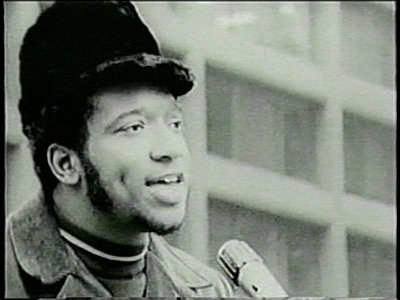
In the early morning of December 4, 1969, before dawn, the Chicago Police Department in conjunction with the Federal Bureau of Investigation—The FBI—riddled the residence of Black Panther Party leaders Fred Hampton and Mark Clark, killing them both. Hampton, who was sleeping in the back of the house with his pregnant girlfriend was unable to defend himself (he had been drugged by an informant), leading poet and Third World Press founder Haki Madhubuti (then Don L. Lee) to describe the incident as a “One Sided Shootout.” On that same day, Shawn Corey Carter—the maverick hip-hop mogul and artist—was born in the Bedford-Stuyvesant section of Brooklyn, NY. I can’t help but wonder what might have happened if these two—icons for two distinct generation of Black youth—might have ever had the chance to meet.
For those familiar with the legacy of Fred Hampton, simply known as Chairman Fred for many, Jay Z might seem the very antithesis of what Hampton represented. At the time of his assassination, Hampton was being prepared for national leadership within The Black Panther Party, which was decimated by incarceration (Huey P. Newton and Bobby Seale) and exile (Eldridge Cleaver). Hampton was 21-years-old, five years younger than Martin Luther King, Jr. was when he led the Montgomery Bus Boycott and the same age of Malcolm Little when he was when he began the prison sentence that transformed him into Malcolm X. Hampton was no ordinary young Black man.
Specifically the Black Panther Party was targeted by FBI director J. Edgar Hoover’s counter-intelligence program, known by the acronym COINTELPRO. The year before Hampton’s death, Hoover publically announced that the Black Panther Party was the “greatest threat to the internal security of the country.” Part of the FBI’s strategy was to kill off the local leadership of the Black Panther Party, before it could ascend to national leadership. In that vein Hoover targeted the Black Panther Party’s breakfast program, because it was one of the most tangible ways the organization impacted their communities.
According to historian Craig Ciccione, author of the forthcoming If I Die Before I Wake: The Assassination of Fred Hampton, “The threat was on the local level because on the local level the organizing was most effective.” Ciccone suggests that killing off local leadership could be achieved on a much quieter level—he notes that virtually none of the Panthers killed in the late 1960s were part of the national leadership.
Of those local leaders, Fred Hampton was perhaps the most significant—The FBI created a file on Hampton when he was just an 18-year-old high school student, who would shortly become leader of the Illinois Chapter of the Black Panther Party. Fred Hampton was a compelling figure because of his skills as an organizer—he was instrumental in the creation of the Rainbow Coalition (a term later appropriated by Jesse Jackson) which included the Black Panther Party, young White activist known as The Young Patriots and The Young Lords, a national organization of Puerto Rican activists co-founded by Felipe Luciano, who was also a member of the original Last Poets.
Combined with his accomplished skills as an orator and his willingness to organize beyond the Black community, Hampton was the prototype for the next generation of Black activist, a possibility that was literally killed in the early hours of December 4, 1969.
One of the tragedies of Fred Hampton’s death is that his presence would not be felt in the Marcy Houses that Jay Z came of age in, or in any of the like communities across this country were young Black Americans lacked examples of political agency and activism that were in sync with their lives at the dawn of 1980s. The period, best known as the Reagan era, was marked by the child murders in Atlanta, the explosion of crack cocaine in Black communities, the emergence of AIDS and the collapse of the kinds of social and cultural infrastructures that helped Black Americans survive segregation and racial violence throughout the 20th Century.
Hip-Hop initially filled that void and though early hip-hop was little more than the “party and bullshit” that seems so normative today, it ability to allow young Black Americans a voice and alternative ways to view the world may have been it most potent political achievement. For example, Chuck D would have been Chuck D regardless of Hip-Hop, but how many young Blacks became politically engaged because Chuck D had Hip-Hop. Indeed as Jay Z details throughout his memoir Decoded (written with Dream Hampton), the possibilities that Hip-hop offered were compelling enough to take him from the street life.
The easy part of this story is to suggest that Jay Z, as emblematic of a Black generational ethos, has squandered Hip-Hop’s political potential on the spoils of crass materialism, middle-management wealth and a politics of pragmatism (as embodied by his man Obama). The feel good move is to imagine a 61-year-old Hampton and a 41-year-old Carter sitting down in conversation with Sonia Sanchez to discuss the legacy of the Black Panther Party on Hip-Hop and Carter’s funding of the Fred Hampton and Shirley Chisholm Institute for Black Leadership Development (which by the way Mr. Carter, need not be a dream). Unfortunately the history of Black political engagement is not as simple as one of those Staples “easy” buttons.
“It Doesn’t Get Any More Real Than Perry”?: The Right’s Stake in Real Americaness
“It Doesn’t Get Any More Real Than Perry”?:
The Right’s Stake in Real Americaness
by Theresa Runstedtler | special to NewBlackMan
“People of all persuasions are sick, sick, SICK of mollycoddling, pandering and Edwardian (as in John Edwards) phoniness . . . . It doesn’t get any more real than Perry. The elite may call it ‘swagger’; I call it a real man with real convictions and the courage to stand up for them, which happen to comport with the majority of Americans. Or as they say in Texas, he is had and cattle. And the coupe de gras, he is a spiritually anchored and philosophically happy warrior.”
– Republican strategist Mary Matalin on presidential candidate Gov. Rick Perry (R-Texas)
Since when did the Right (and more specifically white Republican men from Texas) become the arbiters of what it means to be a “real American man”?
As a Canadian transplant, I’ve always found the theatrics of the U.S. political scene fascinating, where big money campaigns seem interminable and public spectacle usually trumps any in-depth discussion of policy. American politics is a virtual blood-sport with all its sound bite and bombastic fury. Texas Governor Rick Perry is just the latest Republican to enter the pissing contest that is the 2012 presidential campaign, ready to show the “real America” that he has the balls to lead the nation.
Of course, Perry is simply following in the well-worn footsteps of his predecessor George W. Bush, with his self-righteous swagger, Texas drawl, and rugged, frontier persona. He prefers cowboy boots to dress shoes and proudly recounts shooting a coyote with his .380 Ruger (it had a laser sight). He wears his Christianity on his sleeve, most recently playing the patriarchal prophet at his Houston prayer rally. Even though Bush’s people reportedly disdain Perry, he seems to have taken many of his moves right out of their campaign playbook.
While Bush had to manufacture a frontier persona to cover up his elite, northeastern roots (much like President Theodore Roosevelt back in the early 1900s), Perry actually has a real connection to rural Texas. As his campaign website triumphantly claims, “A fifth generation Texan, Governor Rick Perry has taken an extraordinary Texas journey, from a tenant farm in the rolling West Texas plains to the governor’s office of our nation’s second largest state.” Perry and his people would clearly like us to think that he made it to his current political station by pure, hard-scrabble individualism (with a little help from the Man upstairs), but even a cursory look at his record suggests otherwise.
As his website extols, “Rick Perry has led a life of public service, starting in the United States Air Force and continuing over two decades in elected office.” Thanks to a clever, rhetorical twist, his work for one of the largest wings of the federal government – the military – can be touted as admirable public service, in contrast to the other government services he so desperately wants to cut. As the wife of a former Marine, I also know that serving in the military makes one eligible for government-backed housing loans and educational funding, but Perry would argue that unlike other handouts these are appropriate entitlements for deserving people. Perhaps most ironic of all, he boasts two decades as an elected official, even as he calls for the shrinking of government. (I’m pretty sure that he won’t be handing back his tax-payer-provided pension or healthcare.)
Perry claims credit for “creating a Texas of unlimited opportunity and prosperity by improving education, securing the border and increasing economic development through classic conservative values.” However, his real record and the real-life conditions in his state tell a different story. Despite his vociferous condemnation of the federal stimulus bill, Perry has a long history of fighting for federal money to help fund state projects. Even members of his own party have decried his blatant “corporate cronyism.” He has used handouts from the Texas Enterprise Fund (TEF) to pad the pockets of his friends in big business, who in turn have helped to fill his campaign coffers. The free market’s hand is not so invisible in the Lone Star state.
In the midst of the NFL lockout, Adrian Peterson joined a chorus of players who were both critical of the league’s owners and commissioner Roger Goodell, describing professional football as akin to “modern-day slavery”:
People kind of laugh at that, but there are people working at regular jobs who get treated the same way, too. With all the money … the owners are trying to get a different percentage, and bring in more money. I understand that; these are business-minded people. Of course this is what they are going to want to do. I understand that; it’s how they got to where they are now. But as players, we have to stand our ground and say, ‘Hey — without us, there’s no football.’ There are so many different perspectives from different players, and obviously we’re not all on the same page — I don’t know. I don’t really see this going to where we’ll be without football for a long time; there’s too much money lost for the owners. Eventually, I feel that we’ll get something done.
Although not the first person to use the slavery analogy, with William C. Rhoden, Larry Johnson, and Warren Sapp all offering this rhetorical comparison, his comments elicited widespread commendation and criticism. Dave Zirin notes that he was denounced as “ungrateful,” “out of touch,” “an idiot” and, in the darker recesses of the blogosphere, far worse.” Like much of sports media, the controversy quickly reached a zenith with columnists and fans ultimately focusing on other issues, spectacles, and controversies, although never forgetting his insertion of race into the world of sports.
Recently, however, an ESPN columnist brought a spotlight back onto his comments, celebrating Peterson’s determination to right his rhetorical wrongs. In “Adrian Peterson continues righting a wrong” Kevin Seifert cites not only Peterson’s efforts to apologize for his “unfortunate analogy,” but his decision to get involved with anti-slavery efforts as part of a larger effort to make amends. “If some good came of Adrian Peterson’s unfortunate use of analogies this offseason, it’s this: It forced one of the NFL’s highest-profile players into a bond with two of the world’s most prominent advocates for ending human trafficking.”
Citing his involvement with Demi Moore and Ashton Kutcher’s DNA Foundation, a group committed to “rais[ing] awareness about child sex slavery, chang[ing] the cultural stereotypes that facilitate this horrific problem, and rehabilitat[ing] innocent victims,” Seifert argues that Peterson missed-used analogy reflected a lack of knowledge about human trafficking. “As a professional and respectful public figure,” Peterson would never knowingly make such a silly and harmful comparison had he known about the realities of human trafficking and child sex slavery. At least that seems to be the argument emanating from this piece. “I’ve always believed that Peterson wasn’t making any sort of political statement,” writes Seifert, whose column about Peterson’s comments brought up the real-life circumstances of modern-day slavery. “There was no reason to think he harbored some previously unexpressed level of insensitivity. Like many of us, he probably just didn’t know that in 2010, 12.3 million people world-wide were in forced or bonded labor. To that end, Peterson jumped at the chance to work with Moore and Kutcher.”
Seifert’s celebration of Peterson’s PSA is questionable given his efforts to cite this as evidence of his efforts to do penance along the path to redemption. At one level, it is unclear if the PSA was in actuality a response to the controversy surrounding the comments (the interview took place in March and the PSA filming taking place shortly thereafter in April). At another level, and more importantly, Peterson had nothing to apologize for, and therefore his involvement with an organization committed to thwarting modern-day slave sex trafficking has nothing to do with his past comments about the NFL.
The relative silence of the media regarding his PSA, especially in comparison to the ubiquitous level of criticism that he experienced for deploying “the S-word” (Zirin), demonstrates that irrespective of his actions it will be difficult for him to secure redemption in the eyes of mainstream America. Richard King and I wrote about the precarious path to redemption experienced by many black athletes in wake of controversies in “Lack of Black Opps: Kobe Bryant and the Difficult Path of Redemption” (Journal of Sport and Social Issues). There we argue,
The media and public fascinations with Kobe Bryant, Tiger Woods, and other Black athletes accused of personal and/or criminal transgressions should remind us of what a prominent place race, redemption, and respectability play in sport today. Sport media not only rely on the White racial frame but also play a leading role in its reproduction. In this frame, Blackness has overdetermined the actions of African American athletes from O. J. Simpson, Mick Tyson, and Barry Bonds to Ron Artest, Shani Davis, and more recently Marion Jones, Michael Vick, Santonio Holmes and Tiger Woods, creating a context in which interpretations and outcomes for Black and White athletes vary greatly. . . . Yet what is clear is in spite of the celebration of the comeback stories of Tiger Woods, Kobe Bryant, or even Michael Vick, their Blackness, and the broader significations associated with their Black bodies contains and limits their public rehabilitation. Just as their Blackness continues to confine the meaning of their bodies inside and outside of the sports world, their past “mistakes” and “misfortunes” (as Black men) cannot be outrun, out maneuvered, and even controlled.
In other words, while recognizing the unfairness in demanding redemption from Peterson for comments about exploitation and abuse through a deployed slavery analogy, he faces a difficult challenge given the ways in which race and the associated tropes of the “ungrateful,” and “militant” black athlete governs over Peterson in wake of these comments. Yet, the specific nature of the PSA itself lends itself toward some sort of redemption.
Peterson appears in a PSA as part of DNA’s “Real Men” campaign, which includes spots from Bradley Cooper (“Real men know to make a meal”), Sean Penn (“Real Men know how to use an Iron”) and Jamie Foxx (“Real Men know how to use the remote.”) In his PSA, Peterson is sitting in a living room befitting of a member of the aristocracy (or at least the American upper-class). Confirming his class status and respectability, Peterson simultaneously represents an authentic manhood, able to start a fire by merely rubbing his hands together. Unlike other men, Peterson embodies a true and enviable manhood, evident in his physical prowess and his economic prowess. In this regard, his blackness is muted by a desired class- and gender-based identity.
Peterson’s represented identity is an important backdrop for both his purported redemption resulting from his participation in this campaign and the PSA itself. The narrative argument offered within the campaign is that “real men don’t buy girls,” and that “real men” don’t participate in “child sex slavery.” Peterson, as a man who can start a fire with his bare hands, and who is economically successful (not to mention someone who make defenders look silly) is already a real man within a hegemonic frame; his stance against sex slavery is but another signifier of a real masculinity, all of which is constructed as important attracting women. The PSA ends with a young woman asking, “Are you a real man,” followed by a clear reminder: “I prefer a real man.” At this level, the PSA is disturbing in that it tells viewers to oppose childhood sex slavery because that is what real men do and because women of age find such a stance attractive.
In a world where 12 million people are enslaved and where 2 million children are bought into the global sex trade, it is rather simplistic (and comforting) to reduce this injustice to a faulty masculinity. Given that sex trafficking, according to the United Nations, involves “127 countries of origin, 98 transit countries and 137 destination countries” it is rather dubious to reduce the problem to a single construction of bad masculinity.
Catherine MacKinnon makes this clear in her analysis of global sex trafficking:
If women were human, would we be a cash crop shipped from Thailand in containers into New York’s brothels? Would we be sexual and reproductive slaves? Would we be bred, worked without pay our whole lives, burned when our dowry money wasn’t enough or when men tired of us, starved as widows when our husbands died (if we survived his funeral pyre)?
She notes further the links between sexual violence, heterosexism, and dominant notions of masculinity
Male dominance is sexual. Meaning: men in particular, if not men alone, sexualize hierarchy… Recent feminist work… on rape, battery, sexual harassment, sexual abuse of children, prostitution, and pornography supports [this]. These practices, taken together, express and actualize the distinctive power of men over women in society; their effective permissibility confirms and extends it.”(In Dunlap)
The links between sex trafficking and patriarchy and misogyny, along with racism, xenophobia, and global geo-politics is further illustrated by comments offered during a NGO forum, which among other things dispels arguments about “bad apples,” individual pathologies, and “real/unreal” men:
Trafficking in persons is a form of racism that is recognized as a contemporary form of slavery and is aggravated by the increase in racism, racial discrimination, xenophobia and related intolerance. The demand side in trafficking is created by a globalized market, and a patriarchal notion of sexuality. Trafficking happens within and across borders, largely in conjunction with prostitution (In Agathangelous and Ling).
In other words, “real manhood,” as codified legally, as defined culturally, and as constructed ideologically not only sanctions sexual violence but also promotes its very existence. Child sex trafficking reflects the logic of hegemonic masculinity. While comforting to imagine the problem of child sex trafficking as an aberrant and abhorrent masculinity, this injustice has nothing to do with real or a desirable manhood. It is about power, hierarchies, and the systemic dehumanization of women, particularly women of color.
The problem of slavery is real and reflects the systemic and historic manifestations of sexism (along with racism and colonization). To imagine this as a problem of a faulty masculinity does not work to eradicate the problem. While I certainly applaud the efforts of DNA, and celebrated Peterson’s involvement with a campaign committed to raising awareness about the painful realities of human trafficking, the narrative leads us back to the same place.
Taking a stand against child sex trafficking and other forms of sexual violence reflects a willingness to embrace a feminist ethos, not one of “a real man.” The struggle against sexual violence, whether it be rape or sex trafficking, should not be about redeeming and celebrating REAL men, Adrian Peterson, Justin Timberlake (who shaves with a chain saw), or anyone else, but challenging the injustices that result from hegemonic patriarchy. How about we make a PSA about real resistance and real transformation rather than real men!
During the last two years, a political revolt on the Right has changed the landscape of American politics. A movement which calls itself the Tea Party, overwhelmingly composed of white Americans over the age of fifty, has taken over the Republican Party, and with it the House of Representatives, with a program calling for drastic curbs on government expenditure and a moratorium on new taxation. The startling growth of this movement is in large measure attributable to racial fears triggered by Barack Obama’s election as president. But those fears are connected to demographic shifts which have made school populations majority minority in many states, and prefigure a future when whites are no longer the nation’s dominant group. Economic anxiety and racial fears have produced a truly vindictive approach to politics on the American Right. To put the matter bluntly, the Tea Party has declared war on American youth by trying to cut school budgets, library budgets, publicly subsidized recreation programs, and access to college scholarships.
Until quite recently. young people in the country, who do not vote in the same proportions as their elders, ( the 2008 Presidential Election excepted) have mounted little no significant resistance to the Tea Party offensive and showed few signs of dissatisfaction. But this could change with startling rapidity A wave of protest in other nations, starting in the Arab World, spreading to continental Europe and most recently taking the form of massive riots in England, all have originated among young people using social media to spread their message. It is not difficult to imagine that this wave of global protest, both non-violent and violent, will soon spread to the US, taking forms uniquely adapted to American conditions.
Some of this protest has already started; It is significant that the most important recent youth protests in the US have taken place in our prison system, a sector which dwarfs its counterparts in the Arab world or Europe. There have been two huge hunger strikes in prisons in the last six months, the first in Georgia, the second in California, in each case ending when authorities made concessions. Since a significant portion of the American working class lives in communities where people move in and out of prison with startling frequency, such protests are a sign of growing discontent among that section of the US population steadily being beaten down, not only by Depression imposed job losses and foreclosures,, but by the budget cuts Tea Party activists have helped negotiate.
Another sign of this discontent is are electronically organized commodity riots which the media have called “flash mobs,” groups of adolescents from poor neighborhoods, who, with the help of cell phone communication, suddenly descend on a downtown business district, or a store, and rob everyone in sight, disappearing as quickly as they’ve congregated. Incidents of this kind have taken place in Cleveland, Chicago, Philadelphia, and Maryland, prompting moral panic among politicians and religious leaders who view these outbursts as a consequences of faulty childrearing and parental neglect.
But while it is hard to endorse indiscriminate acts of violence which put forth no program and make no demands, it is also naïve to condemn them without referring to the increasing poverty and isolation of the young people responsible for these actions , or to the blithe indifference to their plight among urban elites and young professionals whose prosperity has been untouched by the recession. Can you really expect young people to stand by and suffer in silence while libraries and recreation centers are shut, while food becomes scares, while many among them are being forced into homelessness, and when schools become test factories, especially since their older siblings in prison are starting to organize and protest against their plight. As conditions worsen among the working class and the poor, expect more flash mobs, more school takeovers and walkouts, and more actual riots, especially when and if police over react to these other forms of protest.
Henry Louis Gates Jr., the famed African-American literary scholar and director of the Du Bois Institute at Harvard University, recently reflected the following in an interview on National Public Radio: If it weren’t for affirmative action, he would not have been admitted to Yale University, regardless of how high his credentials were and he would not have had the opportunities to demonstrate his talent over the past four decades.(1)
Gates’ admission reflects a fundamental problem with affirmative action. It works. I had the opportunity to reflect on that out loud in a discussion at the Race and Higher Education conference in Grahamstown last month when I asked: “Are there no mediocre white people in South Africa? Is every white person hired, every white person offered admission to institutions of learning, an excellent candidate?”
My rhetorical question was premised upon what Gates and many other highly achieved blacks know and that is the myth of white supremacy is the subtext of the “qualifications” narrative that accompanies debates on affirmative action.
When I was tenured at Brown University, the process required evaluations of my work from five referees. Expected performance was a published monograph, several articles, satisfactory teaching, service and signs of international recognition. My dossier had the following: three monographs (one of which won a book award for outstanding work on human rights in North America), an edited book, a co-edited book, 40 articles (several of which had gone in reprint in international volumes), two teaching awards and service that included heading a committee that recruited 23 scholars of color to the university. The process for my promotion and tenure was dragged out because of continued requests for more referees. The number grew to 17.
There was a comparable white candidate in the philosophy department. He also supposedly worked in existentialism, one of my areas of expertise. His dossier? A contract for his dissertation and a few articles. His case was successful. His contracted dissertation was published several years later. He has since then not published a second book. He is now a full professor at that institution. Over the years, I have only met one person in his field who knew of and spoke well of his work. That person was a classmate of his in graduate school.
Was affirmative action necessary for my promotion and tenure? Yes. But as should be evident in this example and no doubt Gates’ and many others, there is another truth. Was investment in white supremacy necessary for less than stellar whites to be promoted? Yes.
Affirmative action, which brought people of color to the table to learn first-hand about the level of performance of their white predecessors and contemporaries, stimulated a reflection on standards in many institutions. As more people of color began to meet inflated standards, what were being concealed were the low standards available to the whites who preceded them (and no doubt many who continue to join them as presumed agents of excellence).





 Dr. David J Leonard