No question about its roots: White Supremacy and the Cracker Question

While little surprises me about CNN (Cable’s NON News), the sensational efforts to play off the George Zimmerman trial, to link the “N Word” to Cracker, and to situate the discussion within a discourse of “which is worse” is a testament to their failures as a network.  As someone on Twitter and my colleague Rich King noted, the mere fact that CNN says Cracker but encodes the “N-word” tells us all we know, yet the conversation continues.

Despite amazing participants, the framing of the discussion, which centers whiteness (can’t have a discussion of “N word” without somehow bringing the debate back to whiteness), on false comparisons is telling!    If CNN wanted to have a discussion to add depth to Zimmerman trial as it relates to Cracker but instead they wandered down the problematic road of “everyone is racist” and “everyone has their own slurs.”

Cracker has a long history; a longer history than America.  Dating back at least to Shakespeare, the origins and meaning are disparate.  Jelani Cobb, on NPR’s Code Switch, offers insight into its more contemporary usage:

“Cracker,” the old standby of Anglo insults was first noted in the mid 18th century, making it older than the United States itself. It was used to refer to poor whites, particularly those inhabiting the frontier regions of Maryland, Virginia and Georgia. It is suspected that it was a shortened version of “whip-cracker,” since the manual labor they did involved driving livestock with a whip (not to mention the other brutal arenas where those skills were employed.) Over the course of time it came to represent a person of lower caste or criminal disposition, (in some instances, was used in reference to bandits and other lawless folk.).

Despite this very specific history, one that locates cracker within history of white supremacy and one that position itself outside this history, some still try to connect Cracker with “N word” as part of its narrative on “white victimhood” and “double standards.   Joan Walsh took up this line of argumentation in a recent post:

From Glenn Beck’s the Blaze to the Breitbots to smaller right-wing shriekers to Twitter trolls everywhere, white grievance-mongers seemed less bothered by the fact that Martin allegedly used the term, than by Jeantel saying it wasn’t a slur…. My God, don’t these people get tired of themselves? So much of the trumped-up racial upset on the right, generally, is about language: If black people can use the N-word, why can’t we? (Even Paula Deen tried to use that as self-defense at first.) Now we’re moving on to: If the N-word is racist and forbidden, words like “cracker” should be, too.  But “cracker” has never had the same power to demean, or to exile, or to sting. No social order has ever been devised whereby African-Americans oppress people they deride as “crackers.”

Conservative columnist Kathleen Parker too articulated the absurdity of the comparison:

For those needing a refresher course, here are just a few reasons why cracker doesn’t compare to the N-word. Cracker has never been used routinely to:

Deny a white person a seat at a lunch counter.

Systematically deny whites the right to vote.

Deny a white person a seat near the front of a bus.

Crack the skulls of peaceful white protesters marching for equality.

Blow up a church and kill four little white girls.

Need more? Didn’t think so.

Cracker may be a pejorative in some circles. It may even be used to insult a white person. But it clearly lacks the grievous, historical freight of the other.

The efforts to push back at this attempt to imagine white victimhood, to reduce racism discussions to individual prejudices or slurs, to deny white privilege through noting double standards and the assault on whiteness, is nothing new.  It’s central to a post civil rights discourse, which has sought to deny the structural advantages that continue to benefit white America.  Tim Wise makes this clear in his piece “Revisiting a Past Essay — Honky Wanna Cracker? Examining the Myth of Reverse Racism:”

Simply put, what separates white racism from any other form and makes anti-black and brown humor more dangerous than its anti-white equivalent is the ability of the former to become lodged in the minds and perceptions of the citizenry. White perceptions are what end up counting in a white-dominated society. If whites say Indians are savages, be they “noble” or vicious, they’ll be seen in that light. If Indians say whites are mayonnaise-eating Amway salespeople, who the hell’s going to care? If anything, whites will simply turn it into a marketing opportunity. When you have the power, you can afford to be self-deprecating.

The day that someone produces a newspaper ad that reads: “Twenty honkies for sale today: good condition, best offer accepted,” or “Cracker to be lynched tonight: whistled at black woman,” then perhaps I’ll see the equivalence of these slurs with the more common type to which we’ve grown accustomed. When white churches start getting burned down by militant blacks who spray paint “Kill the honkies” on the sidewalks outside, then maybe I’ll take seriously these concerns over “reverse racism.”

So to be clear, comparing the “N-Word” to Cracker is like comparing ice cream to cardboard.  Yet, both very much pivot on white supremacy.  Yes, white supremacy grounds both the N-Word and Cracker.  The history and origins of Cracker points to the way it seeks to normalize whiteness as middle-class, civility, and civilization.  It, like White Trash (see here for great discussion), seeks to differentiate between those who are southern, those who are lower-classes, and those who don’t embody the desired inscription of whiteness.  Cracker seeks to humanize white normativity.   Matt Wray (cited here), writing about discourse surrounding white trash, argues:

Current stereotypes of white trash can be traced to a series of studies produced around the turn of the century by the US Eugenics Records Office… wherein the researchers sought to demonstrate scientifically, that large numbers of rural poor whites were “genetic defectives.” Typically, researchers conducted their studies by locating relatives who were either incarcerated or institutionalized and then racing their genealogies back to a “defective” source (often, but not always, a person of mixed blood) (2)

Given this history, Cracker must be understood not as anti-White per se but serving in the maintenance of white supremacy and the white power structure.  It establishes a qualifier to those who are “white” who don’t embody the hegemonic vision of whiteness. It not only Others the “white poor,” furthering narratives that demonize and blame the poor across the color line, but humanizes whiteness as a category.  The history of Cracker and the word itself is very much one of race, class, and caste, in which WHITES judged, policed, and categorized OTHER WHITES to determine who was truly WHITE and who was not quite WHITE.  Rather than recycling the tried and trusted story of white victimization (notice how the debate about “N Word,” Cracker, Affirmative Action, the Voting Rights Act, Paula Deen, etc. always in some way comes back to a delusional sense of white victimhood), we must begin to think about the structural context, one where “whites continue to swim in preference.”  Cracker isn’t simply a word or a slur but a window into America’s racial history, into white supremacy.
Anne Braden: Defiant, Inspiring, and Self-Aware | The Feminist Wire

Anne Braden: Defiant, Inspiring, and Self-Aware

January 23, 2013

By David J. Leonard


Emblematic of a generation of men and women in the South that challenged their parents’ generation’s views on race, jobs, gender, sexuality, and a broader sense of the world, Anne Braden did more than look backwards. She, like Bayard Rustin, was a woman “ahead of her times, yet the times didn’t know it.” Anne Braden: Southern Patriot, a documentary from California Newsreel, highlights how she did not merely respond to the regressive and oppressive realities of the South, but instead looked forward toward a more just and equal society.

Like Ella Baker, Braden was committed to and involved in a myriad of movements, fighting against economic injustice, environmental injustice, war, classism, racism, and sexism. Where there was violence and degradation, Anne Braden was likely fighting alongside countless others. The film highlights not only her work, but her ethics and ethos, a willingness to confront injustice whereever it confronted her. Through the film, Braden expresses a level of fearlessness that spit in the face of white supremacy, patriarchy, and class inequality. She was always standing in opposition to white supremacy, on the other side of the police state, yet the danger and the consequences never led her to shy away from a fight.

What Anne Braden’s life reveals, and what Anne Braden: Southern Patriotdemonstrates in vivid detail, is how her work was both an external fight and an ongoing reconcilliation with her own whiteness. Her fight was with her own privileges and their relationship to a broader system of white supremacy. In a powerful moment in the film, Braden recounts a moment of clarity where she felt the impact of American racism in her own ethos and worldview as much as with those “backwards neighbors”:

In the mornings before I came downtown I would call the courthouse, to see if anything big happened overnight, because if there had I’d have to skip breakfast usually and go on to the courthouse and get the details and get it into the first edition of the afternoon paper. When I would get downtown I often stopped for breakfast and met a friend there. And the waitress was putting our food down on the table. And so he said anything doing? And I said no, just a colored murder. And I don’t think I’d have ever thought anything about it if that black waitress hadn’t been standing there. She was pouring coffee into our cups and her hand was sort of shaking, but there wasn’t an expression on her face. It was like she had a mask. And my first impulse was that I wanted to get up and go put my arms around her and say, “Oh I’m sorry. I didn’t mean that. It’s not that I don’t think the life of your people is important. It’s my newspaper that says what news is.” And then I just suddenly realized I had meant exactly what I’d said.

Listening to these words, and others from Braden, I was struck by the resonance within our own moment. The silence afforded to Chicago compared to Sandy Hook, for example, and the erasure of anti-black state violence and mass incarceration from public discourse highlight how Braden’s assessment still matters 40 years later. Her diagnosis of society, and every white member of society, remains an unfortunate reality and this is why her life’s work deserves attention.

Throughout her life, Anne Braden’s fight was not just with white supremacy, but also most importantly with white America. In actions and words, she challenged white America to make a choice, to decide whether or not to challenge racism, whether or not to accept the unearned benefits of American racism:

“What you win in the immediate battles is little compared to the effort you put into it but if you see that as a part of this total movement to build a new world, you know what could be. You do have a choice. You don’t have to be a part of the world of the lynchers. You can join the other America. There is another America!”

Continue reading at Anne Braden: Defiant, Inspiring, and Self-Aware | The Feminist Wire.

Historic Amnesia: Four Little Girls and Assata Shakur

That song…did more for me to get me out of myself than any song that I’ve ever done.  I was so outraged when the four colored girls were killed in…that Baptist church.  I tell you I was so outraged that I didn’t—I only walked the floor for hours at a time and that’s how it came out.  It just came out as a complete outraged protest against the injustices of this country against my people (Simone, Interview on Protest Anthology, 2008  – from Danielle Heard’s “Don’t Let Me Be Misunderstood”: Nina Simone’s Theater of Invisibility”)

Approaching the fifty-year anniversary of the release of Nina Simone’s “Mississippi Goddam,” the ghosts of Mississippi and the horror of white supremacist violence continues to haint the nation.

On Friday, May 24, 2013, President Barack Obama posthumously awarded Addie Mae Collins, Denise McNair, Carole Robertson, and Cynthia Wesley Congressional Gold Medals.  The murder of the “4 Little Girls” on September 15, 1963 at the 16th Street Baptist Church galvanized the black freedom struggle in its fight against white supremacy.

President Obama described the violence in the following way: “That tragic loss, that heartbreak, helped to trigger triumph and a more just and equal and fair America.”  Indeed – although it also triggered radicalization, outrage, and increasing calls for black power.

Taylor Branch, in Parting the Waters, describes Diane Nash’s reaction as one of growing dissatisfaction with methods embraced by the mainstream civil rights movement:

That night, Diane Nash presented to King the germ of what became his Selma voting rights campaign in 1965. She was angry. Privately, she told King that he could not arouse a battered people for nonviolent action and then give them nothing to do. After the church bombing, she and Bevel had realized that a crime so heinous pushed even nonviolent zealots like themselves to the edge of murder. They resolved to do one of two things: solve the crime and kill the bombers, or drive Wallace and Lingo from office by winning the right for Negroes to vote across Alabama. In the few days since, Nash had drawn up a written plan to accomplish the, latter with a rigorously trained nonviolent host, organized at brigade and division strength, that would surround Wallace’s government in Montgomery with a sea of bodies, “severing communication from state capitol building . . . Lying on railroad tracks, runways, and bus driveways . . . Close down the power company.” Her plan amounted to a protracted sit-in on the scale of the March on Washington. “This is an army,” she wrote King. “Develop a flag and an insignia or pin or button.”

The terrorism practiced by the Ku Klux Klan and other white supremacist organizations was part and parcel of American Apartheid.  The lynching of Emmett Till, the daily violence of white supremacy, and the bombings at 16th Street reflected the politics, morals, and values of the (southern) white American landscape but also contributed to a growing call for radical intervention.  Assata Shakur described the impact of white mobs, lynchings, and bombings on her political ethos:

Mostly, when I was young, the news didn’t seem real … only the news concerning black people had any impact on me. And it seemed that each year the news got worse. The first of the really bad news that I remember was Montgomery, Alabama. That was when I first heard of Martin Luther King. Rosa Parks had been arrested for refusing to give her seat to a white woman. The Black people boycotted the buses. It was a nasty struggle. Black people were harassed and attacked and, if I remember correctly, Martin Luther King’s house was bombed. Then came Little Rock. I can still remember those ugly, terrifying white mobs attacking those little children who were close to my own age … We would sit there horrified–from Harvey Young, “’A New Fear Known to Me’: Emmett Till’s Influence and the Black Panther Party”

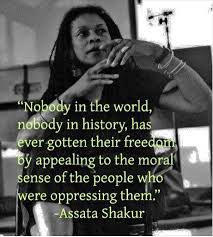
There is more than a bit of irony, hypocrisy, and failure to understand history that in the same month that the “4 Little Girls” have been awarded this medal Assata is put on FBI’s most wanted list.  It is outrageous that someone committed to ridding America of white supremacist violence–to making sure no more children were murdered in the name of racism, segregation, and hatred–has been declared a terrorist worthy of a 2 million dollar bounty. She was fighting against the very terrorism that killed these girls.

Olympic swimmers help erase the historic ‘swimming color line’ | theGrio

Olympic swimmers help erase the historic ‘swimming color line’


Lia Neal competes in the Women’s 200 yard Individual Medley heats on day one of the AT&T Short Course National Championships at McCorkle Aquatic Pavillion on December 2, 2010 in Columbus, Ohio. (Photo by Chris McGrath/Getty Images)

As Lia Neal, Cullen Jones, and Anthony Irvin compete in the the 2012 Olympic Games, they are not simply battling the best in the world; they are helping to close the book on a sad chapter in American history. With each start, each stroke, and each flip-turn, the trio of African-American swimmers are putting the historic (and occasionally more recent) exclusion of African-Americans from America’s pools further behind us. Their presence on this year’s Olympic team and their place among the larger history of black Olympic swimmers (they join Maritza Correia, who won a silver medal in 2004) reminds us of a larger history of racism and exclusion.

Indeed, to witness three black Olympians competing as swimmers represents the continued struggle against the longstanding efforts to keep pools white.

“Sports reflect a larger quandary in the land of opportunity, that so many sports have been resistant to inclusion for all races,” writes William C. Rhoden. And for decades, African-Americans were denied access to swimming pools and other municipal activities: and not only in the south. In Pittsburgh at the turn of the 20th century, whites attacked blacks in the name of swimming segregation.

Richard Allietta describes the level of violence and harassment directed at African-Americans within a segregated swimming culture: “As a youngster in Bellaire, Ohio in the early 1950′s, we would go to the public swimming pool on Mondays, ‘colored day,’ and sit in the observer stands and jeer at the colored swimmers.” Similarly, Ted Gaskins’ memories of his childhood in New Mexico, as described to American RadioWorks, illustrates the longstanding connections between American racism and swimming:

During my early childhood days in Alamogordo, New Mexico, in the early-to-mid 1950s, my grandparents owned and operated the local municipal swimming pool. This was before filtering systems were required and the pool had to be treated with chlorine and other chemicals to maintain the cleanliness of the water. It was also drained once a week and refilled with fresh water.

The sign on the outside of the pool read: “hours 10am to 6 pm Tuesday— Sat. Colored: Sunday from 1 pm – 5 pm.’

After 5:00 on Sunday, my grandfather would drain the pool (125,000 gallons of water) — and on Monday everyone would grab buckets of liquid chlorine and scrub the entire pool.

I asked my grandfather why we did this, and he said that the colored people were unclean and this would kill any bacteria that they would bring in. I also would ask my grandmother if I could go swimming on Sunday, and she would always tell me no, because that was the time when the “colored folks” could swim and I wasn’t allowed to swim with them. This went on till 1957 and at that time the state required the new filtering system and my grandparents closed the pool because of the cost of the new equipment. This was an accepted practice during my early childhood.

Reflecting entrenched ideologies, many white residents resisted efforts to integrate pools in the northern and western U.S. during the 1940s and early 1950s. As these municipal pools, which were largely constructed during the Progressive Era (yes, government creating jobs), began to integrate, many whites fled to suburban and private pools, resulting in systemic divestment from the urban spaces.

Continue reading @ Olympic swimmers help erase the historic ‘swimming color line’ | theGrio.

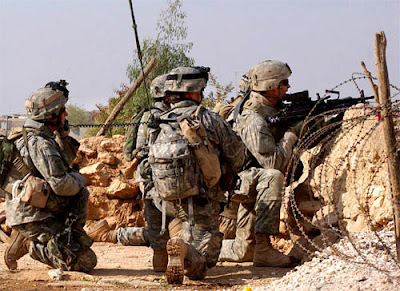
NewBlackMan (in Exile): In the Army Still? White Supremacists and the American Military

In the Army Still?

White Supremacists and the American Military

by David J. Leonard & C. Richard King |

NewBlackMan (in Exile)

Increasingly since 9/11, American political discourse and popular culture has acknowledged, if not celebrated, the sacrifices of members of its armed forces. The often self serving praise of the service of others, which so few with privilege have ever seriously contemplated, has not resulted in heightened care for soldiers and veterans, nor deeper reflection among many on those who opt to serve, and what their service might mean for American democracy.

Unfortunately, Wade Michael Page likely will not foster the needed conversations about these issues, but instead prompt attention to the dispositions and drives that led to Page to commit what has repeatedly been described “as a senseless act.” Yet, as noted by Rinku Sen in Colorlines, these murders “are neither senseless nor random, and the vast majority of such incidents here involve white men. Racism holds a terrible logic, for a concept with no grounding whatsoever in science or morality, yet too many white people don’t see any pattern.” Equally powerful, Harsha Walia reminds readers to break down the walls between extreme and mainstream, between individual and societal, between civilian and military, to look at this violence not as yet another instance of a bad apple but yet another of the rotten tree(s):

The crimes of white supremacists are not exceptions and do not and cannot exist in isolation from more systemic forms of racism. People of colour face legislated racism from immigration laws to policies governing Indigenous reserves; are discriminated and excluded from equitable access to healthcare, housing, childcare, and education; are disproportionately victims of police killings and child apprehensions; fill the floors of sweatshops and factories; are over-represented in heads counts on poverty rates, incarceration rates, unemployment rates, and high school dropout rates. Colonialism has and continues to be shaped by the counters of white men’s civilizing missions.

To our minds, if this properly projects the arc of media coverage, until the next trauma or panic, we fear we will have lost real occasion to put into dialogue two key elements of Page’s biography: he was a veteran and he was a white supremacist. We do not know how these elements of his identity and experience interfaced with one another, though apparently his general discharge in 1998 was not related to bias. We do know, however, that thinking about the connections between white nationalist groups and the U.S. military, between the mainstream and the extreme, will help us better apprehend the shooting in Wisconsin, and more engage their implications more sensibly. “It would be a mistake to dismiss Page was an isolated actor from a lunatic fringe disconnected from the mainstream of U.S. society. In fact, the reality is that white supremacy is a persistent, tragic feature of the American cultural and political landscape,” writes Jessie Daniels. “The extreme expressions of white supremacy – like this shooting, or like some of the violent images and messages previously circulated in print and now online – are part of a larger problem. White supremacy is woven into the fabric of our society and it kills people.” We see this fact in the relationship between white supremacy and the U.S. military.

This is not a new issue, but it one that continues to resurface, often in association with tragic acts of violence. Nearly 25 years ago, the Southern Poverty Law Center (SPLC) brought to the attention of the Reagan administration that “active-duty Marines at Camp Lejeune, NC, were participating in paramilitary Ku Klux Klan activities and even stealing military weaponry for Klan use.” Secretary of Defense Caspar Weinberger acted decisively, clarifying for members of the armed forces that involvement with “white supremacy, neo-Nazi and other such groups…[was] utterly incompatible with military service.”

Continue reading @ NewBlackMan (in Exile): In the Army Still? White Supremacists and the American Military.

“America Has Never Been America”: Whiteness, Nostalgia and HBO’s The Newsroom

“America Has Never Been America”: 
Whiteness, Nostalgia and HBO’s The Newsroom
by David J. Leonard | NewBlackMan (in Exile)
There is a speech making its rounds in the blogosphere and on social media that seems to galvanizing (parts of liberal) America.  Unfortunately, it isn’t Malcolm’s “Ballot or the Bullet,” Fannie Lou Hamer’s brilliance at the 1968 Democratic Convention, King’s “Beyond Vietnam” or Fred Hampton’s inspiring language, but rather Jeff Daniels’ monologue at the beginning of HBO’s Newsroom.  Capturing Aaron Sorkin’s propensity for sappy dialogue that is drunk on optimism, this speech also reflects his propensity to see the world through binaries, often erasing the complexities, divisions, and inequalities that define culture, politics, and society.  It also embodies a disturbing level of nostalgia that seems commonplace within televisual culture.  From Mad Men (more discussion here) to Pan-AM, contemporary TV (and film – The Help) is rooted in nostalgia for the past, one that fails to account for the less than idyllic world for people of color, women, the GLBT community, and others whose dreams remain deferred.
In responding to a young woman’s question about America’s greatness (American Exceptionalism), Will (Daniels) launched into a lengthy monologue:
Will: It’s not the greatest country in the world, professor, 
that’s my answer.
 
Moderator [pause]: You’re saying—
 
Will: Yes.
 
Moderator: Let’s talk about—
 
Will: Fine. [to the liberal panelist] Sharon, the NEA is a loser. Yeah, it accounts for a penny out of our paychecks, but he [gesturing to the conservative panelist] gets to hit you with it anytime he wants. It doesn’t cost money, it costs votes. It costs airtime and column inches. You know why people don’t like liberals? Because they lose. If liberals are so fuckin’ smart, how come they lose so GODDAM ALWAYS!
 
And [to the conservative panelist] with a straight face, you’re going to tell students that America’s so starspangled awesome that we’re the only ones in the world who have freedom? Canada has freedom, Japan has freedom, the UK, France, Italy, Germany, Spain, Australia, Belgium has freedom. Two hundred seven sovereign states in the world, like 180 of them have freedom.
 
And you—sorority girl—yeah—just in case you accidentally wander into a voting booth one day, there are some things you should know, and one of them is that there is absolutely no evidence to support the statement that we’re the greatest country in the world. We’re seventh in literacy, twenty-seventh in math, twenty-second in science, forty-ninth in life expectancy, 178th in infant mortality, third in median household income, number four in labor force, and number four in exports. We lead the world in only three categories: number of incarcerated citizens per capita, number of adults who believe angels are real, and defense spending, where we spend more than the next twenty-six countries combined, twenty-five of whom are allies. None of this is the fault of a 20-year-old college student, but you, nonetheless, are without a doubt, a member of the WORST-period-GENERATION-period-EVER-period, so when you ask what makes us the greatest country in the world, I don’t know what the fuck you’re talking about?! Yosemite?!!!
As I initially watched this Olberman-esque sermon, I was intrigued, although I didn’t find the information or the argument particularly powerful – it was unusual for mainstream TV.  It also did speak to how whiteness operates, whereupon Will or Sorkin can challenge American Exceptionalism without their patriotism or citizenship being questioned; yet people of color cannot offer these same arguments without denunciation and demonization. My interest quickly turned from frustration to annoyance to disgust to outrage as he continued with his myopic and white-colored lecture:
We sure used to be. We stood up for what was right! We fought for moral reasons, we passed and struck down laws for moral reasons. We waged wars on poverty, not poor people. We sacrificed, we cared about our neighbors, we put our money where our mouths were, and we never beat our chest. We built great big things, made ungodly technological advances, explored the universe, cured diseases, and cultivated the world’s greatest artists and the world’s greatest economy. We reached for the stars, and we acted like men. We aspired to intelligence; we didn’t belittle it; it didn’t make us feel inferior. We didn’t identify ourselves by who we voted for in the last election, and we didn’t scare so easy. And we were able to be all these things and do all these things because we were informed. By great men, men who were revered. The first step in solving any problem is recognizing there is one—America is not the greatest country in the world anymore.
In a blink of an eye, Sorkin transports viewers from the problems of today to a time worthy of celebration and memory.  In erasing the violence, inequality, segregation, dehumanization, and denied rights, the monologue nostalgically imagines an exceptional time in American history.  It offers evidence of and potential for the American Dream; it sees the past as time for meritocracy.  America’s greatness rests with the hard work and perseverance of previous generation.  It exists with a time when anyone could live out his or her dream. At the same time, the show imagined a time where people struggled and triumphed, overcoming obstacles through personal responsibility, hard work, and community.
What a crock; clearly we need to crack open a history book in Hollywood. Ernest Hardy offered his assessment of the clip in a Facebook post:
Ugh. I really, really, really hate this ahistorical bullshit paean to an America that never existed. Every time I watch this clip, I think of Black GI’s who were denied the same loans as their white brothers-in-arms when they returned from WWII; of the Black men used as lab rats in Tuskegee to help America reach those dizzying heights of medical breakthroughs; of the Black women who endured all sorts of emotional/sexual/psychological horrors that ‘The Help’ would never have the balls to really detail; I see Medgar Evers’ assassinated in his driveway in a warm-up to the murders of Dr. King and Malcolm X. Fuck this angry white dude rewrite and whitewash of history.
His comments and the scene itself made me think of a spoken word piece I wrote a few years ago regarding “the greatest generation” and this commonplace racial amnesia:
The greatest generation
 
You mean the Jim Crow generation
White only signs, lynchings, and the Klan
 
You mean the Scottsboro generation
One of many incarcerated from the generations of blacks in American
 
You mean the sharecropper generation
Debt servitude, enslavement, and no protections
 
You mean the Tom, Coon and mammy generation
Hollywood representations: Amos, Andy, and Mammy
 
You mean the Emmett Till generation
Murder a boy for whistling, like so many others
 
You mean the Japanese internment generation
“No Japs allowed,” excepted in Hawaii and in the military
 
You mean the atom-bomb generation
Killin 1000s, but none It Italy or Germany
 
You mean the segregated military generation
German prisoners first, freedom and democracy not for you
 
You mean the St. Louis generation
A war to save the Jews, just not those on the St. Louis or 1000s others
 
You mean the McCarthyism generation
Red scares, loyalty oaths, and the absence of dissent
 
You mean the Zoot Suit Riot generation
Soldiers attacking all who are Mexican
 
You mean the Bracero program generation
Give us your tired, your exploitable, your cheap
 
You mean the operation wetback generation
Don’t give your brown, black and yellow
 
You mean the bordering school generation
‘Speak English,” not the savage tongue of your inferior generations
 
You mean the white affirmative action generation
GI Bills, suburban homes and white American Dreams
Dreams made for a white generation
 
You mean the restrictive covenant generation
“Whites only,” America’s ghettos become black and brown
 
The greatest generation
 
1960s youth who stood face to face with Exceptional violence
Who stood toe to toe with police dogs, fire hoses, and COINTELPRO
 
The greatest generation
Malcolm, Martin, Cesar, Shirley, Cha Cha, Fred
 
The greatest generation
 
Fredrick Douglas, David Walker, Sojourner Truth
 
The greatest generation
 
Ida B. Wells, Clarence Darrow and Zapata
 
The greatest generation
 
Curt Flood, Tommie Smith and Muhammad Ali
 
The greatest generation
 
Amzie Moore, Ella Baker, Fannie Lou Hammer
 
The greatest generation
 
BPP, Young Lords, TWLF, AIM
 
The greatest generation
 
Alcatraz, blowouts, Palante Siempre Palante
 
The greatest generation
 
“Serve the people,” “power to the people”
 
The greatest generation
 
Hip Hop
 
The greatest generation
 
Anti Apartheid
 
The greatest generation
 
Carlos Delgado, Etan Thomas, Craig Hodges and Mahmoud Abdul Rauf
 
The greatest generation
 
Books not prisons, Books not Bombs
 
The greatest generation
 
Walkouts and blowouts,
 
The greatest generation
 
Down with 187, 209, 227
 
The greatest generation?
 
Ain’t never been THE GREATEST GENERATION TO ME
In other words, despite the nostalgia and the historic amnesia of Newsroom, one that reflects its social location and the refusal to interrogate privilege, America’s exceptionalism isn’t a waning reality in that as noted by Langston Hughes “America has never been America” for countless generations.

Olympic swimmers help erase the historic ‘swimming color line’ | theGrio

Olympic swimmers help erase the historic ‘swimming color line’

by David Leonard | August 5, 2012 at 8:00 AM


Lia Neal competes in the Women’s 200 yard Individual Medley heats on day one of the AT&T Short Course National Championships at McCorkle Aquatic Pavillion on December 2, 2010 in Columbus, Ohio. (Photo by Chris McGrath/Getty Images)

As Lia Neal, Cullen Jones, and Anthony Irvin compete in the the 2012 Olympic Games, they are not simply battling the best in the world; they are helping to close the book on a sad chapter in American history. With each start, each stroke, and each flip-turn, the trio of African-American swimmers are putting the historic (and occasionally more recent) exclusion of African-Americans from America’s pools further behind us. Their presence on this year’s Olympic team and their place among the larger history of black Olympic swimmers (they join Maritza Correia, who won a silver medal in 2004) reminds us of a larger history of racism and exclusion.

Indeed, to witness three black Olympians competing as swimmers represents the continued struggle against the longstanding efforts to keep pools white.

“Sports reflect a larger quandary in the land of opportunity, that so many sports have been resistant to inclusion for all races,” writes William C. Rhoden. And for decades, African-Americans were denied access to swimming pools and other municipal activities: and not only in the south. In Pittsburgh at the turn of the 20th century, whites attacked blacks in the name of swimming segregation.

Richard Allietta describes the level of violence and harassment directed at African-Americans within a segregated swimming culture: “As a youngster in Bellaire, Ohio in the early 1950′s, we would go to the public swimming pool on Mondays, ‘colored day,’ and sit in the observer stands and jeer at the colored swimmers.” Similarly, Ted Gaskins’ memories of his childhood in New Mexico, as described to American RadioWorks, illustrates the longstanding connections between American racism and swimming:

During my early childhood days in Alamogordo, New Mexico, in the early-to-mid 1950s, my grandparents owned and operated the local municipal swimming pool. This was before filtering systems were required and the pool had to be treated with chlorine and other chemicals to maintain the cleanliness of the water. It was also drained once a week and refilled with fresh water.

The sign on the outside of the pool read: “hours 10am to 6 pm Tuesday— Sat. Colored: Sunday from 1 pm – 5 pm.’

After 5:00 on Sunday, my grandfather would drain the pool (125,000 gallons of water) — and on Monday everyone would grab buckets of liquid chlorine and scrub the entire pool.

I asked my grandfather why we did this, and he said that the colored people were unclean and this would kill any bacteria that they would bring in. I also would ask my grandmother if I could go swimming on Sunday, and she would always tell me no, because that was the time when the “colored folks” could swim and I wasn’t allowed to swim with them. This went on till 1957 and at that time the state required the new filtering system and my grandparents closed the pool because of the cost of the new equipment. This was an accepted practice during my early childhood.

Reflecting entrenched ideologies, many white residents resisted efforts to integrate pools in the northern and western U.S. during the 1940s and early 1950s. As these municipal pools, which were largely constructed during the Progressive Era (yes, government creating jobs), began to integrate, many whites fled to suburban and private pools, resulting in systemic divestment from the urban spaces.

Jim Crow, meanwhile, remained a stark reality throughout the South. By the 1960s, however, activists demanded integration in every aspect of American life, including swimming pools and beaches. In St. Augustine, Florida, the owner of Monson Motor Lodge poured acid into the pool after a black man and white women entered the water together.

Continue reading @ Olympic swimmers help erase the historic ‘swimming color line’ | theGrio.