FORTHCOMING BOOK
DAVID J. LEONARD
AFTER ARTEST: THE NBA AND THE ASSAULT ON BLACKNESS
SUNY PRESS, MAY 2012
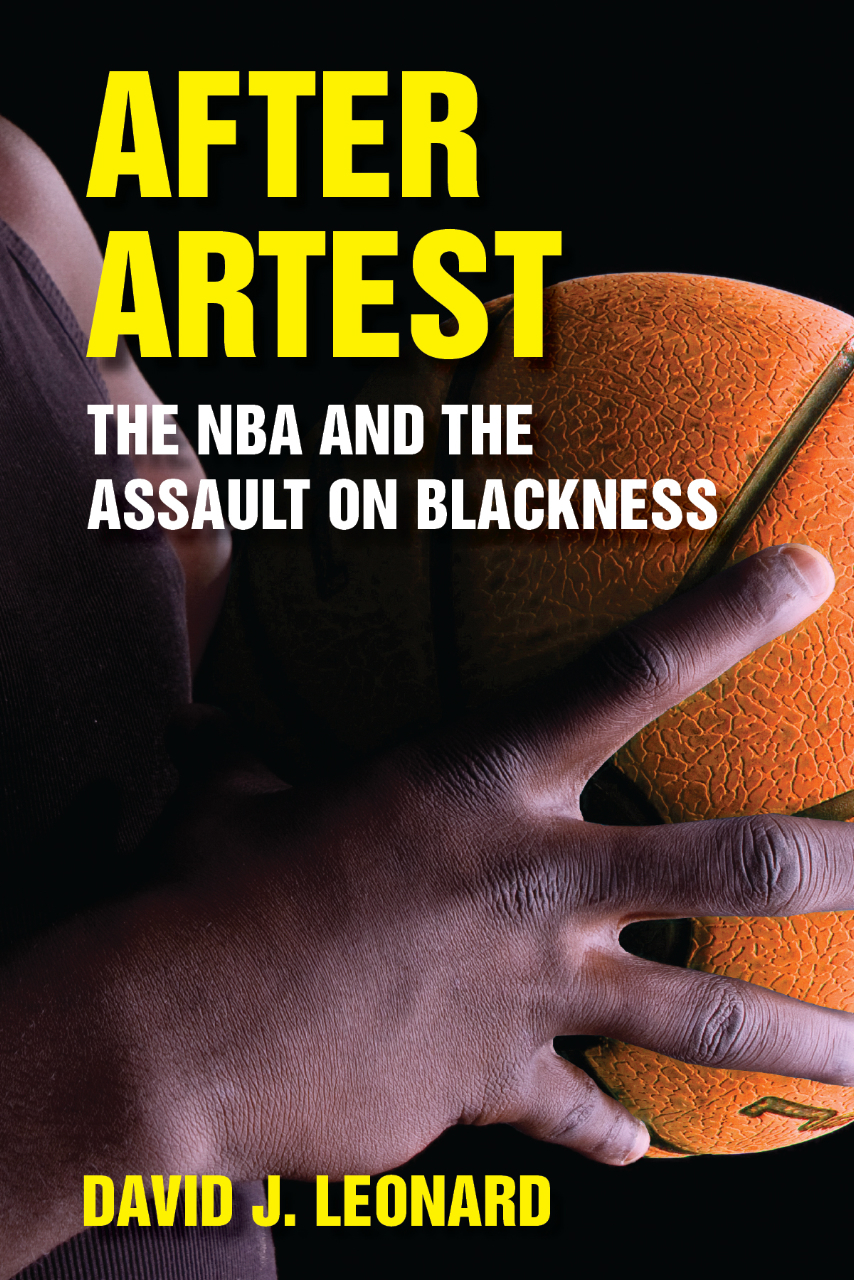
FORTHCOMING BOOK
DAVID J. LEONARD
AFTER ARTEST: THE NBA AND THE ASSAULT ON BLACKNESS
SUNY PRESS, MAY 2012
 MY LATEST BLOG POST FOR NEW BLACK MAN
The star power of Yao Ming is not the result of his extraordinary stats for the Houston Rockets. He averages a respectable 13 points and 8.2 rebounds per game. The flurry of magazine covers, billboards, and television commercials featuring Yao reflect the desires of American and Chinese companies to cash in on Yao’s popularity. Beyond the efforts to sell basketball to more than 2 billion Chinese nationals, the NBA hopes to capitalize on the sudden explosion in ticket sales to the Asian American market. Asian Americans buying group packages for Rockets games represent 11 percent of the buying public, 10 percent more than last year. In cities across America, Yao attracts fans to the Rockets’ away games to such an extent that a number of stadiums, in places like Detroit, Boston, and Oakland, have offered special “Asian American nights.” When the Rockets played the Golden State Warriors this spring, the Oakland arena announced parts of the game in Mandarin. Rockets’ coach Rudy Tomjanovich frequently boasts of Yao ‘s importance in bridging cultural and political gaps. In other words, Yao is presumably schooling America about Chinese culture and history.

Described as crazy, as a publicity stunt from a man seeking attention, as evidence of his weirdness, and countless other not-to-mentioned racist and derogatory comments, the Internet was set ablaze after Ron Artest announced his plans to change his name to Metta World Peace.
Commentators also used the instance to rehash Artest’s past, postulating that the name change reflected a deliberate attempt to continue to change his image. For example, Andy Kamenetzky, offered the following as explanation for his name change:
In any event, the identity change falls in line with recent steps Ron has taken while bettering himself as a person and revamping his formerly tarnished image:
– Opening up about his time in therapy, while becoming an outspoken advocate for the mental health issues. (A matter we discussed at great length earlier this season.)
– Winning the 2011 J.Walter Kennedy Citizenship award for outstanding service and dedication to the community.
– Launching a new reality TV show, “Last Second Shot,” in which he’ll mentor parolees.
Thus, why not change his name to “Metta World Peace?” (“Metta,” by the way, is defined as the Buddhist virtue of kindness.”)
The one concern I might have for Ron is perhaps appearing like he’s on the verge of jumping the shark. It’s one thing to thank your psychiatrist before conducting a freewheeling, heartfelt press conference for the ages. It’s another to adopt a very unusual moniker. Too many moves at once, however well-intentioned, could come off as cartoonish.
The fact that his decision to change has led to ample ridicule and criticism, leaving one to wonder how this was an attempt to reform his image, is revealing. Unable or unwilling to accept the name change on his terms, analysts and the many people who offered comments on various pages took the opportunity to once again deconstruct, analyze, psychologically prod Artest. In my forthcoming book – After Artest (SUNY Press) – I argue that Artest (and the NBA’s black bodies) were unable to transcend and move beyond the prism of the Palace Brawl. That is, the 2004 Palace Brawl overdetermined the media discourse surrounding and public consumption of the NBA; and both the Palace Brawl and the representations of the NBA were overdetermined by the blackness associated with the league. The spectacle surrounding his name change, the demonization, the ridicule, and the efforts to psychologically analyze Artest demonstrates how both blackness and the Palace Brawl overdetermine this reaction. The level of animosity and judgment is not only evidence to the impossible path to redemption, but also how we as a society might grow a bit if we simply thought about what Metta (Ron Artest) is trying to tell us. According to Acharya Buddharakkhita, Metta means the following:
The Pali word metta is a multi-significant term meaning loving-kindness, friendliness, goodwill, benevolence, fellowship, amity, concord, inoffensiveness and non-violence. The Pali commentators define metta as the strong wish for the welfare and happiness of others (parahita-parasukha-kamana). Essentially metta is an altruistic attitude of love and friendliness as distinguished from mere amiability based on self-interest.
If people could simply hear and practice what is in his name, I can only imagine what the sporting world would look like (not too mention the comment) as well as every other institution within our society.

 Dr. David J Leonard