SLAM ONLINE | » The NBA’s Franchise Player?

The NBA’s Franchise Player?

The untouchable Blake Griffin or the can’t-do-right Andrew Bynum?

by David J. Leonard / @DR_DJL

After watching yet another commercial, seeing yet another magazine advertisement, and trip to Subway, both my 4-year-old son and 8-year-old daughter noted that Blake Griffin seemed to be everywhere.

No matter where they turned, no matter what was on the television, it is almost impossible not to see Griffin, all of which is emblematic of the power of the NBA’s marketing machine. Despite winning nothing of substance to-date and only putting up very good numbers over his short career (20 and 10), Blake has ascended as the face of the League.

Celebrating for his ferocity, his spectacular dunks, and his purported right attitude, Griffin has filled the hero gap left by LeBron’s “Decision,” Dwight Howard’s “Indecision,” Melo’s “New York State of Mind,” and Kobe’s “Baggage.” Griffin, on the other hand, has consistently been represented as a “breath of fresh air,” a throw back player, and someone who fans can cheer for.

Celebrating his balance, the media narrative consistently depicts Blake as a competitor on the floor and a good guy off the floor. For example, TJ Simers highlights the difficulties Blake must endure and the grace that he has shown under this pressure:

That almost speaks to a sensitivity one would never consider Griffin possessing, given the way he imposes his physical will on opponents. But he is still young, and when asked about the highlight of his summer, surprisingly it was his brother’s wedding rather than the Hollywood treatment he received.

Similarly, Justin Verrier offered explanation and, in some regards, an excuse for Blake’s “antics” as a means to celebrate him:

But Cousins and Gasol aren’t entirely wrong, either: While it’s hard to argue that Griffin is “babied” by refs, given the game-by-game punishment he takes in the post, he certainly benefits from his share of favorable calls (in particular, the one that sent Cousins off the deep end to begin with). And Griffin has made a habit of forcefully dropping his off-hand on some of his more memorable dunks, creating both a way to propel himself higher and return some of the force applied to him on his way up (a natural reaction with unintentional consequences, he’s said in the past).

But these are only minor squabbles in a season full of them, throughout the League. Their comments certainly put a national spotlight on Griffin’s on-court demeanor—Cousins’ comments alone overshadowing recent ugly performances by the Heat and Thunder—but they may end up saying more about how players around the League perceive the rise of young stars like Griffin.

You have to crawl before you walk. You’re supposed to intern before you get that big job. And in basketball, like all other professional sports, you’re supposed to pay your dues.

This represents the crux of the Blake the narrative: great kid, whose passion, competitiveness and work ethic at times get the best of him. What could have been a criticism thus becomes a way of celebrating Blake Griffin as unique and special.

“He’s a highlight at any second of the game, but he’s also smart enough to know that the fundamentals are the part that will make him better and help this team,” noted his coach Vinny del Negro. “He handles it very well. He has great humility and great character.”

Evident here is how the Blake Griffin story is very much a figment of the media/NBA imagination. Shooting free throws with the precision of Shaq and Chris Dudley, possessing only two moves—the dunk and a 20-foot, pick-and-pop shot—and of course playing no defense are not the markers of a fundamentally-sound player. The description of Blake as humble doesn’t match his on-court persona of talk trashing in the tradition of Bird and Payton, and relishing the opportunity to embarrass an opponent with a poster shot.

Continue reading at SLAM ONLINE | » The NBA’s Franchise Player?.

The NBA’s Glass Wall


My 5-part series with Lay Up-line on gender, sexism, and the NBA
March 7, 2012

NBA’s Glass Wall: Cheerleaders

(This is part four in a special 5-part series by sports analyst David J. Leonard on the NBA’s abysmal performance when it comes to gender equity.)

Mary Jo Kane, in “Sex sells Sex, Not Women’s Sports” links the marginalization of female athletes to the hegemony of sex within sports.  She successfully debunks the claim that sex sells women’s sports: “Sex sells sex, not women’s sports.” As part of the Nation’s series on sports, Kane argues:  “Millions of fans around the globe just witnessed such media images and narratives during coverage of the Women’s World Cup in Germany. Perhaps such coverage will start a trend whereby those who cover women’s sports will simply turn on the camera and let us see the reality—not the sexualized caricature—of today’s female athletes. If and when that happens, sportswomen will receive the respect and admiration they so richly deserve.”

This is pretty easy to see as one looks at the ways female athletes enter into the sports media sphere. Historian Patricia Hill Collins notes how contemporary sports cultures works to “simultaneously” “celebrate and ‘feminize” their athleticism by showing women in action and showing their navels”.  Coming on the WNBA’s marketing campaign, Collins argues that WNBA “ads all shared another feature — unlike their basketball uniforms that provide more than adequate coverage for their breasts and buttocks, each woman was dressed in fitted sweat pants and in a form-fitting top that, for some exposed a hint of their midriffs, an occasional naval”.

In regards to the WNBA, one has to look no farther than google to see the hegemony of sexualization.  If one types in WNBA and “hotties,” “sexy” or “sexiest” one is faced by an avalanche of websites offering top-10 lists.  Whether on the Bleacher Report, Spike TV, ESPN, and YouTube, women in the WNBA are far more readily available as sexual objects than ballers. Routinely radio stations and websites pit women of the WNBA in a battle for who will be crowned as the “hottest” WNBA star (see here for example).   In these contests, presumably male fans vote for the “hottest player” illustrating the ways in which primarily male fans interact with women ballers: as sex objects, as body parts, as sources of pleasure.  Women, thus, enter into the sports realm reaffirming patriarchy and gender boundaries, reinforcing the primacy of males in this space.

The sexualization of women within basketball is of course not limited to WNBA players, but is on full display during each and every NBA game.  Over the past decade women have been deposed from their positions as referees and play by play analysts.  When the NBA hired two women referees, Violet Palmer and Dee Kantner, in 1999 three years after promoting Cheryl Miller as a play by play analyst, it appeared as if women were shattering the NBA”s glass wall that kept women away from on-court positions of authority.   However by 2003, Palmer was the lone woman referee in the NBA and there were no other women doing play by play for nationally televised games.  Therefore if you watched an NBA game on TV in the last thirty years the only women you saw was either a sideline television reporter—but that still depended heavily on which team you were viewing and whether it was a televised game.  So more likely than not the only women you saw gracing the courts during NBA games were cheerleaders.

The sight of scantily clad cheerleaders who make limited wages for their in-game performances (around $100 dollars per game) affirms that the place of women on the basketball floor is quite clear.  Cheerleaders are the most prominent examples of the “sexy babe mode” mode of representing women.  According to Kane, the “sexy babe mode” “represents a “hot” female athlete, falls just short of soft pornography.” This carries over into sports media with websites and “mainstream” sports like NBC Sports or Sports Illustrated offering pictorial slide shows, often showing women in sexualized positions (cleavage shots seem to be a requirement for some websites).

In spite of the fact that it operates a professional woman’s basketball league sex and sexuality remains the predominant vehicle through which the NBA transmits images of women.  While sex sells sex, it also sells “MEN’S SPORTs.”  Whether in advertisements for strip clubs in local newspapers, athlete pictorials, or eye-candy cheerleaders, women in sports remain sexualized objects for the consumption of male consumers.

NBA’s Glass Wall: The Case of Nancy Lieberman

(This is part three in a special 5-part series by sports analyst David J. Leonard on the NBA’s abysmal performance when it comes to gender equity.)

Following the announcement that Nancy Lieberman was going to become the first female head coach in the NBA system in 2009, the sports media gathered around in celebration.  Chris Tomasson asked “Could Nancy Lieberman Become the NBA’s First Female Head Coach?” while Scott Schroeder celebrated Lieberman as  “Still a Pioneer.”  Although clearly a break through movement for the league, the media focused on celebrating the individual achievement rather than the dismantling of the NBA’s boys-only coaching carousel.  For example, Tomasson rhetorically asked: “The D-League today. The NBA tomorrow.”  Depicting her as a pioneer, as a trailblazer, and as someone who will open up opportunities for other women in the NBA, he concluded:  “If there ever will be a female NBA head coach in my lifetime, I’m thinking Nancy Lieberman has got a shot. Lieberman took the first step toward that Thursday when she was named head coach of the Dallas Mavericks’ D-League team in Frisco, Texas.“

Similarly an Associated Press story, quoting Lieberman as a transformational figure, as someone who has the potential to usher in sea change within the NBA, continued the celebratory tone.  It describes her struggle “to break another gender barrier, one she hopes “could be the last barrier.”  The efforts to imagine her as a transformational figure, as someone who could lead the NBA into a post-gender reality is evident in comments from Lieberman herself:  “I kind of look at President Obama,” she noted. “Everybody knows it’s historical because he’s a man of color. But at the end of the day, regardless of his race, creed, color or gender, he has to be president. Everybody knows I’m a woman, but at the end of the day, regardless of my race, creed, color or gender, I have to win basketball games.

Noting the importance of her success, the overall narrative focused on Lieberman as an ideal pioneer, given her ample successes, including her playing against men.  Yet, the media tended to focus on the burden and responsibility she faced.  Her success and failure would invariably impact whether or not other women would have the chance to become coaches. She noted, “If I am successful, I’m sure that I will be looked at (by the NBA).”  Unfortunately, after a 24-26 record in her only season on the bench, Lieberman moved into the front office.  The fanfare and celebratory tone has vanished, as has the commitment to breaking down the gender barriers for female coaches.  The culture of masculinity and the persistence of the old-boys club, all while the narrative focuses on the ways in which it is the league’s players are reluctant to accept a female coach, illustrate that hegemony of the NBA’s gender problem.

A single person, even the great Nancy Lieberman, a lone hire, never had the power to undermine the belief that leaders are male.  The fact that there is little conversation about the lack of female coaches is a testament to the ways in which male coaches have been normalized within the NBA.  It is no wonder that Mark Cuban thinks the NBA will have an openly gay player before it has a female head coach.  It no wonder that Pat Summit, collegiate basketball winningest coach, described the chance of a women coaching in the NBA a “longshot.” Because of patriarchy and sexism, evidenced by the entrenched NBA culture, and given the persistence of Glass Walls within the NBA, I guess the hope of Lieberman is not hope we can believe in.

The NBA’s Glass Wall: The Case of Jeanie Buss

(This is part 2 in a special 5-part series by sports analyst David J. Leonard on the NBA’s abysmal performance when it comes to gender equity.)

One of the more popular minstrel reality shows in VH1’s roster is the program Basketball Wives.  This show is consistently lampooned and derided online whenever it airs for a whole host of reasons, not the least of which is that none of the women on the show are actually NBA Wives, not even in the common law sense.  That wives and girlfriends are interchangeable in VH1 parlance is peculiar enough, but more troubling is the fact that in an era where accomplished women are leading nations, running Fortune 500 companies, and in the case of Oprah Winfrey, a multi-platform media empire, when it comes to the NBA, the most prominent women is this gaggle of pseudo-celebrities.

Clearly, the NBA does not endorse Basketball Wives, so the point here is not to attribute the show as an extension of the league.  No, the issue is how does a multi-national corporation like the NBA which has housed two of the biggest sports stars of the last thirty-years, Michael Jordan and Yao Ming, allow itself to get outmaneuvered by VH1 and its tabloid fare when it comes to the dissemination of women’s images.

One way to begin this discussion is to explore the experiences of Jeanie Buss, which is profoundly instructive as to how the image of the “girlfriend” has become the league’s dominant meme when it comes to women.

In spite of her numerous professional accomplishments, most people know Buss more for her relationship with Phil Jackson, her appearance in Playboy, and her potential participation in the Real Housewives of Beverly Hills, and not as a Los Angeles Lakers executive (she is executive vice president of Business Operations).  It should come as no surprise that little has been made over the assumed anointing of Jim Buss and not her as the next leader of the Lakers.  After all, “It’s a man world,” and her entry into a hyper masculine space has been through her sexuality and body.

While I don’t speculate to understand the dynamics here, but raise the issue in regards to how little has been made about her not even being included in the conversation as a potential successor to Jerry Buss.  Jim Buss’ role as president and his power within the organization is obvious, yet little has been made as why him and not her.  Take a report on ESPN.com shortly before Buss’ promotion:

But now, with legendary coach Phil Jackson retiring and his father, Lakers owner Dr. Jerry Buss, retreating a bit further from the day-to-day operations of the team each year, Jim Buss’ influence on the future of the franchise will be hard to miss.

His whims, his voice, will be the single most important force in the way the Lakers move out of this failed season.

Jim Buss has been constructed as the natural successor while Jeanie is depicted as Phil Jackson’s girlfriend.   Although Jim Buss has been routinely criticized for his decisions and communication skills, it is hard to find anyone suggesting that Jeanie would be better for the job.  This in spite of a fact that her success as a manager dates back to her early days serving as chief executive of the Los Angeles Forum, and overseeing business operations of the Lakers during both the Shaquille-Kobe era and the more recent Kobe-Pau period.  By contrast, Jim Buss’ two most important decisions in the last fifteen years has been hiring Rudy Tomjanovich and Mike Brown.

In short, Jeanie Buss is the most prominent example of the glass wall that seems to permeate the NBA.  Women are able to rise to the executive ranks in the NBA’s league office and the business side of many franchises, but they dare not cross over to managing day to day basketball operations.  That even a family owned franchise like the Lakers that has been extremely successful over the last thirty years would not portend to let a woman exist as a voice of the franchise is really telling about the density of this glass wall.

The themes here transcend the Lakers and the Buss family as we can see how the NBA is a hyper-masculine enterprise and that the participation of women so often comes in the form of traditional supports and sexual objects.  “The NBA would rightly point out that a number of women work in fairly important positions in the league office, where it’s easy to find people who care sincerely about such things,” writes Henry Abbott. “But women not only don’t play basketball for the NBA or its teams. They also don’t coach, make trades or hand out punishments. (They do, however, at almost every public NBA event, dance around in skimpy outfits for money.)”

That Jeanie Buss receives more attention, from media and otherwise, for her relationship history rather than her managerial acumen is indicative of the ways that women are accepted within sporting cultures.  Consumed as sexual object, as fulfilling traditionally accepted gender roles, Jeanie Buss has illustrated the difficulty of being seen in other contexts.

February 27, 2012

NBA Teams Airball When It Comes to Promoting Women


(This is part one in a special 5-part series by sports analyst David J. Leonard on the NBA’s abysmal performance when it comes to gender equity.)

The NBA is often praised for its diversity, celebrated as some model of how sports should handle race.  While researching and writing After Artest I spent ample analyzing the widespread celebration of the NBA in this regard.  The NBA is presumably the gold standard when it comes to the hiring and advancement of racial minorities in front office and head-coaching positions.  However, when we swap gender for race, the NBA’s AAA Diversity rating is significantly downgraded.

This past summer, The Institute for Diversity and Ethics in Sport (TIDES) at of University of Central Florida released its report on the NBA.   While providing ample data, the conclusion/summary was as follows:

The NBA had an A+ for race and an A- for gender for a combined A.

Based on the total points used in these weighted scales, the NBA earned its highest grade combined grade ever at 92.2, up from its previous high of 91.5 in 2010. The NBA grade for race was 95.3, which was up significantly from the 2010 Report when it was 93.8. The combined total and the total for race were both higher than for any other men’s sport in the history of the Racial and Gender Report Card. The NBA again received men’s pro sports’ only A for a combined grade for race and gender. As has often been the case since TIDES began issuing its annual report there were countless headlines praising the NBA’s Diversity Efforts, such as “NBA remains leader in sports diversity” and “NBA gets an ‘A’ for Diversity.”  Yet, as we look at the report and beyond, it is hard to imagine how the NBA can get an “A-” for gender, much less an overall A.

For gender, the NBA earned an A in the league office and an A- for professional administrators. It received a C for team senior administration and an F for team vice presidents.  At best, this is a B average, but a closer look reveals how troubling the NBA’s approach to gender has become.

  • Of the 60 NBA Referees, there was 1 woman (or .02 percent)
  • Women made up 3-percent of Radio/TV Broadcasters
  • Of the 320 Team Vice Presidents, only 48 were women (15%)
  • Women held 27% of team senior administrative jobs (an all-time high)

TIDES depends on close cooperation of league offices to produce its report so there are myriad reasons why it would be in their best interest to accentuate the positives about the NBA.  The league however has been far less complimentary regarding these continued inquiries into their diversity practices.  In a recent article by the New York Times’ Harvey Araton NBA commissioner David Stern is quoted as saying:

“I recognize the presumption that an organization that is not diverse has a job to do. But once you reach a certain critical distribution, the counting should stop.”

Even though the NBA received the highest gender grade of the four major sports, Stern was still overly sensitive regarding ongoing calls for greater gender equity throughout various branches of the NBA.

Interestingly, in this report about diversity in the NBA, there are no grades for gender as it relates to coach, assistant coaches, president/CEO, and general manager.  There are multiple ways to interpret this omission: (1) in the absence of any women in these positions, the grade is obviously an “F.”  Yet, in unmarking that exclusion, the report fails to highlight the absence of female coaches and top executives within the NBA.  (2) The erasure of these numbers normalizes the absence of women within the key basketball-related within the NBA.

In effect, by failing to note these abysmal numbers, the report seemingly renders this reality as both unexpected and a given, not worthy of notation.  This represents a major shortcoming within the report and more importantly the overall tenor of discussions regarding women in the NBA.  Naturalizing exclusion renders women as coaches, presidents, and general managers as unthinkable within the dominant imagination.  The report does grade the NBA as it relates to women vice-presidents, in which the league gets an “F.”  Beyond the abysmal numbers – there were 48 women vice presidents during the 2010-11 NBA season, accounting for 15 percent of vice-presidents league-wide – it is quick to see how few women serve in basketball-related capacities. Female vice-presidents so often found in positions within human resources, marketing, and other business related activities.  There are few women who are both visible, and integral to basketball operations.

Again, it should be noted that this report praises the NBA’s diversity record in the league office, i.e., central administration (“manager, coordinator, supervisor or administrator in business operations, marketing, promotions, publications and various other departments”), giving the NBA an  A- here.  Its when it gets to the individual teams that there is a steep drop off in performance.  Therefore, what becomes evident is that its been normalized that the place for women within the NBA is peripheral; at its best, we see women as league vice presidents, albeit outside of basketball relations.  At worse, and more commonly, women can be found in support roles, in those accepted gender roles as sideline reporters, secretaries, personal-assistants, cheerleaders, and as the case of tomorrow’s subject Jeanie Buss reveals, even when a woman is an accomplished front-office professional she is still rendered as someone’s, girlfriend.

David J. Leonard Reflects on Derek Fisher Trade | The Layup Line

The Derek Fisher Trade

David Leonard

David J. Leonard Reflects on Derek Fisher Trade | The Layup Line

I am a Lakers’ fan. From cradle until grave, I will be a Lakers fan. I was cheering for alley-oops (Coop-a-loop) long before “Lob City;” I have watched games at the Great Western Forum, the Staples Center, and elsewhere. So, when I heard the Derek Fisher had been traded, I was sad. With his jersey hanging in my closet, Fish has always been a favorite player of mine. Defensive-minded, but someone who has always hit key shots – .04 against the Spurs; his 3 against the Magic; his greatness in Game 3 against the Celtics – he has been instrumental in the Lakers’ championships. In a history of the NBA’s greats, Fisher is not one of them, yet his lore and power extends to the likes of West, Baylor, Magic, Worthy, Shaq, and Kobe

At an intellectual level, his trade to the Houston Rockets makes perfect sense. Fish is 37-years old and his best days on the court are certainly behind him. His effectiveness, whether on the defensive end or as shooter, has been in steady decline. Add to this, the economics of the game and that the Lakers’ had just traded for Ramon Sessions, a young and dynamic point guard, one has to concede trade makes sense.

It is clear from yesterday’s trades that the Lakers’ improved their squad, increasing their chances in the playoffs, something every fan has demanded since their last championship two years ago. Yet, I found myself conflicted, uneasy about the trade outside of “basketball reasons.” I was not alone with Lakers’ fan lamenting the trade of Fish (while celebrating the departure of Luke Walton and barely noticing the trade of Jason Kapono). Noting how he was a glue guy, how important he was to the team’s chemistry, and how instrumental he has been for the Lakers’ the overall tone was both reminiscent and predictive. Fans have expressed concern about how his departure may impact the team though little of it has focused on specific contributions – scoring, rebounding, assists, defense, ball-handling – that the Lakers are losing. Kelly Dwyer encapsulates this line of thinking:

There is absolutely no justification for the move. Fisher, to be quite frank, has been absolutely brutal on both sides of the ball over the last two seasons for Los Angeles. He can’t stay in front of even the NBA’s slowest point guards, at this point, and he offers precious little offensively save for the occasional (as in, “32 percent of the time he shoots one”) 3-point basket. By every conceivable standard, he was a millstone for the team on the court. No amount of leadership and smarts (two things Fisher provides in spades) could make up for his shortcomings.

It still doesn’t mean you trade Derek Fisher, heart of the team, to save $3.4 million and a few million more in luxury tax savings. Some guys really should just be untouchable, even as their minutes decrease to nil. Derek Fisher should have been one of those guys.

continue reading @ David J. Leonard Reflects on Derek Fisher Trade | The Layup Line.

Family Ties: On Jeremy Lin, “Tiger Moms,” And Tiger Woods | Racialicious – the intersection of race and pop culture

Family Ties: On Jeremy Lin, “Tiger Moms,” And Tiger Woods

By Guest Contributor Dr. David J. Leonard

In a world that imagines basketball as the purview of African Americans, the emergence of Jeremy Lin has sent many commentators to speculate and theorize about Lin’s success. Focusing on religion, Eastern philosophy, his educational background, his intelligence, his parents, and his heritage, the dominant narrative has defined Lin’s success through the accepted “model minority” myth.

In other words, while celebrating Lin’s success as a challenge to dominant stereotypes regarding Asian Americans, the media has consistently invoked stereotypical representations of Asianness to explain his athletic success, as if his hard work, athleticism, and talents are not sufficient enough explanations.

Intentional or not, the story of Lin is both an effort to chronicle his own success in comforting and accepted terms and, in doing so, offer a commentary on blackness.

“Discussions about the NBA are always unique because the NBA is one of the few spaces in American society where blackness, and specifically black masculinity, is always at the center of the conversation, even when it’s not. Power is often defined by that which is assumed, as opposed to that which is stated,” notes Todd Boyd.

“Because black masculinity is the norm in the NBA, it goes without saying. Concurrently any conversation about race in the NBA inevitably refers back to this norm. In other words, people seldom describe someone as a ‘black basketball player’ because the race of the player is assumed in this construction. So any current discussion about Jeremy Lin is taking place within the context of a league and its history where the dominant players have long been black men. Lin is ‘the other’, as it were, but here the standard is black, not white, as would normally be the case in most other environments.”

Not only does the constructed Lin narrative exist in opposition to the normative blackness of the NBA, but also the specific rhetorical utterances often play upon the dominant assumptions of today’s black ballers.

Central to the efforts to explain Lin’s success, a process that renders him as exceptional, has a focus on his parents. In the New York Daily News, Jeff Yang argues that, “the secret to Lin’s success seems to have been a combination of high expectations and unconditional support–a kind of tiger-panda hybrid, if you will.” Emphasizing his Dad’s role as basketball tutor and coach extraordinaire who exposed Lin to the “signature moves from the likes of Dr. J, Moses Malone, Kareem Abdul-Jabbar, and, most of all, Michael Jordan,” the media consistently depicts his father in the tradition of (white) American fathers who nurtured and encouraged athletic performance. His mom, on the other hand, is depicted as a “tiger mom” of sorts, as someone who balanced out the father by maintaining an emphasis on education. Requiring that Lin and his brothers complete their homework prior to basketball, the narrative describes Lin’s athletic prowess as being the result of the perfect marriage of “Asian values” and “American” cultural norms.

While the media often links black athletic success to “God’s gifts” or to physical “prowess,” the efforts to chronicle Lin’s rise as reflecting his cultural background reinforces dominant conceptions of both blackness and Asianness.

Continue reading @ Family Ties: On Jeremy Lin, “Tiger Moms,” And Tiger Woods | Racialicious – the intersection of race and pop culture.

NewBlackMan: #LinSanity and the Blackness of Basketball

#LinSanity and the Blackness of Basketball

by David J. Leonard | NewBlackman

Over the last week, there has been significant discussion about how race is playing out within the media and fan reception of Jeremy Lin. Focusing on anti-Asian slurs, prejudice, and stereotypes, the media narrative has not surprisingly provided a simplistic yet pleasurable narrative. Imagining racism as simply bias that can be reduced through exposure and education, the media discourse has erased the powerful ways that sports teaches race and embodies racism. As Harry Edwards argues, sports recapitulates society, whether it be ideology or institutional organization.

According to Marc Lamont Hill, professor of education at Columbia, “blackness is at the center” of the media’s Linsanity. Seeing basketball as a space of blackness, “the whole undertone is irony, bewilderment and surprise.” Harry Edwards, Sociology Professor emeritus at UC Berkeley, highlights the predicable narrative, which reflects the fact that “we live in a niche society.” This encourages people to “retreat into traditional storylines.” Irrespective of facts or specifics, the deployed media narrative has retreated to a place that depicts the NBA as a black-league defined by athleticism and hip-hop that is changing before our eyes. The arrival of Jeremy Lin, who the media continues to cast in the role of the “model minority” whose intellect, personality, and overall difference is providing the league with something otherwise unavailable, is constructed through a narrative black-Asian conflict.

Replicating stereotypes, the undercurrent of the Lin narrative, the media inducted fantasy, has been his juxtaposition to the league’s black players. “Discussions about the NBA are always unique because the NBA is one of the few spaces in American society where blackness, and specifically black masculinity, is always at the center of the conversation, even when it’s not. Power is often defined by that which is assumed, as opposed to that which is stated,” noted Todd Boyd, Professor of Critical Studies at USC, in an email to me. “Because black masculinity is the norm in the NBA, it goes without saying. Concurrently any conversation about race in the NBA inevitably refers back to this norm. In other words, people seldom describe someone as a ‘black basketball player’ because the race of the player is assumed in this construction.

So any current discussion about Jeremy Lin is taking place within the context of a league and its history where the dominant players have long been black men. Lin is ‘the other’ as it were, but here the standard is black, not white, as would normally be the case in most other environments.” From the constant references to his being “humble” and “team-oriented,” to his widely circulated idea that he came out of no where and that his career is one of low expectations and being overlooked, the media narrative has imagined him as the anti-black baller. The stereotypes of both Asian Americans and blacks guide the media narrative.

According to Oliver Wang, “Some in the Asian American community are following “Linsanity” with caution, especially as commentators praise Lin for being “hard working,” “intelligent” and “humble,” words associated with long-standing stereotypes of Asian Americans. Chuck Leung, writing for Slate.com, expressed the fear that “beneath this Linsanity is an invitation for others to preserve these safe archetypes.” Whereas black ballers are defined/demonized with references to selfishness and ego, a sense of entitlement that comes from societal fawning, Lin purportedly provides something else. Compared to black players, who are defined through physical prowess and athleticism, Lin, who is 6’3”, extremely physical and athletic, the media has consistently presented him as a “cerebral player” whose success comes from guile, intestinal fortitude, and determination, seemingly discounting his physical gifts and his talents on the floor. Marc Lamont Hill noted a report that described Lin as a “genius on the pick n’ roll.” Continuously noting his Harvard education, his high school GPA, his college GPA, and his economics major all advance the narrative of his exceptionalism and his presumed difference from the league’s other (black) players.

On Weekends with Alex Witt, Sports Illustrated columnist and Lin friend Pablo Torre celebrated Lin as a “student of the game,” and as an anomaly. Torre noted that Lin watches game footage at halftime, a practice he says isn’t seen within the NBA. While David West of the Indiana Pacers told me that watching footage is standard practice with the NBA, its usage here is just another example as how Lin is being positioned as NBA model minority and the desired body outside the sports arena.

Reflecting on the nature of this discourse, Hiram Perez in an essay about Tiger Woods, describes “model minority rhetoric” as both homogenizing the Asian American experience through professed stereotypes and celebration of Asian American accomplishments, but “disciplin[ing] the unruly black bodies threatening national stability during the post-civil rights era” (Perez, 2005, p. 226). The caricatured and stereotyped media story with Lin illustrates this dual process, one that reifies stereotypes concerning Asian Americans while at the same demonizing blackness. Historically, the model minority discourse has work to juxtapose homogenized identities, cultures, and experiences associated with Asian Americans and African Americans.

Continue reading @ NewBlackMan: #LinSanity and the Blackness of Basketball.

SLAM ONLINE | » Going Global: Jeremy Lin and the NBA

Going Global: Jeremy Lin and the NBA

Linsanity has become a global phenomena, but the NBA’s popularity throughout Asia is nothing new.

by David J. Leonard / @DR_DJL

In 2010, I visited Taiwan, speaking to university students about Yao Ming and then-college player Jeremy Lin. Even though Lin is Taiwanese American, few students knew who he was—most knew about Yao, some just wanted to talk about Beyoncé and Jay-Z. In Taiwan today, it’s safe to think that—like Kobe Bryant—most know who Jeremy Lin is now.

Unsurprisingly, one of the emergent Linsanity narratives has been that he is providing a bridge to untapped markets, whether Asian-American communities or those throughout Asia. Constructing Asian-American fans and those from throughout Asia (with little differentiation across various countries) as otherwise disinterested in basketball, the narrative replicates stereotypes while simultaneously erasing the immense popularity of basketball within the Asian Diaspora.

Jeremy Lin has been credited with either cultivating or revitalizing interest in basketball throughout Asia. According to Matt Brooks, “But in the post-Yao Ming NBA, Lin just might be the player to further the League’s growth in Asia, while continuing to inspire athletes to break the mold.”

Similarly, an Associated Press story credits Lin with filling the void left by Yao Ming: “Jeremy Lin and Ricky Rubio aren’t just responsible for reviving their dormant franchises. They also are giving the NBA two fresh young faces to market internationally. As the first American-born player of Chinese or Taiwanese descent, Lin is re-opening doors in Asia that were feared to be closing in the wake of Yao Ming’s retirement. He’s led the New York Knicks to five straight victories and has become an instant fan favorite at Madison Square Garden.”

While clearly Lin has captured the national and international imagination, the narrative that there weren’t NBA fans throughout the Diaspora lacks any factual basis. And the argument that the NBA did not exist in Asia prior to Yao Ming or that fans in China or Japan, Thailand or the Philippines or Taiwan were fans of Yao and not the NBA reinforces stereotypes while erasing the history of the NBA globally. Lin’s own story, whose father became immensely passionate about the NBA after watching games while still living in Taiwan, is a testament to the globalization of basketball.

NBA Commissioner David Stern once described “the opportunity for basketball and the NBA in China” as “simply extraordinary.” The media narrative around Jeremy Lin has advanced this argument, yet reducing the NBA’s popularity in Taiwan, China, and throughout Asia to ethnic or national solidarity is simplistic. Basketball has been immensely popular throughout Asia for many years.

According to a 2007 study, 89 percent of Chinese between the ages of 15 and 54 were “aware of the NBA,” with 70 percent of youth between the ages of 15 and 24 describing themselves as fans. With 1.4 billion viewers watching NBA games during the 2008 season (up through April 30) on one of the 51 broadcast outlets in China, and 25 million Chinese visiting NBA.com/China each month, basketball and the NBA are cultural phenomena within China.

And while the immense fanfare directed at NBA stars is partially a result of the emergence of Yao Ming within the NBA, American NBA players have in recent years generated equal, if not more, popularity. For example, Yao Ming, whose jersey ranked as the sixth most popular in 2007, had dropped into 10th by 2008 even behind the likes of Gilbert Arenas. As of 2010, Kobe Bryant and LeBron James had the two most popular jerseys in China, with Dwight Howard, Kevin Garnett, Derrick Rose and Kevin Durant also feeling the love. The allure of the NBA, and the immense excitement that the League generates did not begin and end with Yao Ming and Jeremy Lin.

The popularity of the NBA and its players was clearly on full display during the 2008 Summer Olympics. While attending a US Women’s basketball game, Bryant attempted to move through the crowd to his seat, only to find himself amid a sea of cheering fans. The presence of Bryant, who has experienced ample criticism and media derision during the course of his career within the United States, receiving star-studded adoration assumed to be reserved for Chinese athletes, was a testament to the popularity of the NBA and its (African) American basketball stars in China.

Continue reading @ SLAM ONLINE | » Going Global: Jeremy Lin and the NBA.

When It Comes to Sports, Race Still Matters – Entertainment & Culture – EBONY

When It Comes to Sports, Race Still Matters

By David Leonard Writer

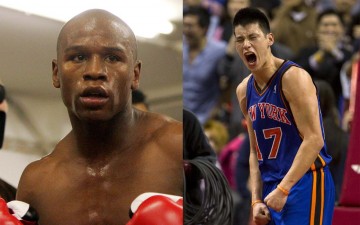
The emergence of Jeremy Lin as international superstar, and resulting tweets from Jason Whitlock and Floyd Mayweather, has prompted widespread debate about whether or not race matters in both the media representation and in understanding the arch of his career. Without a doubt, race matters when talking about Lin given his path to the NBA, prejudice experienced while on the court (see here for examples; see here broader discussion), and the larger context of anti-Asian racism. Lin is not evident of some post-racial fantasy, but instead a reminder of how race matters. It matters whether talking about sports, housing, education, foreign policy, economic inequality, media culture, and interpersonal relations.

Race matters when examining the media representations of Black athletes, whether were talking about the demonization of Michael Vick (the most despised athlete in America), Barry Bonds, or LeBron James; it matters in look at the stories of redemption afforded to Ben Roethlisberger and Josh Hamilton, or the lack of media attention directed at Kevin Love following his recent stomp. To deny the impact and significant of race with Lin is as absurd as deploying “the race denial card” in these contexts as well. To imagine Lin outside of the scope of race and racism, or to isolate race as something usual in this instance, especially given the ways that the NBA is associated with blackness (the subtext here feels as if the discussion is being reduced to anti-Asian prejudice from African Americans), represents an immense failure.

So race matters when thinking about Lin’s recruitment (or lack thereof) out of high school and his path to the NBA, as race matters when talking about employment discrimination.

Racism holds people back in every industry, from higher education to the business world. Researchers at the Discrimination Research Center, in their study “Names Make a Difference,” argue that racial discrimination represents a significant obstacle for employees. Having sent out 6,200 resumes with similar qualifications to temporary employment agencies, the authors found that those with names associated with the Latino and white communities received callbacks more frequently than those presumed to be African American or South Asian/Arab American (called back the least frequently).

Similarly, MIT professors Marianne Bertrand and Sendhil Mullainathan concluded that perspective applicants with “White sounding names” are 50 percent more likely to receive a callback after submitting a resume than were those with “Black sounding names.” They concluded that Whiteness was as much an asset as 8 years of work experience, demonstrating that race has a significant impact on one’s job future. In their study, “Are Emily and Greg More Employable than Lakisha and Jamal? A Field Experiment on Labor Market Discrimination,” the authors conclude, “While one may have expected that improved credentials may alleviate employers’ fear that African-American applicants are deficient in some unobservable skills, this is not the case in our data. Discrimination therefore appears to bite twice, making it harder not only for African-Americans to find a job but also to improve their employability” (“Employers’ Replies to Racial Names” 2003).

In a society where those with “Black sounding” and “Muslim sounding” names receive call backs from perspective employments with 50% less frequency, this an opportunity to talk about systemic racism.

Continue reading @ When It Comes to Sports, Race Still Matters – Entertainment & Culture – EBONY.