Liz Dwyer: Want to Boost Minority Achievement? End School Bullying – Education – GOOD

Want to Boost Minority Achievement? End School Bullying

Liz Dwyer

Education Editor

It’s no secret that victims of school bullying have a tough time keeping up their grades. After all, thanks to all that taunting and name-calling, almost 160,000 children stay home from school every day because they’re afraid to show up. Now, a study released Tuesday concludes that bullying has an even greater negative impact on the GPAs of black and Latino students than those of their white peers.

Lisa Williams, a doctoral student in sociology at The Ohio State University, and Anthony Peguero, a sociology professor at Virginia Tech, used national bullying data as well as survey results from 9,590 students attending 580 schools nationwide for their study, which they presented at the annual meeting of the American Sociological Association. They found that black high school freshmen earning 3.5 grade point averages saw their grades drop to a 3.2 average by senior year as a result of bullying.

The effect of bullying was even worse for Latino students. Freshman with 3.5 GPAs who were bullied as sophomores ended high school with a 3.0 average. In comparison, high-achieving white freshman who experienced bullying only saw their GPAs decrease from 3.5 to 3.47.

Why does bullying effect high achieving black and Latino students so disproportionately? “Stereotypes about black and Latino youth suggest that they perform poorly in school,” Williams says. When students from those backgrounds “do not conform to these stereotypes,” they end up being “especially vulnerable to the effect bullying has on grades.”

Continue reading @ Want to Boost Minority Achievement? End School Bullying – Education – GOOD.

Mychal Denzel Smith–The Failure of Pro-Feminist Hip-Hop — The Good Men Project

The Failure of Pro-Feminist Hip-Hop

 By Mychal Denzel Smith

August 23, 2011

Mychal Smith desperately wants to like pro-feminist hip-hop artist Drake, but something important and powerful is missing from the music.

I often have a very difficult time reconciling my love of hip-hop with all my hoity-toity ideals about gender, sex, and whatnot. However controversial it was, I’m one of those self-proclaimed feminist men who believes, as Gloria Steinem recently said, “It’s really important that kids grow up knowing that men can be as loving and nurturing as women can.” So when I’m listening to some of my favorite rappers exuberantly claim that they “don’t love hoes” or when rape imagery is used by otherwise talented individuals to affirm some sense of manhood and masculinity, I get extremely uncomfortable.

I’m enough of a hip-hop fan to know that this isn’t all the genre and culture have to offer, and I indulge the alternatives with pleasure. But even there, misogyny rears its ugly head at times, and the constraints of masculine identity limit discourse. I could use more parity.

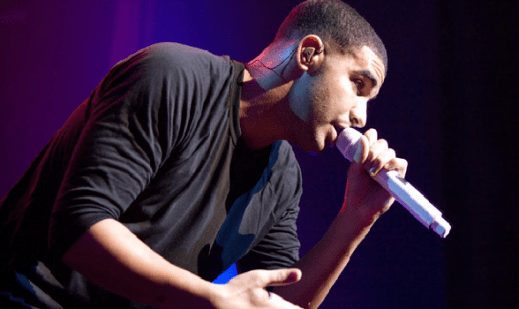
Drake, the Canadian-born teen-TV-actor-turned rapper, is exactly the sort of emcee that a progressive, black, male hip-hop head like myself is supposed to love. He is the antithesis of every tired hip-hop trope revolving around proving your manhood through violence and sexism. He is the type of rapper of whom I should be singing the praises. I should be heralding him as the leader of the new direction hip-hop needs to take so it can grow and evolve its ideas about manhood and masculinity.

I want to love Drake and write essays about how his music opened up a whole new world for me and how it can do the same for others. But I can’t. He and his music do absolutely nothing for me.

Continue reading @ The Failure of Pro-Feminist Hip-Hop — The Good Men Project.

Mark Anthony Neal – NewBlackMan: Daughters of The Help

Daughters of the Help

by Mark Anthony Neal | HuffPost BlackVoices

Twenty years ago filmmaker Julie Dash celebrated the release of her groundbreaking film Daughters of the Dust. The film, set off the South Carolina coast, chronicles the lives of a black family, led by family matriarch Nana Peazant, at the turn of the 20th Century. Shot by cinematographer Arthur Jafa the film offers a brilliant portrait of black life, between and betwixt the modernity that would radically transform it. The film also offers one of the most complex and sophisticated views of the lives of black women in the era. It is a measure of how forward thinking Dash’s Daughters of the Dust was and how backward Hollywood remains 20 years later, that a film like The Help could be lauded as an intimate and authentic depiction of the lives of the Black women who worked as domestics. The tragedy is that far fewer people have seen, let alone, heard of Daughters of the Dust.

As I watched The Help — with my soon 13-year-old daughter sitting next to me — I couldn’t help but think about the daughters of Daughters of the Dust and the daughters of The Help. In Daughters of the Dust, there wasn’t a question as to whether these young women were facing progress, but rather whether that progress would be enveloped with the hard-earned integrity that helped their family survive the middle passage and enslavement. With The Help, I was left witnessing Minny Jackson (in a brilliant, Oscar deserving performance by Octavia Spencer) bequeathing to her barely teenage daughter, a life of servitude and labor exploitation. In one of the film’s more insidious moments, The Help passes off Minny’s daughter’s future as the product of the demands of Minny’s abusive (and invisible) husband and not the very visible system of Jim Crow that limited opportunities for such women and girls for more than a century.

Both my grandmother and my mother-in-law were domestics at one time or another during their lifetimes. My grandmother, now deceased, worked as a domestic for a time in the late 1960s for former New York Mets manager Davey Johnson, then a second baseman for the Baltimore Orioles. My mother-in-law worked as a domestic until her husband could acquire the kind of job that would allow her to stay at home and raise their children, the youngest of which is my wife. I imagine that both my grandmother and mother-in-law would readily admit that their experiences as domestics were far different than those experienced by black women in the deep south in places like Jackson, MS, where The Help is set.

Continue reading @ NewBlackMan: Daughters of The Help.

NewBlackMan: Black Sambo 2.0? New Media Technology and the Persistence of Racist Representations


Black Sambo 2.0?

New Media Technology and the Persistence of Racist Representations

by David J. Leonard | NewBlackMan

New media technology is changing the landscape of television. At one level, the emergence of web-based television, along with platforms like YouTube, provides a space for historically ignored themes and silenced voices within popular culture. I previously wrote about the potential during a discussion of The LeBrons, which “highlights how new media technologies provide modern black athletes (among others) tools to define their own image and message, partially apart from those ‘restrictive script,’ yet bound by the dominant discourse and accepted images.”

Reflecting on this cultural and technological shift, Aymar Christen Jean argues that the golden age of black television has ended. He notes further that the potential afforded by new media technologies are significant in challenging the white hegemony of American television culture: “In this early stage, the writing and production values are uneven. But when you throw in social-networking possibilities online, the emergence of original Web programming can only be good news for black art and expression.” Writing about the brilliant and rightly celebrated The Misadventures of AWKWARD Black Girl, Britni Danielle highlights the transformative potential residing in Web 2.0. “It’s official, the best shows featuring Black people are not on BET, TVOne, NBC, or any other TV channel. The best shows featuring interesting Black characters are on the web,” writes Danielle. “In times like these, when TV shows and films featuring interesting Black characters are missing from most mainstream outlets, it’s nice to see that many (and I do mean many) are taking matters into their own hands and making their own way.”

While clear, from The Misadventures of AWKWARD Black Girl, The New 20s, The LeBrons, Kindred, and Road to the Alter, that the web is emerging as the promise land for the production of black-themed shows and the dissemination of counter-narratives and representations, the frontier of new media technology is also littered with dehumanizing shows as well.

The advance of new media technology, whether on YouTube, I-Tunes, or the totality of the Internet provides a space for the dissemination of racist shows of yesterday, narratives, stereotypes, and episodes that artists fought long and hard to remove from public consumption. William Van De Burg, in New Day in Babylon, documents the ways in which organizations, like the National Black Media Coalition and Black Citizens for Fair Media, fought the continued dissemination of racist imagery. They, along with Asian Americans for Fair Media and others, worked hard to counter those racial images that represented “an explosive psychological force that warps human relationships and wreaks havoc on one’s personal dignity” (Wei, 1993; 51). While movements of the 1960s and 1970s were successful in challenging the presence of dehumanizing representations within network television, the advance of new media has proven to given life to many shows of past generations.

On YouTube, you can find a number of cartoons from the mid-20th century, some of which are explicitly labeled as racist (or banned/censored) cartoons, while others lack specific marking. These cartoons bring into wide circulation the otherwise put into the grave racist televisual moments of yesteryear. For example, on YouTube, “Southern Fried Rabbit” where bugs sings, “I wish I was in Dixie,” also depicts the South as a beautiful oasis in juxtaposition to the barren wasteland of the North. In this episode, Bugs Bunny is presented in blackface, ultimately impersonating a happy slave. At one level, this particular episode is keeping “past” images and narratives alive (the happy slave is clear in circulation as evidence by “pledge”); at another level, it facilitates a space where commentators can rehash and deploy their own racial narratives and ideologies. Claims about permissibility of racist images back then, that it was just entertainment, and simply kid’s stuff are commonplace on YouTube. Likewise, in this episode and in countless others found on YouTube, the history of blackface, of imagining and depicting blackness through dehumanizing imagery is evident.

Continue reading at NewBlackMan: Black Sambo 2.0? New Media Technology and the Persistence of Racist Representations.

Dave Zirin: DON’T Give the Miami Hurricanes the Death Penalty: Give it to the NCAA | The Nation


DON’T Give the Miami Hurricanes the Death Penalty: Give it to the NCAA

Dave Zirin

August 18, 2011

Thursday morning’s cover of USA Today blared the two words on everyone’s lips: “the death penalty.” No, this isn’t because Texas Governor Rick Perry – who just loves executin’ innocent and guilty alike – is now running for President. It’s the fate that most people believe awaits the storied football team at the University of Miami. The death penalty means that the NCAA will for an indeterminate time shut down the entire Hurricanes program. It’s a brutal, financially crippling fate that many believe Miami has more than earned, following a Yahoo Sports expose by Charles Robinson which detailed eight years of amateur violations that would make Dennis Rodman blush. A mini-Madoff financial criminal named Nevin Shapiro, currently serving 20 years behind bars, offered prostitutes, payola, jewelry, yacht parties and every possible South Beach excess for the Hurricane players. While corrupting the athletic program, he was simultaneously being feted by school President, former Clinton cabinet member Donna Shalala and Hurricanes athletic director Paul Dee. They even let him on two occasions lead the team out of the tunnel on game day.

This bombshell has the moral majority of sports journalists in full froth, rushing to the barricades to defend amateur sports. We have people like Sporting News columnist David Whitley, to use merely one example, writing, “The only way to make Miami behave is a long timeout. No more football, smoke and parties for a couple of years. Nothing else has a chance of ending the culture of corruption that is The U.” He even calls Miami “the Ben Tre of college football”, writing, “American forces wiped out the village to get rid of the Viet Cong, prompting a timeless explanation from the U.S. commander: ‘It became necessary to destroy the town to save it.’ The only way to save Miami is to destroy it, stripper pole and all.” But like the war in Vietnam, not to mention the actual death penalty, the call for the NCAA to shut down the program is dead wrong. As with capital punishment, eliminating the Hurricanes is an exercise in hypocrisy that does nothing but ensure these scandals will happen again and again.

What this scandal should produce, instead of the isolation and destruction of one program, is a serious reflection on the gutter economy that is college athletics. Players cannot be paid openly and legally so instead we get the amoral wampum of “amateur sports.” Reading the Yahoo Sports story, it’s difficult to not be chilled by the casual misogyny detailed as strippers, “escorts” and hookers were purchased and handed to players like party favors. You wonder why over 80% of NFL players get divorced after retirement. It’s because as teenagers, they are mentored by parasites like Nevin Shapiro who show them that women are the exchange value for their lucrative labor. This kind of gutter economy also has an ugly echo in old slave plantations, as the prized sports specimens in the antebellum South were handed women by the masters in return for their athletic prowess. Or as David Steele wrote earlier this week, ”Of course, America’s tender little feelings will be bruised if this is equated to slavery, or a plantation economy, or a plantation mentality. Fine. Maybe it can live with a metaphor like sharecropping. You do all the work, we take all the profits, we compensate you with the bare necessities of life, and tough break if you don’t like it.”

The metaphor works because once you wave away the smoke and hot air, this is about jock sniffing criminals and corrupted college Presidents taking advantage of primarily poor African Americans from the South, who see everyone getting paid but them. One anonymous University of Miami player told Yahoo Sports about University running back Tyrone Moss, who took $1,000 from Shapiro. “The guy had a kid while he was in college, a little Tyrone Jr.,” the player said. “He comes in poor as [expletive] from Pompano and he’s got a little kid to feed. I could barely feed myself. I can’t imagine having to feed a kid, too. Of course he’s going to take it when someone offers him $1,000. Who wouldn’t in that situation?”

via/continue reading at DON’T Give the Miami Hurricanes the Death Penalty: Give it to the NCAA | The Nation.

David Steele: College athletes used, abused by NCAA system – NCAA Football – Sporting News

College athletes used, abused by NCAA system

David Steele

Are you happy, Nevin Shapiro? You, University of Miami athletic department? You, NCAA? You, College Football Nation?You’ve made Luther Campbell look like a paragon of virtue in comparison.Much of the allegations of impropriety happened while Paul Dee was the AD at Miami.

You all had various obligations and responsibilities to the welfare and progress of the members of the Miami football and basketball teams. All of you abandoned them.

Those young men – actually, boys in some cases, since the actions described in that damning Yahoo! report Tuesday were sometimes initiated with high school recruits – should have been able to use you for guidance to help them move to the next stage of their lives. Instead, you all used them. You bought, sold and traded those human beings, calculated the costs and benefits of your expenditures and raked in the profits.

In short, you all displayed scruples and values that are somewhere beneath those of the guy who wrote and performed “Me So Horny.’’

Uncle Luke did get a previous version of “The U’’ in trouble, for sure, with allegations of bounties and cash payouts. But, as he pointed out Wednesday in his own blog for the Miami New Times, he was not a booster for the school when he did it, didn’t have direct access to the halls of power as he did it. His connection was lower on the ladder. On the bottom rung, as far as the sport is concerned.

Laugh if you want at his claim that he “dedicated part of his life to helping kids in Miami’s inner city neighborhoods get a college education.’’ He sure gave more of a damn about the welfare of those players than Shapiro did. Or, for that matter, anyone else connected to the Miami program. Or anyone else in college football, or anyone else who follows the sport.

Shapiro bared his tainted soul in a series of jailhouse interviews for Yahoo, detailing how he indulged his deepest jock-sniffing desires for nearly a decade by throwing money at Miami players, utterly unconcerned about whether school officials knew. Oh, and how he funded it by robbing investors in a $930 million Ponzi scheme.

via College athletes used, abused by NCAA system – NCAA Football – Sporting News.

NewBlackMan: The Tweening of America: The Disappearance of Age-Appropriate Television

Wednesday, August 17, 2011

The Tweening of America: The Disappearance of Age-Appropriate Television


The Tweening of America: The Disappearance of Age-Appropriate Television

by David J. Leonard | NewBlackMan

What started as an ordinary conversation about marriage between my partner and our 7 ½ year old daughter (Rea) concretized our ongoing frustrations and precarious relationship with popular culture. Following a role-playing game that ended in a pretend marriage between Rea and Sam (our son, who will be four next month), my partner asked Sam if he knew what marriage meant. Unsure, Rea intervened with a very elaborate description that went something like this: it is when two people meet and then start to date. If they like each other, they continue to date for a while until they are ready to get married. At the wedding, the promise to follow the rules for married people. While her description actually encompassed a few more details, it was clear that she not only understands dating, relationships, and courting rituals, but the institution of marriage and the associated vows. At the age of 7 ½ , she is well versed in both the fairy-tale and happily-ever-after narratives of marriage.

Over the last year, my partner and I have struggled to help Rea find age-appropriate, and most importantly, empowering television shows. In her mind, she is too mature and grown-up for those preschool/kindergarten shows. You know that ones that emphasize language skills, inter-personal skill development, symbolic reason, and cultural literacy: Sesame Street, Arthur, Sid the Science Kid, Word Girl, and Martha Speaks. In her estimation, these shows are neither cool nor sophisticated enough for her; her brother yes, but definitely not for a 2nd grader. Simply put, those shows are boring and, worse, beneath her. Instead, she would much rather watch shows like ICarly, Victorious, Hannah Montana, Wizards of Waverly Place, Good Luck Charlie, or countless other tween shows.

According to Gary Marsh, a top executive at Disney Channels Worldwide: “It’s always been presumed that animation is the gravy train. Nobody quite understood you could create lifestyle franchises out of live-action tween shows.” Similarly, Peter Larsen, in “TV’s Tween Scene,” describes this cultural shift as not only economically significant but culturally important as well: “What they discovered was that kids in that age range didn’t want to watch shows for little kids, and didn’t want to watch their parents’ shows. Instead, they wanted to see themselves and their stories on TV.”

While trying to attract the 9-14 age consumers (25 million in the United States, representing a 50 billion dollar industry), tween shows universally tell stories of TEENAGERS. ICarly chronicles the trials and tribulations of Carly Shay and friends, now in high school, who have their own webcast. One Nickelodeon executive identified the show as one about “relationships and humor” a fact that illustrated by a list of Carly’s “boyfriends, dates and crushes” on one website. Victorious similarly follows high school kids at a performing art school in Hollywood, CA. It, like just about every other show, explores the issues of relationships, getting-in-trouble, boyfriends and girlfriends. While focusing on the experiences and stories of 13-16 year olds, the dearth of shows dealing with the experiences of 6-10 year old kids, along with marketing efforts directed at these younger consumers, results in gravitation to shows that are more teen than tween.

Our discomfort with her watching shows that focus on dating, boys and materialism, looking beautiful and being cool isn’t simply about age appropriateness and our desire for her to define her identity and otherwise imagine her own childhood outside of teenager themes and issues. The focus on dating sends a message that coolness and acceptance comes for girls who have a boyfriend, who guys think are attractive, and who has been kissed. Likewise, too much of these shows chronicle the struggles of girls to be accepted, to feel good about themselves, and part of this comes from the struggles to get a boyfriend.

According to a 2009 study from True Child, school-age television shows lag significantly behind preschool shows in terms of offering representation of confident and self-aware girls. Compared to 94% of preschool shows, only 42% of shows geared toward school-age kids like my daughter exhibit characteristics like confidence, assertiveness, and high-self esteem. Similarly, the report found that “49% of shows feature at “82% of shows feature girls primarily with long hair”; “60% of the shows feature girls who are underweight with skinner than average waists.”

The questionable messages about consumerism, gendered-identity, and appearance-determined coolness run against the presented image of the Disney and Nickelodeon shows about girl power. As example, True Child celebrated several tween girl shows for “breaking through gender stereotypes.” Similarly, David Bushman argues the importance these shows in giving girls something to watch that indeed is about confident girls:

I think Nickelodeon has empowered kids in a lot of ways … but I think they’ve specifically empowered young girls, and that’s a really important thing that Nickelodeon deserves a lot of credit for. This whole idea that you could not make girl-centric shows because boys wouldn’t watch them, they disproved that theory (in Banet-Weiser).

Yet, visibility and even challenging stereotypes isn’t the only issue to consider when examining these shows. Visibility doe

Continue reading at NewBlackMan: The Tweening of America: The Disappearance of Age-Appropriate Television.