Olympic swimmers help erase the historic ‘swimming color line’ | theGrio

Olympic swimmers help erase the historic ‘swimming color line’

by David Leonard | August 5, 2012 at 8:00 AM


Lia Neal competes in the Women’s 200 yard Individual Medley heats on day one of the AT&T Short Course National Championships at McCorkle Aquatic Pavillion on December 2, 2010 in Columbus, Ohio. (Photo by Chris McGrath/Getty Images)

As Lia Neal, Cullen Jones, and Anthony Irvin compete in the the 2012 Olympic Games, they are not simply battling the best in the world; they are helping to close the book on a sad chapter in American history. With each start, each stroke, and each flip-turn, the trio of African-American swimmers are putting the historic (and occasionally more recent) exclusion of African-Americans from America’s pools further behind us. Their presence on this year’s Olympic team and their place among the larger history of black Olympic swimmers (they join Maritza Correia, who won a silver medal in 2004) reminds us of a larger history of racism and exclusion.

Indeed, to witness three black Olympians competing as swimmers represents the continued struggle against the longstanding efforts to keep pools white.

“Sports reflect a larger quandary in the land of opportunity, that so many sports have been resistant to inclusion for all races,” writes William C. Rhoden. And for decades, African-Americans were denied access to swimming pools and other municipal activities: and not only in the south. In Pittsburgh at the turn of the 20th century, whites attacked blacks in the name of swimming segregation.

Richard Allietta describes the level of violence and harassment directed at African-Americans within a segregated swimming culture: “As a youngster in Bellaire, Ohio in the early 1950′s, we would go to the public swimming pool on Mondays, ‘colored day,’ and sit in the observer stands and jeer at the colored swimmers.” Similarly, Ted Gaskins’ memories of his childhood in New Mexico, as described to American RadioWorks, illustrates the longstanding connections between American racism and swimming:

During my early childhood days in Alamogordo, New Mexico, in the early-to-mid 1950s, my grandparents owned and operated the local municipal swimming pool. This was before filtering systems were required and the pool had to be treated with chlorine and other chemicals to maintain the cleanliness of the water. It was also drained once a week and refilled with fresh water.

The sign on the outside of the pool read: “hours 10am to 6 pm Tuesday— Sat. Colored: Sunday from 1 pm – 5 pm.’

After 5:00 on Sunday, my grandfather would drain the pool (125,000 gallons of water) — and on Monday everyone would grab buckets of liquid chlorine and scrub the entire pool.

I asked my grandfather why we did this, and he said that the colored people were unclean and this would kill any bacteria that they would bring in. I also would ask my grandmother if I could go swimming on Sunday, and she would always tell me no, because that was the time when the “colored folks” could swim and I wasn’t allowed to swim with them. This went on till 1957 and at that time the state required the new filtering system and my grandparents closed the pool because of the cost of the new equipment. This was an accepted practice during my early childhood.

Reflecting entrenched ideologies, many white residents resisted efforts to integrate pools in the northern and western U.S. during the 1940s and early 1950s. As these municipal pools, which were largely constructed during the Progressive Era (yes, government creating jobs), began to integrate, many whites fled to suburban and private pools, resulting in systemic divestment from the urban spaces.

Jim Crow, meanwhile, remained a stark reality throughout the South. By the 1960s, however, activists demanded integration in every aspect of American life, including swimming pools and beaches. In St. Augustine, Florida, the owner of Monson Motor Lodge poured acid into the pool after a black man and white women entered the water together.

Continue reading @ Olympic swimmers help erase the historic ‘swimming color line’ | theGrio.
NewBlackMan (in Exile): “Even Sugar Got Free…”: Black Athletes and the Contradictions of Free Agency

“Even Sugar Got Free…” (Paul Mooney):

Black Athletes and the Contradictions of Free Agency

by David J. Leonard | NewBlackMan (in Exile)

One of the common narrative frames of the 2012 playoffs was how the Oklahoma City Thunder did things the “right way.” Ignoring the team’s move from Seattle, a fact that left Sonics fans with a bitter taste in their mouth, Thunder mania stemmed from the fact that the bulk of their roster was made-up of draft picks and players who arrived via trade. Embodying a “rags-to-riches” ideology, one that celebrates individuals and institutions that supposedly pull themselves up by their bootstraps (or draft-picks), the celebration of the Thunder makes perfects sense given our national imagination about sports. In praising the Thunder for choosing to trade several players to acquire endless draft picks (a fact that surely also had to do with the pending sale of the team and dumping salary), fans and media pundits reimagined the Thunder as creating their own destiny.

This celebratory tone was amplified during the 2012 finals, which pitted the Thunder against the Heat, an organization imagined as everything wrong with sports. “The fact that we equate the Heat with evil and the Thunder with good reveals one big truth: sports fans and media hate it when a player chooses where he plays, and love it when a player has no choice over where he plays,” writes Nicholas Schwartz. “Writers and fans simply approve when a player has absolutely no choice over where he can play — like the Oklahoma City players dealt through trades — and disapprove when a player has a choice in which uniform he puts on. The criticism of the Heat ‘model’ for winning reveals that sports fans simply don’t want athletes to have any power over the course of their careers.”

What is clear from this “logic” and the celebration of the Thunder is that fans and media alike don’t like free agency. Worse yet, they don’t approve of players, particularly young African American men, determining their own future. In wake of LeBron James’ decision to take his talents to South Beach, William Rhoden noted the oppositional nature of free agency for the black athlete: “There are many lessons contained in the James free-agency drama. The first is controlling the game, not allowing the game to control you. Here is James, a 25-year-old African-American man with a high school diploma, commanding a global stage.” The response that he should “shut up and play” where he is told to play reflects the hegemony of white racial framing. The message is clear: professional basketball players are lucky enough to earn millions of dollars for playing a game, and that the least they can be is grateful, appreciated and loyal to their fans and city.

The contempt for player movement within the NBA has been on full display in recent years. The condemnation directed at LeBron James both typified this mentality all while perpetuating the idea that free agency is destroying the league. On The Bleacher Report, Asher Chancey named James the #1 worst traitor in sports history (the Sonics/Thunders’ owners are no where on the list). “By holding a prime-time news conference to announce to the world that the City of Cleveland was losing one the best athletes in professional sports, LeBron showed all the qualities we suspect our favorite athletes possess but hope they do not,” he notes. “LeBron showed the entire world that he has an enormous ego, he cares about himself first and all others second, and that the game of basketball is just that to him, a game.”

Continue reading @ NewBlackMan (in Exile): “Even Sugar Got Free…”: Black Athletes and the Contradictions of Free Agency.

The Olympics and the Role of Race in Athletic Choices | Urban Cusp

The Olympics and the Role of Race in Athletic Choices

By David J. Leonard

UC Columnist


In a column on Huffington Post, Kelli Goff dared to ask the unthinkable: “Why Are Some Olympic Sports Whiter Than Others?” Noting the lack of diversity in many Olympics sports, Goff attempts to answer why Gabby Douglas, Lia Neal and Keith Smart (fencing) are anomalies in the white world of sports. While noting class, environment, differential opportunities, and countless other factors, Goff stays clear of racism:

Before the eye rolling begins, this is not a column about rampant racism in sports. But it is an attempt to understand why some sports end up predominated by one racial group versus others, and the long-term social and cultural implications of such segregation on the field, court, or gymnastics mat.

Goff highlights some important issues, although the avoidance of directly exploring race, racism, and segregation leaves an incomplete answer. In 2000, Harry Edwards reflected on how race and racism impacted sporting choices:

In ninety-five percent of American sports, the white athlete is there in numbers and dominant. The white athlete is there in swimming. The white athlete is there in diving. The white athlete is there in water polo. The white athlete is there in golf. The white athlete is there in tennis. The white athlete is there in badminton. The white athlete is there in auto racing. The white athlete is there in horse racing. The white athlete is there in soccer, walking, gymnastics, and all the winter sports in dominant numbers. What happened to the white athlete? The white athlete is there, except in those three, four, or five sports where blacks have had access.

Embodying class inequalities, a history of discrimination, and the realities of residential segregation, many Olympic sports are dominated by whites because the spaces, the neighborhoods, the schools and the very institutions that produce those recreational and elite athletes are racially segregated. Whether swimming, diving or gymnastics, the pipeline to the Olympics is one where youth of color find difficult entry, if not outright exclusion. We need to look further than American schools.

Surrounded by immensely segregated schools, Culver City School is likely one of the most diverse schools in Los Angeles. Although possessing a student population that is 37% Latino; 25% black; 22% white and 15% Asian, its diversity of school doesn’t translate to endless sporting opportunities. Not surprisingly it lags behind schools with significant white student demographics in terms of sporting opportunities yet exceeds those opportunities available at schools that are overwhelmingly black and Latino. It offers the following: Baseball, Boys Basketball, Football, Lacrosse, Soccer, Track & Field, Boys Volleyball, Water Polo, Boys Wrestling, Girls Basketball, Girls Lacrosse, Girls Soccer, Softball, Girls Track & Field, Girls Volleyball, and Water Polo.

Just a few miles away from Culver City lies Beverly Hills High school, a school that is 70% white, 18% Asian, 6.5% black and 5% Latino. As expected, the school with its famous zip code – 91022 (close enough), offers endless academic opportunities and immaculate facilities (including a retractable basketball court that opens up to a swimming pool). It also provides students with access to countless sports.

Although Beverly Hills High occasionally competes against Dominguez High in a basketball tournament, there is no golf, wrestling, water polo or swimming rivalry between the cross-freeway (intra-segregation) rivals. The Compton School district (which has three high schools – Dominguez, Centennial and Compton) is the face of American public education: segregated, underfunded, and left behind. With high schools that are over 97% black and Latino, it should come as no surprise that athletic schedules begin and end with basketball, football, soccer, baseball, volleyball, and track and field.

Just south and west of Compton, in what might as well be another world, is Huntington Beach High School. A school that is 64% white, compared to 16% Latino, 10% AAPI, 7% Native American and 1% African American offers a range of sports, many of which are Olympic sports.

via The Olympics and the Role of Race in Athletic Choices | Urban Cusp.

NewBlackMan (in Exile): Olympic Inequalities

Olympic Inequalities

by David J. Leonard | HuffPost Sports

In a recent blog post on The Huffington Post, Kelli Goff dared to ask the unthinkable: “Why Are Some Olympic Sports Whiter Than Others?” Noting the obvious and seeking to understand the absence of people of color from many Olympic sports, Goff attempts to answer why Gabby Douglas, Lia Neal, Jordan Burroughs, Ibtihaj Muhammad, Justin Lester, John Orozco, and Cullen Jones are unusual in the white world of sports. While noting class, environment, differential opportunities (I explore this aspect here), and countless other factors, Goff stays clear of racism:

Before the eye rolling begins, this is not a column about rampant racism in sports. But it is an attempt to understand why some sports end up predominated by one racial group versus others, and the long-term social and cultural implications of such segregation on the field, court, or gymnastics mat.

Despite her attempt to push the conversation away from racism in sports (and beyond), there has been ample resistance from readers. The truth is hard to hear. The reason why America’s Olympic team is overwhelmingly white, the reason why there are so few athletes of color within many Olympics sports, is the persistent impact of racism, segregation, and institutional violence.

Embodying class inequalities, a history of discrimination, and the realities of residential segregation, many Olympic sports are dominated by whites because the spaces, the neighborhoods, the schools and the very institutions that produce those recreational and elite athletes are racially segregated. Whether swimming, diving, or gymnastics, the pipeline to the Olympics is one where youth of color find difficult entry, if not outright exclusion.

We see the consequences of inequality and segregation as it relates to our high school sports, our recreation, leisure, and play. Research has shown that people of color and particularly lower-income communities have fewer opportunities for physical activity. For example, several studies published within the American Journal of Preventive Medicine (AJPM) found “that unsafe neighborhoods, poor design and a lack of open spaces and well constructed parks make it difficult for children and families in low-income and minority communities to be physically active.”

Likewise, citing the study from Trust for America’s Health (TFAH) and the Robert Wood Johnson Foundation (RWJF) entitled “F as in Fat: How Obesity Threatens America’s Future 2010” Angela Glover Blackwell focuses on the structural impediments to a healthy lifestyle that includes exercise. “As the report illustrates, where we live, learn, work and play has absolutely everything to do with how we live. Low-income families of color are too often disconnected from the very amenities conducive to leading healthier lives, such as clean air, safe parks, grocery stores with fresh fruits and vegetables, and affordable, reliable transportation options that offer access to those parks and supermarkets.” Communities of color, and America’s poor, are disconnected from the very facilities and resources necessary to become a great champion. Access to pools, coaches, gyms, and healthy foods, remains a dream deferred for communities of color, meaning the dreams of an Olympic birth are all too distant as well.

Continue reading @ NewBlackMan (in Exile): Olympic Inequalities.

NewBlackMan (in Exile): Covering the #Fail: The NBA, Sports Reporting & the United Hater Nation

Sunday, June 10, 2012

Covering the #Fail: The NBA, Sports Reporting & the United Hater Nation

by David J. Leonard | NewBlackMan

I have lost that lovin’ feeling. Already a recovering baseball, football, and college sports fan, I am slowly starting to hate the NBA. Don’t get me wrong – I love the game; there is nothing like a crisp bounce pass, a thunderous dunk, an ankle-breaking crossover, a fadeaway jumper, and a last second shot. Nothing compares to the beauty of the NBA game, or its excitement, competitiveness, and unpredictability. No other sport can compare when it comes to artistry and memorable moments: MJ’s jumper over Bryon Russell, Magic’s baby hook, Reggie’s 8 points in 9 seconds, Kobe’s alley-oop to Shaq, Robert Horry/Derek Fisher, and that is just a few playoff moments. Just think: Iverson’s crossover, Duncan’s bank shot, the Dream shake. Shaq’s rim tattlers, Ray Allen’s jumper, Gervin’s finger roll, and MJ/Kobe’s baseline jumper. The sight of LeBron James or Kevin Durant getting in the zone is not simply greatness personified but pure beauty. Perfection, beauty, and timeless are the words I would use to describe the NBA yet I have lost that lovin’ feeling.

My waning love isn’t about the hypocrisy of a league that sells its products through hip-hop at the same time it disparages and regulates its presence. It isn’t about an overzealous commissioner who vetoes trades for basketball reasons or even the league’s racial and class politics. It isn’t about greedy owners and the treatment of players. I have long come to grips with my discomfort, remaining a fan in spite of these troubling realities for the love of the game. Yet, that love doesn’t feel eternal.

The last week of the playoffs has highlighted my growing unease with basketball, which has nothing to do with the players, the league, or even basketball. I am starting to hate watching the NBA (and sports in general) because of the media, fans, and the cultural politics of blame. Upon the conclusion of several playoff games, commentators and fans alike immediately took to their respective platforms to blame players for a loss, to disparage, mock, and otherwise ridicule these great athletes. It is not just the glee the results from THEIR loss, but the pleasure in denigrating and disrespecting another person’s hard work and artistry that is killing my love softly and slowly, especially during the playoffs.

The Pacers’ victory over the Heat didn’t produce praise for Indiana’s squad or celebration of a clutch performance from David West or Roy Hibbert but endless statements from the UHN – United Hater Nation. Blaming LeBron, D-Wade, Spoelstra, Riley, and the role players, the post-game banter focused on player failures, player shortcomings, and worse yet the inadequacies of the players – “he isn’t clutch; he is mentally weak; he is selfish; he is to blame for the loss.” What happened to who is responsible for the win? What happened to celebration and acknowledgment of the greatness of players evident in the victory? In victory and loss, the politics of blame imagines players as robots deserving condemnation when they don’t perform as expected.

Even James’ historic performance in Game 6 of the Eastern Conference Finals did not silence every critic with questions raised as to whether he could play at the level in a 4th quarter with the score tied, or whether or not he had the mental toughness to make that last 2nd shot. I am surprise he wasn’t criticized for not having 25 assists along with his 45 points. Where is the love?

The postgame commentary following game 2 (and likely game 4) between the Lakers and Thunder was no different in terms of the blame game, although it included death threats directed at Steve Blake. With debates about who was responsible for the Lakers inability to close and secure in those games (Kobe, Pau, Bynum, Coach Brown, role players; Jim Buss??) few even acknowledged the execution from the Thunder. The Thunder won that game and would ultimately win 4 games. The Thunder execution when it counted was amazing, especially for the young and untested team from OKC. That continued into the Spurs series. Yet, in many instances, the exceptional play of the Thunder and all its players hasn’t been the focus from the media and fans on social media given the dominance of the culture of blame, uber criticism, and the haters that dominate the NBA landscape.

Continue reading @ NewBlackMan (in Exile): Covering the #Fail: The NBA, Sports Reporting & the United Hater Nation.

NewBlackMan (in Exile): “Even Sugar Got Free…”: Black Athletes and the Contradictions of Free Agency

“Even Sugar Got Free…” *:

Black Athletes and the Contradictions of Free Agency

by David J. Leonard | NewBlackMan (in Exile)

One of the common narrative frames of the 2012 playoffs was how the Oklahoma City Thunder did things the “right way.” Ignoring the team’s move from Seattle, a fact that left Sonics fans with a bitter taste in their mouth, Thunder mania stemmed from the fact that the bulk of their roster was made-up of draft picks and players who arrived via trade. Embodying a “rags-to-riches” ideology, one that celebrates individuals and institutions that supposedly pull themselves up by their bootstraps (or draft-picks), the celebration of the Thunder makes perfects sense given our national imagination about sports. In praising the Thunder for choosing to trade several players to acquire endless draft picks (a fact that surely also had to do with the pending sale of the team and dumping salary), fans and media pundits reimagined the Thunder as creating their own destiny.

This celebratory tone was amplified during the 2012 finals, which pitted the Thunder against the Heat, an organization imagined as everything wrong with sports. “The fact that we equate the Heat with evil and the Thunder with good reveals one big truth: sports fans and media hate it when a player chooses where he plays, and love it when a player has no choice over where he plays,” writes Nicholas Schwartz. “Writers and fans simply approve when a player has absolutely no choice over where he can play — like the Oklahoma City players dealt through trades — and disapprove when a player has a choice in which uniform he puts on. The criticism of the Heat ‘model’ for winning reveals that sports fans simply don’t want athletes to have any power over the course of their careers.”

What is clear from this “logic” and the celebration of the Thunder is that fans and media alike don’t like free agency. Worse yet, they don’t approve of players, particularly young African American men, determining their own future. In wake of LeBron James’ decision to take his talents to South Beach, William Rhoden noted the oppositional nature of free agency for the black athlete: “There are many lessons contained in the James free-agency drama. The first is controlling the game, not allowing the game to control you. Here is James, a 25-year-old African-American man with a high school diploma, commanding a global stage.” The response that he should “shut up and play” where he is told to play reflects the hegemony of white racial framing. The message is clear: professional basketball players are lucky enough to earn millions of dollars for playing a game, and that the least they can be is grateful, appreciated and loyal to their fans and city.

The contempt for player movement within the NBA has been on full display in recent years. The condemnation directed at LeBron James both typified this mentality all while perpetuating the idea that free agency is destroying the league. On The Bleacher Report, Asher Chancey named James the #1 worst traitor in sports history (the Sonics/Thunders’ owners are no where on the list). “By holding a prime-time news conference to announce to the world that the City of Cleveland was losing one the best athletes in professional sports, LeBron showed all the qualities we suspect our favorite athletes possess but hope they do not,” he notes. “LeBron showed the entire world that he has an enormous ego, he cares about himself first and all others second, and that the game of basketball is just that to him, a game.”

In other words, in holding a nationally held press conference that millions of people chose to watch, by raising money for the Boys and Girl’s Club, and in exercising his rights under free agency, he was denigrated (and dehumanized) as a traitor. He was said to be worse than owners who moved their teams to other cities or franchises that fire its workers because of a lockout.

Telling, no?

With jerseys burning in the background and fans ranting in virtual spaces, Dan Gilbert made clear his feelings about James and the enterprise of free agency:

Continue reading @ NewBlackMan (in Exile): “Even Sugar Got Free…”: Black Athletes and the Contradictions of Free Agency.

NewBlackMan (in Exile): Serena Williams: “Ain’t I a Champion?”

Serena Williams: “Ain’t I a Champion?”

by David J. Leonard | NewBlackMan (in Exile)

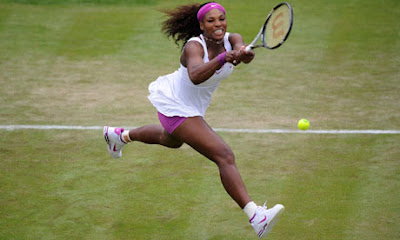
On Saturday, Serena Williams captured her 5th Wimbledon title (later in the day, she and Venus would secure a double’s title as well). Since 1999, the Williams sisters have captured 10 titles at the all-England club. Yet, for each of them, this success has not come without trials and tribulations. Over the last few years, Serena has suffered countless injures, including a blood clot in her lungs. Battling insomnia, depression, physical ailments, and the tragedy of her sister’s murder, Serena has overcome obstacles far more challenging than a Sharapova backhand. “I definitely have not been happy,” Williams announced in 2011. “Especially when I had that second surgery (on my foot), I was definitely depressed. I cried all the time. I was miserable to be around.” In other words, Serena Williams has secured greatness on and off the court, thriving in spite of tremendous hardship.

Within a culture that thrives on stories of redemption, that celebrates resilience and determination, the career of Serena Williams reads like a Hollywood screenplay. Yet, her career has been one marred by the politics of hate, the politics of racism and sexism. Last year I wrote about the treatment she has faced from fans and media alike:

What is striking about the comments and several of the commentaries as well, is the demonization of Serena Williams. Focusing on her body (reinforced by the many pictures that sexualize Williams), her attitude, and her shortcomings as a player, the responses pathologize Williams. “The Williams sisters have been criticized for lacking ‘commitment’ by refusing to conform to the Spartan training regime of professional tennis, restricting their playing schedules, having too many ‘off-court interests’ in acting, music, product endorsements, fashion and interior design, and their Jehovah’s Witness religion” (McKay and Johnson).…

“The Williams sisters also have been subjected to the carping critical gaze that both structures and is a key discursive theme of ‘pornographic eroticism’,” writes James McKay and Helen Johnson. Similarly, Delia Douglas argues, a “particular version of blackness” is advanced within the representations of the Williams sisters. We see the “essentialist logic of racial difference, which has long sought to mark the black body as inherently different from other bodies. Characterizations of their style of play rely on ‘a very ancient grammar’ of black physicality to explain their athletic success”

This monumental victory also didn’t lead to a celebration, a coronation of the greatest player of her generation (and maybe in history), but instead more of the same. The story of redemption and the beauty of her game isn’t the story found throughout the cyber world, from twitter to the comment section of various sports websites.

Her victory prompted tweets referring to her by the “N Word” and several more about her body and sexuality. Reflecting an atmosphere of racist and sexist violence, of dehumanizing rhetoric, tweets referring to her as a gorilla flowed throughout cyberspace with great frequency (some of the below appeared over the last week).

  • ·      Today a giant gorilla escaped the zoo and won the womens title at Wimbledon… oh that was Serena Williams? My mistake.
  • ·      Serena Williams is a gorilla
  • ·      Watching tennis and listening to dad talk about how Serena Williams looks like gorilla from the mist
  • ·      I don’t see how in the hell men find Serena Williams attractive?! She looks like a male gorilla in a dress, just saying!
  • ·      You might as well just bang a gorilla if you’re going to bang Serena Williams
  • ·      Earlier this week I said that all female tennis players were good looking. I was clearly mistaken: The Gorilla aka Serena Williams.
  • ·      serena williams looks like a gorilla
  • ·      Serena Williams is half man, half gorilla! I’m sure of it.
  • ·      Serena Williams look like a man with tits, its only when she wears weave she looks female tbh, what a HENCH BOLD GORILLA!
  • ·      Serena Williams is a gorilla in a skirt playing tennis #Wimbledon
  • ·      My god Serena Williams is ugly! She’s built like a silver backed gorilla
  • ·      I would hate to come across Serena Williams in a dark alley #nightmare#gorilla#notracist
  • ·      Serena williams is one of the ugliest human beings i’ve ever seen #Gorilla
  • YouTube posts offered similar responses to her victory:
  • ·      A man? look at her body, more like a silver back gorilla. I can easily imagine her charging through the jungle breaking trees while flexing those muscles. Doesn’t help that her nose looks like a gorillas as well. I keep expecting to see her zoo handlers to chain her up after the match before she can escape.
  • ·      Monkey business
  • ·      i ddnt know apes wer allowed in women tennis O_O

It would be a mistake to dismiss these comments as the work of trolls or extremists whose racism and sexism put them outside the mainstream.  Just as the Obamas, just as Dr. Christian Head, just as Mario Balotelli was depicted as King Kong in a recent cartoon, and just as just as soccer andhockey players from throughout the Diaspora face banana peels and monkey chants, the racism raining down on Serena’s victory parade highlights the nature of white supremacy.  It embodies the ways that white supremacy demonizes and imagines blackness as subhuman, as savagery.

Continue reading @ NewBlackMan (in Exile): Serena Williams: “Ain’t I a Champion?”.