Hating Marshall Henderson | NewBlackMan (in Exile)

by David J. Leonard

I hate Marshall Henderson. There I said it. I realize that my disdain for all things Marshall ran deep recently, where I couldn’t help but sit in front of the television to watch Ole Miss-Florida in the SEC tournament finale. I am more likely to watch the Real Housewives of Iowa than an SEC basketball game, yet it was must see-TV because of my disdain for Marshall Henderson.

But let me clear, I am not a hater. In fact, my feelings have nothing to do with Marshall Henderson. I don’t know the man. Nor do I have an investment in his daily performance.

My thoughts about Henderson have as much to do with the myopic celebration of his accomplishments, “colorful” personality, and “swagger” given the sordid history of integration at Ole Miss. Given the “ghosts of Mississippi,” and given the historic mistreatment directed at African American students at this “rebel campus,” it is telling that Henderson has elicited praise. It is telling that he has been elevated at the expense of his teammates, erasing their contributions to the team.

My emotional reaction is not about Henderson himself but the narrative, the media coverage, and the double standards that he is embodies. “Marshall Henderson is the Charlie Sheen of college basketball – an unapologetic poster-child of white privilege,” notes Charles Moriano. “Despite a litany of on and off-court behavior that normally send sports media pundits into “what about the kids” columns with African-American athletes, Henderson has been most often been described as ‘passionate’, ‘colorful’, and ‘entertaining’.” Greg Howard describes the double standards that anchor the media response:

He messes with any racially essentialist expectations of what a white basketball player is supposed to be. He’s an incessant shit-talker who tosses up 30-footers, rarely passes, and has a conspicuous lack of “hustle” stats. He tokes an invisible joint after made three-pointers…Marshall Henderson by all rights shouldn’t exist. And if he were a black athlete, he wouldn’t—not as far as big-time basketball is concerned.

My contempt is about the public persona that he has created along with a media that seems not only OK but rejoicing in behavior that has become the basis of the sports-punditry-hater-industry when it comes to today’s black athletes.

Matt Rybaltowski is illustrative of everything I loathe about the Marshall Henderson story: “In an age of political correctness and the contrived sound bite, Marshall Henderson is an anomaly, a free-spirit college basketball hasn’t seen since Jason Williams brought his killer crossover to Gainesville in the late 1990s. Dating back even further, it’s not a stretch to consider Henderson a Bill Walton in a shooter’s body.”

Sports pundits are incapable of offering comparisons that are not racially segregated. Whereas Bill Walton loved the Grateful Dead, protested the Vietnam War (he was even arrested during his junior year), and joined Kareem Abdul Jabbar and others in support of the civil rights movement, Henderson loves playing quarters and his “hoes.” I guess we can say Henderson protested injustice, calling those coaches who didn’t vote him first team all-conference as losers. Comparing Henderson to Walton is like comparing Justin Bieber to Eric Clapton; white and involved in same vocation.

Whereas black ballers are continuously criticized for selfishness – “there is no I in TEAM” – Henderson’s aspiration to “get his money” or his propensity to taunt fans is a sign of his being free spirit. He is celebrated for saying what is on his mind even if his mind seems to begin and end with himself. It is a striking moment of hypocrisy where not only does Henderson get a pass for his trash-talking, self-promotion, and his shot selection, but when he is imagined as exceptional. In an age of media scrutiny, where (black) athletes are routinely criticized for deviating from the prescribed scripts, it is striking that he is celebrated by the same media that makes millions off telling today’s (black) student-athlete to shut up and play.

Continue reading at  Hating Marshall Henderson | NewBlackMan (in Exile).

Rotten at its core or it’s bigger than Rutgers

In classrooms across the nation, future Olivia Popes will learn about Rutgers University as an example of what not to do when responding to crisis.   From President Robert Barchi not watching the video of his basketball coach abusing student athletes to their failure to properly vet the academic credentials of new basketball coach Eddie Jordan, Rutgers has shown a level of ineptitude comparable to Tim Tebow’s throwing arm and Dwight Howard’s free throw shooting.  Yet, their failures are systemic; the consequences are severe.  The most recent example of not just incompetence but a level of blindness to the fundamental problems facing college sports can be seen with the hiring of Julie Hermann.  Dave Zirin describes the situation as such:

That’s what makes the goings-on at Rutgers University so maddening. In looking to move the school forward following the scandal that cost bullying former basketball coach Mike Rice and athletic director Tim Pernetti their jobs, school president Robert Barchi hired former Louisville assistant athletic director Julie Hermann. After the homophobic, misogynistic invective that will define the Mike Rice era, appointing an extremely competent woman must have seemed savvy. Unfortunately, in aiming to get beyond a bullying scandal, the school hired an athletic director with a history of bullying. In attempting to show that the athletic department is not a haven for misogynists, they hired someone with a history of misogyny. And worst of all, in boasting about the depths of their research into Hermann’s past, they missed a series of incidents that a Google search followed by ten minutes of follow-up phone calls could have revealed.

While clearly Rutgers has shown what not to do, while the reports about Julie Hermann are troubling and while what has gone on Rutgers from Mike Rice forward are an indication of the warped and troubling values of higher education, I find myself wondering if she is being held to different standards than her male counterparts. Is she becoming a scapegoat? It would be nice if male ADs and coaches (and professors, administrators….) were held to same level of scrutiny and accountability. It would be nice if we talked about police officers who go from one force to next with a rap sheet of complaints about brutality with same level of interest and questions about past behavior.

One can only wish that the anti feminist and sexist culture that pervades sports and university culture be called out in every instance.  One can only hope that the abuses and exploitation be highlighted, whether it be the sensational or the examples of the entrenched nature of collegiate athletics. One can only wish that warped values that lead to a barrage of racist, sexist, and violent tweets that follow each and every loss be called out.  One can hope that we begin to connect the dots from from incidence of abuse and violence to ever growing emphasis on sports within today’s sports culture.  Whether abuse at Rutgers and Penn State, or the decision to have weeknight football games at the expense of academics for student-athletes and their non-participating peers, profit in front of people, wins in front of education, TV contracts ahead of tenure track lines, define today’s collegiate landscape.

We don’t have to look any further than Chicago where Rahm Emmanuel is leading the charge to build a stadium and not schools.  Worse yet, he might as well be moving the nuts and bolts from some 50 schools in Chicago to this new stadium at Depaul. Is this gentrification we can believe in?   Dave Zirin highlights the profit before people mentality:

It all starts with the person who seems committed to win the current spirited competition as the most loathsome person in American political life: Mayor Rahm Emanuel. The same Mayor overseeing the closing of fifty-four schools and six community mental health clinics under the justification of a “budgetary crisis” has announced that the city will be handing over more than $100 million to DePaul University for a new basketball arena. This is part of a mammoth redevelopment project on South Lakeshore Drive consisting of a convention center anchored by an arena for a non-descript basketball team that has gone 47-111 over the last five years. It’s also miles away from DePaul’s campus. These aren’t the actions of a mayor. They’re the actions of a mad king.

These are symptoms of the value placed upon sports within society; they are indications of upside down priorities.  It reflects a shared disregard for the future, innocence, and livelihood of youth of color, whose schools are being shut down in record numbers furthering the both the school-to-prison-pipeline and the athletic scholarship-to-school pipeline, which each in their own ways are defined by exploitation, abuse, control and profit.   Its bigger than Julie Hermann or Rutgers.  Quoting Blue Scholars, in their song “Oscar Grant,

I hear them sayin that this shit don’t never happen in Seattle
And if it does is just a couple bad apples
But if you keep it count you will see this shit is not the apple is the tree
Its rotten underneath. Oh say, can you see no way that is true

When talking college sports, it’s not the (bad) apples, it’s the tree . . .  rotten at its core.

****

Dave Zirin breaking it all down

The NFL and America’s Drinking Problem | NewBlackMan (in Exile)

The NFL and America’s Drinking Problem

by David J. Leonard | NewBlackMan (in Exile)

A month ago Jerry Brown Jr. lost his life. Like all too many people, each and every day, his death was the result of drunk driving. According to police reports, Brown was a passenger in the car of his Dallas Cowboys’ teammate and college roommate, Josh Brent. Traveling at what appeared to be a high speed on an interstate highway, Brent’s car struck the “outside curb, causing the vehicle to flip at least one time before coming to rest in the middle of the service road.” In just an instant one man’s life was lost and his best friend’s life would be forever changed. “Officers at the scene believed alcohol was a contributing factor in the crash,” noted John Argumaniz, an Irving police spokesman. “Based on the results and the officer’s observations and conversations with Price-Brent, he was arrested for driving while intoxicated.” This is tragic on so many levels, but that is not the emergent story.

In wake of this tragic death and Brent’s arrest, a narrative emerged that sought to construct a bridge between football and drunk driving. The Memphis Business Journal parroted widely cited statistics in its piece about the “NFL’s Drinking Problem” to highlight the large problem that had tragic consequences:

In the wake of the alcohol-related death of Dallas Cowboys linebacker Jerry Brown over the weekend, the NFL may have some serious soul-searching to do.

USA TODAY reports 28 percent of the 624 player arrests since 2000 occurred because of a suspicion of driving under the influence of drugs or alcohol. The single-vehicle accident in which Brown was killed marked the third time since 1998 an NFL player killed another person due to suspected intoxicated driving, the paper reported.

Barron H. Lerner, with “Why Can’t the NFL Stop Its Players From Driving Drunk?” offered a similar song, noting statistics about NFL players and arrests (yet of course failing to offer notation that this same study revealed that NFL players were less likely to engaged in this practice than their non-playing peers). He also recycled the longstanding argument that NFL players are more likely to engaged in such behavior because of the lack of moral and legal consequences:

It is reasonable to speculate that these efforts have lowered the rates of drunk driving among NFL players and, for that matter, all professional athletes. But there is still a culture of drinking and driving among NFL players. As Dan Wetzel reported on Yahoo, drunk driving is the league’s biggest legal issue. A study by the San Diego Union-Tribune found that 112 of the 385 NFL player arrests between 2000 and 2008 involved drunk driving. In 2009, Cleveland Browns wide receiver Donté Stallworth, who had been drinking at a hotel bar in Florida, struck and killed a pedestrian. The problem is that there are limits to moral and legal deterrents.

Similarly, Brian Miller called for greater surveillance and punishment to address the NFL’s criminal problem:

From drugs, murder, DUI, assault and battery, the NFL needs to stand up in front and lead. They need to be tougher and frankly, Roger Goodell is a pretty tough commissioner. However, it’s time that he starts landing major punches in his battle to clean up the image of the NFL. In order to do that, he will need more than simple cooperation from the (players’ union). This is not an NFL issue; it’s a players issue.

The narrative that imagines the NFL as a league of irresponsible drunks and criminally-minded threats to public safety dominants the landscape.

Continue reading at The NFL and America’s Drinking Problem | NewBlackMan (in Exile).

Revealing the Stigma Against Tattooed Athletes

Revealing the Stigma Against Tattooed Athletes

Dr. David J. Leonard

Dear Mr. Whitley:


I recently decided to take a break from public writing; I needed to catch my breath, to catch up on life, work, and recharge. Yet, after reading your most recent piece about Colin Kaepernick, I found myself unable to shake my anger; your words had gotten under my skin.


From the first sentence in your column — “San Francisco’s Colin Kaepernick is going to be a big-time NFL quarterback. That must make the guys in San Quentin happy” — to your description of people with tattoos as looking as though they are on parole, you make clear that you see a tattooed body as a criminal body. You question Colin Kaepernick because he looks “like a criminal.” This makes me wonder if you think he looks like a criminal because he has tattoos or because he has tattoos and he is black. To me, he looks like a chef, a college student, a soldier, or one of the many professors that I know who are covered with tattoos. He looks like many of the 20-30 percent of Americans who currently sport ink.


And so what if he looks like someone locked up in one of America’s many prisons? I know the extent of your knowledge of the criminal justice system begins with Cops and ends with Lockout, but did you know that the vast majority of America’s incarcerated are nonviolent drug offenders? Did you know or care that they are people — mothers and fathers; sons and daughters; brothers and sisters. Why is looking like someone who has gone to prison such a bad thing in your mind? Your comfort in imagining those locked up as violent criminals, as “tatted thugs,” gives me pause. I mean your entire argument is premised on fact that “criminals” have tattoos and therefore why would any person want to have a tattoo. Maybe you should do some research about the millions of incarcerated people, and those on probation and parole; hopefully that would lead you to be a little less callous. To lament Kaepernick’s inked arms by demonizing incarcerated people is reprehensible.


And forgive me if I don’t buy your claim that your point isn’t about race. Forgive me if I don’t buy the explanation that race isn’t an issue because you have two adopted African American daughters, or because your editor is black. Is it just a coincidence that you lament tattoos in sports by focusing on their place on African American bodies? I must have missed your exposés on Josh Hamilton and the death of America’s pastime. Your piece on Danica Patrick and NASCAR’s tattoo problem must have been left on the editing room floor. And yes, I realize that you note that Ben Roethlisberger and Alex Smith both have tattoos, yet they seem to get a pass because they aren’t visible. Are tattoos bad or do you have a problem when the ink is visible? You remind me of the person who denies they are homophobic, and claims, “I don’t have a problem with gay people,” but laments the sight of men holding hands or worse, kissing in public. Oh wait, you are that person.


Do you think Tim Duncan and Kevin Durant look like “criminals?” Have you questioned their leadership abilities? I think not. The “NFL quarterback is the ultimate position of influence and responsibility. He is the CEO of a high-profile organization, and you don’t want your CEO to look like he just got paroled.” Those are your words. Did you know that Barry Goldwater, Antonio Villaraigosa , Senator Jim Webb, Rep. Duncan Hunter, and John F. Kennedy, Jr. all had tattoos? Does this change your opinion of them? What about President Franklin D. Roosevelt, Winston Churchill (and his mom), President Theodore Roosevelt, King George V, and Thomas Edison? All tatted! This isn’t surprising, as among the elite tattoos have a long history. Throughout the early part of the twentieth century, aristocracy often got tattoos as evidence of their sophistication, cultured ethos, and worldly cosmopolitanism. Maybe before your next column about tattoos you should do a little reading about the subject you are writing about, rather than recycling stereotypes.


Your column mirrors so much of today’s lamenting discourse, which bemoans the changing racial demographics, the shifting cultural values, and the challenges to white male heterosexual power. It works through your own nostalgia, all of which seems wrapped up in your own racial assumptions. In sounding like Mittens O’Reilly and those afflicted with White Delusional Disorder (WDD), I can’t help but think this is all about your racial anxiety. Do you fear what will happen if the bastion of white masculinity — the quarterback position — is challenged not just by Cam Newton, but also by tatted Colin Kaepernick? “If you can’t draw the tattoo line at NFL quarterback, you can’t draw them anywhere.” Why is there an impulse to draw a line in the first place and how empowered you do draw such boundaries? How does this represent your desire to contain bodies? I can’t but see your column as part of a long line of efforts to police black bodies. Does the sight of Kaepernick’s ink body lead you think that he might be “bad boy black athlete” (Collins 2005, p. 153) and not “Tim Tebow.” We know that contemporary sports culture consistently represents black male athletes as “overly physical, out of control, prone to violence, driven by instinct, and hypersexual.” Are tattoos and blackness seen as inseparable? Or does ink mean something depending on the body it is attached to? While you seem OK in using tattoos as evidence of worthiness, as markers of being “unruly and disrespectful,” “inherently dangerous” and “in need of civilizing” (Ferber 2007, p. 20), I am not.

Continue reading @ Dr. David J. Leonard: Revealing the Stigma Against Tattooed Athletes.

NewBlackMan (in Exile): Review of ‘The Passion of Tiger Woods’

A Review of The Passion of Tiger Woods:

An Anthropologist Reports on Golf, Race, and Celebrity Scandal by Orin Starn

by David J. Leonard | NewBlackMan (in Exile)

For some golf is a game; for others it is leisure. Golf, at its core, is about mastery; it’s about fantasy; it’s about fulfillment of the possibility of greatness. It is about that hole-in-one at the local public course or the bullet drive that covered 300+ yards. Golf provides the fulfillment of a myriad of “fantasies.” With his new book, The Passion of Tiger Woods, Orin Starn leads on a journey not to Pebble Beach or the courses of Hawaii, not into these fantasies playgrounds, but into the treacherous world and real-life drama that he describes as “Tigergate.”

Starn starts his discussion with a foray into the sociology of golf, highlighting the emotional appeal of the game. Describing golf as the “last chance to do “childish things” and as a cheap replacement for masculine yearning for outdoor adventures, Starn locates golf’s appeal within the mental stimulation and imagination afforded by golf’s immense challenges. It’s appeal rests not with improved cardiovascular health, the camaraderie of pickup basketball or soccer, or even tradition (fathers and sons bonding), but with the mental stimulation; it appeal rests with its similarity to a video game rather than basketball or soccer. “The game’s most elementary lure … is that flush of satisfaction and even inner delight that comes from a good shot.” The popularity of the game that Mark Twain once described as a “good walk spoiled” rests with the prospect of making “a twisting twenty-five foot put curving into the hole; a cleaver escape from under the tree.” While “none of us will ever know the ecstasy of running as fast as Usain Bolt or cutting through the water like Michael Phelps,” every once in a while, “even a rotten golfer will hit a shot as magnificent as if it had been hit by Tiger Woods” (15).

It is no wonder that golf is one of the most popular games despites its cost. While not at the levels of baseball, football, or even NASCAR and basketball, golf is tremendously popular as a spectator sport and a leisure activity. With over “17,000 golf courses, covering an area the size of Rhode Island and Delaware combined” (XV), golf may not be America’s national pastime it might America’s most prominent and important hobby. Golf is a national obsession, at least within certain (white; male; middle and upper-class) segments of the American populace.

This analysis isn’t simply an interesting examination of golfing cultures but one that provides an important backdrop for understanding the rise and fall of Tiger Woods. The popularity of golf, its cultural meaning, the ascendance of celebrity culture, and the increased power of new media all contributed to his ultimate tumble before the nation.

Starn identifies the media spectacle surrounding Woods as evidence of the hegemony of the scandal industrial complex. “Now scandal has become a multibillion dollar industry. Talk shows and trash television, glossy magazines, supermarket tabloids, and gossip blogs power this vast and viral entertainment complex” (45). Identifying “Tigergate” as the perfect storm, Starn argues that the media obsession and sensationalism embodied in the “celebritaization” of modern athletes. Yet, his discussion goes beyond the missed placed priorities of today’s tabloid media circus to highlight Tiger Woods’ specific place within the American landscape.

Continue reading @ NewBlackMan (in Exile): Review of ‘The Passion of Tiger Woods’.

Taylor Townsend: Too Big for Tennis? – Entertainment & Culture – EBONY

Taylor Townsend: Too Big for Tennis?

David Leonard

Dear Patrick McEnroe:

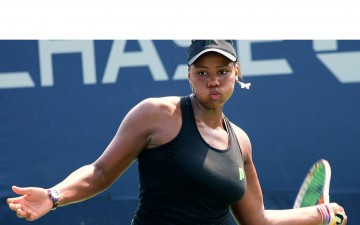
I write you to express my anger and disgust as to how you and the UTSA have treated Taylor Townsend. Despite being the world’s #1 junior girl’s tennis player, and the future of American tennis, you decided to shut her out, to take away her financial support, and otherwise block her from entering tournaments. You asked her “to stop competing?” And why? Because you think she is too fat; because you think she needs to get into better shape and slim down.

Who died and made you Jillian Michaels?

I am glad to see you decided to pay for Taylor’s travel costs from Chicago to New York. Better late than never. How about you now apologize for publicly ridiculing and shaming a 16-year old girl? How about you fly to Chicago to express your regret for not only punishing Taylor Townsend, but also embarrassing her in front of the world. In what world do you live that you would think this strategy would be to her benefit? There is no valid explanation for a bunch of middle-age males telling her what to eat, when to exercise, what to dress, and how to look. I hope you realize how much you hurt her. Let her words sink into your skinny head: “It was definitely shocking. I was actually very upset. I cried. I was actually devastated. I mean, I worked really hard, you know, it’s not by a miracle that I got to number one.”

I hope you understand that you follow in a long tradition of sexist institutions that have told women and girls, particularly those of color, that they are inadequate and ugly; that they are undesirable, and so disgusting that they should not even be in public. This was the message you sent to Taylor and millions of other girls. If you can’t get this idea through your thick privileged skull, head over to Sports Illustrated to read the words of Courtney Nguyen.

The implications of your statements and actions are disturbing on so many levels, especially given the epidemic of eating disorders and body image struggles inside and outside of sports. Training session in the library?

Continue reading @ Taylor Townsend: Too Big for Tennis? – Entertainment & Culture – EBONY.

NewBlackMan (in Exile): Ballin’ at the Graveyard: A Film Review

Ballin’ at the Graveyard: A Film Review

by David J. Leonard | special to NewBlackMan (in Exile)

Growing up in Los Angeles, I spent many weekends, some evenings, and most of my summers on the basketball court. Whether on the courts at my high school, at any number of local parks, or other spots spread out around West Los Angeles, pickup basketball was a fixture of my teenage years. I love to play ball; while a mediocre player on my best days the chance to run with my boys or prove myself to others was something I relished growing up.

Through college and graduate school, I continued to play whenever I made it back to Los Angeles; visits home came with an expectation of multiple days of ballin’. Although kids and AGE, not to mention geography (not a lot of pick-up games in Pullman) has resulted in my retirement from the game, the cultural, social, and personal significance of this space remains strong in my mind. Based on both nostalgia for the Saturdays spent on the court, calling “next,” and even the arguments about a travelling calls, and my intellectual curiosity about the subculture of the “pickup game,” I was very excited to watch Ballin’ at the Graveyard, a new film from Basil Anastassiou and Paul Kentoffio.

Chronicling the weekend battles at Albany, New York’s Washington Park – the Graveyard – the film is much more than a basketball film. It is a glimpse into the sociology – the rules, the community – of the subculture of pickup basketball.

Continue reading @ NewBlackMan (in Exile): Ballin’ at the Graveyard: A Film Review.