David J. Leonard Reflects on Derek Fisher Trade | The Layup Line

The Derek Fisher Trade

David Leonard
David J. Leonard Reflects on Derek Fisher Trade | The Layup Line

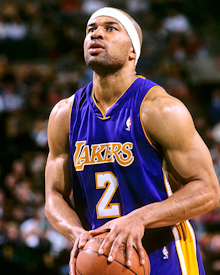
I am a Lakers’ fan. From cradle until grave, I will be a Lakers fan. I was cheering for alley-oops (Coop-a-loop) long before “Lob City;” I have watched games at the Great Western Forum, the Staples Center, and elsewhere. So, when I heard the Derek Fisher had been traded, I was sad. With his jersey hanging in my closet, Fish has always been a favorite player of mine. Defensive-minded, but someone who has always hit key shots – .04 against the Spurs; his 3 against the Magic; his greatness in Game 3 against the Celtics – he has been instrumental in the Lakers’ championships. In a history of the NBA’s greats, Fisher is not one of them, yet his lore and power extends to the likes of West, Baylor, Magic, Worthy, Shaq, and Kobe

At an intellectual level, his trade to the Houston Rockets makes perfect sense. Fish is 37-years old and his best days on the court are certainly behind him. His effectiveness, whether on the defensive end or as shooter, has been in steady decline. Add to this, the economics of the game and that the Lakers’ had just traded for Ramon Sessions, a young and dynamic point guard, one has to concede trade makes sense.

It is clear from yesterday’s trades that the Lakers’ improved their squad, increasing their chances in the playoffs, something every fan has demanded since their last championship two years ago. Yet, I found myself conflicted, uneasy about the trade outside of “basketball reasons.” I was not alone with Lakers’ fan lamenting the trade of Fish (while celebrating the departure of Luke Walton and barely noticing the trade of Jason Kapono). Noting how he was a glue guy, how important he was to the team’s chemistry, and how instrumental he has been for the Lakers’ the overall tone was both reminiscent and predictive. Fans have expressed concern about how his departure may impact the team though little of it has focused on specific contributions – scoring, rebounding, assists, defense, ball-handling – that the Lakers are losing. Kelly Dwyer encapsulates this line of thinking:

There is absolutely no justification for the move. Fisher, to be quite frank, has been absolutely brutal on both sides of the ball over the last two seasons for Los Angeles. He can’t stay in front of even the NBA’s slowest point guards, at this point, and he offers precious little offensively save for the occasional (as in, “32 percent of the time he shoots one”) 3-point basket. By every conceivable standard, he was a millstone for the team on the court. No amount of leadership and smarts (two things Fisher provides in spades) could make up for his shortcomings.

It still doesn’t mean you trade Derek Fisher, heart of the team, to save $3.4 million and a few million more in luxury tax savings. Some guys really should just be untouchable, even as their minutes decrease to nil. Derek Fisher should have been one of those guys.

continue reading @ David J. Leonard Reflects on Derek Fisher Trade | The Layup Line.

[OPINION] Trayvon, Sports and Me – News & Views – EBONY

Trayvon, Sports and Me

David J. Leonard

I grew up in segregated Los Angeles. While often celebrated for its diversity, L.A. is community. Divided by freeways, inequalities, and policing, the Los Angeles I remember was defined by its segregation. For middle-class white kids such as myself I was in constant ignorance about the persistence of inequality and my own White privilege. I never thought a second about leaving my house to buy a bag of Skittles; I never contemplated how others – teachers, employers, and even the police – might interpret my saggin’ pants or my hoodie; I did not even give a second thought when I showed up to play basketball at my local park with my hair in braids. The ignorance of privilege and the power of Whiteness defined my youth. Yet, the privileges of Whiteness gifted me each and every day. I was able to move throughout the city without fear from driving while White, and without fear of being suspicious, because in America “the assumption is that the natural state of Black men is armed and dangerous.”

It took leaving Los Angeles for the Pacific Northwest to truly understand the nature of American racism. In the 20 weeks that I attended the University of Oregon, notions of colorblindedness and equality shattered before my eyes. Walks to the store, to dinner, or to class with African American friends often found us followed by the police, stared at by others. It was a lesson in the ways that Blackness equals suspicion whereas Whiteness protected me from prejudgments. Racism wasn’t just the daily assault on my Black friends, but the unearned privileges I was granted each day.

Looking back, these experiences taught me not just about racial profiling and “Walking While Black”, but the many contradictions that exist in an integrated country that never came to terms with its racism. Several of my friends on campus at the time were student-athletes (another issue, of course: the disproportionate number of Black students in the athletics program versus the few who were present at the school otherwise); these young men and women regularly experienced praise and adoration while on the court. Celebrated as heroes, cheered as superstars, and anointed as celebrities, they were desired, wanted, and cherished… as commodities. Yet, while walking the streets, while eating at restaurants, while in class, and while attending various parties, the desirability was replaced by suspicion, contempt, and surveillance.

The murder of Trayvon Martin speaks to this country’s fear of Black people, particularly males. It also reflects the country’s contradictory concept of Blackness. The fact that Trayvon ventured out during the halftime of the NBA All-Star game (taking place in Orlando as well) only to lose his life at the hands of George Zimmerman highlights the valuing of Blackness inside the arena and the devaluing of Black life elsewhere. As fans cheered Kobe, CP3, and King James, Trayvon lied in a pool of blood. Having seen pictures of Trayvon in his football uniform and read about his love of sports, his murder taking place during this grand celebration of Black athleticism speaks volumes. Like DJ Henry and Robert Tolan, both of whom were shot (Henry died) by the police, Marcus Dixon, Mychel Bell, and Genarlow Wilson, all of whom despite athletic prowess endured the grips of a Jim Crow justice system, the status as athlete, star or otherwise, did not protect Trayvon Martin.

The murder of Trayvon Martin speaks to this country’s fear of Black people, particularly males.

Even as millions of fans announce their love for Kobe and LeBron, even as tens of millions voted for Barack Obama, even as a growing Black middle-class has made inroads throughout society, the likes of Trayvon Martin, Oscar Grant, Sean Bell, and countless others remind us about the dangers of living while Black in America even in 2012. Essex Hemphill, in his brilliant poem “American Hero” describes a world where Black men can simultaneously be celebrated for dunking a basketball during a globally televised game while just miles a way a young Black male is dying at the hands of American racism:

Squinting, I aim at the hole fifty feet away. I let the tension go. Shoot for the net. Choke it. I never hear the ball slap the backboard. I slam it through the net. The crowd goes wild for our win. I scored thirty-two points this game and they love me for it. Everyone hollering is a friend tonight. But there are towns, certain neighborhoods where I’d be hard pressed to hear them cheer if I move on the block.

via [OPINION] Trayvon, Sports and Me – News & Views – EBONY.

The White Coach’s Burden | Racialicious – the intersection of race and pop culture

The White Coach’s Burden

By Guest Contributor Dr. David J. Leonard

During my “glory days” playing high school football–among other positions I played linebacker–there was a game where, after several tackles (pretty amazing tackles if I remember them correctly), I found myself rolling on the ground in pain. Their running back decided to thrust his helmet into my gut leaving me gasping for air. I would later find out that the opposing coach encouraged his players to “take me out”: a helmet to the gut would do that for at least one play.

The fact that a nobody player in a nothing high-school football game between two tiny private schools in Los Angeles was “taken out” illustrates how encouraged violence is part and parcel to football culture, even if there were no “‘knockouts’…worth $1,500 and ‘cart-offs’ $1,000, with payments doubled or tripled for the playoffs,” rewards uncovered as part of the New Orleans Saints’ “bounty program” last week.

Yet, the NFL, much of the media, and others have acted as if the Saints’ actions are an aberration that can be easily corrected. As such, the league’s response was predictably clichéd:

The [anti-] bounty rule promotes two key elements of NFL football: player safety and competitive integrity. It is our responsibility to protect player safety and the integrity of our game, and this type of conduct will not be tolerated. We have made significant progress in changing the culture with respect to player safety and we are not going to relent. We have more work to do and we will do it.

The NFL wasn’t alone with its shock and outrage (and hypocrisy). The Los Angeles Times’ Bill Plaschke referred to the bounty system as “sanctioned evil” that in one game constituted a “blatant mugging by the New Orleans Saints.” Eamon Quinn described bounties as antithetical to the values of sports: “Such malicious intent—regardless of whether the particular hit was legal by the letter of the law—totally undermines the camaraderie and goodwill inherent in participation in sports. It is diametrically opposed to the inherently benevolent nature of sporting competition.” Similarly, ESPN’s Gregg Easterbrook identified the bounty issue as “Sinnersgate” which “is about being paid to cause injury, which takes a beautiful sport and makes it a low, filthy thing.”

Dave Zirin rightfully highlights the hypocrisy in the league’s resisting calls for reform while marketing itself on the “Orwellian staple” of comparing NFL players to warriors:

There is no morality in war — but that doesn’t stop our political and military leaders from insisting otherwise. Invariably, the enemy consists of immoral, medieval cave dwellers who respect neither human life nor the sacred rules of combat. Our side, on the other hand, engages in “surgical strikes” to limit “collateral damage” in a noble effort to liberate the shackled from tyranny. They tell us to ignore the innocent killed in drone attacks, the piling body counts, and just remember that our enemies are savages because they don’t play by civilized rules.

The moral indignity of the media is striking given its own promotion of on-the-field violence. The proliferation of a highlight culture dominated by jarring hits is as much a bounty as any direct or indirect payment system.


An ESPN culture that leads with bone-crushing, de-cleating tackles, turning relatively obscure defensive players into household names, illustrates the role of the media in offering incentive for viciousness on the field. The hypocrisy and faux-outrage from the media as well as fans, given the widespread acceptance of a culture of violence, seems more about disappointment the behavior of any coaches involved; bounty gate isn’t a challenge to perception of football and the NFL, but the league’s patriarchs – the coaches.

Continue reading @ The White Coach’s Burden | Racialicious – the intersection of race and pop culture.

Andrew Luck and Racial Assumptions: Are Stereotypes a Part of the Game? | Urban Cusp

Andrew Luck and Racial Assumptions:

Are Stereotypes a Part of the Game?

By David J. Leonard

By now you are probably sick of reading and talking about Jeremy Lin. Thankfully, with Linsanity calming down, the conversation has turned back to the court, a shame given his own struggles and those of the Knicks in recent weeks.

Yet, at the same time, I find myself disappointed and frustrated by the missed opportunities within the media avalanche. Amid the endless articles about Lin, many reflected on the ways in which race and stereotypes about Asians limited the ability of scouts to recognize Lin’s talent. Stereotypes not only about the lack of athletic ability of Asians as well as the stereotypes about African American success within basketball impacted the difficult roads traveled by Lin.

“Lin was almost certainly underestimated, or misevaluated, because as an Asian American he does not look the way scouts and general managers expect an NBA player to look,” wrote Touré. “If he’d walked into the gym and wowed everyone right away he would’ve stood out, but when he didn’t, it confirmed the societal script that does not expect Asian Americans to be pro-level basketball players. That’s the prejudice Lin had to fight through.” This sentiment was commonplace throughout the public discussion, revealing a willingness to acknowledge that race does matter, that racism exists as an obstacle, and that stereotypes impact the ways that people interact on a daily basis.

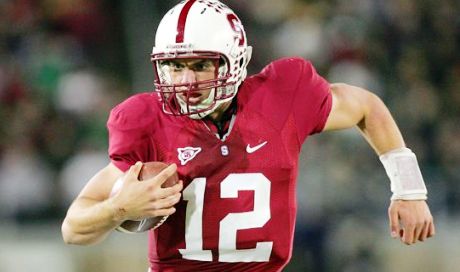
Similar conversations about stereotypes and obstacles faced by athletes because of racial assumptions have followed the NFL Scouting Combine. The likely two-top picks, Andrew Luck (Stanford) and Robert Griffin III (Baylor), have been at the center of these conversations. Luck, a white quarterback, has shocked scouts because of his surprising speed, whereas Griffin has been praised with a level of surprise for his intellect and his field vision (still despite his precision in passing some scouts have lamented his propensity of “mental mistakes”).

With both men, stereotypes have guided the conversation, either through the replication and recycling of longstanding ideas associated with white and black athletes, or with a shock and awe over their not fitting into these boxes. For example, in “Andrew Luck is pretty fast, too,” Michael David Smith highlights how racial stereotypes associated with speed and quickness that leads black quarterbacks to be labeled as scramblers and white quarterback as pocket passers, has led to surprise about Luck, even though his 40 time matched that of Cam Newton:

Luck turned in an excellent 40-yard dash time today of 4.59 seconds at the NFL Scouting Combine, the third-fastest among quarterbacks this year behind only Baylor’s Robert Griffin III and Wisconsin’s Russell Wilson.

No one runs like Griffin, but Luck is faster than the vast majority of NFL quarterbacks. To put Luck’s time in perspective, it’s exactly the same as the time turned in by Cam Newton at last year’s Combine.

In “Do Racial Stereotypes Dictate NFL Success,” kgans laments the ways in which race impacts personnel decisions and the NFL product:

Racial stereotypes in draft evaluations are something you can see all the time, and it’s not only for the quarterback position. All the time you have draft evaluations describing white defensive ends as “high-energy guys, with great motors.” Or a black linebacker described as being “freakishly athletic with sideline-to-sideline speed.” These racial stereotypes are ignorant and they hurt the integrity of the game.

Just recently, Jeremy Lin, an Asian-American point guard has taken the NBA by storm. On http://www.draftexpress.com, the website described Lin as being “deceptively quick and assertive off the dribble.” Deceptively quick, what does that mean? Is he deceptively quick because you didn’t expect him to be quick since he is Asian?

Kgans makes clear that racial stereotypes are not only restricting the opportunities afforded to athletes but at the same time undermining the quality of the game. Because of racial stereotypes, players are not judged by the content of their crossover, or the precision of their passing, but the color of their skin. “I think racial stereotypes in draft evaluations could have something to do with this. If we could all be more “colorblind” in our talent evaluations we might be able to increase the amount of black quarterbacks in the NFL,” writes Gans. “And believe me, after NFL GM’s have seen what Linsanity has done for the Knicks no one wants to miss out on the NFL’s version of Jeremy Lin. Being more ‘colorblind’ in talent evaluations will help make sure that doesn’t happen.”

via Andrew Luck and Racial Assumptions: Are Stereotypes a Part of the Game? | Urban Cusp.

Trouble A-Bruin: On UCLA And Who Schools Choose To Redeem | Racialicious – the intersection of race and pop culture

Trouble A-Bruin: On UCLA And Who Schools Choose To Redeem

By Guest Contributor Dr. David J. Leonard


Much of the buzz surrounding Sports Illustrated’s report about the troubles surrounding UCLA men’s basketball program has focused on the players, sporting headlines like “UCLA players undermined discipline, morale,” and “UCLA Basketball Out Of Control.” But the story itself really hones in on coach Ben Howland’s failure to “control” and “discipline” those players.

But if this same story had been about teams like UNLV, Miami or Michigan’s “Fab Five,” the narrative would been less one of shock and disappointment but rather the fulfillment of expectation, which are wrapped in racial and class assumptions that UCLA, celebrated as an example of the nostalgic ideal of collegiate sports entertainment, has benefited from for years.

More specifically, much of the article focuses on Howland and his inability to corral and control Reeves Nelson, who has denied many of the allegations.

The piece gives ample attention to the disruptive influence of Nelson, who is white: injuring three players on separate occasions, getting into a fight with another player away from practice, and otherwise engaging in questionable behavior. I could not help but think how much the story revealed about the state of education, privilege, and inequality within society.

Whereas other players are lamented for drug use and partying in ways that detracted from the team success (victories), Nelson comes across as being at a different level. Noting how Howland “looked the other way” because of his play, SI describes Nelson as a pariah, as a cancer to the program:

Nelson was hardly the player around whom to build a team. He was a classic bully, targeting teammates who weren’t as athletically gifted as he and tormenting the support staff. At the end of practice, he would punt balls high up into the stands at Pauley Pavilion, turn to the student managers and say, “Fetch.” Nelson frequently talked back to the assistant coaches. When they told him to stop, he would remark, “That’s how Coach Howland talks to you.” […]

Nelson showed Howland only slightly more respect. By his own admission, he often ignored the head coach’s phone calls, and Howland resorted to calling one of Nelson’s roommates, asking him to coax Nelson onto the line.

There certainly wasn’t a system of zero tolerance for any of the players, but most certainly Nelson had a level of impunity. It made me think about the ways race infects the process of discipline and punishment as well as how education increasingly operates through a commodity model as opposed to one of education.

This is not say that what is happening at UCLA is all about race or that it is evidence of the failed priorities of today’s educational system but rather that what we see at UCLA isn’t simply a soap opera or a instance to wax nostalgically about the John Wooden era but rather a window, glimpse and teachable moment regarding issues bigger than UCLA.

Beginning in the 1980s and extending to the 1990s, students of color attending American public schools faced increased levels of surveillance, policing, and state-sanctioned violence. For example, in 1994, President Bill Clinton signed the Gun-Free Schools Act, a law requiring a one-year suspension for any student who brought a gun to school. This had both direct and indirect consequences throughout the United States. In Chicago, for example: during the 1994-95 school year, only 23 students were throughout the entire district. By 1996-1997, this number reached 571, surpassing 1,000 by two years later.

Although white youth are more likely to bring a gun to school, sell drugs, and use drugs, the efforts to rid schools of these behaviors have focused on youth of color.

The consequences of a Jim Crowed disciplinary process have been evident since day 1. Consider just these three findings:

  • According to a 2007 study by the National Economic and Social Rights Initiative, black students accounted for 17.1 percent of U.S. student populations in 1998, but represented 32.1 percent of students suspended as a result of rule violations. The study also names this statistic from a national survey of high school students: the number of students who reported the presence of security guards and/or police officers in their schools rose from 54 percent in 1999 to 70 percent in 2003.
  • In a separate study of 15 major American cities, the Applied Research Center found black students “report higher than expected” suspension and expulsion rates in all fifteen. In Chicago, while African American students accounted for just over half the district students, they represented almost 2/3s of the students suspended and close to 3/4s of those expelled.

Continue reading @Trouble A-Bruin: On UCLA And Who Schools Choose To Redeem | Racialicious – the intersection of race and pop culture.

NewBlackMan: Like Father, Like Son?: An Open Letter to Coach Pat Knight

Like Father, Like Son?: An Open Letter to Coach Pat Knight

by David J. Leonard | NewBlackMan

Dear Coach Pat Knight (Lamar University):

I am writing to you about your post-game comments the other night. As others may not have seen your press conference, I quote it for their sake. Entering the press conference, you first tell a student-athlete: “I am next, because you don’t have a clue what it takes to win.” Your tone of disrespect didn’t end there:

We’ve got the worst group of seniors right now that I’ve ever been associated with. Their mentality is awful. Their attitude is awful. It has been their M.O. for the last three years.

We’ve had problems with them off the court, on the court, classroom, drugs, being late for stuff. All that stuff correlates together if you’re going to win games. You just can’t do all that B.S. and expect to be a good team and win games. These guys got to learn; they have to grow up. They don’t need to be coddled; they don’t need to be babysat. That is the problem with society . . . because people don’t make kids accountable. These kids are stealing money by being on scholarship with their approach . . . . If you act like this in the real world, you are going to be homeless, with a job… And if people have a problem with me being harsh about it, I don’t care. I came here to clean something up.

While others have called your post-game comments an “epic rant,” as “tough love” or as an example your honesty, I don’t share their opinion. It was abusive, disrespectful and an affront to the educational mission of every institution of higher learning. You have defended these comments by noting the support of your fellow coaches, who are “all dealing with the same thing.” You have cited parents as so appreciative of your comments that they would want their kids to play on your team. While I don’t write as a parent (although the thought of my kids learning anything from you is one I cannot bear), I do write you as a teacher and a member the higher education community.

I am not sure if you think of yourself as a teacher or an educator. I don’t know if you subscribe to the belief that coaches, like professors, are advancing the mission of higher education through instilling values, fostering skill development, and otherwise preparing the next generation to succeed in all walks of life. Sally Jenkins, a sports columnist with the Washington Post, highlights the presumed pedagogical power (or mission) of collegiate coaches:

The best college coaches teach sport as a set of problems and how to tease out the solutions. They don’t just teach content and skill, but how to transfer it into real-world performance through study, organization and communication under pressure. They ask, what happens if you follow a strategy to its logical conclusion? What are the consequences of making things up as you go along? Why do things break down? What are effective fallback principles when skill or strategy breaks down? What are the traits of successful organizations across professional boundaries?

I would gather that you do see yourself as an educator, as a teacher molding the future generation. Whether true or not, I have to tell you your approach is both troubling and offensive and has NOTHING to do with teaching or educating. Teaching is not about publicly humiliating; teaching is not about ridiculing, demeaning, and disrespecting. You may think your approach reflects a commitment to disciplinarity and accountability but there have to be other ways to instill a commitment to excellence on and off the court. Anyone can stand before an audience, microphone in hand, without fear of any reprisal, to criticize. Teachers find other ways of inspiring, informing, or helping beyond intimidation and fear. Teachers don’t violate the trust of their students by announcing their grades in front of millions of people. Teachers don’t disrespect their students; calling out behavior is one thing, but condemning their character is another. Your decision to treat student-athletes as children, to publicly condemn and ridicule them, shows that you have a lot to learn as a teacher because anyone has the capacity to do what you did that night.

Beyond the tone, do you think it is proper to share students’ private academic records?  You obviously do because you followed your press conference with additional statements about academic performance:  “I’ve never seen more F’s on report cards than I ever have since I got here. Missing classes, being late for workouts, missing workouts. … What I don’t think they understand is all that correlates together. If you’re not going to be a winner off the court, you’re not going to be a winner on the court.” What good can come from embarrassing these students? At the same time, do you think it is proper to reference drug arrests, even though when I searched online all I could find is one arrest for a minor marijuana possession charge?
I would be remised if I didn’t bring up the racial optics of a white male coach publicly chastising, ridiculing and demonizing 5 African American players (based on search of roster, it appears that all 5 seniors are black)?  Did you think about how publicly castigating 5 black players as academically deficient, drug using, and otherwise lacking the requisite values and attitude to be successful as basketball players or people fits in a larger racial context?  Did you think about the societal stereotypes and how your claims are not only disrespectful to the players but reinforce widely circulated stereotypes about student-athletes and particularly black student-athletes?
Your arrogant comments makes me wonder if you and Newt Gingrich are writing a book together acting as if success and opportunity come as the result of a recipe of values, work ethic, and the right cultural ethos.  Was he busy lecturing members of the NAACP so you decided to use your platform to reduce success and failure to attitude and values?  Do you really think that excoriating 5 (black) players will help them develop a work ethic to avoid being homeless as if homelessness or unemployment is the result of not having the requisite values?  You seem to imply that people succeed or fail because of their actions, which is far from the truth (just ask Mitt Romney).  I wonder how your white manhood fits into your own career and how your own connections allowed you to make it irrespective of your own actions.  You claim to fear for the futures of those players who lack the needed maturation, but maybe they have a Dad who can help them out.

Continue reading @ NewBlackMan: Like Father, Like Son?: An Open Letter to Coach Pat Knight.

SLAM ONLINE | » Not Entertained?

Not Entertained?

Brittney Griner continues to challenge expectations.

by David J. Leonard / @DR_DJL

Average 22.7 points/game – Check

Sixty percent from field and over 80 percent from the line – Check

Almost 10 rebounds each night – Check

Record 155 blocks after 30 games in season – Check

Team undefeated and ranked No. 1 – Check

Outscore opponents by 30+ points/game – Check

With numbers like this—and the level of dominance seen throughout their career—you would think that this player would be the talk of the town, with magazine covers, lengthy biographic pieces on ESPN and a theme of celebration. Yet, these numbers and success hasn’t translated into Britsanity, all of which reflects the power of race, gender and sexuality within sport culture.

Unable to transform the narrative, in spite of her amazing (revolutionizing) play, Brittney Griner remains an afterthought within the basketball world. Unable to embody the traditional feminine aesthetic and beauty, yet fulfilling the stereotypes usually afforded to Black male ballers, there is little use for Griner within the national imagination. Her greatness is relatively invisible (outside of hardcore sports fans) because she simultaneously fits and repels our expectations for female athletes.

When Brittney Griner emerged on the national scene three years ago (and even while still in high school), the media focus wasn’t solely on her game, but instead positioned her as a player who was challenging the expectations of female athletes. Unlike the vast majority of celebrated female athletes, she was, according to the narrative, a less feminine “androgynous female” who challenged the “rigidity of sex roles.” Often comparing her to males, the media narrative consistently imagined her as a “freak” and as an aberration, contributing to a story of shock, amazement and wonderment whether Griner was indeed a woman. According to Lyndsey D’Arcangelo, “The world of women’s basketball has never seen a player like this before. Griner has the athletic skills and build of any budding male college basketball star, which has brought her ‘gender’ into question.”

In Brittney Griner, Basketball Star, Helps Redefine Beauty, Guy Trebay highlights the ways in which the dominant narrative of Griner imagine her as not baller, as not student-athlete, but as signifier of gender and sexuality.

Feminine beauty ideals have shifted with amazing velocity over the last several decades, in no realm more starkly than sports. Muscular athleticism of a sort that once raised eyebrows is now commonplace. Partly this can be credited to the presence on the sports scene of Amazonian wonders like the Williams sisters, statuesque goddesses like Maria Sharapova, Misty May Treanor and Kerri Walsh, sinewy running machines like Paula Radcliffe or thick-thighed soccer dynamos like Mia Hamm.

While celebrating her for offering an alternative feminine and aesthetic, the media narrative of course represented her in ways limited to female athletes—she was confined by the stereotype of women athletes. Focusing on her body, and how she meshes with today’s beauty stands, all while defining her “as a tomeboy” the public inscription of Grinner did little to challenge the image of female athletes. In purportedly breaking down the feminine box that female athletes are confined to within sports cultures, Griner provided an opportunity, yet as we see the opportunity is still defined through feminine ideals and sexual appeal to men.

The limited national attention afforded to Griner irrespective of her dominance and her team’s success reflects the profound ways that her emergence has not ushered in a new moment for women’s sports. Unable to appeal to male viewers, to fulfill the expectations of femininity and sexuality, Griner has remained on outside the already infrequent media narrative of women’s sports. Even though there are multiple networks dedicated to sport, even though there are magazines, countless websites, and a host of other forms of social networking dedicated to sports, there are few places for female athletes, much less black female athletes. Studies have demonstrated that less than 10 percent (3-8 percent) of all sports coverage within national and local highlight packages focuses on women’s sports.

Substantive coverage and national attention so often comes through sex and sex appeal, where female athletes who are successful at sport (less important) and eliciting pleasure from male viewers garner the vast majority of sport. Matthew Syed (2008) argues that, “There has always been a soft-porn dimension to women’s tennis, but with the progression of Maria Sharapova, Ana Ivanovic, Jelena Jankovic and Daniela Hantuchova to the semi-finals of the Australian Open, this has been into the realms of adolescent (and non-adolescent) male fantasy.” Attempting to elevate women’s sports by telling readers that it is OK to view female athletes as sexual objects, he laments how western culture has not “reached a place where heterosexual men can acknowledge the occasionally erotic dimension of watching women’s sport without being dismissed as deviant.” This sort of logic contributes to the relative invisibility of Griner on the national landscape.

Continue reading @ SLAM ONLINE | » Not Entertained?.