Mychal Denzel Smith–The Failure of Pro-Feminist Hip-Hop — The Good Men Project

The Failure of Pro-Feminist Hip-Hop

 By Mychal Denzel Smith

August 23, 2011
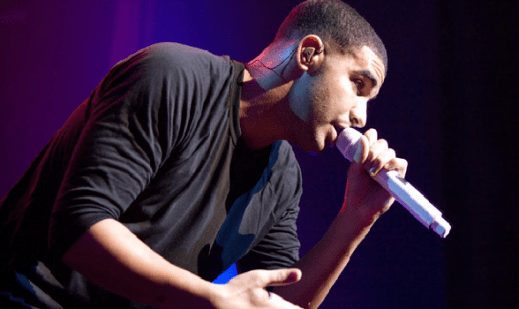
Mychal Smith desperately wants to like pro-feminist hip-hop artist Drake, but something important and powerful is missing from the music.

I often have a very difficult time reconciling my love of hip-hop with all my hoity-toity ideals about gender, sex, and whatnot. However controversial it was, I’m one of those self-proclaimed feminist men who believes, as Gloria Steinem recently said, “It’s really important that kids grow up knowing that men can be as loving and nurturing as women can.” So when I’m listening to some of my favorite rappers exuberantly claim that they “don’t love hoes” or when rape imagery is used by otherwise talented individuals to affirm some sense of manhood and masculinity, I get extremely uncomfortable.

I’m enough of a hip-hop fan to know that this isn’t all the genre and culture have to offer, and I indulge the alternatives with pleasure. But even there, misogyny rears its ugly head at times, and the constraints of masculine identity limit discourse. I could use more parity.

Drake, the Canadian-born teen-TV-actor-turned rapper, is exactly the sort of emcee that a progressive, black, male hip-hop head like myself is supposed to love. He is the antithesis of every tired hip-hop trope revolving around proving your manhood through violence and sexism. He is the type of rapper of whom I should be singing the praises. I should be heralding him as the leader of the new direction hip-hop needs to take so it can grow and evolve its ideas about manhood and masculinity.

I want to love Drake and write essays about how his music opened up a whole new world for me and how it can do the same for others. But I can’t. He and his music do absolutely nothing for me.

Continue reading @ The Failure of Pro-Feminist Hip-Hop — The Good Men Project.

Mark Anthony Neal – NewBlackMan: Daughters of The Help

Daughters of the Help

by Mark Anthony Neal | HuffPost BlackVoices

Twenty years ago filmmaker Julie Dash celebrated the release of her groundbreaking film Daughters of the Dust. The film, set off the South Carolina coast, chronicles the lives of a black family, led by family matriarch Nana Peazant, at the turn of the 20th Century. Shot by cinematographer Arthur Jafa the film offers a brilliant portrait of black life, between and betwixt the modernity that would radically transform it. The film also offers one of the most complex and sophisticated views of the lives of black women in the era. It is a measure of how forward thinking Dash’s Daughters of the Dust was and how backward Hollywood remains 20 years later, that a film like The Help could be lauded as an intimate and authentic depiction of the lives of the Black women who worked as domestics. The tragedy is that far fewer people have seen, let alone, heard of Daughters of the Dust.

As I watched The Help — with my soon 13-year-old daughter sitting next to me — I couldn’t help but think about the daughters of Daughters of the Dust and the daughters of The Help. In Daughters of the Dust, there wasn’t a question as to whether these young women were facing progress, but rather whether that progress would be enveloped with the hard-earned integrity that helped their family survive the middle passage and enslavement. With The Help, I was left witnessing Minny Jackson (in a brilliant, Oscar deserving performance by Octavia Spencer) bequeathing to her barely teenage daughter, a life of servitude and labor exploitation. In one of the film’s more insidious moments, The Help passes off Minny’s daughter’s future as the product of the demands of Minny’s abusive (and invisible) husband and not the very visible system of Jim Crow that limited opportunities for such women and girls for more than a century.

Both my grandmother and my mother-in-law were domestics at one time or another during their lifetimes. My grandmother, now deceased, worked as a domestic for a time in the late 1960s for former New York Mets manager Davey Johnson, then a second baseman for the Baltimore Orioles. My mother-in-law worked as a domestic until her husband could acquire the kind of job that would allow her to stay at home and raise their children, the youngest of which is my wife. I imagine that both my grandmother and mother-in-law would readily admit that their experiences as domestics were far different than those experienced by black women in the deep south in places like Jackson, MS, where The Help is set.

Continue reading @ NewBlackMan: Daughters of The Help.