Neshoba: A documentary about the past that teaches us about the present

My plan for the summer is to watch many documentaries and to read an equal number of books.  First up, I watched Neshoba: The Price of Freedom, a documentary by Micki Dickoff and Tony Pagano about the murders of James Chaney, Andrew Goodman and Michael Schwerner.  While the film documents what happened to these civil rights workers, and the broader struggle for civil rights in Mississippi, it is very much a story of the families of these three men.  It brings to life how their murders and the failure to secure justice on their behalf impacted family, friends, and the community at large (society as a whole).  Pushing the discussion beyond their place as icons and symbols, the film depicts them as sons, fathers, husbands, and brothers, giving voice to pain and suffering endured by their families.   Like Spike Lee’s Four Little Girls, the film challenges those who depict the civil rights movement as so far removed from our current moment, illustrating how the violence and injustice that took place during the 1960s continues to impact families and communities, elucidating how this history remains with us.

The film doesn’t merely focus on their murders and the civil rights movement, highlighting the struggle for justice.  While at times the film focuses too much attention on the trial of Edgar Ray Killen, who was found guilty of three counts of manslaughter in 2005 41 years after these three civil rights workers went missing, the emphasis here is important because it shows how the fight for justice was a fight for accountability, justice and racial reconciliation.

Beyond this, the film makes two really important points. (1) The civil rights movement was immensely violent.  Even as civil rights activists engaged in nonviolence, resisting Jim Crow through passive resistance, the movement itself was extremely violent.  Civil rights workers and those African Americans living under American Apartheid faced violence each and every day.  The film, in this regard, highlights the ways in which the civil rights movement engaged in “unviolence” (a term Charles Payne uses that he attributes to SNCC activist Worth Long), in that in the face intimidation, economic reprisals, physical abuse, torture, terror, sexual violence, and murder, “the movement” (those freedom fighters) choose not to respond in kind, to engage in self-defense, but to unviolent resist.  Neshoba reminds us about the violence endured and how that impacted lives.

(2) The film successfully highlights how race and racism impacted the societal reaction to these murders.  In the film, Rita Bender notes that media spotlight (and now historical focus) forced people to think “Whose son matter’s more.” The film makes clear that national attention about James Chaney and his violent death came about because he died alongside of Michael Schwerner and Andrew Goodman.  The fact that as authorities dragged the Mississippi River in search of the three civil rights workers only to discover 9 bodies lead many blacks to ask, “Who are these people,” and “where was the search parties, national attention, and overall concern about their well-being when they went missing.”  Looking at this historically, whether the murder of these civil rights workers, or the violence experienced by the Freedom Riders, we see white supremacy in action: violence carried out in the name of white supremacy but also in the value placed upon a white life over that of African Americans.  The historical illustration here got me thinking about how often a black life (or that of a person of color) is devalued.  We can see in the lack of media attention and national discourse concerning the noose at Santa Monica High School or the brutality experienced by Jordan Miles. In the war on drugs or in differential media coverage about the abduction of white women and women of color  we see how race impacts narratives.  We see whose life matters, whose humanity is highlighted, and whose experience is given public consideration, public concern, public outrage, public sympathy, and societal action.  While Neshoba brings to light the historic atrocity involving the civil rights movement, it powerfully documents the ways in which racism affords and denies humanity along racial lines not only in the past but also in our present moment.  We see not just the legacy of racism but its continued grip on society.
Just because he is a bit wrong, doesn’t mean you are right: Jon Stewart, Chris Wallace, Herman Cain, and the politics of race

Vs.

Vs.

Vs.

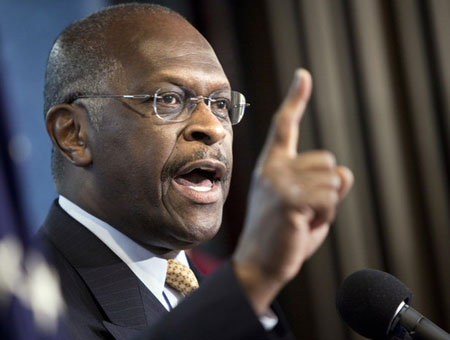
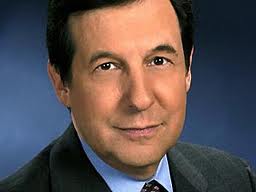
During a contentious exchange between Jon Stewart and Fox’s very own Chris Wallace (Part 1 and Part 2), this past Sunday, Wallace criticized Stewart for the voice he used while doing a bit on Herman Cain.  He asked Stewart if he planned to make a remake of “Amos n’ Andy.”  Not to be out-done, Herman Cain seized the moment: “As far as [Stewart] mocking me, look, I’ve been called every name in the book because I’m a conservative, because I’m black,” noted Cain during a public speech.  “I have been called ‘Uncle Tom,’ ‘sellout,’ ‘Oreo,’ ‘shameless.’ So the fact that he wants to mock me because I happen to be a black conservative, in the words of my grandfather, ‘I does not care. I does not care’” (see here for video)

To say there is something ironic in this accusation would be an understatement.  “Cain’s comments about Stewart are a bit odd,” noted Boyce Watkins.  “Given that Cain feels an inexplicable degree of comfort around men like Bill O’Reilly, Sean Hannity, Glenn Beck and Rush Limbaugh, who have insulted people of color in ways were previously unimaginable in the new millennium [sic].” Beyond odd, the accusations, given the accepted deployment of racism, against Stewart meet the definition of Chutzpah.

While the criticisms in this case are disingenuous and evidence of double standards, Stewart’s vocal intimations in this bit are disconcerting.  Given the history of racism in this country, it does play upon longstanding white racial frames of African Americans.  When I initially watched this bit, it made me uncomfortable.  Just as Stephen Colbert “impression” of a Chinese man (I know it is satire, but still) makes me uncomfortable even thought he is criticizing Rush Limbaugh for his own anti-Chinese prejudice, and Bill Maher calling Barack Obama a “’Black Ninja Gangster President’” elicits contempt from me, Stewart’s decision to mock Cain linguistically is troubling especially given its larger historic place.  Likewise, his explanation to Wallace (“Why don’t you show — do you want to show me doing the voices for all the other people that we do? You want to see my New York voice? My Chinese guy voice?’) is equally unsatisfying because it doesn’t reveal a lot of self-reflection as to the larger history of race in this country.  This instance got me thinking about a piece I wrote for Colorlines some years back about how white populism within progressive pundits/entertainers maintained a larger history of white anti-racist activists who have struggled to reflect on white privilege and how longstanding racial images/narratives impact white progressive as well.  As such, I thought I would call attention to this piece in hopes that it provides some greater thought about the current criticism surrounding Stewart.  Just because the (disingenuous) criticism has been brought by Chris Wallace and Herman Cain doesn’t mean there isn’t some basis to the criticism.

From Colorlines (September 21 2004)

“Popularity, Privilege, and the White Populists Who Populate the Airwaves”

After the sixth book arrived in the mail, I realized something might be going on here. Stupid White Men; Rush Limbaugh is a Big Fat Idiot, Does Anyone Have a Problem With That: The Best of Politically Incorrect; Lies and the Lying Liars Who Tell Them: A Fair and Balanced Look at the Right; When You Ride Alone You Ride With Bin Laden: What the Government Should Be Telling Us to Help Fight the War on Terrorism; Dude, Where’s My Country? Turn on the TV, and there’s Jon Stewart sneering at Trent Lott, Strom Thurmond or the bigoted Republican Party. Listen to the radio, and there’s Al Franken talking about the racist plot to disenfranchise black voters during the 2000 election. Liberal pundits, while not as ubiquitous as conservative talk radio and TV warriors, nevertheless seem to be coming out of the woodwork these days.

In addition to excoriating the Christian right, the gun lobby, and evil corporations in general, these liberal pop-culture icons-in-the-making also talk about race on occasion.

In his corporate speeches, Al Franken likes to offer the following commentary on U.S. racism: “Looking at your faces today, I can see that this group hasn’t caved in to that whole affirmative action nonsense. Look around, see all the white faces and laugh. ”

Bill Maher, who has a new HBO show “Real Time With Bill Maher” since the canning of his “Politically Incorrect” post-Sept. 11, made this remark during a March 2004 segment: “Nothing gets white people to the polls like fear. In fact, the right wing is so fired up about Jews and gays and the potty mouth, they’ve almost forgotten who the real enemy is —brown people.”

Like the white populist movements of olden days, the new white populists of today claim allegiance with people of color and supposedly represent a solidarity of common white folk and communities of color against the establishment.

Continue reading here

Metta World Peace: Leave the Baller formerly known as Ron-Ron alone

Metta World Peace

Described as crazy, as a publicity stunt from a man seeking attention, as evidence of his weirdness, and countless other not-to-mentioned racist and derogatory comments, the Internet was set ablaze after Ron Artest announced his plans to change his name to Metta World Peace.

Commentators also used the instance to rehash Artest’s past, postulating that the name change reflected a deliberate attempt to continue to change his image.  For example, Andy Kamenetzky, offered the following as explanation for his name change:

In any event, the identity change falls in line with recent steps Ron has taken while bettering himself as a person and revamping his formerly tarnished image:

– Opening up about his time in therapy, while becoming an outspoken advocate for the mental health issues. (A matter we discussed at great length earlier this season.)

– Winning the 2011 J.Walter Kennedy Citizenship award for outstanding service and dedication to the community.

– Launching a new reality TV show, “Last Second Shot,” in which he’ll mentor parolees.

Thus, why not change his name to “Metta World Peace?” (“Metta,” by the way, is defined as the Buddhist virtue of kindness.”)

The one concern I might have for Ron is perhaps appearing like he’s on the verge of jumping the shark. It’s one thing to thank your psychiatrist before conducting a freewheeling, heartfelt press conference for the ages. It’s another to adopt a very unusual moniker. Too many moves at once, however well-intentioned, could come off as cartoonish.

The fact that his decision to change has led to ample ridicule and criticism, leaving one to wonder how this was an attempt to reform his image, is revealing.  Unable or unwilling to accept the name change on his terms, analysts and the many people who offered comments on various pages took the opportunity to once again deconstruct, analyze, psychologically prod Artest.  In my forthcoming book – After Artest (SUNY Press) – I argue that Artest (and the NBA’s black bodies) were unable to transcend and move beyond the prism of the Palace Brawl.  That is, the 2004 Palace Brawl overdetermined the media discourse surrounding and public consumption of the NBA; and both the Palace Brawl and the representations of the NBA were overdetermined by the blackness associated with the league.  The spectacle surrounding his name change, the demonization, the ridicule, and the efforts to psychologically analyze Artest demonstrates how both blackness and the Palace Brawl overdetermine this reaction.   The level of animosity and judgment is not only evidence to the impossible path to redemption, but also how we as a society might grow a bit if we simply thought about what Metta (Ron Artest) is trying to tell us.  According to Acharya Buddharakkhita, Metta means the following:

The Pali word metta is a multi-significant term meaning loving-kindness, friendliness, goodwill, benevolence, fellowship, amity, concord, inoffensiveness and non-violence. The Pali commentators define metta as the strong wish for the welfare and happiness of others (parahita-parasukha-kamana). Essentially metta is an altruistic attitude of love and friendliness as distinguished from mere amiability based on self-interest.

If people could simply hear and practice what is in his name, I can only imagine what the sporting world would look like (not too mention the comment) as well as every other institution within our society.