Huffington Post (Gabriel Lerner): Jailing Undocumented Immigrants Is Big Business (VIDEO)

Jailing Undocumented Immigrants Is Big Business (VIDEO)

by Gabriel Lerner

LOS ANGELES — At dawn on July 19, nearly 40 Immigration and Customs Enforcement (ICE) and Homeland Security Immigration (HSI) agents burst into the home home of Carmen Bonilla, 44. The agents were searching for “Robert” an alleged drug dealer, but ended up terrifying Bonilla and her son Michael, 16, daughter Josefina, 23, daughter-in-law Leticia, 28, and two of her granddaughters.

According to Jessica Dominguez, the family’s lawyer, and Jorge Mario Cabrera, spokesperson of the Coalition for Human Immigrant Rights of Los Angeles (CHIRLA), the family was subjected to “different levels of physical and verbal abuse,” including screaming, “kicking, beating and aggression.” Their treatment was documented last week by HuffPost LatinoVoices’ Jorge Luis Macías.

What happened to the Bonillas has happened to thousands of immigrant families. Immigration authorities — both local police and federal ICE agents — have embarked on a program to seek out “criminal illegal aliens” and, whether they find them or not, have often rounded up entire families for deportation.

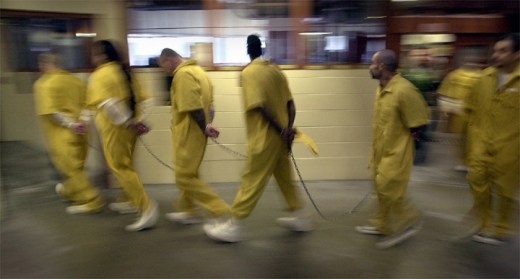
Even though the Bonilla family members do not have criminal records, they face removal proceedings before an immigration judge. The family was able to find legal representation and general public support, enabling their release from ICE custody, but undocumented immigrants who are less lucky are routinely sent to prisons and detention centers where ICE will process their paperwork and decide whether they may be released.

“If they have a criminal record, particularly a drug or security-related conviction, or a felony or violent crime, or crime of moral turpitude, they will likely have to remain in custody until their trial before the [immigration judge],” explained Aggie R. Hoffman, an immigration attorney.

The Department of Homeland Security pays between $50 to $200 per day per person to local, county and state prisons to house apprehended aliens. A few years ago, a series I wrote for La Opinión showed how prisons in general, and California’s prisons in particular, benefit from the largesse of the federal government and vie for a piece of this lucrative business. At that time, I visited a detention center in Lancaster, Calif., run by the Sheriff of Los Angeles, where immigrants rounded up in raids were housed until their deportation or legal proceedings. The process is supposed to take just a few days, but some of the detainees rushed to tell me that they had been kept there for more than two years.

Continue reading at Huffiington Post

via Jailing Undocumented Immigrants Is Big Business (VIDEO).

From feministing.com: Nikki Haley’s got “white girl” problems

Nikki Haley’s got “white girl” problems

By Samhita Mukhopadhyay | Published: August 11, 2011

Growing up South Asian in the United States in the last few decades was not exactly awesome if fitting in was central to your identity development. If you grew up in the city, you probably didn’t feel like you belonged to the other more populated immigrant communities around you and if you grew up in the ‘burbs or rural areas there’s a good chance you were one of the only non-white people in your town (like me).

In a country where the diversity model is either you are white or you are added to the diversity salad by claiming a racial and ethnic identity in it’s most “authentic” sense–growing up at a time when there weren’t a lot of South Asians didn’t leave you with many options. It also dictated the choices and values South Asian Americans came to hold (think “model minority” and all its discontents).

Which is why, Nikki Haley’s decision to mark herself as white, despite her South Asian origins, on her voter registration card is indicative of much larger cultural forces than a personal moment of ambivalence, dissonance or confusion. Her decision to identify as white is part of a system of racial categorization.

Amardeep Singh, a writer for South Asian political blog Sepia Mutiny, writes on his own blog in response to Taz at SM, two points about what he thinks is wrong about calling Haley out for this racial categorization of herself:

Continue reading here:  Nikki Haley’s got “white girl” problems (feministing.com).

Enough is enough: Pelican Bay Hunger Strike and the Abysmal Conditions in America’s prisons « Your Black World

Enough is enough:

Pelican Bay Hunger Strike and the Abysmal Conditions in America’s prisons

Originally Published on Your Black World

by David Leonard

On July 1, 2011, hundreds of prisoners initiated a hunger strike in California. While the strike began inside of the Special Housing Unit at Pelican Bay State Prison, where human beings are locked away inside of soundproof cells for 22 1/2 hours each and every day, the strike has spread to prisons throughout the state, reaching as many as 6,600 prisoners in 13 locations. According he protest sought to “draw attention to, and to peacefully protest, twenty-five years of torture via [California Department of Correction and Rehabilitation]‘s arbitrary, illegal, and progressively more punitive policies and practices.” More specifically, the strike began as an effort to change the inhumane treatment facing prisoners in California (and elsewhere). Colorlines Magazine succinctly summarizes the demands as follows

· “End Group Punishment & Administrative Abuse” would end group punishment as a means to address an individual inmates rule violations.

· “Abolish the Debriefing Policy, and Modify Active/Inactive Gang Status Criteria” The practice of “debriefing,” or offering up information about fellow prisoners particularly regarding gang status, is often demanded in return for better food or release from the SHU. Prisoners demand the end to debriefing because it puts the safety of prisoners and their families at risk, because they are then viewed as “snitches.”

· “Comply with the US Commission on Safety and Abuse in America’s Prisons 2006 Recommendations Regarding an End to Long-Term Solitary Confinement” Prisoners demand a more productive form of confinement in the areas of allowing inmates in SHU and Ad-Seg [Administrative Segregation] the opportunity to engage in meaningful self-help treatment, work, education, religious, and other productive activities. This demand includes access to adequate natural sunlight and health care treatment.

Continue reading at Enough is enough: Pelican Bay Hunger Strike and the Abysmal Conditions in America’s prisons « Your Black World.

Marc Lamont Hill: Why we must stand in solidarity with the Pelican Bay prisoners | Philadelphia Daily News | 07/20/2011

Marc Lamont Hill: Why we must stand in solidarity with the Pelican Bay prisoners

By Marc Lamont Hill

Philadelphia Daily News

FOR NEARLY three weeks, inmates at Pelican Bay State Prison, in California, have been on a hunger strike. They plan to continue until officials agree to improve the conditions and prison policies.

Contrary to what prison officials have suggested, the prisoners’ demands are far from numerous or extravagant.

To the contrary, the inmates have made five reasonable requests: individual accountability, so that entire groups (or races) aren’t punished for the acts of one person; abolishing the policy that forces prisoners to snitch (thereby risking their lives) in order to avoid punishment; ending long-term solitary confinement, a practice that has been deemed torture by the United Nations; no longer withholding food as punishment; and providing reasonable programming and privileges, such as being allowed to have one photo per year.

I stand in solidarity with them. And so should you.

In Pelican Bay, and nearly every other prison in the country, inmates are beaten, raped, tortured and denied their constitutional rights. As prisons continue to expand at a rapid pace – Pennsylvania’s prison spending grew by another 10 percent this year – these problems are becoming more prevalent and extreme.

At this point, many of you are rolling your eyes in disgust. You may even be asking, “Why should I care about how murderers and rapists are treated?”

First of all, the majority of prisoners are not there for violent crimes, nor are they even threats to society. Most are incarcerated due to crimes related to the failed War on Drugs, such as simple drug possession, petty theft and parole violations. More often than not, these are people who would not be incarcerated if they could have afforded to live in a better neighborhood or hire a better lawyer.

These are people who belong in rehab or mental-health facilities rather than buried in cages. The suffering they incur in prison only exacerbates their problems, making them more likely to commit crimes again.

Regardless of a person’s crimes, however, no one deserves to be raped, tortured, starved or otherwise mistreated in prison. But, sadly, this is exactly what happens every day. Unfortunately, the abuse of prisoners goes largely unaddressed because of our refusal to see prisoners as people.

Consider, for example, all the jokes that are made in movies, TV and everyday life about prison rape. These jokes are rooted in truth, as nearly 2 percent of all U.S. inmates are raped while incarcerated. Such humor can be considered “funny” only if the people being hurt are not understood as full human beings.

Continue reading at  Marc Lamont Hill: Why we must stand in solidarity with the Pelican Bay prisoners | Philadelphia Daily News | 07/20/2011.

Neshoba: A documentary about the past that teaches us about the present

My plan for the summer is to watch many documentaries and to read an equal number of books.  First up, I watched Neshoba: The Price of Freedom, a documentary by Micki Dickoff and Tony Pagano about the murders of James Chaney, Andrew Goodman and Michael Schwerner.  While the film documents what happened to these civil rights workers, and the broader struggle for civil rights in Mississippi, it is very much a story of the families of these three men.  It brings to life how their murders and the failure to secure justice on their behalf impacted family, friends, and the community at large (society as a whole).  Pushing the discussion beyond their place as icons and symbols, the film depicts them as sons, fathers, husbands, and brothers, giving voice to pain and suffering endured by their families.   Like Spike Lee’s Four Little Girls, the film challenges those who depict the civil rights movement as so far removed from our current moment, illustrating how the violence and injustice that took place during the 1960s continues to impact families and communities, elucidating how this history remains with us.

The film doesn’t merely focus on their murders and the civil rights movement, highlighting the struggle for justice.  While at times the film focuses too much attention on the trial of Edgar Ray Killen, who was found guilty of three counts of manslaughter in 2005 41 years after these three civil rights workers went missing, the emphasis here is important because it shows how the fight for justice was a fight for accountability, justice and racial reconciliation.

Beyond this, the film makes two really important points. (1) The civil rights movement was immensely violent.  Even as civil rights activists engaged in nonviolence, resisting Jim Crow through passive resistance, the movement itself was extremely violent.  Civil rights workers and those African Americans living under American Apartheid faced violence each and every day.  The film, in this regard, highlights the ways in which the civil rights movement engaged in “unviolence” (a term Charles Payne uses that he attributes to SNCC activist Worth Long), in that in the face intimidation, economic reprisals, physical abuse, torture, terror, sexual violence, and murder, “the movement” (those freedom fighters) choose not to respond in kind, to engage in self-defense, but to unviolent resist.  Neshoba reminds us about the violence endured and how that impacted lives.

(2) The film successfully highlights how race and racism impacted the societal reaction to these murders.  In the film, Rita Bender notes that media spotlight (and now historical focus) forced people to think “Whose son matter’s more.” The film makes clear that national attention about James Chaney and his violent death came about because he died alongside of Michael Schwerner and Andrew Goodman.  The fact that as authorities dragged the Mississippi River in search of the three civil rights workers only to discover 9 bodies lead many blacks to ask, “Who are these people,” and “where was the search parties, national attention, and overall concern about their well-being when they went missing.”  Looking at this historically, whether the murder of these civil rights workers, or the violence experienced by the Freedom Riders, we see white supremacy in action: violence carried out in the name of white supremacy but also in the value placed upon a white life over that of African Americans.  The historical illustration here got me thinking about how often a black life (or that of a person of color) is devalued.  We can see in the lack of media attention and national discourse concerning the noose at Santa Monica High School or the brutality experienced by Jordan Miles. In the war on drugs or in differential media coverage about the abduction of white women and women of color  we see how race impacts narratives.  We see whose life matters, whose humanity is highlighted, and whose experience is given public consideration, public concern, public outrage, public sympathy, and societal action.  While Neshoba brings to light the historic atrocity involving the civil rights movement, it powerfully documents the ways in which racism affords and denies humanity along racial lines not only in the past but also in our present moment.  We see not just the legacy of racism but its continued grip on society.

Just because he is a bit wrong, doesn’t mean you are right: Jon Stewart, Chris Wallace, Herman Cain, and the politics of race

Vs.

Vs.

Vs.

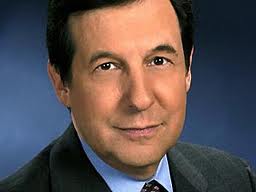
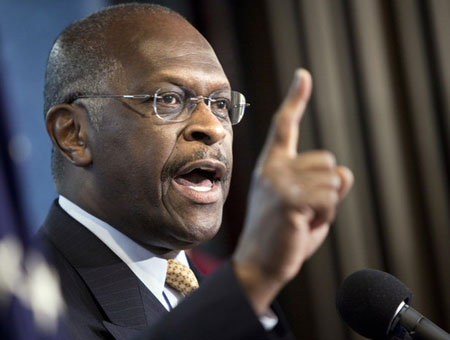
During a contentious exchange between Jon Stewart and Fox’s very own Chris Wallace (Part 1 and Part 2), this past Sunday, Wallace criticized Stewart for the voice he used while doing a bit on Herman Cain.  He asked Stewart if he planned to make a remake of “Amos n’ Andy.”  Not to be out-done, Herman Cain seized the moment: “As far as [Stewart] mocking me, look, I’ve been called every name in the book because I’m a conservative, because I’m black,” noted Cain during a public speech.  “I have been called ‘Uncle Tom,’ ‘sellout,’ ‘Oreo,’ ‘shameless.’ So the fact that he wants to mock me because I happen to be a black conservative, in the words of my grandfather, ‘I does not care. I does not care’” (see here for video)

To say there is something ironic in this accusation would be an understatement.  “Cain’s comments about Stewart are a bit odd,” noted Boyce Watkins.  “Given that Cain feels an inexplicable degree of comfort around men like Bill O’Reilly, Sean Hannity, Glenn Beck and Rush Limbaugh, who have insulted people of color in ways were previously unimaginable in the new millennium [sic].” Beyond odd, the accusations, given the accepted deployment of racism, against Stewart meet the definition of Chutzpah.

While the criticisms in this case are disingenuous and evidence of double standards, Stewart’s vocal intimations in this bit are disconcerting.  Given the history of racism in this country, it does play upon longstanding white racial frames of African Americans.  When I initially watched this bit, it made me uncomfortable.  Just as Stephen Colbert “impression” of a Chinese man (I know it is satire, but still) makes me uncomfortable even thought he is criticizing Rush Limbaugh for his own anti-Chinese prejudice, and Bill Maher calling Barack Obama a “’Black Ninja Gangster President’” elicits contempt from me, Stewart’s decision to mock Cain linguistically is troubling especially given its larger historic place.  Likewise, his explanation to Wallace (“Why don’t you show — do you want to show me doing the voices for all the other people that we do? You want to see my New York voice? My Chinese guy voice?’) is equally unsatisfying because it doesn’t reveal a lot of self-reflection as to the larger history of race in this country.  This instance got me thinking about a piece I wrote for Colorlines some years back about how white populism within progressive pundits/entertainers maintained a larger history of white anti-racist activists who have struggled to reflect on white privilege and how longstanding racial images/narratives impact white progressive as well.  As such, I thought I would call attention to this piece in hopes that it provides some greater thought about the current criticism surrounding Stewart.  Just because the (disingenuous) criticism has been brought by Chris Wallace and Herman Cain doesn’t mean there isn’t some basis to the criticism.

From Colorlines (September 21 2004)

“Popularity, Privilege, and the White Populists Who Populate the Airwaves”

After the sixth book arrived in the mail, I realized something might be going on here. Stupid White Men; Rush Limbaugh is a Big Fat Idiot, Does Anyone Have a Problem With That: The Best of Politically Incorrect; Lies and the Lying Liars Who Tell Them: A Fair and Balanced Look at the Right; When You Ride Alone You Ride With Bin Laden: What the Government Should Be Telling Us to Help Fight the War on Terrorism; Dude, Where’s My Country? Turn on the TV, and there’s Jon Stewart sneering at Trent Lott, Strom Thurmond or the bigoted Republican Party. Listen to the radio, and there’s Al Franken talking about the racist plot to disenfranchise black voters during the 2000 election. Liberal pundits, while not as ubiquitous as conservative talk radio and TV warriors, nevertheless seem to be coming out of the woodwork these days.

In addition to excoriating the Christian right, the gun lobby, and evil corporations in general, these liberal pop-culture icons-in-the-making also talk about race on occasion.

In his corporate speeches, Al Franken likes to offer the following commentary on U.S. racism: “Looking at your faces today, I can see that this group hasn’t caved in to that whole affirmative action nonsense. Look around, see all the white faces and laugh. ”

Bill Maher, who has a new HBO show “Real Time With Bill Maher” since the canning of his “Politically Incorrect” post-Sept. 11, made this remark during a March 2004 segment: “Nothing gets white people to the polls like fear. In fact, the right wing is so fired up about Jews and gays and the potty mouth, they’ve almost forgotten who the real enemy is —brown people.”

Like the white populist movements of olden days, the new white populists of today claim allegiance with people of color and supposedly represent a solidarity of common white folk and communities of color against the establishment.

Continue reading here