The Southern Strategy in the Age of Color-Blind Racism
by David J. Leonard | NewBlackMan
In recent weeks, with the GOP establishment coming to the aid of Mitt Romney and because of Newt Ginrich’s efforts to sell himself as an outsider, an increasingly visible narrative has emerged: as the anti-GOP establishment. Given Newt’s racial politics and his entire campaign strategy, it is hard to think of Newt as anything but the GOP establishment.
At the same time, there has been a growing sentiment about the hegemony of colorblind racism within the GOP. “Colorblind racism is the new normal in American conservative political thought,” writes Edward Wyckoff Williams. The “2012 Republican candidates are using egregious signals and dog whistles to incite racial divisiveness as an effective tool for political gain. But when confronted about the nature of their offensive rhetoric, the answer is either an innocuous denial or dismissive retort.” The codes or dog whistle politics are not new, nor is the denial. While the audacity of race denial may be on the rise, the clarity of the GOP’s race politics have been on full display. No secret decoder is necessary especially as we look at the larger history of race and the GOP.
Like so many of his fellow competitors, Newt’s racial demagoguery, his demonization of people of color, and his efforts to scapegoat have been a daily reality during the 2011-2012 GOP presidential primary. This is nothing new from Newt, who has made his career on the demonization of “welfare moms,” “illegals” and a “food stamp president.” In 2007, Newt took exception with bilingual education, announcing: “We should replace bilingual education with immersion in English so people learn the common language of the country and they learn the language of prosperity, not the language of living in a ghetto.”
This has continued during the current election cycle with his recycling of the Moynihan report and his policy initiatives focusing on teaching black kids a work ethic. The language, the policies, and the centrality of race illustrate the profound ways that Newt Gingrich is the GOP establishment. As the voice box for the racial ideologies and the torchbearer for the GOP’s southern strategy (demonizing people of color in hopes of galvanizing white voters to support a party that doesn’t represent their economic interests), Newt’s denied GOP credentials is almost laughable.
This is the party of Nixon, whose southern strategy sought to scapegoat African Americans. This is the same man, who talked about “Negro bastards” who “live like a bunch of dogs” on welfare rolls. This is the GOP that was led by Richard Nixon, who one said:
Bill Rogers has got — to his credit it’s a decent feeling — but somewhat sort of a blind spot on the black thing because he’s been in New York,” Nixon said. “He says well, ‘They are coming along, and that after all they are going to strengthen our country in the end because they are strong physically and some of them are smart.’ So forth and so on.
My own view is I think he’s right if you’re talking in terms of 500 years,” he said. “I think it’s wrong if you’re talking in terms of 50 years. What has to happen is they have be, frankly, inbred. And, you just, that’s the only thing that’s going to do it, Rose.
This is the party of Reagan, who described outrage from working Americans over the sight of a “strapping young buck using food stamps to buy T-bone steaks at the grocery store.” When not demonizing black men, he spoke about “welfare queens” in Chicago, “who drove a Cadillac and had ripped off $150,000 from the government using 80 aliases, 30 addresses, a dozen social security cards and four fictional dead husband.” This is the same Reagan, who started his presidential campaign in 1980 in Philadelphia, Mississippi with an “ode to state’s rights,” a theme that continued with his defense of segregationist Bob Jones University and his denunciation of the voting right act as “humiliating to the South.” As the patriarch of the party, it is no wonder that racist rhetoric and appeals are central to the 2012 campaign.
Some days it seems as if the GOP candidates are competing to be the governor of Alabama, circa 1960, rather than running to be President of the United States in 2013. Since the republican process to elect a nominee commenced, we have been treated to an endless string of racially awkward moments. Whether instances of ignorance or ignorant instances of institutionally racist ideology, too many of the republican Presidential candidates have re-revealed for us the colorblind fact that we are NOT post-race. In fact, judging from some of the candidate’s miscues and the underhanded pandering directly to the racial Right, we might actually be Pre-Race.
During a campaign stop in Sioux City, Iowa, Rick Santorum, responded to a familiar question about government spending with a longwinded diatribe that ultimately led him back to the GOP’s sweet spot: demonizing (and tacitly racializing) the social safety net. Focusing on the size of government and spending, Santorum stated:
It just keeps expanding—I was in Indianola a few months ago and I was talking to someone who works in the department of public welfare here, and she told me that the state of Iowa is going to get fined if they don’t sign up more people under the Medicaid program. They’re just pushing harder and harder to get more and more of you dependent upon them so they can get your vote. That’s what the bottom line is.
But this was not the “bottom line.” Santorum went on to ‘clarify’ the links between government spending and race, rehashing the accepted argument of the right that the federal government, especially under President Obama, is dedicated to taking money from hardworking white Americans and giving it to lazy and nonworking African Americans. He argued, “I don’t want to make black people’s lives better by giving them somebody else’s money; I want to give them the opportunity to go out and earn the money. And provide for themselves and their families. The best way to do that is to get the manufacturing sector of the economy rolling again.”
Santorum’s seamless transition from government spending to blacks on welfare is a non sequitur; it is indicative of the power of a white racial framework that consistently imagines African Americans as welfare queens and unproductive parasites on/in society. These stereotypes of African Americans stand in juxtaposition to the vision of middle and working class white folk as the racial model of hard work, virtue and dedication. While only 9% of African Americans in Iowa are on food stamps (nationally, 39% of welfare recipients are white, whereas 37% and 17% are black and Latino), Santorum’s comments resonate with the GOP’s vision of race and policy. His comments complemented Newt Gingrich’s recent lamentation of the deficient work ethic of black youth, his recycling of the culture of poverty/Moynihan Report, and his constant references to President Obama as a “food stamp president.”
Not surprisingly, Santorum and his fellow candidates have denied the racial implications here. Arguing that he did not actually say “black,” that some of “his best friends are black,” and that he was merely giving voice to the issues raised in Waiting for Superman, Santorum his been dealing the race-denial card from the top, bottom, and middle of the deck.
Despite the denials, the comments fit a larger worldview seemingly shared by Santorum and the entire field. Earlier in his campaign, Santorum argued that President Obama, as a black man, should understand the dangers of the government deciding who is and isn’t a person. “The question is — and this is what Barack Obama didn’t want to answer — is that human life a person under the Constitution? And Barack Obama says ‘no,’” Santorum argued during a television interview. “Well if that person — human life is not a person — then I find it almost remarkable for a black man to say, ‘we’re going to decide who are people and who are not people.’” This effort to invoke race and to analogically integrate his pro-life agenda with anti-black racism isn’t just a campaign strategy.
Colorlines recently published a 90 second video summarizing the year in race, an amazing feet given what has happened over the year. Statistical measurement define 2011, in many ways:
45 percent of the 131,000 homeless veterans in America are African-American
26 percent of African American families earn less than $15,000
1 in 9 African Americans live in neighborhoods where 40%+ of its residents live in poverty
Black women earn 68 cents for every dollar earned by men; for Latinas this number is 59 centers
16.2 percent of African Americans are unemployed
17.5 percent of black males are unemployed; 41 percent of black teenagers are without a job
11.4 percent of Latinos are unemployed; 21.3% of Alaska Natives and 19.3% of members of Midwest indigenous communities are unemployed
In 2011, blacks and Latino were twice as likely to face home foreclosures
“Between January and June of 2011, the United States carried out more than 46,000 deportations of the parents of U.S.-citizen children”
Yet, meaning of this year transcends these numbers. We have seen ample intrusions of blatant racism into the public square. I recently wrote about this, arguing:
In Two-Faced Racism, Leslie Picca and Joe Feagin explore the ways in which racial performances are carried in both the frontstage (integrated and multiracial public spaces) and the backstage (those private/semi-private all-white spaces where race talk and racist ideas reveal themselves in profound ways). Their research found that the backstage offers whites a place to “perform, practice, learn, reinforce, and maintain racist views of and inclinations toward people of color. These views and inclinations play a central role in generating and maintaining the overt and covert racial discrimination that is still commonplace in major institutions of this society” (27-28).
Increasingly, however, the frontstage is replacing the backstage whereupon whites are publicly performing, learning, reinforcing and maintaining their racist views toward people of color. Evident in college students donning blackface and then putting pictures online, evident in Gene Marks, Newt Ginrich, Donald Trump and their reactionary pals lamenting the laziness of black youth, evident in the usage of the N-word, evident in white-only movie screenings and white-only swimming pools, the lines between the frontstage and the backstage are blurring before our eyes. In other words, the frontstage is now the backstage, leaving me to wonder what sorts of ideologies, stereotypes and racial talk is transpiring in backstage. Or maybe, in a “post-racial America,” widespread racism has returned (did it ever leave?) to the frontstage thereby illustrating the importance of challenging and resisting in each and every location.
From Rep. Doug Lamborn referring to President Obama as a “tar baby” and Brent Bonzell describing President Obama as “a skinny, ghetto crackhead” to Fox’s headline for President Obama’s birthday party –“Obama’s Hip-Hop BBQ Didn’t Create Jobs” and Eric Bolling “criticizing” President Obama for “chugging 40’s in IRE while tornadoes ravage MO,” there have been ample examples of the ways in which public expressions of racism have defined the 2011 political sphere. The racism and sexism directed at Michelle Obama (just one example) and the astounding types of political commercials (just one example) are also evident of the ways in which violent rhetoric has dominated the public square.
Not surprisingly, Rush Limbaugh (calling President Obama a “oreo cookie” and Michelle Obama as “uppity”), Ann Coulter (“our blacks are better than theirs”), Pat Buchannan (“Blacks bought a lot of propaganda of the liberal plantation”), amongst others, all illustrate the ways in which racist language and ideologies define the nature of political discourse during 2011. Beyond the ample instances of racism, it is important to see beyond the starling ease that racism operates within the public square to look at the ways race plays out within the deployed narratives and ideologies. Take Pat Buchannan, who reminisced for Jim Crow during 2011: “Back then, black and white lived apart, went to different schools and churches, played on different playgrounds, and went to different restaurants, bars, theaters, and soda fountains. But we shared a country and a culture. We were one nation. We were Americans.” In language and the vision for America, race defined the past year (and the years before).
The last year has also seen quite a bit of recycling. From the Moynihan Report and culture of poverty, to bootstraps ideology and efforts to blame the poor, 2011 has seen a comeback (not that these racist narratives ever went away) of these troubling ideas. Two of the most illustrative examples were Newt Gingrich and Gene Marks. Gingrich, who has made a career of race baiting (calling President Obama a “food stamp president” and one defined by a “‘Kenyan, anti-colonial worldview’”), recently offered policy prescriptions to deal with black unemployment: teach black youth the value of work. He stated:
Really poor children in really poor neighborhoods have no habits of working. And have nobody around them who works. They have no habit of ‘I do this and you give me cash’-unless it’s illegal. What if you paid them part time in the afternoon, to sit at the clerical office and greet people when they came in? What if you paid them to work as the assistant librarian. What if they were the assistant janitor, and carried a mop?
Deploying longstanding stereotypes about black laziness and criminality, all while crafting economic policy based on bootstrapism, Ginrich shows how 2011 has been so much about sampling and redeploying the racist ideologies of yesteryear. Gene Marks, whose article prompted widespread condemnation because of its paternalistic tone and acceptance of widespread stereotypes, is equally reflective of this trend.
I am not a poor black kid. I am a middle aged white guy who comes from a middle class white background. So life was easier for me. But that doesn’t mean that the prospects are impossible for those kids from the inner city. It doesn’t mean that there are no opportunities for them. I believe that everyone in this country has a chance to succeed. Still. In 2011. Even a poor black kid in West Philadelphia.
The prosecution and sentencing of, and the struggle for justice for, Kelly Williams-Bolar is emblematic of many issues surrounding race in 2011. From the criminalization of people of color and the demonization of women of color, to educational inequalities and the generation of kids behind left behind, her case teaches us much about the continued struggle for civil rights in 2nd decade of the twenty-first century. Jamilah King described the case in the following way:
Just in case you haven’t seen this story blow up on your social network this week: Kelley Williams-Bolar is headed to an Ohio jail. The mother of two was sentenced this week to 10 days in jail, three years of probation, and 80 hours of community service. Her crime? Sending her two daughters to an out-of-district school. . . .It’s an infuriating case, especially for anyone who’s even remotely familiar with educational inequity in this country. America still hasn’t made good on its half-century promise to desegregate its public schools, and academic achievement can almost always be measured by zip code.
The demonization of women of color extended into the realm of popular culture as well.
2011 was also the year of The Help, a film that recycled the hegemonic Hollywood trope of “white love” (h/t Elon James White) and racial redemption all while sanitizing the black freedom struggle. Yet, it was also a year defined by the many powerful responses to this film; these effort resisted and challenged the film’s (mis)representation of black women’s work, segregation, social justice, and countless other issues. From the Association of Black Woman Historians’ powerful statement to the many articles from black scholars – Dutchess Harris, Rebecca Wanzo, Mecca Jamilah Sullivan, Martha Southgate, Mark Anthony Neal, Aishah Shahidah Simmons, Melissa Harris-Perry, and Honorée Fanonne Jeffers – many voices have challenged the narrative and representations offered by The Help, refusing to accept the cultural politics of the mainstream. Yet, 2011 has also seen the release of Pariah, a film that explores the experience of a young black lesbian struggling for acceptance within her family and society at large. Whereas The Help represents blackness as accessory, as the help, Pariah reminds audiences of the power and beauty of black identity, highlighting heterogeneity, diversity, and humanity.
2011 has seen ample moments of resistance, a refusal to accept and tolerate racism, sexism, and homophobia. It has been a year of “speaking truth to power” and refusing the dominant narrative. Following the airing of ABC’s 20/20 special entitled “Children of the Plains,” a group of Native American students from South Dakota produced their own video that refused the images and messages offered in the show: “I know what you probably think of us…we saw the special too. Maybe you saw a picture, or read an article. But we want you to know, we’re more than that…we have so much more than poverty.” Then there were the students from Ohio University, who launched the “We are a culture not a costume” campaign to protest the racist stereotypes and racist images so prominent during Halloween. Youth in California and Alabama fought vigorously to change the tide against anti-immigrant racism. Hotel workers in New York protested Dominique Strauss-Kahn and the victimization of Nafissatou Diallo. And so much more.
The power of new media as a space of resistance has been on full-display, whether the consciousness raising happening on twitter and Facebook, or the ways in which Jay Smooth, Jasiri X, Issa Rae, Amie Breeze Harper, Ariana Proehl. Scholars like Alondra Nelson, Koritha Mitchell, Nicole Fleetwood, Danielle McGwire, Kellie Jones, Evie Shockey, and Manning Marable (who we lost this year) have also published important works that advance the study of race, gender, and sexuality in both history and our current moment. In the face of erasure, dehumanization, and persistent inequalities, scholars and artists (see Lisa Thompson’s discussion of black women in theater), activists and organizers, and people from community big and small have met the racism and injustice with force. There has been so much to challenge in 2011 yet the many instances of injustice have not killed our “freedom dreams.” While these dreams will be deferred until 2012, the struggle will continue.
The Frontstage is the New Backstage: Racism in the Public Square
by David J. Leonard | NewBlackMan
Three stories have captured the imagination of social media recently.
A Buffalo High school suspended several members of the basketball team because its members allegedly regularly chant racial epithets prior to each game. As reported in the Buffalo News, “Tyra Batts, the sole African-American on the Kenmore East High School’s squad,” said “her teammates would hold hands before the game, say a prayer and then shout “One, two, three (n——).’” Batts, who was suspended because of her involvement in a fight resulting from the repeated use of the N-Word by her teammates, disputed claims that it “was just a joke.” The efforts to defend its usage and to deny the racist and violent history have set off anger and debate throughout the web.
“Remember all of those debates we’ve had about whether or not the n-word is just another word?,” writes Britini Danielle. “Usually, our conversations dealt with white and non-black rappers and entertainers using the word ‘as a term of endearment,’ but this time we’re heading into the tricky world of high school.”
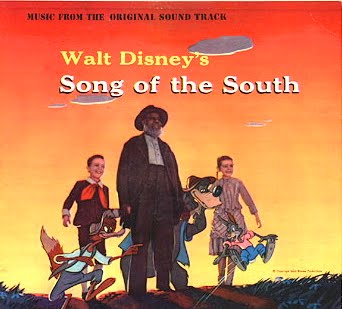
Not to be outdone, a P.h.D student at Rutgers University invited her white classmates to a screening of the Disney Classic Song of the South. An editorial in The Daily Targum describes the circumstances as follows:
This email invited “her fellow non-racist racists” to a private, guilt-free viewing of 1946 musical Song of the South in her home, where together they could engage in celebratory mocking of stereotyped 1940’s images of southern blacks. This was an event hosted by a “ragtime/minstrel loving fool” who was due “for some rollicking Disneyfied Ole Darkeyism.” The postscript read, “If you do come, hooch is most welcome, as are straw hats and other Darkeyisms. I might even buy a watermillyum if I get enough interest.” It specified who invited guests should bring, given that “I might yell racist things at the TV.” The author of this email articulated the hope that the experience would be a “communion with her shamefully preferred era of Disney.”
The celebration of dehumanizing representations, the efforts to create a segregated space, and the replication of longstanding stereotypes provoked outrage, condemnation, and ample conversation on Facebook and Twitter. Citing it as evidence of the absurdity of a “post-racial America,” the instance became another moment to protest the persistence of white supremacist ideologies within contemporary America.
Yet, none of the outrage would compare to the anger, protests, and denunciation that has followed Gene Marks ode to paternalism in Forbes Magazine. In “If I Were A Poor Black Kid,” Marks provides “advice” that rehashes bootstraps ideology all while playing on longstanding stereotypes about black laziness and disinterest in schooling. Following in the footsteps of Newt Gingrich and Donald Trump, Marks recycles those arguments that link black unemployment and poverty rates to work ethic and personal choice.
His comments have produced a strew of commentaries that have condemned the article for its arrogance, paternalism, and overall erasure of structural inequalities. “Mr. Gene just wants to give us some of that patented #WhiteLove™ that he has laying around the house,” writes Elon James White. “With a healthy sprinkling, poor ignorant black children can rise above their station into the magical world of reasonable participation in society! Mr. Marks has a step-by-step booklet for you to get your school game on track, not your wig pushed back … by poverty.” James, like so many of the responses, identified the arguments offered in Forbes as not a peripheral aberration but instead a central white racial frame within contemporary culture. Evident in The Help and The Blindside, reflected in political and academic discourses, and central to white racial framing, the narrative focus on black pathological failures and the potential through better parenting, better choices, and better work ethic, guides American racial discourse.
Politics as Usual: Decoding the Attacks on a Liberal Education
by David J. Leonard, Mark Anthony Neal and James Braxton Peterson | NewBlackMan
Few university courses generate much attention from mainstream media, but Georgetown Professor Michael Eric Dyson’s course “The Sociology of Hip-Hop: Urban Theodicy of Jay-Z” has drawn national attention from NBC’s Today Show, The Washington Post, The Associated Press, USA Today, and Forbes.com among many others. To be sure such attention is not unusual for Dyson, who is one of the most visible academics in the United States and has offered courses dealing with hip-hop culture, sociology, and Black religious and vernacular expression for more than twenty-years. Yet, such attention seems odd; hundreds of university courses containing a significant amount of content related to Hip-hop culture and Black youth are taught every year—and have been so, for more than a decade. In addition, there are dozens of scholarly studies of Hip-hop published each year—Julius Bailey’s edited volume Jay-Z: Essays of Hip-Hop’s Philosopher King, among those published just this year—and two Ivy League universities, Harvard and Cornell, boast scholarly archives devoted to the subject of Hip-Hop.
Any course focused on a figure like Jay-Z (Shawn Corey Carter), given his contemporary Horatio Alger narrative, and his reputation as an urban tastemaker, was bound to generate considerable attention, but the nature of the attention that Dyson’s class has received and some of the attendant criticism, suggest that much more is at play.
In early November, The Washington Post offered some of the first national coverage of the class, largely to coincide with the arrival of Jay-Z and Kanye West’s Watch the Throne tour to Washington DC’s Verizon Center. Jay-Z dutifully complied with the attention by giving Professor Dyson a shout-out from the stage. The largely favorable article about the class, did make note, as have many subsequent stories, about the cost of tuition at Georgetown; as if somehow the cost of that tuition is devalued by kids taking classes about hip-hop culture.
Other profiles of the course and Dyson have gone out of their way to make the point that the course had mid-term and final exams, as if that wouldn’t be standard procedure for any nationally recognized senior scholar at a top-tier research university in this country. Such narrative slippages speak volumes about the widespread belief that courses that focus on some racial and cultural groups, are created in slipshod fashion and lack rigor; it is a critique that is well worn, and that various academic disciplines, such as Women’s Studies, Ethnic Studies and even Sociology have long had to confront.
As the nation and global community turns its attention to the rise of the Occupy Wall Street movement, celebrity involvement has been a growing hot topic. Last week, controversy erupted over Kanye West’s presence at the protest site, Zuccotti Park in New York City, at the invitation of Russell Simmons. One article of particular interest, Why Kanye West Doesn’t Belong at Occupy Wall Street, was written by GOOD Senior Editor Cord Jefferson. Highlighting the selling price of his outfit and his image as the “Louis Vuitton Don,” the writer concluded by saying that “what OWS doesn’t need is everyone who’d like to be seen as a populist jumping on Rboard for a photo opportunity before leaving to go buy $500 jeans. Lip service and deceit is what got us into this mess in the first place.”
Watch this videotaped discussion to hear Urban Cusp’s Editorial Director Rahiel Tesfamariam reflect on the author’s points with Bakari Kitwana, who has a forthcoming new book entitled Hip-Hop Activism in the Obama Era. Kitwana has been seen and heard on CNN, Fox News, C-Span, PBS and NPR. He is the CEO of RapSessions.org and Senior Media Fellow at the Harvard Law-based think think, the Jamestown Project. Kitwana is also the former editor of The Source, co-founder of the National Hip-Hop Political Convention and author of the best-selling The Hip Hop Generation: Young Blacks and the Crisis in African American Culture.
Below is two images from the “we are the 99%” movement. Powerful illustrating of injustices and inequalities; interesting frames; interesting who is included and who isn’t included
2nd October 2011
Photo with 8 notes
2nd October 2011
I AM the 99%
I am 53 years old and have worked since I was 13 (paying into Social Security AND Medicare). I have lost 2 401Ks and a pension. I lost my home in 2007 due to mortgage fraud. I am ONE paycheck away from homelessness. I pay more in taxes than GE, Exxon and Bank of America combined. My plan for retirement is WORK UNTIL I DIE.




 Dr. David J Leonard