Dr. David J. Leonard: White Denial and a Culture of Stereotypes

White Denial and a Culture of Stereotypes

In the last installments I have tried to focus readers’ attention on both white denial and the propensity to deploy the experiences of the black middle-class as evidence of a post-racial America. Despite focusing on persistent wealth gaps, examples of institutional racism, and the ongoing consequences of systemic racism, some readers still responded with the clichéd level of defensiveness. The move to criticize me for blaming white people for inequality, or accusing me of labeling all white people as racists, is not a unique move; rather, it represents a typical effort to turn every conversation about race into a statement about white victimhood. This effort, in fact, defines contemporary racial discourse. How else might we explain the fact that more than fifty percent of whites identify the lack of motivation from blacks as the reason for limited racial progress; sixty-five percent believe that racial inequalities would “disappear if only Blacks would ‘try harder'” (Liptsitz 2011, p. 250). According to a recent study white denial is commonplace even amongst America’s youngest generation: “A solid majority of white Millennials, 56 percent, say that government has paid too much attention to the problems of blacks and other minorities. In fact, “58 percent say that ‘discrimination against whites has become as big a problem as discrimination against blacks and other minorities.'” Denial is not simply an outward projection about laws, economic institutions, the political structure or the criminal justice; white denial is about “not seeing race,” despite the fact that the racial prejudices and stereotypes are rampant. White denial isn’t simply outward disavowal but a defense of self.

Such denial is neither simply reflective of a lack of knowledge about the ongoing history of racism, nor do these predicable responses simply reflect an absence of the necessary language to actually talk about racism (the difference between prejudice and racism; what constitutes institutional racism; what is a micro aggression). While the limited knowledge about history of racism and the absence of the requisite literary to engage in these important conversations are important, so too is white privilege. White privilege not only allows whites to be blind to racial profiling, stop and frisk, redlining, housing discrimination, and the myriad of examples of institutional racism, but it incentivizes protecting the status quo. This helps us understand the myriad of studies that show that whites think the scale of race relations is tilted in the favor of communities of color.

Yet, even the privileges that sequester whites away from the consequences and realities of white supremacy do not explain the extent of denial, an almost pathological refusal to look at racism within our legal, political, and cultural institutions–but that are visible in everyday life.

Evident in the ubiquity of racial epithets and racist jokes, along with findings that whites are indifferent to those slurs and jokes, demonstrates how racism is alive and well. Irrespective of class or geography, everyday racism is a fact of life present across a myriad of communities. The facts of micro aggressions in the face of white denial illustrate a very different understanding of the world in which we live: one based on facts and experiences and the other based on fantasy, privilege, and segregation. Micro aggressions refer to “brief and everyday slights, insults, indignities and denigrating messages sent to people of color by well-intentioned White people who are unaware of the hidden messages being communicated” (Sue).

Continue reading @ Dr. David J. Leonard: White Denial and a Culture of Stereotypes.

Dr. David J. Leonard: White Denial and Black Middle-Class Reality – Part 2

White Denial and Black Middle-Class Reality – Part 2

Denial is a fixture of contemporary racial discourse. Reflecting segregation and the entrenched nature of white privilege, the efforts to deny through citing a mythical black middle-class, as if the black middle-class reveals some post-racial reality, defies the facts on the ground. It defies the realities of America’s housing situation.

Housing

A 2012 study entitled, Price Discrimination in the Housing Market, found that like the poor paying more for various goods and services, the black middle class pays more for a home:

No matter what the ultimate reason for the price premium, our results imply that systematic, robust racial differences in the price paid to buy a home – on the order of 3 percent on average in multiple major US markets – persist to the present day, long after many of the most overt forms of institutional discrimination have been eliminated. Considering the average purchase price paid by a black homebuyer in our sample is $177,000, this translates to an average premium of about $5,000 per transaction, a substantial amount given the average income of black households in these cities.

The costs of racism on the black middle-class are evident in the difficulty in securing home loans. For African American joining and remaining part of the middle-class is a precarious and difficult task because of racism. According to a report in the New York Times, black homeowners otherwise eligible for traditional fixed rate 30-year mortgages often had subprime loans. In NYC, it “found that black households making more than $68,000 a year were nearly five times as likely to hold high-interest subprime mortgages as whites of similar or even lower incomes. (The disparity was greater for Wells Fargo borrowers, as 2 percent of whites in that income group hold subprime loans and 16.1 percent of blacks).”

Additionally, Joe Weisenthal, with Did Racist Subprime Lending Cause The New York Foreclosure Crisis? notes that according Housing and Urban Development Secretary Shawn Donovan, “Roughly 33 percent of the subprime mortgages given out in New York City in 2007, Mr. Donovan said, went to borrowers with credit scores that should have qualified them for conventional prevailing-rate loans.” Differential access to different types of loans has huge financial cost. “These practices took a great toll on customers, Weisenthal notes. “For a homeowner taking out a $165,000 mortgage, a difference of three percentage points in the loan rate — a typical spread between conventional and subprime loans — adds more than $100,000 in interest payments.” As noted in the article, the prospect of paying an extra 700 dollars a month over 27 years highlights the financial cost and burden resulting from subprime loans.

Housing discrimination in all its forms demonstrates the precluded benefits of middle-class status to many African American families, but the ways in which racism is shrinking the size of the black middle-class. Evident in foreclosures, the resulting lost wealth, and the overall financial burden of racism, a Black middle class is bound to be fundamentally different from a white middle class.

The consequences of these historic and ongoing practices of discrimination are clear. “Segregation of neighborhoods and communities often means, for African Americans, less access to schools with excellent resources, key job networks, quality public services such as hospital care and quality housing,” writes Joe Feagin and Kathryn McKinney in The Many Costs of Racism. “The later factors, less access to quality housing, also limits the ability of African American families to build upon substantial housing equity, a major source for the wealth passed along by families for several generations.” These are the costs of racism for all African Americans.

Continue reading @ Dr. David J. Leonard: White Denial and Black Middle-Class Reality – Part 2.

Dr. David J. Leonard: White Denial and Black Middle-Class Realities (Part 1)

White Denial and Black Middle-Class Realities (Part 1)

The denial of racism is an obsession of white America. In what has become a holy trinity of sorts – accusing others of playing the “race card;” noting the election of Barack Obama; and citing the success of the black middle class and/or the black elite – the denial of racism and the demonization of those who demand that America fulfill its creed of equality plagues contemporary racial discussions. It is a rarity to witness a conversation about race, whereupon this holy trinity isn’t deployed, derailing the conversation before it even begins. Whether highlighting segregation or inequality in access to education, health care, or countless institutions, whether noting the realities of stop-and-frisk or daily confrontations with American racism, the response is often the same: denial, denial, denial.

In an effort to have an honest conversation and to push the conversation beyond this myopic fantasy, I thought I would give the denial crowd some facts. This is for those who like to cite the black middle class as evidence of a post-racial America; this is for those who cite the black middle class (likely never having a meaningful conversation with a person of color of any class status) as evidence that poverty rates, incarceration rates, educational inequality or health disparities is the result of faulty values or a poor work ethic. This is my response to those who dismiss the injustice and inequality endured by poor communities of color – the working poor – by noting the purported American Dream experienced by the black middle-class. For all of them, here is a little dose of reality.

Wealth

Despite the continued invoking of the black middle-class, the realities of inequality and persistent wealth disparities within the middle-class reveal a different reality. In other words, the wealth on the ground reveals a reality rather entirely different from this white fantasy. According to a 2011 study from Pew Research Center, whites possess 20 times more wealth than African Americans and 18 times that of Latinos. More succinctly, whereas the average white family had $113,149 dollars of wealth, “the typical black household had just $5,677 in wealth (assets minus debts) in 2009, and the typical Hispanic household had $6,325 in wealth.” As of 1999, whites and blacks similarly situated within the “educational middle class” live in distinct wealth words. Whereas whites possessed $111,000 in median net worth, black families had only $33,5000 dollars; in terms of assets the disparity with $56,000 to $15,000 (Shapiro, 2004, p. 90-91). If we look at “the occupational middle-class” an equally pronounced gap is visible: whites had only $123,000 in median net worth and $60,000 in median net financial assets compare to $26,500 and $11,200 for African Americans. Across the various categories that comprise the middle class, white families possess “between three and five times as much wealth as equally achieving black middle class families.” (Shapiro 2004, p. 90-91)

While persistent wealth disparities stratified along racial lines are nothing new, the Great Recession has worsened this divide. According to Algernon Austin, director of the Economic Policy Institute’s Program on Race, Ethnicity and the Economy, “In 2009, for every dollar of wealth the average white household had, black households only had two cents.” Wealth is not only transferable from generation to generation, but wealth is what allows people to generate more wealth, to invest, to borrow money for education, to pay for gymnastics or swimming lessons at some elite school, or to otherwise invest in the future. And the ongoing history of discrimination is systematically destroying the black middle-class. “History is going to say that the black middle class was decimated” during the first half of the twenty-first century, notes Maya Wiley, director of the Center for Social Inclusion. “But we’re not done writing history.” One reason we are not done writing this history is because for too many Americans, this history and this reality is both denied and obscured.

Continue reading @  Dr. David J. Leonard: White Denial and Black Middle-Class Realities (Part 1).

Sexual Harassment in a Culture of Misogyny | The Feminist Wire

Sexual Harassment in a Culture of Misogyny

By David J. Leonard

At least once year, the media highlights the issue of sexual harassment within the sport world. Often focusing on an athlete harassing a member of the media or someone within the organization, the narrative plays upon sensationalism, often depicting sexual harassment as the result of the confluence of highly sexualized male athletes, products of the über-masculine world of words, with an increasingly integrated sports world. In other words, the media coverage often reduces sexual harassment to tawdry tales involving athletes, seemingly leaving readers to believe that had women remained outside of these “male spaces,” sexual harassment would decline proportionally. Erasing power, legitimizing male privilege, all while denying the frequency of sexual harassment at every level of sporting culture and society at large, the media discourse surrounding sexual harassment often fails in documenting this societal evil.

At the start of the 2011 NBA season (and at its conclusion with a settlement), one story received ample coverage without much analysis and discussion. A former employee of the Golden State Warriors filed a lawsuit against Monta Ellis and the team for alleged sexual harassment. The AP Story described the lawsuit and the allegations as follows:

A former Golden State Warriors employee filed a sexual harassment lawsuit against star guard Monta Ellis on Wednesday, alleging Ellis sent her unwanted texts that included a photo of his genitals. In her lawsuit, which also names the team, Erika Ross Smith alleges Ellis began sending her several dozen explicit messages, sometimes several times a day, starting in November 2010 through January while she worked for the team’s community relations department.The messages included lines such as, “I want to be with you,” and “Hey Sexy,” and periodically asked her what she was wearing or doing, according to the lawsuit.

Sensationalistic, a series of headlines without much analysis, context, and examination, the spectacle here did little to address to problem of sexual harassment within the NBA and throughout society. The allegations against Ellis and the Warriors are not the only instance of reported sexual harassment. One week prior, Warren Glover, a former NBA security official, alleged that he was fired from his position with the NBA, one that he had held for ten years, because of his efforts to expose sexual harassment in the league office:

A former N.B.A. security official says that he repeatedly warned his superiors that women in the office were being sexually harassed or discriminated against, but that his concerns were ignored and that he was ultimately fired for his actions on the women’s behalf. He is suing the league for lost wages and damages.

These two instances, as well as the 2007 case involving Isiah Thomas, contribute to a narrative of the NBA as having a sexual harassment problem. Reinforcing the image of sport as a space of heightened sexism, where sexual harassment is rampant because of sport (macho) culture, the media discourse isolates the injustices, thereby comforting the rest of society. In other words, rather than using these moments to confront sexism and sexual harassment found in the NBA and society at large, such discourse isolates it to sports/NBA culture, thereby reinforcing a pacifying narrative of hypersexual black ballers (the Glover case works a bit different) preying on women.

Continue reading @ Sexual Harassment in a Culture of Misogyny | The Feminist Wire.

Olympic swimmers help erase the historic ‘swimming color line’ | theGrio

Olympic swimmers help erase the historic ‘swimming color line’


Lia Neal competes in the Women’s 200 yard Individual Medley heats on day one of the AT&T Short Course National Championships at McCorkle Aquatic Pavillion on December 2, 2010 in Columbus, Ohio. (Photo by Chris McGrath/Getty Images)

As Lia Neal, Cullen Jones, and Anthony Irvin compete in the the 2012 Olympic Games, they are not simply battling the best in the world; they are helping to close the book on a sad chapter in American history. With each start, each stroke, and each flip-turn, the trio of African-American swimmers are putting the historic (and occasionally more recent) exclusion of African-Americans from America’s pools further behind us. Their presence on this year’s Olympic team and their place among the larger history of black Olympic swimmers (they join Maritza Correia, who won a silver medal in 2004) reminds us of a larger history of racism and exclusion.

Indeed, to witness three black Olympians competing as swimmers represents the continued struggle against the longstanding efforts to keep pools white.

“Sports reflect a larger quandary in the land of opportunity, that so many sports have been resistant to inclusion for all races,” writes William C. Rhoden. And for decades, African-Americans were denied access to swimming pools and other municipal activities: and not only in the south. In Pittsburgh at the turn of the 20th century, whites attacked blacks in the name of swimming segregation.

Richard Allietta describes the level of violence and harassment directed at African-Americans within a segregated swimming culture: “As a youngster in Bellaire, Ohio in the early 1950′s, we would go to the public swimming pool on Mondays, ‘colored day,’ and sit in the observer stands and jeer at the colored swimmers.” Similarly, Ted Gaskins’ memories of his childhood in New Mexico, as described to American RadioWorks, illustrates the longstanding connections between American racism and swimming:

During my early childhood days in Alamogordo, New Mexico, in the early-to-mid 1950s, my grandparents owned and operated the local municipal swimming pool. This was before filtering systems were required and the pool had to be treated with chlorine and other chemicals to maintain the cleanliness of the water. It was also drained once a week and refilled with fresh water.

The sign on the outside of the pool read: “hours 10am to 6 pm Tuesday— Sat. Colored: Sunday from 1 pm – 5 pm.’

After 5:00 on Sunday, my grandfather would drain the pool (125,000 gallons of water) — and on Monday everyone would grab buckets of liquid chlorine and scrub the entire pool.

I asked my grandfather why we did this, and he said that the colored people were unclean and this would kill any bacteria that they would bring in. I also would ask my grandmother if I could go swimming on Sunday, and she would always tell me no, because that was the time when the “colored folks” could swim and I wasn’t allowed to swim with them. This went on till 1957 and at that time the state required the new filtering system and my grandparents closed the pool because of the cost of the new equipment. This was an accepted practice during my early childhood.

Reflecting entrenched ideologies, many white residents resisted efforts to integrate pools in the northern and western U.S. during the 1940s and early 1950s. As these municipal pools, which were largely constructed during the Progressive Era (yes, government creating jobs), began to integrate, many whites fled to suburban and private pools, resulting in systemic divestment from the urban spaces.

Continue reading @ Olympic swimmers help erase the historic ‘swimming color line’ | theGrio.

The terrorist next door: James Holmes and the false media profile of mass murderers | theGrio

The terrorist next door: James Holmes and the false media profile of mass murderers

by David Leonard | July 24, 2012 at 12:42 PM

Accused movie theater shooter James Holmes makes his first court appearance at the Arapahoe County on July 23, 2012 in Centennial, Colorado.(Photo by RJ Sangosti-Pool/Getty Images)

Accused movie theater shooter James Holmes makes his first court appearance at the Arapahoe County on July 23, 2012 in Centennial, Colorado.(Photo by RJ Sangosti-Pool/Getty Images)

In less than 36 hours, we’ve learned a lot about James Holmes, the alleged shooter in Aurora, Colorado. The desire to learn about his background, to understand him, speaks to the destructive ways that we talk about violence within our culture. It speaks to our collective discomfort whenever we see, confront, and face violence that is “not supposed to happen.”

Described as “nice,” “easy-going,” “smart” and “quiet,” the media discourse has gone to great lengths to humanize Holmes, describing him in sympathetic terms. Whether identified as churchgoing, or as someone who worked with underprivileged kids, the media has gone to great lengths to depict him as a good person gone awry.

The Los Angeles Times, quoting Anthony Mai (a family friend), described Holmes in the following way: “I saw him as a normal guy, an everyday guy, doing everyday things.” He was a “very shy, well-mannered young man who was heavily involved in their local Presbyterian church.” Similarly, an AP Report included the assessment of Jackie Mitchell, who lived in the same neighborhood as Holmes and reportedly had a beer with him the week of the shootings. “We just talked about football. He had a backpack and geeky glasses and seemed like a real intelligent guy,” Mitchell said. “And I figured he was one of the college students.” Noting that he had “swagger,” Mitchell’s “insight,” albeit based on a single encounter, purportedly authenticates a narrative of Holmes as a “normal” All-American kid. He drinks beer and talks football like many other 24-year olds. Other reports depict Holmes as “reserved” and “respectful;” as a “loner” and as a “kid,” despite being 24-years old.

According to neighbors in San Diego, who shared apple cider with his family just last year, Holmes was not unlike many of his peers. While he rarely socialized with other kids and never had a girlfriend, he was a “nice guy.” Tom Mai agreed with his daughter, noting, “James was nice and quiet. He was studious, he cut the grass, and cleaned the car. He was very bright.” Likewise, in “From Quiet Kid to Accused Mass Killer,” Nick Martin illustrates the trajectory and scope of the emerging Holmes narrative:

Growing up in San Diego, James Eagan Holmes was seen by his neighbors as an “everyday guy,” a smart kid who was otherwise unremarkable. But by Friday, the young man was being described by Colorado’s governor as a “very deranged mind” and was the sole suspect in a horrific massacre that left 12 people dead and 59 wounded at a movie theater in the Denver suburbs.

Continue reading @ The terrorist next door: James Holmes and the false media profile of mass murderers | theGrio.

NewBlackMan (in Exile): In the Army Still? White Supremacists and the American Military

In the Army Still?

White Supremacists and the American Military

by David J. Leonard & C. Richard King |

NewBlackMan (in Exile)

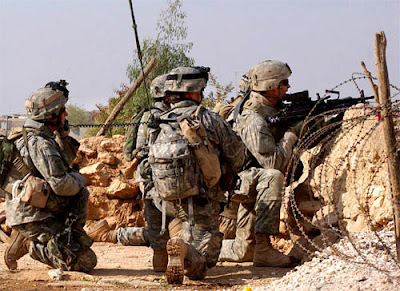
Increasingly since 9/11, American political discourse and popular culture has acknowledged, if not celebrated, the sacrifices of members of its armed forces. The often self serving praise of the service of others, which so few with privilege have ever seriously contemplated, has not resulted in heightened care for soldiers and veterans, nor deeper reflection among many on those who opt to serve, and what their service might mean for American democracy.

Unfortunately, Wade Michael Page likely will not foster the needed conversations about these issues, but instead prompt attention to the dispositions and drives that led to Page to commit what has repeatedly been described “as a senseless act.” Yet, as noted by Rinku Sen in Colorlines, these murders “are neither senseless nor random, and the vast majority of such incidents here involve white men. Racism holds a terrible logic, for a concept with no grounding whatsoever in science or morality, yet too many white people don’t see any pattern.” Equally powerful, Harsha Walia reminds readers to break down the walls between extreme and mainstream, between individual and societal, between civilian and military, to look at this violence not as yet another instance of a bad apple but yet another of the rotten tree(s):

The crimes of white supremacists are not exceptions and do not and cannot exist in isolation from more systemic forms of racism. People of colour face legislated racism from immigration laws to policies governing Indigenous reserves; are discriminated and excluded from equitable access to healthcare, housing, childcare, and education; are disproportionately victims of police killings and child apprehensions; fill the floors of sweatshops and factories; are over-represented in heads counts on poverty rates, incarceration rates, unemployment rates, and high school dropout rates. Colonialism has and continues to be shaped by the counters of white men’s civilizing missions.

To our minds, if this properly projects the arc of media coverage, until the next trauma or panic, we fear we will have lost real occasion to put into dialogue two key elements of Page’s biography: he was a veteran and he was a white supremacist. We do not know how these elements of his identity and experience interfaced with one another, though apparently his general discharge in 1998 was not related to bias. We do know, however, that thinking about the connections between white nationalist groups and the U.S. military, between the mainstream and the extreme, will help us better apprehend the shooting in Wisconsin, and more engage their implications more sensibly. “It would be a mistake to dismiss Page was an isolated actor from a lunatic fringe disconnected from the mainstream of U.S. society. In fact, the reality is that white supremacy is a persistent, tragic feature of the American cultural and political landscape,” writes Jessie Daniels. “The extreme expressions of white supremacy – like this shooting, or like some of the violent images and messages previously circulated in print and now online – are part of a larger problem. White supremacy is woven into the fabric of our society and it kills people.” We see this fact in the relationship between white supremacy and the U.S. military.

This is not a new issue, but it one that continues to resurface, often in association with tragic acts of violence. Nearly 25 years ago, the Southern Poverty Law Center (SPLC) brought to the attention of the Reagan administration that “active-duty Marines at Camp Lejeune, NC, were participating in paramilitary Ku Klux Klan activities and even stealing military weaponry for Klan use.” Secretary of Defense Caspar Weinberger acted decisively, clarifying for members of the armed forces that involvement with “white supremacy, neo-Nazi and other such groups…[was] utterly incompatible with military service.”

Continue reading @ NewBlackMan (in Exile): In the Army Still? White Supremacists and the American Military.