NewBlackMan: Does It Have to Be The Shoes?: Macklemore and Ryan Lewis’ “Wings”

Does It Have to Be The Shoes?:

Macklemore and Ryan Lewis’ “Wings”

by David J. Leonard | NewBlackMan

“It’s gotta be the shoes”—Mars Blackmon

These six words in many ways defined the late 1980s and 1990s, encapsulating the rise of hip-hop, NIKE, Michael Jordan, and the racial-class narratives embedded in each of them. For a teenager growing up in the 1980s, in many ways this phrase defines my generation. Rather than generation X, we are the “It’s gotta be the shoes generation.”

The problems inherent in such an ethos crystallized for me after watching the new video from Seattle’s very own Macklemore and Ryan Lewis.

“Wings,” directed by Zia Mohajerjasbi, initially plays on the childhood memories associated with Air Jordans, ideas that likely resonate with many of this generation today.

I was seven years old, when I got my first pair

And I stepped outside

And I was like, Momma, this air bubble right here, it’s gonna make me fly

I hit that court, and when I jumped, I jumped, I swear I got so high

The joy of success on the court, of ballin’ like the big boys, was not a pure accomplishment, but one that was wrapped up in commercial ideas and commodification from the jump. The purity of being able to touch the net was never, in his mind, indicative of his own skills but that of the shoes. It had to be the shoes.

Yet, the tune (in the song and for the young boy in the video) quickly changes, away from childhood dreams and nostalgia for the sweet smell of brand-new kicks, to the painful realities about shoes.

And then my friend Carlos’ brother got murdered for his fours, whoa

See he just wanted a jump shot, but they wanted to start a cult though

Didn’t wanna get caught, from Genesee Park to Othello

Carlos’ brother, like other kids, in the 1980s, learned all too painfully about the value placed on a pair of shoes. Worth more than a life; worth more than a future; the quick transition from “wanting to be like Mike,” to fly, to stark reminder about those killed over Mike’s shoes is a powerful message. Here, Macklemore not only illustrates the value placed upon shoes but challenges listeners to think beyond the nostalgia for balling in new Jordans to remember those who died for those new air Jordans.

Yet, the song is not purely about the cultural meaning and history behind shoes, but a powerful commentary on commodification. It is a story of the valued put on shoes culturally, economically, socially, athletically, and stylistically, even though shoes are shoes.

We want what we can’t have, commodity makes us want it

So expensive, damn, I just got to flaunt it

Got to show ‘em, so exclusive, this that new shit

A hundred dollars for a pair of shoes I would never hoop in

Look at me, look at me, I’m a cool kid

I’m an individual, yea, but I’m part of a movement

My movement told me be a consumer and I consumed it

They told me to just do it, I listened to what that swoosh said

Look at what that swoosh did

See it consumed my thoughts

Highlighting the ways in which products define our sense of identity, demark coolness, and otherwise tell the world something about us, “Wings” laments the power ascribed onto shoes. It questions that stock we put into consumption and products, a process that merely enhances the stock value of companies like NIKE.

In this regard, the song and the video simultaneously show a process, the difficulty in challenging the marketing and message to say, “they are just a pair of shoes.” The allure of the American Dream, of coolness, and the product are seductive. In fact, this is part of the marketing strategies of companies like NIKE, which invest in the production of image and advertizing, all while minimizing costs of labor. In selling a dream, in selling hipness, athleticism, coolness, and an overall image, the shoes themselves and the conditions of production are erased and rendered meaningless.

Sue Collins, in “‘E’ Ticket to NIKE Town, describes this tactic as “commodity fetishism.” It is “the kind of “magic” that occurs when we displace value as a product of human labor by projecting it onto objects as if the value were inherent. Marx described a commodity as a mysterious thing because ‘in it the social character of men’s labor appears to them as an objective character stamped upon the product of that labor; because the relation of the producers to the sum total of their own labor is presented to them as a social relation, existing not between themselves but between the products of their labor.’” She continues as follows:

Fetishism in postmodern consumer culture entails emptying commodities of meaning or ‘hiding the real social relations objectified in them through human labor’ to make it ‘possible for the imaginary/symbolic social relations to be injected into the construction of meaning at a secondary level.’ Production, then, empties, and advertising fills, and in this way use value is subsumed by exchange value. The Nike swoosh and the Jordan brand as cultural commodities not only constitute a symbolic code, they also take on a system of significations, coded abstractions realized by “ideological labor,” to borrow from Baudrillard. In the fetish theory of consumption, the so-called magical substance of consumer products is really part of a generalized code of signs, what Baudrillard refers to as “a totally arbitrary code of difference, and that it is on this basis, and not at all on account of their use values or their innate ‘virtues,’ that objects exercise their fascination.”13 In advanced capitalism, objects lose any real connection with their practical utility and “instead come to be the material correlate (the signifier) of an increasing number of constantly changing, abstract qualities.”

Whether in the pain and suffering of those who labor in NIKE factories, or those who died over the shoes, we can see the damages resulting from commodity fetishism. “Wings” highlights the production of consumers obsessed with shoes not as a functional tool but as a commodity that encapsulates a myriad of narratives and signifiers.

What I wore, this is the source of my youth

This dream that they sold to you

For a hundred dollars and some change

Consumption is in the veins

And now I see it’s just another pair of shoes

This song spoke to me in so many ways: its message resonates with my own childhood experiences and my constant pledge of allegiance to the shoes (and the matching hats); it connects to the persistent inner battle between my critical self that understands commodity fetishism and the realities of worker conditions and the consumer in me that wants; and mostly it speaks to me as a father who increasingly struggles in helping my daughter see those shoes, sweatshirt, jeans, etc as neither sources of joy nor signifiers of cool but simply clothes. I am hoping that her generation will heed the message of “Wings” and not follow in the footsteps of the “it’s gotta be the shoes” generation.


via NewBlackMan: Does It Have to Be The Shoes?: Macklemore and Ryan Lewis’ “Wings”.

NewBlackMan: Brandon Marshall and the Challenge to Mental Health Treatment Inequality

Vulnerable:

Brandon Marshall and the Challenge to Mental Health Treatment Inequality

by David J. Leonard | NewBlackMan

On Sunday, amid all the hoopla about the start of NFL training camp, player movement, and the start of the NFL season, Brandon Marshall quietly told the world a secret, announcing that he was living with a Borderline Personality Disorder.

Right now today, I am vulnerable, I making myself vulnerable, and I want it to be clear that this is the opposite of damage control. The only reason I am standing here today is to use my story to help others who may suffer from what I suffer from, from what I had to deal with. I can’t explain to you and paint a vivid enough picture for you guys where I been in my life, probably since the end of my rookie year.

Noting that neither the cars nor the fame, neither the success on the field nor the joys experienced off the field resulted in happiness, Marshall highlighted the despair that he has experienced during his life:

I haven’t enjoyed not one part of it and it’s hard for me to understand why . . . . One of the things I added to my prayer was for God to show me my purpose here. When I got out of the hospital, I called my videographer and I said, Rob, grab your camera and just come to my house and just start shooting. I said I’m very depressed right now, I probably won’t talk, I probably won’t even leave my theater room, but you just shoot and don’t stop shooting. I said, I don’t know where we’re going with this, I don’t know what’s going to come out of this, but something good is going to happen.

Marshall is not the first high-profile African American athlete to publicly document the struggles with mental illness. Several years ago, Ricky Williams spoke about his illness (Social Anxiety Disorder) “to up the awareness and erase the stigma.” Likewise, Ron Artest, who has publicly acknowledged his own disease, has gone beyond chronicling his own story, testifying before congress while raising money (through auctioning off his championship ring) for mental health awareness among youth.

Continue reading at  NewBlackMan: Brandon Marshall and the Challenge to Mental Health Treatment Inequality.

Enough is enough: Pelican Bay Hunger Strike and the Abysmal Conditions in America’s prisons « Your Black World

Enough is enough:

Pelican Bay Hunger Strike and the Abysmal Conditions in America’s prisons

Originally Published on Your Black World

by David Leonard

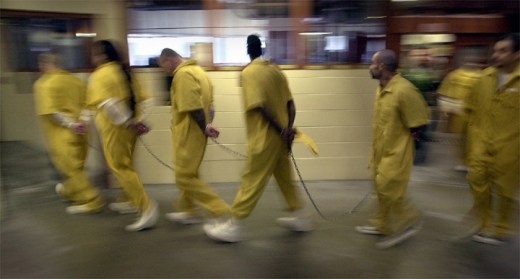
On July 1, 2011, hundreds of prisoners initiated a hunger strike in California. While the strike began inside of the Special Housing Unit at Pelican Bay State Prison, where human beings are locked away inside of soundproof cells for 22 1/2 hours each and every day, the strike has spread to prisons throughout the state, reaching as many as 6,600 prisoners in 13 locations. According he protest sought to “draw attention to, and to peacefully protest, twenty-five years of torture via [California Department of Correction and Rehabilitation]‘s arbitrary, illegal, and progressively more punitive policies and practices.” More specifically, the strike began as an effort to change the inhumane treatment facing prisoners in California (and elsewhere). Colorlines Magazine succinctly summarizes the demands as follows

· “End Group Punishment & Administrative Abuse” would end group punishment as a means to address an individual inmates rule violations.

· “Abolish the Debriefing Policy, and Modify Active/Inactive Gang Status Criteria” The practice of “debriefing,” or offering up information about fellow prisoners particularly regarding gang status, is often demanded in return for better food or release from the SHU. Prisoners demand the end to debriefing because it puts the safety of prisoners and their families at risk, because they are then viewed as “snitches.”

· “Comply with the US Commission on Safety and Abuse in America’s Prisons 2006 Recommendations Regarding an End to Long-Term Solitary Confinement” Prisoners demand a more productive form of confinement in the areas of allowing inmates in SHU and Ad-Seg [Administrative Segregation] the opportunity to engage in meaningful self-help treatment, work, education, religious, and other productive activities. This demand includes access to adequate natural sunlight and health care treatment.

Continue reading at Enough is enough: Pelican Bay Hunger Strike and the Abysmal Conditions in America’s prisons « Your Black World.

Marc Lamont Hill: Why we must stand in solidarity with the Pelican Bay prisoners | Philadelphia Daily News | 07/20/2011

Marc Lamont Hill: Why we must stand in solidarity with the Pelican Bay prisoners

By Marc Lamont Hill

Philadelphia Daily News

FOR NEARLY three weeks, inmates at Pelican Bay State Prison, in California, have been on a hunger strike. They plan to continue until officials agree to improve the conditions and prison policies.

Contrary to what prison officials have suggested, the prisoners’ demands are far from numerous or extravagant.

To the contrary, the inmates have made five reasonable requests: individual accountability, so that entire groups (or races) aren’t punished for the acts of one person; abolishing the policy that forces prisoners to snitch (thereby risking their lives) in order to avoid punishment; ending long-term solitary confinement, a practice that has been deemed torture by the United Nations; no longer withholding food as punishment; and providing reasonable programming and privileges, such as being allowed to have one photo per year.

I stand in solidarity with them. And so should you.

In Pelican Bay, and nearly every other prison in the country, inmates are beaten, raped, tortured and denied their constitutional rights. As prisons continue to expand at a rapid pace – Pennsylvania’s prison spending grew by another 10 percent this year – these problems are becoming more prevalent and extreme.

At this point, many of you are rolling your eyes in disgust. You may even be asking, “Why should I care about how murderers and rapists are treated?”

First of all, the majority of prisoners are not there for violent crimes, nor are they even threats to society. Most are incarcerated due to crimes related to the failed War on Drugs, such as simple drug possession, petty theft and parole violations. More often than not, these are people who would not be incarcerated if they could have afforded to live in a better neighborhood or hire a better lawyer.

These are people who belong in rehab or mental-health facilities rather than buried in cages. The suffering they incur in prison only exacerbates their problems, making them more likely to commit crimes again.

Regardless of a person’s crimes, however, no one deserves to be raped, tortured, starved or otherwise mistreated in prison. But, sadly, this is exactly what happens every day. Unfortunately, the abuse of prisoners goes largely unaddressed because of our refusal to see prisoners as people.

Consider, for example, all the jokes that are made in movies, TV and everyday life about prison rape. These jokes are rooted in truth, as nearly 2 percent of all U.S. inmates are raped while incarcerated. Such humor can be considered “funny” only if the people being hurt are not understood as full human beings.

Continue reading at  Marc Lamont Hill: Why we must stand in solidarity with the Pelican Bay prisoners | Philadelphia Daily News | 07/20/2011.

Neshoba: A documentary about the past that teaches us about the present

My plan for the summer is to watch many documentaries and to read an equal number of books.  First up, I watched Neshoba: The Price of Freedom, a documentary by Micki Dickoff and Tony Pagano about the murders of James Chaney, Andrew Goodman and Michael Schwerner.  While the film documents what happened to these civil rights workers, and the broader struggle for civil rights in Mississippi, it is very much a story of the families of these three men.  It brings to life how their murders and the failure to secure justice on their behalf impacted family, friends, and the community at large (society as a whole).  Pushing the discussion beyond their place as icons and symbols, the film depicts them as sons, fathers, husbands, and brothers, giving voice to pain and suffering endured by their families.   Like Spike Lee’s Four Little Girls, the film challenges those who depict the civil rights movement as so far removed from our current moment, illustrating how the violence and injustice that took place during the 1960s continues to impact families and communities, elucidating how this history remains with us.

The film doesn’t merely focus on their murders and the civil rights movement, highlighting the struggle for justice.  While at times the film focuses too much attention on the trial of Edgar Ray Killen, who was found guilty of three counts of manslaughter in 2005 41 years after these three civil rights workers went missing, the emphasis here is important because it shows how the fight for justice was a fight for accountability, justice and racial reconciliation.

Beyond this, the film makes two really important points. (1) The civil rights movement was immensely violent.  Even as civil rights activists engaged in nonviolence, resisting Jim Crow through passive resistance, the movement itself was extremely violent.  Civil rights workers and those African Americans living under American Apartheid faced violence each and every day.  The film, in this regard, highlights the ways in which the civil rights movement engaged in “unviolence” (a term Charles Payne uses that he attributes to SNCC activist Worth Long), in that in the face intimidation, economic reprisals, physical abuse, torture, terror, sexual violence, and murder, “the movement” (those freedom fighters) choose not to respond in kind, to engage in self-defense, but to unviolent resist.  Neshoba reminds us about the violence endured and how that impacted lives.

(2) The film successfully highlights how race and racism impacted the societal reaction to these murders.  In the film, Rita Bender notes that media spotlight (and now historical focus) forced people to think “Whose son matter’s more.” The film makes clear that national attention about James Chaney and his violent death came about because he died alongside of Michael Schwerner and Andrew Goodman.  The fact that as authorities dragged the Mississippi River in search of the three civil rights workers only to discover 9 bodies lead many blacks to ask, “Who are these people,” and “where was the search parties, national attention, and overall concern about their well-being when they went missing.”  Looking at this historically, whether the murder of these civil rights workers, or the violence experienced by the Freedom Riders, we see white supremacy in action: violence carried out in the name of white supremacy but also in the value placed upon a white life over that of African Americans.  The historical illustration here got me thinking about how often a black life (or that of a person of color) is devalued.  We can see in the lack of media attention and national discourse concerning the noose at Santa Monica High School or the brutality experienced by Jordan Miles. In the war on drugs or in differential media coverage about the abduction of white women and women of color  we see how race impacts narratives.  We see whose life matters, whose humanity is highlighted, and whose experience is given public consideration, public concern, public outrage, public sympathy, and societal action.  While Neshoba brings to light the historic atrocity involving the civil rights movement, it powerfully documents the ways in which racism affords and denies humanity along racial lines not only in the past but also in our present moment.  We see not just the legacy of racism but its continued grip on society.

Noose in the Locker Room: Racism Inside and Outside of the Santa Monica High School

My blog post at New Black Man (http://newblackman.blogspot.com/2011/06/noose-in-locker-room-racism-inside-and.html)

Tuesday, June 28, 2011

A Noose in the Locker Room: Racism Inside and Outside of the Santa Monica High School

by David J. Leonard

It was likely just another day for a Santa Monica High (CA) student when he headed to wrestling practice. Entering the locker room, things were anything but “normal.” A noose was inside the room nearby a wrestling practice dummy (the specifics are unclear based on current reporting). When an African American wrestler entered the room, he was then accosted by two teammates. According to a report from the Santa Monica Daily Press, “One grabbed him in what” was “described as a ‘bear hug,’ while the other slipped a lock through his belt loop and connected it to a nearby locker.” As they left the room, with the boy still attached to the locker, they shouted, “slave for sale.”

The noose, the reference to the boy as a “slave for sale” and the attack on the African American student did little to set off alarm bells from the school administration beyond damage control. According to the above newspaper account, they failed to notify the boy’s mother even while they contacted other parents connected to the wrestling team. Seemingly unconcerned about the impact of this attack on the boy, his family and the larger community of students of color at Santa Monica High School, their efforts appeared to be directed at helping (rather than punishing) and protecting the students who perpetrated these shameful acts. Some reported that at the request from school officials, pictures of the noose, for example, were erased from several student cell phones.

To read the complete post go to: NewBlackMan: A Noose in the Locker Room: Racism Inside and Outside of the Santa Monica High School.