With FLOTUS and Rhianna targeted, 2011 ends with more racist and sexist language
Within the span of about 10 days, a little-known congressional representative and an even lesser known magazine emerged into the public by deliberately disrespecting two of the most popular black women in the world: the first lady of the United States Michelle Obama, and mega-pop-star Rihanna. Each of these instances are distinctly despicable in that they attempt to degrade women’s bodies generally by reaffirming a societal gaze that assigns value to a woman’s humanity based almost exclusively on the size and shape of her body. What may be more sinister here though is the deployment of this tragically common assault at two exceptionally popular and powerful black women with one unfortunate outcome being the fact that the ‘representative’ and the ‘magazine’ enhanced their ‘brands’ via an assortment of name checks in the media-sphere. Sadly we will have to (yet again) mention those (brand) names here.
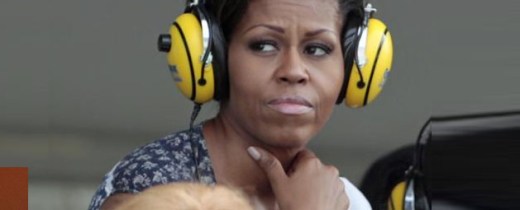
During a recent Christmas bazaar at St. Aidan’s Episcopal Church in Hartford, Wisconsin, Rep Jim Sensenbrenner (R – WI) criticized Michelle Obama’s campaign against obesity given the size of her lower posterior.. Daniel Bice, in “Sensenbrenner apologizes to first lady over ‘big butt’ remark,” described the incident in the following way:
Perhaps Sensenbrenner – who was accompanied by an aide – assumed it was safe to crack wise about the first lady’s posterior in such a heavily Republican area. But, as the old saying goes, this is what happens when you assume.
Ann Marsh-Meigs, a church member who heard Sensenbrenner’s remarks, said he took several swipes at the first lady on Dec. 10. . . .“He then talked about how different first ladies have had different projects – Laura Bush and literacy – and he named two or three others,” Marsh-Meigs said in an interview last week. “And then he said, ‘And Michelle Obama, her project is obesity. And look at her big butt.’”
“That’s basically what he said,” she continued. “It was a combination of her work on obesity and her shape.”
When confronted by a woman in attendance, who sought to highlight Mrs. Obama’s wonderful qualities, Rep Sensenbrenner responded by noting that “Michelle should practice what she preaches – ‘she lectures us on eating right while she has a large posterior herself.’”
History reveals that the unmasking and over-sexualization of black bodies is a longstanding practice central to American popular culture. As Bobo (1995) states: “Representations of black women in mainstream media constitute a venerable tradition of distorted and limited imagery” (p. 33). Rather than constituting black women as “specific victims of the lust of [white] brutes,” dominant representations have posited black women as sexually deviant, aggressive, domineering or wretched victims – as mammies or jezebels (Hansberry, 1960).
Black women’s bodies have historically garnered negative attention in the public sphere; the black female form has posed as both a threat and a cheap, yet addictive, commodity within American culture. Within the realm of popular culture Janet Jackson’s breasts, like Jennifer López’s and Beyonce’s behinds, have elicited incredibly prurient commentary highlighting both the exotic determination and demonization of female bodies of color. This history endures through these comments that rely on the fragmentation of Michelle Obama’s body.
Colorlines recently published a 90 second video summarizing the year in race, an amazing feet given what has happened over the year. Statistical measurement define 2011, in many ways:
45 percent of the 131,000 homeless veterans in America are African-American
26 percent of African American families earn less than $15,000
1 in 9 African Americans live in neighborhoods where 40%+ of its residents live in poverty
Black women earn 68 cents for every dollar earned by men; for Latinas this number is 59 centers
16.2 percent of African Americans are unemployed
17.5 percent of black males are unemployed; 41 percent of black teenagers are without a job
11.4 percent of Latinos are unemployed; 21.3% of Alaska Natives and 19.3% of members of Midwest indigenous communities are unemployed
In 2011, blacks and Latino were twice as likely to face home foreclosures
“Between January and June of 2011, the United States carried out more than 46,000 deportations of the parents of U.S.-citizen children”
Yet, meaning of this year transcends these numbers. We have seen ample intrusions of blatant racism into the public square. I recently wrote about this, arguing:
In Two-Faced Racism, Leslie Picca and Joe Feagin explore the ways in which racial performances are carried in both the frontstage (integrated and multiracial public spaces) and the backstage (those private/semi-private all-white spaces where race talk and racist ideas reveal themselves in profound ways). Their research found that the backstage offers whites a place to “perform, practice, learn, reinforce, and maintain racist views of and inclinations toward people of color. These views and inclinations play a central role in generating and maintaining the overt and covert racial discrimination that is still commonplace in major institutions of this society” (27-28).
Increasingly, however, the frontstage is replacing the backstage whereupon whites are publicly performing, learning, reinforcing and maintaining their racist views toward people of color. Evident in college students donning blackface and then putting pictures online, evident in Gene Marks, Newt Ginrich, Donald Trump and their reactionary pals lamenting the laziness of black youth, evident in the usage of the N-word, evident in white-only movie screenings and white-only swimming pools, the lines between the frontstage and the backstage are blurring before our eyes. In other words, the frontstage is now the backstage, leaving me to wonder what sorts of ideologies, stereotypes and racial talk is transpiring in backstage. Or maybe, in a “post-racial America,” widespread racism has returned (did it ever leave?) to the frontstage thereby illustrating the importance of challenging and resisting in each and every location.
From Rep. Doug Lamborn referring to President Obama as a “tar baby” and Brent Bonzell describing President Obama as “a skinny, ghetto crackhead” to Fox’s headline for President Obama’s birthday party –“Obama’s Hip-Hop BBQ Didn’t Create Jobs” and Eric Bolling “criticizing” President Obama for “chugging 40’s in IRE while tornadoes ravage MO,” there have been ample examples of the ways in which public expressions of racism have defined the 2011 political sphere. The racism and sexism directed at Michelle Obama (just one example) and the astounding types of political commercials (just one example) are also evident of the ways in which violent rhetoric has dominated the public square.
Not surprisingly, Rush Limbaugh (calling President Obama a “oreo cookie” and Michelle Obama as “uppity”), Ann Coulter (“our blacks are better than theirs”), Pat Buchannan (“Blacks bought a lot of propaganda of the liberal plantation”), amongst others, all illustrate the ways in which racist language and ideologies define the nature of political discourse during 2011. Beyond the ample instances of racism, it is important to see beyond the starling ease that racism operates within the public square to look at the ways race plays out within the deployed narratives and ideologies. Take Pat Buchannan, who reminisced for Jim Crow during 2011: “Back then, black and white lived apart, went to different schools and churches, played on different playgrounds, and went to different restaurants, bars, theaters, and soda fountains. But we shared a country and a culture. We were one nation. We were Americans.” In language and the vision for America, race defined the past year (and the years before).
The last year has also seen quite a bit of recycling. From the Moynihan Report and culture of poverty, to bootstraps ideology and efforts to blame the poor, 2011 has seen a comeback (not that these racist narratives ever went away) of these troubling ideas. Two of the most illustrative examples were Newt Gingrich and Gene Marks. Gingrich, who has made a career of race baiting (calling President Obama a “food stamp president” and one defined by a “‘Kenyan, anti-colonial worldview’”), recently offered policy prescriptions to deal with black unemployment: teach black youth the value of work. He stated:
Really poor children in really poor neighborhoods have no habits of working. And have nobody around them who works. They have no habit of ‘I do this and you give me cash’-unless it’s illegal. What if you paid them part time in the afternoon, to sit at the clerical office and greet people when they came in? What if you paid them to work as the assistant librarian. What if they were the assistant janitor, and carried a mop?
Deploying longstanding stereotypes about black laziness and criminality, all while crafting economic policy based on bootstrapism, Ginrich shows how 2011 has been so much about sampling and redeploying the racist ideologies of yesteryear. Gene Marks, whose article prompted widespread condemnation because of its paternalistic tone and acceptance of widespread stereotypes, is equally reflective of this trend.
I am not a poor black kid. I am a middle aged white guy who comes from a middle class white background. So life was easier for me. But that doesn’t mean that the prospects are impossible for those kids from the inner city. It doesn’t mean that there are no opportunities for them. I believe that everyone in this country has a chance to succeed. Still. In 2011. Even a poor black kid in West Philadelphia.
The prosecution and sentencing of, and the struggle for justice for, Kelly Williams-Bolar is emblematic of many issues surrounding race in 2011. From the criminalization of people of color and the demonization of women of color, to educational inequalities and the generation of kids behind left behind, her case teaches us much about the continued struggle for civil rights in 2nd decade of the twenty-first century. Jamilah King described the case in the following way:
Just in case you haven’t seen this story blow up on your social network this week: Kelley Williams-Bolar is headed to an Ohio jail. The mother of two was sentenced this week to 10 days in jail, three years of probation, and 80 hours of community service. Her crime? Sending her two daughters to an out-of-district school. . . .It’s an infuriating case, especially for anyone who’s even remotely familiar with educational inequity in this country. America still hasn’t made good on its half-century promise to desegregate its public schools, and academic achievement can almost always be measured by zip code.
The demonization of women of color extended into the realm of popular culture as well.
2011 was also the year of The Help, a film that recycled the hegemonic Hollywood trope of “white love” (h/t Elon James White) and racial redemption all while sanitizing the black freedom struggle. Yet, it was also a year defined by the many powerful responses to this film; these effort resisted and challenged the film’s (mis)representation of black women’s work, segregation, social justice, and countless other issues. From the Association of Black Woman Historians’ powerful statement to the many articles from black scholars – Dutchess Harris, Rebecca Wanzo, Mecca Jamilah Sullivan, Martha Southgate, Mark Anthony Neal, Aishah Shahidah Simmons, Melissa Harris-Perry, and Honorée Fanonne Jeffers – many voices have challenged the narrative and representations offered by The Help, refusing to accept the cultural politics of the mainstream. Yet, 2011 has also seen the release of Pariah, a film that explores the experience of a young black lesbian struggling for acceptance within her family and society at large. Whereas The Help represents blackness as accessory, as the help, Pariah reminds audiences of the power and beauty of black identity, highlighting heterogeneity, diversity, and humanity.
2011 has seen ample moments of resistance, a refusal to accept and tolerate racism, sexism, and homophobia. It has been a year of “speaking truth to power” and refusing the dominant narrative. Following the airing of ABC’s 20/20 special entitled “Children of the Plains,” a group of Native American students from South Dakota produced their own video that refused the images and messages offered in the show: “I know what you probably think of us…we saw the special too. Maybe you saw a picture, or read an article. But we want you to know, we’re more than that…we have so much more than poverty.” Then there were the students from Ohio University, who launched the “We are a culture not a costume” campaign to protest the racist stereotypes and racist images so prominent during Halloween. Youth in California and Alabama fought vigorously to change the tide against anti-immigrant racism. Hotel workers in New York protested Dominique Strauss-Kahn and the victimization of Nafissatou Diallo. And so much more.
The power of new media as a space of resistance has been on full-display, whether the consciousness raising happening on twitter and Facebook, or the ways in which Jay Smooth, Jasiri X, Issa Rae, Amie Breeze Harper, Ariana Proehl. Scholars like Alondra Nelson, Koritha Mitchell, Nicole Fleetwood, Danielle McGwire, Kellie Jones, Evie Shockey, and Manning Marable (who we lost this year) have also published important works that advance the study of race, gender, and sexuality in both history and our current moment. In the face of erasure, dehumanization, and persistent inequalities, scholars and artists (see Lisa Thompson’s discussion of black women in theater), activists and organizers, and people from community big and small have met the racism and injustice with force. There has been so much to challenge in 2011 yet the many instances of injustice have not killed our “freedom dreams.” While these dreams will be deferred until 2012, the struggle will continue.
The Frontstage is the New Backstage: Racism in the Public Square
by David J. Leonard | NewBlackMan
Three stories have captured the imagination of social media recently.
A Buffalo High school suspended several members of the basketball team because its members allegedly regularly chant racial epithets prior to each game. As reported in the Buffalo News, “Tyra Batts, the sole African-American on the Kenmore East High School’s squad,” said “her teammates would hold hands before the game, say a prayer and then shout “One, two, three (n——).’” Batts, who was suspended because of her involvement in a fight resulting from the repeated use of the N-Word by her teammates, disputed claims that it “was just a joke.” The efforts to defend its usage and to deny the racist and violent history have set off anger and debate throughout the web.
“Remember all of those debates we’ve had about whether or not the n-word is just another word?,” writes Britini Danielle. “Usually, our conversations dealt with white and non-black rappers and entertainers using the word ‘as a term of endearment,’ but this time we’re heading into the tricky world of high school.”
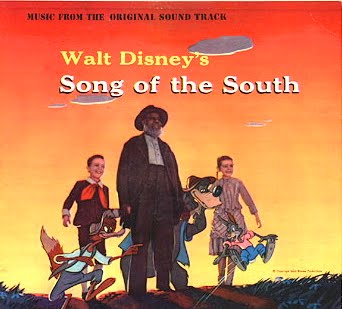
Not to be outdone, a P.h.D student at Rutgers University invited her white classmates to a screening of the Disney Classic Song of the South. An editorial in The Daily Targum describes the circumstances as follows:
This email invited “her fellow non-racist racists” to a private, guilt-free viewing of 1946 musical Song of the South in her home, where together they could engage in celebratory mocking of stereotyped 1940’s images of southern blacks. This was an event hosted by a “ragtime/minstrel loving fool” who was due “for some rollicking Disneyfied Ole Darkeyism.” The postscript read, “If you do come, hooch is most welcome, as are straw hats and other Darkeyisms. I might even buy a watermillyum if I get enough interest.” It specified who invited guests should bring, given that “I might yell racist things at the TV.” The author of this email articulated the hope that the experience would be a “communion with her shamefully preferred era of Disney.”
The celebration of dehumanizing representations, the efforts to create a segregated space, and the replication of longstanding stereotypes provoked outrage, condemnation, and ample conversation on Facebook and Twitter. Citing it as evidence of the absurdity of a “post-racial America,” the instance became another moment to protest the persistence of white supremacist ideologies within contemporary America.
Yet, none of the outrage would compare to the anger, protests, and denunciation that has followed Gene Marks ode to paternalism in Forbes Magazine. In “If I Were A Poor Black Kid,” Marks provides “advice” that rehashes bootstraps ideology all while playing on longstanding stereotypes about black laziness and disinterest in schooling. Following in the footsteps of Newt Gingrich and Donald Trump, Marks recycles those arguments that link black unemployment and poverty rates to work ethic and personal choice.
His comments have produced a strew of commentaries that have condemned the article for its arrogance, paternalism, and overall erasure of structural inequalities. “Mr. Gene just wants to give us some of that patented #WhiteLove™ that he has laying around the house,” writes Elon James White. “With a healthy sprinkling, poor ignorant black children can rise above their station into the magical world of reasonable participation in society! Mr. Marks has a step-by-step booklet for you to get your school game on track, not your wig pushed back … by poverty.” James, like so many of the responses, identified the arguments offered in Forbes as not a peripheral aberration but instead a central white racial frame within contemporary culture. Evident in The Help and The Blindside, reflected in political and academic discourses, and central to white racial framing, the narrative focus on black pathological failures and the potential through better parenting, better choices, and better work ethic, guides American racial discourse.
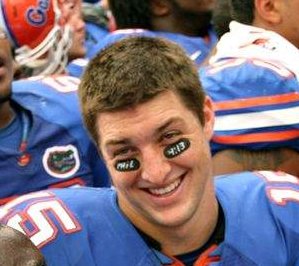
Tim Tebow is ubiquitous. Everywhere we look, Tim Tebow is there. Whether celebrating his “accomplishments,” attributing the Broncos season to his comeback heroics, reflecting on his now famous on-field genuflections, or debating his treatment by media and fans alike, Tim Tebow has captured the national imagination.
In many ways, the national fascination with Tebow reflects the power of whiteness. Historically the quarterback has been a positioned reserved for white men. Seen as a position that requires intelligence, leadership qualities, and proper mechanics, the NFL has historically engaged in, position segregation, and more than a little bit of Jim Crow on the field. That said, Tebow doesn’t follow in this tradition; he plays the position in a gritty running style that has long been associated with blackness.
In Am I Black Enough for You, Todd Boyd identifies a dialectical relationship between racialization and styles of play where whiteness represents a “textbook or formal” style, which operates in opposition to “street or vernacular” styles that are connected to blackness within the collective consciousness. As such, he describes a hegemonic narrative where “white” players adhere to “ . . . a specific set of rules [that] determines one’s ability to play successfully and ‘correctly’” (1997, p. 115). In both styles of play, notions of intelligence, mental toughness, and mental agility are all at work.
Tebow embodies a vernacular or extemporaneous style that has (historically) been associated with blackness and as a result of this association that same style has been devalued. Yet, for Tebow it has been embraced, celebrated as both innovative and as an example of athletic heroism. The celebration of Tebow, like the praise for some receivers, or safeties, comes from the shock and awe of white success in areas that are generally (assumed to be) dominated by black bodies.
Writing about Jordy Nelson, a white receiver with the Green Bay Packers, Ron Demovsky attributes his success to racial stereotypes: “There’s a joke in the receivers meeting room that Nelson benefits by being the only white receiver on the team because perhaps opposing defensive backs don’t take him seriously.” So while Tebow may only complete a few passes per game, the power in his athletic narrative rests with his ability to play quarterback in a style not associated with whiteness; the beauty for many commentators is in the spectacle and in his ability to convert this style of play into victories.
What’s in a Name? The ‘Plantation’ Metaphor and the NBA
by David J. Leonard | NewBlackMan
Several weeks back, at the conclusion of HBO’s Real Sports, Bryant Gumbel took David Stern to task for his arrogance, “ego-centric approach” and eagerness “to be viewed as some kind of modern plantation overseer, treating NBA men, as if they were his boys.” Highlighting the power imbalances and the systematic effort to treat the greatest basketball players on earth as little more than “the help,” Gumbel invoked a historic frame to illustrate his argument.
If the NBA lockout is going to be resolved anytime soon, it seems likely to be done in spite of David Stern, not because of him. I say that because the NBA’s infamously ego-centric commissioner seems more hell-bent lately on demeaning the players than resolving his league’s labor impasse.
How else to explain Stern’s rants in recent days? To any and everyone who would listen, he has alternately knocked union leader Billy Hunter, said the players were getting inaccurate information, and started sounding Chicken Little claims about what games might be lost, if players didn’t soon see things his way.
Stern’s version of what’s been going on behind closed doors has of course been disputed. But his efforts were typical of a commissioner that has always seemed eager to be viewed as some kind of modern plantation overseer, treating NBA men, as if they were his boys.
It’s part of Stern’s M.O. Like his past self-serving edicts on dress code or the questioning of officials, his moves were intended to do little more than show how he’s the one keeping the hired hands in place. Some will of course cringe at that characterization, but Stern’s disdain for the players is as palpable and pathetic as his motives are transparent. Yes the NBA’s business model is broken. But to fix it, maybe the league’s commissioner should concern himself most with a solution, and stop being part of the problem.
Not surprisingly, his comments have evoked widespread criticism and scorn. Even less surprising, commentators have chastised Gumbel for inserting race into the discussions, as if race isn’t central to the lockout, the media coverage, and fan reaction. As evidence, the response to Gumbel, and the ubiquitous efforts to blame the lockout and the labor situation on the players through racialized language (see here for example – h/t @resisting_spec), illustrates the ways in which race and hegemonic ideas of blackness operates in this context.
Also revealing has been the response to Jeffrey Kessler, a lawyer for the NBA players Association, who similarly described David Stern’s treatment of the players. He told the Washington Post: “To present that in the context of ‘take it or leave it,’ in our view, that is not good faith. Instead of treating the players like partners, they’re treating them like plantation workers.” While his comment elicited some backlash along with an apology, the vitriol and the level of indignation didn’t match the reaction to Gumbel.
Beyond the power of white privilege in this regard, what has been striking has been the references to history by the anti-Gumbel/Kessler crowd; much of the criticism at Gumbel and Kessler has focused on their historic amnesia. That is, their comments, while being inaccurate, unfair, and infusing race into otherwise colorblind situation, are disrespectful towards the history of slavery in America. References to slavery in this context betray the violent history of American slavery. In “Occupy the NBA: A Plea from an Avid Basketball Fan” Timothy Jones takes Gumbel to task for the historic slight here:
I’m appalled that anyone would compare this situation to slavery. I have great respect for Bryant Gumbel, but his quote that David Stern sees himself as a modern day plantation overseer is not only disrespectful to our ancestors, but it also did nothing to help this situation. Stern may not be handling this situation well, he may not have the best interest of the players in mind, he may be a mean person (I really have no clue), but I do know that brothers making millions of dollars are nothing like slaves on a plantation.
Charles Barkley agreed, referring to Gumbel’s comments as “stupid” and “disrespectful to black people who went through slavery. When (you’re talking about) guys who make $5 million a year.” Likewise, Scott Reid questioned the use of such an analogy given history: “The point is that too many people inappropriately use slavery and enslaved people to make points about things that are nowhere close to comparison. All of these casual slavery analogies do nothing but diminish one of the worst crimes against humanity in human history. Comparing enslaved Africans, or anyone else for that matter since slavery still exists for many enslaved people, is not only absurd, it is just plain disrespectful to the memory of the millions who perished under the worst kind of injustice.”
Protecting the (White Male) Gaze: Homophobia of Sports Talk Radio Goes Unchallenged
by David C. Leonard | NewBlackMan
During his ESPN show on Tuesday, Bruce Jacobs described the Los Angeles Sparks and the Phoenix Mercury as “the “Los Angeles Lesbians” and the “Phoenix Dyke-ury.” He returned to the air the following day to offer the following “apology”: “My comments yesterday were ridiculous, stupid and amateurish. I apologize for even uttering the comments, whether you heard them or not, whether you were offended or not.”
To date, little has been made about either his comments or his half-hearted apology that neither apologizes for the spirit of his remarks nor the ideological underpinnings that led to such comments. His apology does not repudiate his own homophobic stereotypes nor does it challenge the ideological assumptions evident here, but instead apologizes for vocalizing them. It isn’t the homophobia that warrants the apology, but expressing it on his show.
While Mr. Jacobs needs to be held accountable for his remarks, along with ESPN, which has failed to publicly condemn the comments, it would be a mistake to isolate this rhetoric as that of a “bad apple.” The homophobia and sexism on display here is reflective of sport talks radio. As with talk radio in general, sports talk radio emerged as a movement to “restore” the hegemony of white male heterosexism. The homophobic remarks of Bruce Jacobs represents a systemic and longstanding effort to restore the normalized vision of sports as a space of male dominance.
Like the efforts to sexualize female athletes, the construction of female athletes as lesbians reaffirms the “normalcy” of sports as a male domain. According to David Nylund (2004), “With White male masculinity being challenged and decentered by feminism, affirmative action, gay and lesbian movements, and other groups’ quest for social equality, sports talk shows, similar to talk radio in general, have become an attractive venue for embattled White men seeking recreational repose and a nostalgic return to a prefeminist ideal.” As argued by Trujillo (1994) and quoted in Nylund:
Media coverage of sports reinforces traditional masculinity in at least three ways. It privileges the masculine over the feminine or homosexual image by linking it to a sense of positive cultural values. It depicts the masculine image as “natural” or conventional, while showing alternative images as unconventional or deviant. And it personalizes traditional masculinity by elevating its representatives to places of heroism and denigrating strong females or homosexuals. (p. 97)
His comments, thus, embody the efforts to silence, surveil, demonize, and ultimately discipline and punish any challenges to the white male heterosexuality of sporting cultures. Those perceived threats to this hegemony are met with efforts to reclaim the sporting space as one of masculinity. From the ubiquity of images of hypersexual female athletes on various sports websites to the commonality of homophobic, sexist, and racist rhetoric, we see that despite the increased levels of diversity, the hegemony of white male heterosexuality remains a central facet within to contemporary sports culture.
The relative silence about this instance of homophobia (as of writing there has been only 9 articles about Jacobs’ comments) and the culture of homophobia within the sports media is especially telling given the widespread condemnation of various players for homophobic slurs during the 2011. Others may cite the varied levels of celebrity and the divergent platforms as reasons for why the comments of Kobe Bryant, Joakim Noah, and Wayne Simmonds received ample media attention. Yet, the comparative silence here reflects a level of comfort in isolating homophobia as a symptom of athlete culture, hip-hop culture and blackness.
Since the announced trade of Chris Paul to the Los Angeles Clippers (yes, L.A. has two basketball teams), the NBA punditry has been abuzz, focusing almost exclusively on the trade as it relates to the future of the Lakers. Asking if the Clippers are now better than the Lakers, if Los Angeles is a Clippers city, and otherwise playing up the rivalry, media outlets have turned the Chris Paul trade into a source of conflict between the Clippers and the Lakers. SLAM’s Dave Zirin captured the essence of a media narrative that portrayed the trade as a Clipper victory over the Lakers:
The morning buzz in sports is about the greatest point guard of our generation, Chris Paul, joining the Los Angeles Clippers. It’s a dizzying thought, but the Clippers, the much-mocked baby brother to the mighty Lakers in L.A., now have the city’s better basketball team. This is a day for Frank Stallone, for Billy Carter, for Roger Clinton…. the day that your little bro with the runny nose and the toilet paper stuck to his shoe inherited the earth.
The near obsession of manufacturing a rivalry between these two teams is emblematic of the League’s direction. Concerned about a future where superstars join forces in a few select locations, owners sought to reconfigure the League so that rivalries and teams sell the game to the future fans. A league whose motto was once “Where Amazing Happens” is being transformed to one where the motto might as well be “Where Rivalries Happen.”
The efforts to build-up other franchises—and now play-up the Lakers-Clippers feud—reflect this trend, despite their absurdity. The Clippers didn’t trade for Chris Paul to “punk” the Lakers; they didn’t do it to beat L.A. or become the best team in Los Angeles. They did it to make money and win games (which will lead them to make more money). If anything, it elevates the Clippers into contention for the Western Conference title.
At the core of the media coverage has been the idea that the Clippers will dominate the Lakers because, in the battle for Chris Paul, they won. Imagined as David defeating Goliath, the sports punditry is celebrating the trade as a victory for the “little guy.” Yet, the Chris Paul trade has everything and nothing to do with the Lakers. The Clippers didn’t defeat the Lakers. David Stern and the League’s owners defeated the Lakers, with the Clippers ultimately benefiting. The celebration of the Clippers as victors embodies a fallacious belief in free markets and neoliberal capitalism.
The celebration of the trade, establishment of a binary between the Lakers and Clippers, erasure of David Stern and the League itself, and the overemphasis placed on one team is on full display in Bill Simmons’ post-trade column. Despite previously lamenting David Stern’s decision, Simmons used this column to play up the rivalry. In an article about the Lakers and Clippers, Chris Paul and the future of both franchises, Bill Simmons invoked the following analogy:
Yesterday, the Lakers were hanging out in front of the Staples Center, twiddling their thumbs and coming to the depressing realization that Josh McRoberts was their fourth-best player, when suddenly the Clippers did a drive-by shooting, popped them in the leg and sent them limping away. It wasn’t a fatal blow, but the Lakers definitely lost a ton of blood. And they might spend the next few years walking with a lif
Simmons’ comparison is off by more than a few coordinates. First, if one insists on this analogy, it’s the NBA doing the drive-by and Stern is the trigger man. This simply would not have taken place if the NBA/New Orleans Hornets had not flexed their hegemonic muscle to derail L.A.’s bid to bring Chris Paul into the purple and gold fold. The Lakers’ “limp” was initiated by the move to send Lamar Odom to Dallas for future picks—a move made in anticipation of acquiring Superman, which is now about as likely as the owners exposing their earnings/holdings. Funny how the super-rich understand resource equality when it’s about divvying up resources among the 1 percent.
But the Simmons analogy is off in other ways as well. It reflects an abiding disregard for professional athletes and a pervasive misunderstanding of their success and status in (and out) of black/brown/urban communities. Most sports commentators believe(d) that Plaxico Burress was a fool for carrying a loaded gun with him on a night out in New York City.


 Dr. David J Leonard