Baller Blues: 49ers’ Kyle Williams Under Attack from Racist Fans – Entertainment & Culture – EBONY

Baller Blues: 49ers’ Kyle Williams Under Attack from Racist Fans

By David Leonard Writer

The New York Giants secured their spot in Super Bowl XLVI by defeating the San Francisco 49ers in an overtime thriller. Unfortunately, the game is not being remembered for its amazing defense, offensive struggles, and punting genius, but for the miscues of Kyle Williams, the 49ers 2nd year wide receiver. In two separate occasions, Williams was unable to secure the ball while receiving a punt, resulting in two Giant scores, the last one ending the game. In describing the reaction to Williams, Sean Jensen notes how he is “a goat, not a hero. And he’s vilified, not celebrated.” Football fans took to social media sites like Twitter to blame, vilify, demonize, and call for violence against Williams and his family: “@KyleWilliams_10. I hope you, youre wife, kids and family die, you deserve it” “Jim Harbaugh, please give @KyleWilliams_10 the game ball. And make sure it explodes when he gets in his car” (see here for more examples)

While Kyle Williams is not the first player to receive ample criticism for an on-the-field mistake (although the criticism of Billy Cundiff has not taken a similar tone), the racial subtext, evident ion the language and the calls for violence, has been particularly disturbing. The criticisms from many sports writers and fans alike have not simply been that he made a mistake or that he erred on the field, but rather that the game reflects his failures as a player and a person

“My take on this is that KW is not the ideal ‘team’ player. KW was so intent on making the ‘big’ play for himself than adhering to rules that all return men hold as gospel.

“Both fumbles on Williams, both for not thinking smart.”

“This Bonehead was carrying the football like he just stole a loaf of bread from the corner store. The Bonehead had no business being on the field in the first place.”

“I want this LOSER cut from the team immediately. Him and his hideous tattoos ruined a great season. He single handedly prevented the 49ers from winning this game twice! Fire this LOSER.”

Evident in these comments and others is the ways that race infuses meaning into the discussion, whereupon the conversation goes from the play to his character, his intelligence, his personality, his demeanor, and his body. While some have renounced the assaults on Williams, and sought to “blame” other circumstances for the loss, it is important to reflect on the hatred and violence directed at the wide receiver.

The efforts to explain use racialized language, to play on stereotypes, and otherwise demonize Williams has a larger context that reflects the varied ways that the sports world, from commentators to fans, talk about athletes through racially distinct language. Citing a 1996 study that “examined NFL telecasts,” Andrew Billings notes that, “sportscasters had entirely different focal points for commentary about athletes of different ethnicities.” He further argues “If the player was White, sportscasters placed an increased focus on the cerebral aspects of the player (e.g., cognitive qualities) but, if the player was Black, sportscasters placed their focus on describing the body size, type, and strength of the athletes (e.g., physical qualities).” With Williams, we see similarities, with emphasis on his “intelligence,” “decision-making” and “understanding of the game.”

Continue reading @ Baller Blues: 49ers’ Kyle Williams Under Attack from Racist Fans – Entertainment & Culture – EBONY.

NewBlackMan: ‘Affirmative Action,’ ‘Black’ GPAs and the Discourse(s) of Black Intellectual Inferiority

‘Affirmative Action,’ ‘Black’ GPAs and the Discourse(s) of Black Intellectual Inferiority

by David J. Leonard | NewBlackMan

The racial culture wars (i.e. the demonization of black students) are once again raging on college campuses. A recent study authored by Peter Arcidiacono, Ken Spenner, and Esteban M. Aucejo concludes that African American students are less qualified and academically prepared to succeed at Duke University. “What Happens After Enrollment? An Analysis of the Time Path of Racial Differences in GPA and Major Choice” cites evidence of African Americans switching from science (STEM) majors to easier liberal arts majors as evidence for a lack of preparation.

According to a group of Duke Alumni, “The study opens with a bold statement that affirmative action admissions in higher education allow for the college admission of minority students who have ‘weak’ preparation for college-level work. This implies that students of color are not as intelligent or prepared as their white counterparts.” The study is thus not simply an assault on affirmative action and the struggle for diversity on college campuses, but an effort to reassert notions of white superiority. “What many people of color discovered upon entering those previously closed corridors was not white superiority but, for the most part, white mediocrity. Now, to preserve such a system, what is often brought up is the mediocrity of blacks and other groups of color who enter,” writes Lewis Gordon. “What is not brought up, however, is the group of blacks and brown people who were excluded on the basis of their excellence. The prevailing view in predominantly white institutions about such candidates is fear of whether such candidates are ‘controllable.’” Leaving readers with the conclusion that blacks are not controllable (and thus not desirable), the study has dangerous implications.

In relying on and working from a series of stereotypes and accepted narratives, the study fails to answer a number of questions that points to both its deficiencies and its danger:

How does the study define blackness; does it differentiate between first generation African immigrants or students whose family have been in the United States? Does it account for class differences? In talking about SAT courses, and preparation, how does it account for educational inequalities, such as differential resources, access to SAT preparation courses, and the availability of advanced placement courses and countless other examples that point to the ways in which racism produce an uneven playing field?

How does the study account for extracurricular activities, demands of work, student involvement, and engagement with the community? Are there differences between different disciplines? How does it account for the ways that the demands of life, and the potential involvement of students as organizers, community leaders, athletes, artists, and active citizens differs between the sciences and the liberal arts, and the potential impact on grades? How does it explain high rate of entry for black students in STEM majors and how does it account for high exit rates?

In failing to actually talk with students and learn from their experiences, in an effort to understand how the institutions and higher education is potentially failing, the authors instead explain once again put the onus back on black students. Offering a narrative that focuses on “qualifications,” “work ethic,” educational unpreparedness, the authors not only deploy a dominant white racial frame that consistently images whites as superior and deserving, and blacks as inferior and therefore undeserving, but erases the meaningful ways that racism and white privilege operate in contemporary society

The study works from a premise that sciences are harder, demand more study time, and are more demanding; the evidence provided for each of these claims is lower grades amongst students despite greater academic preparation. The authors argue at great lengths – “and perhaps related to the differences in grading practices, students are working harder in natural science and economics classes and perceive these classes to be more challenging than classes in the humanities and social sciences”—that African American students are fleeing from harder classes and majors because they cannot handle them. Without any evidence, such claims should give pause on a number of levels. The assumptions here are extensive as the authors provide little evidence that these classes are harder or more demanding; the authors merely recycle the assumptions that Schwarz Reflection Principle and Heisenberg Uncertainty Principle are far more challenging to students than understanding the use of metaphors by Shakespeare and Ellison, analyzing Ferdinand de Saussure’s idea of signifier and signified within The Matrix, or applying the theories of Karl Marx, Max Weber and Walter Rodney to globalization.

Continue reading @ NewBlackMan: ‘Affirmative Action,’ ‘Black’ GPAs and the Discourse(s) of Black Intellectual Inferiority.

CODE BLAH: Racism in Republican Politics | Racialicious – the intersection of race and pop culture

CODE BLAH: Racism in Republican Politics

By Guest Contributors

James Braxton Peterson and David J. Leonard

Some days it seems as if the GOP candidates are competing to be the governor of Alabama, circa 1960, rather than running to be President of the United States in 2013. Since the republican process to elect a nominee commenced, we have been treated to an endless string of racially awkward moments. Whether instances of ignorance or ignorant instances of institutionally racist ideology, too many of the republican Presidential candidates have re-revealed for us the colorblind fact that we are NOT post-race. In fact, judging from some of the candidate’s miscues and the underhanded pandering directly to the racial Right, we might actually be Pre-Race.

During a campaign stop in Sioux City, Iowa, Rick Santorum, responded to a familiar question about government spending with a longwinded diatribe that ultimately led him back to the GOP’s sweet spot: demonizing (and tacitly racializing) the social safety net. Focusing on the size of government and spending, Santorum stated:

It just keeps expanding—I was in Indianola a few months ago and I was talking to someone who works in the department of public welfare here, and she told me that the state of Iowa is going to get fined if they don’t sign up more people under the Medicaid program. They’re just pushing harder and harder to get more and more of you dependent upon them so they can get your vote. That’s what the bottom line is.

But this was not the “bottom line.” Santorum went on to ‘clarify’ the links between government spending and race, rehashing the accepted argument of the right that the federal government, especially under President Obama, is dedicated to taking money from hardworking white Americans and giving it to lazy and nonworking African Americans. He argued, “I don’t want to make black people’s lives better by giving them somebody else’s money; I want to give them the opportunity to go out and earn the money. And provide for themselves and their families. The best way to do that is to get the manufacturing sector of the economy rolling again.”

Santorum’s seamless transition from government spending to blacks on welfare is a non sequitur; it is indicative of the power of a white racial framework that consistently imagines African Americans as welfare queens and unproductive parasites on/in society. These stereotypes of African Americans stand in juxtaposition to the vision of middle and working class white folk as the racial model of hard work, virtue and dedication. While only 9% of African Americans in Iowa are on food stamps (nationally, 39% of welfare recipients are white, whereas 37% and 17% are black and Latino), Santorum’s comments resonate with the GOP’s vision of race and policy. His comments complemented Newt Gingrich’s recent lamentation of the deficient work ethic of black youth, his recycling of the culture of poverty/Moynihan Report, and his constant references to President Obama as a “food stamp president.”

Not surprisingly, Santorum and his fellow candidates have denied the racial implications here. Arguing that he did not actually say “black,” that some of “his best friends are black,” and that he was merely giving voice to the issues raised in Waiting for Superman, Santorum his been dealing the race-denial card from the top, bottom, and middle of the deck.

Despite the denials, the comments fit a larger worldview seemingly shared by Santorum and the entire field. Earlier in his campaign, Santorum argued that President Obama, as a black man, should understand the dangers of the government deciding who is and isn’t a person. “The question is — and this is what Barack Obama didn’t want to answer — is that human life a person under the Constitution? And Barack Obama says ‘no,’” Santorum argued during a television interview. “Well if that person — human life is not a person — then I find it almost remarkable for a black man to say, ‘we’re going to decide who are people and who are not people.’” This effort to invoke race and to analogically integrate his pro-life agenda with anti-black racism isn’t just a campaign strategy.

Continue reading @ CODE BLAH: Racism in Republican Politics | Racialicious – the intersection of race and pop culture.

Not Another T**** Column: Waking Up from the National Nightmare | The Starting Five

Not Another T**** Column: Waking Up from the National Nightmare

David J. Leonard

I am resisting the temptation to write a column about you know who. As with Charles Barkley, I am sick of hearing about him; I am sick of the celebration and the double standards; I am tired of “the national nightmare” and am ready to wake up to talk about something else within the sports world.

As both men are playing this weekend, I thought I would wish the best of luck to Joe Flacco and Alex Smith. Yes, Flacco was recently described as “mediocre” on Around the Horn and described as one of the “worst quarterbacks on a good team” by The Bleacher Report. Sure Alex Smith is routinely ridiculed, called a bust, and otherwise doubted. What’s not to like about Flacco and Smith

In 2011, Flacco saw a slight dip in his numbers, with a quarterback rating of 80.9 and a completion percentage of almost 58%. Statistically, Smith finished with a higher quarterback rating of 90.7, having completed 61% of his passes. Most importantly, Flacco led his team to a 12-4 record, with Smith taking the 49ers into the playoffs with an impressive 13-3. Of course, you can focus on their struggles and their uneven performances, but “they just win”; all they do is win.” Isn’t that the only thing that matters? I think I heard that sometime before.

As we are in the midst of the NFL playoffs, it is important to remember those great performances. Remember Timmy Smith who ran for 204 yards, leading the Redskins to victory in Super Bowl XXII. So what if he last one more year in the league, and that some call him the one-hit wonder of the NFL, does a great playoff game make a career? I mean Larry Brown and David Tyree also had amazing performances during Super Bowl victories and didn’t they get elevated to national heroes, on the cover of every sports magazine, and the key endorsement for those running for president?

I also want to pay homage to those quarterbacks, who despite having OK or not so good careers were given little opportunity to even be a backup in the NFL. Remember Akili Smith, Dennis Dixon (third string in Pittsburgh), and JaMarcus Russell. Where are they now? You would think a team like the Colts or the Broncos could have used one of them as a backup.

With the King holiday on Monday, I have found myself thinking about politics off-the-field and the history of resistance in sports.

Toni Smith, a graduate of Manhatanville College, used her platform as a collegiate basketball player, to protest the injustices and inequalities of society. Prior to each game, as the National Anthem played, she turned away from the flag, bowing her head toward the floor. She described her motivation as follows: “For some time now, the inequalities that are embedded into the American system have bothered me. As they are becoming progressively worse and it is clear that the government’s priorities are not on bettering the quality of life for all of its people, but rather on expanding its own power, I cannot, in good conscience, salute the flag.” Not surprisingly, her courage and her desire to express her political views were met with condemnation. Told “to leave our country, called “disgraceful,” and other demonized, Smith remains a powerful example of a person who challenged the status quo, who refused to cow-tow to the dominant expectations of her as an athlete, as a women of color, and student. She stood tall and said with her actions that progressive politics have a place in sports.

Continue reading @ Not Another T**** Column: Waking Up from the National Nightmare | The Starting Five.

NewBlackMan: Black Athletes and the Racial Politics of Sickle Cell

Black Athletes and the Racial Politics of Sickle Cell

by David J. Leonard | NewBlackMan

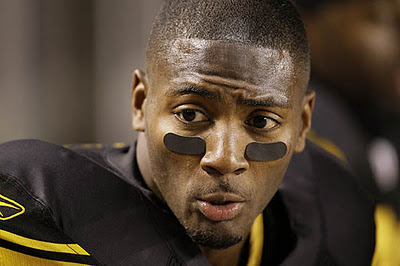
With the Raiders losing on Sunday, the Denver Broncos backpedaled their way into the 2012 NFL playoffs. Although guaranteeing one more week of conversations about Tim Tebow, a fact that no one should wish for, their playoff birth is dramatically impacting the Pittsburgh Steelers and more specifically their safety Ryan Clark. On Monday, Tomlin announced that Clark would be unable to play with the team because he has a sickle-cell trait, which can cause problems in high altitude situations. During a 2007 game in Denver, Clark became terribly ill. Doctors had to remove his spleen and gallbladder; as a result of his organs being deprived of oxygen, Clark lost an astounding 30 pounds.

While the threat to his life is significant, and the decision to skip the game would seem to be a no-brainer, Clark had planned to play. “I mean, everybody knows I want to play and I would have played,” Clark told ESPN. “I talked to my doctors and we actually had a plan in place for me to play. All things pointed to me going until (Tomlin) told me I can’t. He said he wouldn’t have let his son play and so I’m not playing either.” It would be easy to dismiss Clark’s comments, assuming that his plans to play were never realistic or possible. Yet, it is not hard to imagine an NFL player risking life and limb to play “on any given Sunday.”

In an Associated Press story on San Diego Charges offensive Lineman, Kris Dielman, acknowledged a willingness to risk his health in his pursuit to win a Super Bowl title. Dielman, who missed 10 games as a result of a concussion, had a seizure during a post-game team flight, resulting in him being rushed to the hospital. “This was definitely a scare. Waking up in the hospital with my wife standing over me, that was pretty scary. I don’t scare easy, but that was something different.” Neither this scare nor his 2 kids at home changed his approach to the game. He is not alone. Two weeks ago, the Associated Press reported that half of the players (23/44) of the players they interviewed admitted that, “they would try to conceal a possible concussion rather than pull themselves out of a game.” So it should surprise no one that Clark wants to play.

In a sport and a culture that defines masculinity through toughness, invincibility, and competitive fire. In a world of sports that values “winning at all costs” and “a never quit attitude,” Clark’s response reflects the masculinist orientation of sports culture. This is why Coach Mike Tomlin’s decision to hold Clark out of the game, and his unwillingness to ask his players to do anything he wouldn’t feel comfortable asking his children to do, is one worth celebrating. It challenges the culture of masculinity and the ways in which a football culture puts victories and a particular vision of masculinity ahead of everything else.

What has also been striking in the media coverage of Clark’s situation is the absence of any discussion of sickle cell/sickle cell trait in relationship to African Americans. There is a missed opportunity here to differentiate between the trait and disease; Clark has the trait and not the disease. While some articles discussed the medical science related to sickle-cell and how it put him at risk in high altitude settings, with most treating his inability to play as another sports-related “injury story,” there is bigger story here as it relates to sickle cell and African Americans.

This erasure fits with a larger history whereupon the health issues faced by people of color are rendered invisible. Writing about the Black Panther Party and its efforts “to raise public consciousness about sickle cell anemia,” Alondra Nelson states in Body and Soul: The Black Panther Party and the Fight against Medical Discrimination. “The condition became a rallying cry for other representatives of the black community.” The media missed an opportunity to highlight how this disease disproportionately impacts African Americans. In the United States, 1 in 12 African Americans carries the sickle cell trait (1 in 500 have the disease).

The missed opportunity reflects an overall failure to acknowledge the ways in which sickle cell disproportionately impacts African Americans. As Imani Perry told me, “Being at higher risk, because one belongs to a particular ethnic group, has to be distinguished from the idea that the disease is actually a consequence of race, which is a social construct” notes the Professor of African American Studies at Princeton University, “Some diseases are more likely to be found in particular ethnic or racial groups, but that may be a product of environmental conditions or history rather than some genetics that correlate to what we call race.”

While race is a social construction, with zero biological imperative, this disease effects African Americans in devastating ways. In “Dying in the City of the Blues: Sickle Cell Anemia and the Politics of Race and Health,” Keith Wailoo argues that “history of sickle cell anemia in the United States,” is a story of “transformation from an ‘invisible’ malady to a powerful, yet contested, cultural symbol of African American pain and suffering.”

Continue reading @ NewBlackMan: Black Athletes and the Racial Politics of Sickle Cell.

NewBlackMan: Serena Williams and the Politics of Hate(rs)

Serena Williams and the Politics of Hate(rs)

by David J. Leonard | NewBlackMan

Following a first-round victory in the Brisbane International tournament, Serena Williams expressed her sentiments about tennis, sport, and her labor of unlove. “I mean, I don’t love tennis today, but I’m here, and I can’t live without it … so I’m still here and I don’t want to go anywhere any time soon,” she explained. “It’s not that I’ve fallen out of love; I’ve actually never liked sports, and I never understood how I became an athlete. I don’t like working out; I don’t like anything that has to do with working physically.” Williams comments, not surprisingly, elicited widespread commentary, most of which used her confession as a source of criticism and demonization.

In “Woe is Serena: Tennis star says she doesn’t love tennis,” Chris Chase criticizes Williams as narcissistic and otherwise incapable of being self-reflective and self-critical. While acknowledging her candor, he uses that candor as a source of condemnation:

From one view, her candor could be seen as refreshing. Here’s a top athlete discussing the delicate balance of passion and obligation and fear of the unknown. She’s revealing herself to the press, something she rarely has in the past. Then you step back and realize Serena has the least self-awareness of any great athlete of the past decade. Two years later, she can’t bring herself to acknowledge that she was wrong to threaten a lineswoman at the U.S. Open. She’ll likely never admit her actions in last year’s U.S. Open final crossed the line. Unless she gained some insight in the past four months, these quotes are selfish nonsense.

Chase, unwilling to limit the criticisms to the quote, rehashes and recycles those previous incidences that in his mind provide context for understanding Serena’s dislike of tennis. In other words, just as she violated the rules of tennis, just as she has been unable to apologize for her past missed deeds, and just as she hasn’t been able to acknowledge her own faults, these comments are construed as evidence of her deficiencies as a person and athlete. Chase goes on to argue:

Nobody is surprised Serena doesn’t like tennis. Like Andre Agassi before her, she seems to only love the winning and is willing to put up with what it takes to get there. The grind doesn’t interest her much. These aren’t new insights into her soul. The underlying tone isn’t that Serena is a reluctant sports hero, it’s that she’s able to be so much better than the rest of the tour without caring about the game like they do. Her “I don’t love tennis” quote isn’t a revelation, it’s a self-congratulatory declaration. It’s as if she’s saying, “Just imagine what I could do if I cared.

Pete Bodo, with “The real question facing Serena Williams,” expresses a bit more sympathy given Williams’ litany of injuries. Yet, he still concludes: “Serena’s problem appears to be that she likes the reward (celebrity and money) but not the process. She would like to win the Australian title and any number of other tournaments, but she hates having to go through the motions – you know, the long practice sessions, the diet, the gym workouts and even that messy business of playing matches. It’s not a good problem to have, at least not for an athlete.” Beyond the efforts to link her comments to selfishness and a sense of victimhood, several commentaries link her disinterest with tennis to her diverse interests (fashion specifically), as if that is a shortcoming.

Continue reading @ NewBlackMan: Serena Williams and the Politics of Hate(rs).

NewBlackMan: Jason Whitlock’s Ideal America?

Jason Whitlock’s Ideal America?

by David J. Leonard | NewBlackMan

One of the common arguments offered during the NBA lockout was that David Stern and the owners had to initiate the lockout in an effort to make the league better. Citing the success of the NFL, these advocates predicted that the NBA would be more successful economically, more important culturally, and just a better game if it adopted the rules and policies of the NFL. Such arguments have not died down with the end of the lockout or with the start of the NBA season.

Embodying this logic is Jason Whitlock’s recent column, “NFL is model for American success.” Whitlock argues that NFL is a model of success not just for the NBA, but the nation. With a salary cap, revenue sharing, a requirement that players attend at least three years of colleges, its amateur draft design, its “emphasis on teams over individuals while making room for superstars” and “a free-agent system that allows franchises to retain their marquee players”, the NFL offers “the perfect blend of capitalism and socialism.” He remarks further:

One hundred years from now, when scholars analyze the rise and fall of our dynasty, the NFL might be considered America’s greatest invention, the cultural and economic force that should’ve been our guide to 200 more years of global domination.

If only Pete Rozelle had been our president rather than the architect of the modern-day national pastime, Americans would understand the value of restraints on capitalism, revenue sharing and a system that strengthens the poor.

There is so much wrong with the argument and the analysis that it is hard to know where to start. The idea that the NFL’s age restriction leads to a better or more successful system, even in absence of any sort of evidence, is reflective of Whitlock’s propensity to sell myths as fact. The ample success of NBA players, whether those who skipped college or those who were “one-and-done” ballers, runs counter to the rhetoric offered by Whitlock.

Likewise, the premise that NFL is superior because it emphasizes teams over individuals, which has led to increased fan interest, erases the overall popularity of NBA stars throughout the world. Whereas LeBron James, Kobe Bryant, and Michael Jordan are transnational icons, whose talents generated profits for the NBA and its corporate partners, the same cannot be said for the NFL. Think about it, can you name an NFL player that captures the global imagination?

When Michael Jordan was playing, he was one of the most recognizable people in the world; Kobe Bryant’s visits to Asia lead to mass hysteria. Would any NFL player – past or present – elicit such reactions? Despite the fact that the NBA erases these global realities from its economic picture, the NBA global success is very much a result of its emphasis on individual stars over teams.

Likewise, the ascendance of dynasties within the NBA – Bulls, Lakers, Spurs, Celtics –, which has certainly enhanced the NBA’s brand, is reflective of the structure of the NBA. In many regards, the NBA system is superior even though David Stern and the owners seem intent on slowly undermining what has been successful for the league in so many ways.

What is most striking, however, is Whitlock’s celebration of the NFL as an ideal model for the entire nation. Should the NBA and the nation at large emulate the model provided by the NFL given that: 21 former NFL players recently sued the NFL for not protecting players against the harms of concussions. In the lawsuit, they “accuse the NFL of deliberately omitting or concealing years of evidence linking concussions to long-term neurological problems.”

Is the NFL the ideal business and social model, given that: according to a 2006 Study in the St. Petersburg Times, for every year an NFL player spends it the league, it takes 3 years off his life expectancy. In other words, given that the average career of an NFL player is 4 years, his life expectancy will be 55 (as opposed to 75, the national average for American males). Put succinctly by Greg Doyle, “The NFL is killing its players, literally leading them to an early grave — and now the NFL is trying to kill them even faster. That’s a fact, people.” While some may call this rhetoric incendiary and hyperbolic, consider that in 2010, almost 280 players spent time on injured reserve, with 14 suffering head injuries, 13 experiencing neck injuries, and one dealing with spine injury.

continue reading @ NewBlackMan: Jason Whitlock’s Ideal America?.