Super Spectacle: Race, Gender, and the Hawking of Products | The Feminist Wire

Super Spectacle: Race, Gender, and the Hawking of Products

February 15, 2012

By David J. Leonard

The Super Bowl is a spectacle. Whether talking about the pregame festivities, the hype, the halftime show, or the game itself, it is the embodiment of a spectacle. Its commercials, however, especially given the ways that gender, race, and sexuality are circulated, are the embodiment of our contemporary spectaclized society.

By spectacle I am not referring to the everyday use of spectacle as an important or memorable event that a sizable portion of the population views, but instead in the tradition of Guy Debord. Debord, whose Society of Spectacle identifies the dialectics between late capitalism and mass media in the production of mediated spectacles, highlights a condition whereupon the relationship between commodities and people take precedent over any other sort of relationship. According to Debord, “The spectacle is not a collection of images, but a social relation among people, mediated by images.” While the game itself embodies this ritualistic process, the commercials themselves embody and perpetuate the spectacle. “Spectacles are those phenomena of media, culture, and society that embody the society’s basic values, and serve to enculturate individuals into a way of life,” writes Douglas Kellner. Mediated spectacles “dramatize[s] our conflicts, celebrate[s] our values, and project[s] our deepest hopes and fears.”

The spectacle of Super Bowl commercials are evident in the ways in which consumers’ relationships are defined vis-à-vis products. Similarly, the hype, and extravagance is evidence of the ways in which the Super Bowl and the commercials operate as “weapons of mass distraction.” Yet, the existence of a spectacle, illustrated by the presence of Flav Flav and Elton John in a Pepsi commercial, is not limited to size and scope; as Kellner reminds us with the ways in which mediated spectacles “dramatize our conflicts, celebrate our values, and project our deepest hopes and fears.”

The denigration and sexualization of women during the Super Bowl is indicative of the ways in which spectacles operate within our cultural landscape. From the first quarter right until the end of the game, the place of women is made clear: as sexualized objects whose presence figures in eliciting pleasure from the male gaze. Those women who cannot or refuse to reaffirm male sexual pleasure, who deviate from the standards of sexual beauty, are rendered undesirable. While not limited to the Super Bowl, the “Go Daddy” commercials embody the sexualized spectacle of the Super Bowl. Virtually naked women are represented as little more than eye-candy, existing in the mediated space, ready, willing, and able to appeal to the sexual wants of (white) young men. Women enter the spectalized space to provide pleasure to both the males in the commercial and those watching at home. Equally important, the two most visible women of these commercials are Jillian Michaels and Danica Patrick, whose physical strength and presence in the masculine worlds of physical fitness and car racing are muted because they don’t disrupt the dominant values concerning femininity.

There is something revolting about a corporate sponsor taking a woman who has made it in a highly male-dominated and masculine field, car racing, and putting her back in a woman’s rightful place: in a skimpy costume under the male gaze. (Chloe from Feministing)

Dramatizing conflicts about the purported breakdown of male and female spaces, reflecting both hopes and fears, all while validating patriarchy, Go Daddy is the quintessential spectacle. A commercial from Kia further reinforces the sexualized place of women within the male world of sports, celebrating a narrative of female subservience:

The ad from Kia sends a pretty clear message that men and women are totally different species with totally different dreamworlds. A woman dreams of riding across a meadow on the back of a white horse with a handsome fairytale prince under a rainbow sky. But a man dreams of driving a race car while Adriana Lima and thousands of hot bikini-clad women cheer him and Motley Crue plays, and something about a giant sandwich and a boxing match. And these two worlds are so separate and different that a Kia is the only thing that can bring them together.

The sexualized representation of women, and specifically white women and those luminally white ethnic bodies (Italian, for example), is as central to the Super Bowl as the teams themselves. The absence of commercials that turn women into sexual objects would be as impossible as having a Super Bowl without a football. This is evidenced by the barrage of commercials, including an NFL prize commercial that defines the American Dream through access to millions of dollars and scantily clad cheerleaders, and a Valentine’s Day commercial that depicts this holiday as a simple relationship based on exchange. The idea is this: men exchange gifts for sex (“Give and you will receive”). Or there is the Fiat commercial that treats women as if they are interchangeable with cars–both objects to be consumed, sexualized, and fantasized about by men.

Continue reading at Super Spectacle: Race, Gender, and the Hawking of Products | The Feminist Wire.

SLAM ONLINE | » Not Entertained?

Not Entertained?

Brittney Griner continues to challenge expectations.

by David J. Leonard / @DR_DJL

Average 22.7 points/game – Check

Sixty percent from field and over 80 percent from the line – Check

Almost 10 rebounds each night – Check

Record 155 blocks after 30 games in season – Check

Team undefeated and ranked No. 1 – Check

Outscore opponents by 30+ points/game – Check

With numbers like this—and the level of dominance seen throughout their career—you would think that this player would be the talk of the town, with magazine covers, lengthy biographic pieces on ESPN and a theme of celebration. Yet, these numbers and success hasn’t translated into Britsanity, all of which reflects the power of race, gender and sexuality within sport culture.

Unable to transform the narrative, in spite of her amazing (revolutionizing) play, Brittney Griner remains an afterthought within the basketball world. Unable to embody the traditional feminine aesthetic and beauty, yet fulfilling the stereotypes usually afforded to Black male ballers, there is little use for Griner within the national imagination. Her greatness is relatively invisible (outside of hardcore sports fans) because she simultaneously fits and repels our expectations for female athletes.

When Brittney Griner emerged on the national scene three years ago (and even while still in high school), the media focus wasn’t solely on her game, but instead positioned her as a player who was challenging the expectations of female athletes. Unlike the vast majority of celebrated female athletes, she was, according to the narrative, a less feminine “androgynous female” who challenged the “rigidity of sex roles.” Often comparing her to males, the media narrative consistently imagined her as a “freak” and as an aberration, contributing to a story of shock, amazement and wonderment whether Griner was indeed a woman. According to Lyndsey D’Arcangelo, “The world of women’s basketball has never seen a player like this before. Griner has the athletic skills and build of any budding male college basketball star, which has brought her ‘gender’ into question.”

In Brittney Griner, Basketball Star, Helps Redefine Beauty, Guy Trebay highlights the ways in which the dominant narrative of Griner imagine her as not baller, as not student-athlete, but as signifier of gender and sexuality.

Feminine beauty ideals have shifted with amazing velocity over the last several decades, in no realm more starkly than sports. Muscular athleticism of a sort that once raised eyebrows is now commonplace. Partly this can be credited to the presence on the sports scene of Amazonian wonders like the Williams sisters, statuesque goddesses like Maria Sharapova, Misty May Treanor and Kerri Walsh, sinewy running machines like Paula Radcliffe or thick-thighed soccer dynamos like Mia Hamm.

While celebrating her for offering an alternative feminine and aesthetic, the media narrative of course represented her in ways limited to female athletes—she was confined by the stereotype of women athletes. Focusing on her body, and how she meshes with today’s beauty stands, all while defining her “as a tomeboy” the public inscription of Grinner did little to challenge the image of female athletes. In purportedly breaking down the feminine box that female athletes are confined to within sports cultures, Griner provided an opportunity, yet as we see the opportunity is still defined through feminine ideals and sexual appeal to men.

The limited national attention afforded to Griner irrespective of her dominance and her team’s success reflects the profound ways that her emergence has not ushered in a new moment for women’s sports. Unable to appeal to male viewers, to fulfill the expectations of femininity and sexuality, Griner has remained on outside the already infrequent media narrative of women’s sports. Even though there are multiple networks dedicated to sport, even though there are magazines, countless websites, and a host of other forms of social networking dedicated to sports, there are few places for female athletes, much less black female athletes. Studies have demonstrated that less than 10 percent (3-8 percent) of all sports coverage within national and local highlight packages focuses on women’s sports.

Substantive coverage and national attention so often comes through sex and sex appeal, where female athletes who are successful at sport (less important) and eliciting pleasure from male viewers garner the vast majority of sport. Matthew Syed (2008) argues that, “There has always been a soft-porn dimension to women’s tennis, but with the progression of Maria Sharapova, Ana Ivanovic, Jelena Jankovic and Daniela Hantuchova to the semi-finals of the Australian Open, this has been into the realms of adolescent (and non-adolescent) male fantasy.” Attempting to elevate women’s sports by telling readers that it is OK to view female athletes as sexual objects, he laments how western culture has not “reached a place where heterosexual men can acknowledge the occasionally erotic dimension of watching women’s sport without being dismissed as deviant.” This sort of logic contributes to the relative invisibility of Griner on the national landscape.

Continue reading @ SLAM ONLINE | » Not Entertained?.

Family Ties: On Jeremy Lin, “Tiger Moms,” And Tiger Woods | Racialicious – the intersection of race and pop culture

Family Ties: On Jeremy Lin, “Tiger Moms,” And Tiger Woods

By Guest Contributor Dr. David J. Leonard

In a world that imagines basketball as the purview of African Americans, the emergence of Jeremy Lin has sent many commentators to speculate and theorize about Lin’s success. Focusing on religion, Eastern philosophy, his educational background, his intelligence, his parents, and his heritage, the dominant narrative has defined Lin’s success through the accepted “model minority” myth.

In other words, while celebrating Lin’s success as a challenge to dominant stereotypes regarding Asian Americans, the media has consistently invoked stereotypical representations of Asianness to explain his athletic success, as if his hard work, athleticism, and talents are not sufficient enough explanations.

Intentional or not, the story of Lin is both an effort to chronicle his own success in comforting and accepted terms and, in doing so, offer a commentary on blackness.

“Discussions about the NBA are always unique because the NBA is one of the few spaces in American society where blackness, and specifically black masculinity, is always at the center of the conversation, even when it’s not. Power is often defined by that which is assumed, as opposed to that which is stated,” notes Todd Boyd.

“Because black masculinity is the norm in the NBA, it goes without saying. Concurrently any conversation about race in the NBA inevitably refers back to this norm. In other words, people seldom describe someone as a ‘black basketball player’ because the race of the player is assumed in this construction. So any current discussion about Jeremy Lin is taking place within the context of a league and its history where the dominant players have long been black men. Lin is ‘the other’, as it were, but here the standard is black, not white, as would normally be the case in most other environments.”

Not only does the constructed Lin narrative exist in opposition to the normative blackness of the NBA, but also the specific rhetorical utterances often play upon the dominant assumptions of today’s black ballers.

Central to the efforts to explain Lin’s success, a process that renders him as exceptional, has a focus on his parents. In the New York Daily News, Jeff Yang argues that, “the secret to Lin’s success seems to have been a combination of high expectations and unconditional support–a kind of tiger-panda hybrid, if you will.” Emphasizing his Dad’s role as basketball tutor and coach extraordinaire who exposed Lin to the “signature moves from the likes of Dr. J, Moses Malone, Kareem Abdul-Jabbar, and, most of all, Michael Jordan,” the media consistently depicts his father in the tradition of (white) American fathers who nurtured and encouraged athletic performance. His mom, on the other hand, is depicted as a “tiger mom” of sorts, as someone who balanced out the father by maintaining an emphasis on education. Requiring that Lin and his brothers complete their homework prior to basketball, the narrative describes Lin’s athletic prowess as being the result of the perfect marriage of “Asian values” and “American” cultural norms.

While the media often links black athletic success to “God’s gifts” or to physical “prowess,” the efforts to chronicle Lin’s rise as reflecting his cultural background reinforces dominant conceptions of both blackness and Asianness.

Continue reading @ Family Ties: On Jeremy Lin, “Tiger Moms,” And Tiger Woods | Racialicious – the intersection of race and pop culture.

NewBlackMan: #LinSanity and the Blackness of Basketball

#LinSanity and the Blackness of Basketball

by David J. Leonard | NewBlackman

Over the last week, there has been significant discussion about how race is playing out within the media and fan reception of Jeremy Lin. Focusing on anti-Asian slurs, prejudice, and stereotypes, the media narrative has not surprisingly provided a simplistic yet pleasurable narrative. Imagining racism as simply bias that can be reduced through exposure and education, the media discourse has erased the powerful ways that sports teaches race and embodies racism. As Harry Edwards argues, sports recapitulates society, whether it be ideology or institutional organization.

According to Marc Lamont Hill, professor of education at Columbia, “blackness is at the center” of the media’s Linsanity. Seeing basketball as a space of blackness, “the whole undertone is irony, bewilderment and surprise.” Harry Edwards, Sociology Professor emeritus at UC Berkeley, highlights the predicable narrative, which reflects the fact that “we live in a niche society.” This encourages people to “retreat into traditional storylines.” Irrespective of facts or specifics, the deployed media narrative has retreated to a place that depicts the NBA as a black-league defined by athleticism and hip-hop that is changing before our eyes. The arrival of Jeremy Lin, who the media continues to cast in the role of the “model minority” whose intellect, personality, and overall difference is providing the league with something otherwise unavailable, is constructed through a narrative black-Asian conflict.

Replicating stereotypes, the undercurrent of the Lin narrative, the media inducted fantasy, has been his juxtaposition to the league’s black players. “Discussions about the NBA are always unique because the NBA is one of the few spaces in American society where blackness, and specifically black masculinity, is always at the center of the conversation, even when it’s not. Power is often defined by that which is assumed, as opposed to that which is stated,” noted Todd Boyd, Professor of Critical Studies at USC, in an email to me. “Because black masculinity is the norm in the NBA, it goes without saying. Concurrently any conversation about race in the NBA inevitably refers back to this norm. In other words, people seldom describe someone as a ‘black basketball player’ because the race of the player is assumed in this construction.

So any current discussion about Jeremy Lin is taking place within the context of a league and its history where the dominant players have long been black men. Lin is ‘the other’ as it were, but here the standard is black, not white, as would normally be the case in most other environments.” From the constant references to his being “humble” and “team-oriented,” to his widely circulated idea that he came out of no where and that his career is one of low expectations and being overlooked, the media narrative has imagined him as the anti-black baller. The stereotypes of both Asian Americans and blacks guide the media narrative.

According to Oliver Wang, “Some in the Asian American community are following “Linsanity” with caution, especially as commentators praise Lin for being “hard working,” “intelligent” and “humble,” words associated with long-standing stereotypes of Asian Americans. Chuck Leung, writing for Slate.com, expressed the fear that “beneath this Linsanity is an invitation for others to preserve these safe archetypes.” Whereas black ballers are defined/demonized with references to selfishness and ego, a sense of entitlement that comes from societal fawning, Lin purportedly provides something else. Compared to black players, who are defined through physical prowess and athleticism, Lin, who is 6’3”, extremely physical and athletic, the media has consistently presented him as a “cerebral player” whose success comes from guile, intestinal fortitude, and determination, seemingly discounting his physical gifts and his talents on the floor. Marc Lamont Hill noted a report that described Lin as a “genius on the pick n’ roll.” Continuously noting his Harvard education, his high school GPA, his college GPA, and his economics major all advance the narrative of his exceptionalism and his presumed difference from the league’s other (black) players.

On Weekends with Alex Witt, Sports Illustrated columnist and Lin friend Pablo Torre celebrated Lin as a “student of the game,” and as an anomaly. Torre noted that Lin watches game footage at halftime, a practice he says isn’t seen within the NBA. While David West of the Indiana Pacers told me that watching footage is standard practice with the NBA, its usage here is just another example as how Lin is being positioned as NBA model minority and the desired body outside the sports arena.

Reflecting on the nature of this discourse, Hiram Perez in an essay about Tiger Woods, describes “model minority rhetoric” as both homogenizing the Asian American experience through professed stereotypes and celebration of Asian American accomplishments, but “disciplin[ing] the unruly black bodies threatening national stability during the post-civil rights era” (Perez, 2005, p. 226). The caricatured and stereotyped media story with Lin illustrates this dual process, one that reifies stereotypes concerning Asian Americans while at the same demonizing blackness. Historically, the model minority discourse has work to juxtapose homogenized identities, cultures, and experiences associated with Asian Americans and African Americans.

Continue reading @ NewBlackMan: #LinSanity and the Blackness of Basketball.

[OPINION] Give Arenas Another Shot – Entertainment & Culture – EBONY

Give Arenas Another Shot

By David Leonard Writer

It is February and Gilbert Arenas is still looking for a job in the NBA. While rumors swirl about his potentially joining the Los Angeles Lakers, “Agent Zero” remains a free agent. The lack of interest, whether it be from the many teams requiring greater depth in this injury plagued, compressed season, or those bottom dwelling franchises whose seasons’ are on life support (see: Michael Jordan’s Bobcats), makes one wonder if Arenas has been declared unemployable by both the media and the teams throughout the league.

The one-time NBA All-Star has had a few rocky years. Between 2007-2010, Arenas played only 47 games because of injuries and a suspension for bringing a gun into the Washington Wizards’ locker room. The 2010-2011 season was his first close-to-full season (with two teams), but his career low averages in points and shooting percentage while playing with the Orlando Magic has led commentators to question his ability. Ignoring the impact of injuries and suspensions and the fact that his numbers were fine while he was playing substantial minutes with the Wizards in 2010 (17.3 on almost 40% and close to 6 assists per game), the media and teams themselves appear to be written Arenas off.

Even Stan Van Gundy, the Magic’s coach, cautioned against selling Arenas short because of his performance with the Magic, prior to their releasing him by using their amnesty provision: “I don’t think it’s fair to judge Gilbert’s time here. If anything, if people are unhappy with the way Gilbert performed here, you got to lay that on me and the role I gave him. I don’t think you can lay that on Gilbert. I don’t think Gilbert really had much of a chance to play well consistently, with what happened.”

Fair or not, the lack of opportunities afforded to Arenas illustrate how he continues to be judged, although maybe not for on-court reasons alone.

It is hard not to think that Arenas has been unable to change his reputation and the widespread demonization he has experienced over his career. No amount of apologies, efforts to redeem himself, or even time has allowed Arenas to shake the “bad boy” label like he use to shake defenders.

In the aftermath of Arenas and then-teammate Javaris Crittendon bringing guns into the Wizards locker room and pulling them on one another, and Arenas later making light of the issue with a myriad of tweets and his decision to simulate holding a gun during pregame warm-ups, the media denounced him not only as someone who made a bad decision, but as a bad person that deserves to be in prison for a significant amount of time. He was part of a generation of arrogant, entitled, uneducated, and otherwise despicable hip-hop ballers who lacked respect for the game, the fans, and basic civility. For example, Ed Berlinger, in “Next Stop for Gilbert Arenas? Prison Basketball team,” defined Arenas in relationship to a criminal (Black) underclass, all while depicting Arenas as representative of the pathological and destructive culture of today’s (black) athletes.

Praising David Stern for his giving these players 1-year suspensions, Berlinger offered the following: “Nothing could be more necessary in teaching our generation of spoiled, morally inept, law breaking athletic sycophants that they can no longer fall back on the “my dog ate my homework” excuse…He’s a common, street level criminal. One who just happens to wear tailored suits. A convict in the making who may luckily have been revealed before he truly decided to take a life with what would have been spun as an “accident”…His complete disregard for human life and a simple level of societal behavior puts him just above the gang-bangers who revel in their ability to shovel guns in the face of anyone who dare to question their superiority.”

Evident here, much of the media saw Arenas a symptom of a larger problem within the NBA, one that needed correction if the league had any chance of prospering into the future. Not surprisingly, Jason Whitlock seized upon the opportunity to denounce Arenas as an example of what happens when professional athletes do not go to college: “Singling out Arenas as the NBA’s lone idiot gunman is as naive as believing Lee Harvey Oswald acted alone…Harsh sanction is not the cure for ignorance. Education is…Gilbert Arenas can’t think critically. Like most elite athletes, no one has ever tried to teach him to think in a language and field he enjoys.”

The continued penalization (or ostracizing) of Arenas, who like so many others confined to the criminalized class has not been given a second chance, illustrates the ways that his mere presence in the league was seen as a threat. The efforts to imagine Arenas as pathological, uneducated, and unredeemable highlight the context of his difficult employment prospects within the NBA.

Continue reading @ [OPINION] Give Arenas Another Shot – Entertainment & Culture – EBONY.

SLAM ONLINE | » Going Global: Jeremy Lin and the NBA

Going Global: Jeremy Lin and the NBA

Linsanity has become a global phenomena, but the NBA’s popularity throughout Asia is nothing new.

by David J. Leonard / @DR_DJL

In 2010, I visited Taiwan, speaking to university students about Yao Ming and then-college player Jeremy Lin. Even though Lin is Taiwanese American, few students knew who he was—most knew about Yao, some just wanted to talk about Beyoncé and Jay-Z. In Taiwan today, it’s safe to think that—like Kobe Bryant—most know who Jeremy Lin is now.

Unsurprisingly, one of the emergent Linsanity narratives has been that he is providing a bridge to untapped markets, whether Asian-American communities or those throughout Asia. Constructing Asian-American fans and those from throughout Asia (with little differentiation across various countries) as otherwise disinterested in basketball, the narrative replicates stereotypes while simultaneously erasing the immense popularity of basketball within the Asian Diaspora.

Jeremy Lin has been credited with either cultivating or revitalizing interest in basketball throughout Asia. According to Matt Brooks, “But in the post-Yao Ming NBA, Lin just might be the player to further the League’s growth in Asia, while continuing to inspire athletes to break the mold.”

Similarly, an Associated Press story credits Lin with filling the void left by Yao Ming: “Jeremy Lin and Ricky Rubio aren’t just responsible for reviving their dormant franchises. They also are giving the NBA two fresh young faces to market internationally. As the first American-born player of Chinese or Taiwanese descent, Lin is re-opening doors in Asia that were feared to be closing in the wake of Yao Ming’s retirement. He’s led the New York Knicks to five straight victories and has become an instant fan favorite at Madison Square Garden.”

While clearly Lin has captured the national and international imagination, the narrative that there weren’t NBA fans throughout the Diaspora lacks any factual basis. And the argument that the NBA did not exist in Asia prior to Yao Ming or that fans in China or Japan, Thailand or the Philippines or Taiwan were fans of Yao and not the NBA reinforces stereotypes while erasing the history of the NBA globally. Lin’s own story, whose father became immensely passionate about the NBA after watching games while still living in Taiwan, is a testament to the globalization of basketball.

NBA Commissioner David Stern once described “the opportunity for basketball and the NBA in China” as “simply extraordinary.” The media narrative around Jeremy Lin has advanced this argument, yet reducing the NBA’s popularity in Taiwan, China, and throughout Asia to ethnic or national solidarity is simplistic. Basketball has been immensely popular throughout Asia for many years.

According to a 2007 study, 89 percent of Chinese between the ages of 15 and 54 were “aware of the NBA,” with 70 percent of youth between the ages of 15 and 24 describing themselves as fans. With 1.4 billion viewers watching NBA games during the 2008 season (up through April 30) on one of the 51 broadcast outlets in China, and 25 million Chinese visiting NBA.com/China each month, basketball and the NBA are cultural phenomena within China.

And while the immense fanfare directed at NBA stars is partially a result of the emergence of Yao Ming within the NBA, American NBA players have in recent years generated equal, if not more, popularity. For example, Yao Ming, whose jersey ranked as the sixth most popular in 2007, had dropped into 10th by 2008 even behind the likes of Gilbert Arenas. As of 2010, Kobe Bryant and LeBron James had the two most popular jerseys in China, with Dwight Howard, Kevin Garnett, Derrick Rose and Kevin Durant also feeling the love. The allure of the NBA, and the immense excitement that the League generates did not begin and end with Yao Ming and Jeremy Lin.

The popularity of the NBA and its players was clearly on full display during the 2008 Summer Olympics. While attending a US Women’s basketball game, Bryant attempted to move through the crowd to his seat, only to find himself amid a sea of cheering fans. The presence of Bryant, who has experienced ample criticism and media derision during the course of his career within the United States, receiving star-studded adoration assumed to be reserved for Chinese athletes, was a testament to the popularity of the NBA and its (African) American basketball stars in China.

Continue reading @ SLAM ONLINE | » Going Global: Jeremy Lin and the NBA.

When It Comes to Sports, Race Still Matters – Entertainment & Culture – EBONY

When It Comes to Sports, Race Still Matters

By David Leonard Writer

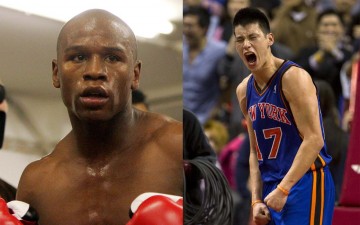
The emergence of Jeremy Lin as international superstar, and resulting tweets from Jason Whitlock and Floyd Mayweather, has prompted widespread debate about whether or not race matters in both the media representation and in understanding the arch of his career. Without a doubt, race matters when talking about Lin given his path to the NBA, prejudice experienced while on the court (see here for examples; see here broader discussion), and the larger context of anti-Asian racism. Lin is not evident of some post-racial fantasy, but instead a reminder of how race matters. It matters whether talking about sports, housing, education, foreign policy, economic inequality, media culture, and interpersonal relations.

Race matters when examining the media representations of Black athletes, whether were talking about the demonization of Michael Vick (the most despised athlete in America), Barry Bonds, or LeBron James; it matters in look at the stories of redemption afforded to Ben Roethlisberger and Josh Hamilton, or the lack of media attention directed at Kevin Love following his recent stomp. To deny the impact and significant of race with Lin is as absurd as deploying “the race denial card” in these contexts as well. To imagine Lin outside of the scope of race and racism, or to isolate race as something usual in this instance, especially given the ways that the NBA is associated with blackness (the subtext here feels as if the discussion is being reduced to anti-Asian prejudice from African Americans), represents an immense failure.

So race matters when thinking about Lin’s recruitment (or lack thereof) out of high school and his path to the NBA, as race matters when talking about employment discrimination.

Racism holds people back in every industry, from higher education to the business world. Researchers at the Discrimination Research Center, in their study “Names Make a Difference,” argue that racial discrimination represents a significant obstacle for employees. Having sent out 6,200 resumes with similar qualifications to temporary employment agencies, the authors found that those with names associated with the Latino and white communities received callbacks more frequently than those presumed to be African American or South Asian/Arab American (called back the least frequently).

Similarly, MIT professors Marianne Bertrand and Sendhil Mullainathan concluded that perspective applicants with “White sounding names” are 50 percent more likely to receive a callback after submitting a resume than were those with “Black sounding names.” They concluded that Whiteness was as much an asset as 8 years of work experience, demonstrating that race has a significant impact on one’s job future. In their study, “Are Emily and Greg More Employable than Lakisha and Jamal? A Field Experiment on Labor Market Discrimination,” the authors conclude, “While one may have expected that improved credentials may alleviate employers’ fear that African-American applicants are deficient in some unobservable skills, this is not the case in our data. Discrimination therefore appears to bite twice, making it harder not only for African-Americans to find a job but also to improve their employability” (“Employers’ Replies to Racial Names” 2003).

In a society where those with “Black sounding” and “Muslim sounding” names receive call backs from perspective employments with 50% less frequency, this an opportunity to talk about systemic racism.

Continue reading @ When It Comes to Sports, Race Still Matters – Entertainment & Culture – EBONY.