SLAM ONLINE | » Remember the Alamo (Heights)

Remember the Alamo (Heights)

How an inflammatory chant at a high school game is deeper than basketball.

by David J. Leonard and C. Richard King

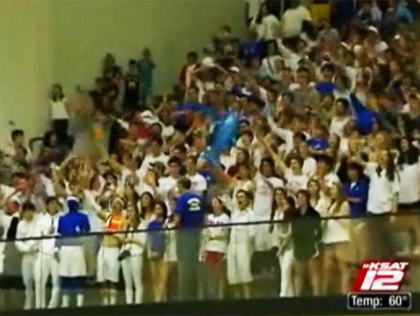
The Texas Region IV-4A high school boys basketball championships that pitted San Antonio Edison High School against Alamo Heights High School ended with a handshake and a celebration. It also ended with a racial and nationalist taunt from several fans from Alamo Heights, who chanted “USA, USA, USA” to celebrate its primarily white team and the school’s victory over the mostly Latino squad. While the Alamo coaches tried to quiet the crowd, the damage was done.

“Our kids try real hard and work extra hard to get to the regional tournament, and then we have to worry about them being subjected to this kind of insensitivity,” noted Edison coach Gil Garza. “To be attacked about your ethnicity and being made to feel that you don’t belong in this country is terrible. Why can’t people just applaud our kids? It just gets old and I’m sick of it. Once again, we’re on pins and needles wondering what’s going to happen.”

This incident was not the first anti-immigrant outburst on the floor in San Antonio. In 2011, Cedar Park High School, a predominantly white school with an equally white basketball squad, battled Lanier, a high school with an all-Latino squad. During the course of the game, Cedar Park fans chanted a myriad of anti-Latino chants, including “USA, USA.” They also cheered “Arizona, Arizona,” a clear reference to SB 1070, legislation that institutionalized anti-Latino racism. And, fans yelled “this is not soccer, this is not soccer” clearly linking their teams success (and ultimate victory) to their whiteness over and against a group of foreigners, marked as such because of their project affinity for and ability at an un-American game. Stereotypes about Latino and soccer reduced the basketball court to nothing more than a competition for racial superiority, another opportunity to police the border through the assertion of white nationalism.

The chant represents a brief, local reiteration of the long-standing equation where USA equals White within the national imagination. It reflects and is a consequence of the vitriol and the anti-immigrant sentiment that dominated the national landscape in recent years. The chant should not be surprise in a moment when presidential candidates “joke” about immigrant deaths or wish they would just deport themselves, when state legislatures make culture and skin color probable cause, and when public officials declare ethnic studies illegal. The chant reflects the same sentiments as those articulated by Rush Limbaugh, who has described America’s immigration in the following way: “[S]ome people would say we’re already under attack by aliens—not space aliens, but illegal aliens.” It is an outgrowth of a historic sentiment that imagines Latinos irrespective of citizenship as foreigners and undesirable. It reflects an increasingly ferocious anti-Latino sentiment that both represents and treat Latinos as “illegal aliens” neither welcome nor deserving of the legal protections of the United States. It should come us no surprise given this larger history and the ramped up anti-immigrant sentiment in recent years. It embodies as Tanya Golash Boza, assistant professor of sociology at University of Kansas, told one of us: “In the white American mindset, the only group that gets an unhyphenated American identity is white.” It should come us no surprise given this larger history and the ramped up anti-immigrant sentiment in recent years.

According to Alexandro José Gradilla, an Associate Professor in the Department of Chicana and Chicano Studies at Cal State Fullerton, the chant embodies “a new political climate of ‘papers please’” where all Latinos are presumed to be outsiders, threats to the national success of the United States. The racial hostility and the nationalist celebration at these high school basketball games, notes Gradilla, “signal a new racializing paradigm of conflating Mexican Americans with Mexican Immigrants—hence the chants of USA USA were appropriate to use against these possibly ‘illegal’ and ‘alien’ people.” Given the history of sports, so often a place to authenticate national superiority, play out racial tensions, and exhibit masculine prowess, the efforts to nationalize the basketball, to use the victory as evidence of national/racial superiority, is reflective of the political orientation of sports.

The staging of anti-immigrant sentiments at a basketball game and the ease with which chanting for a predominantly White team slides into rooting for America is not surprising. The outrage and the ultimate apology from the school district (“Unfortunately, after the game, we had a handful of students who made a bad decision and we’re very sorry it happened. They made a mistake and we’re going to use this as a learning experience…”) has prompted conservative commentators to argue political correctness run amuck and to otherwise deny any racial animus.
via SLAM ONLINE | » Remember the Alamo (Heights).

[OPINION] Is KONY 2012 for Real? – News & Views – EBONY

Is KONY 2012 for Real?

David J. Leonard

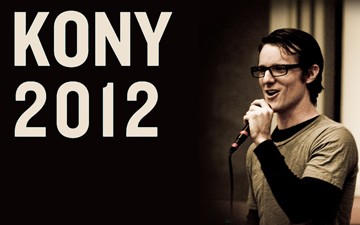
With close to 30 million viewers on YouTube, multiple days trending on twitter, domination of Facebook newsfeeds, and captivation of the national (global) imagination the “Stop Kony 2012” campaign is a lesson in the potential and pitfalls of new media activism.

Others have already offered valuable critiques concerning factual problems presented in the video, the economic practices of “Invisible Children,” the erasure of Ugandan voices, and the overall simplicity of its presented story, one that paints it as a struggle between good and evil. It is a story straight from Hollywood, with (White) Western heroes and a disgusting enemy in the form of Kony whose defeat will purportedly lead to harmony and peace irrespective of persistent poverty, AIDS, and a myriad of other problems.

Yet, what is striking here is not simply the recycling of “White saviors” and the pathologizing of Africans as either helpless/invisible victims or evil murders, but how new media fosters apolitical consumption. The “Stop Kony” viral video is an example of an emergent strain of social justice activism rampant in the United States and throughout the Western world. Described as click-through activism (“clicktivism”), cyber activism, and essentially based on apathy, limited knowledge and overall disengagement with social/political issues, the Kony campaign is a telling example of the ways new media technology can undermine struggles for justice. Urban Dictionary, usually not a source of theoretical insights, nails it in its definition of “Facebook activism”:

The illusion of dedication to a cause through no-commitment awareness groups. Specifically in reference to Facebook groups centered around political issues.

Dave: Man, this genocide in Darfur is terrible. I sure wish I could make a difference.

Jenna: Well, I made a Facebook group about it. We have almost one million members!

Dave: That’s great! Are you all going to donate money to refugees or something?

Jenna: No, but now those murderers will really know how sad we are!

Dave: Sounds like you’re really into your Facebook activism!

With Kony, although part of its agenda clearly is getting people to donate to the Invisible Children organization or to buy their “tool kit” (for 30 dollars), the video frames the issue as one of awareness where global pressure will lead to justice. In other words, merely “sharing” the video on Facebook, via Twitter or tumblr, will bring about change. Chris Csikzentmihalyi, co-director of the Center of Future Media at MIT, compares “click-through activism” to “dispensations that Catholic Church used to give.” Whether posting the video online, donating to the organization, or raising funds or awareness, participation in the Kony campaign becomes absolution for a history of wrongdoing and even any potential complicity in the problems facing the world. That is since people are “doing good,” by demanding justice, by raising awareness about Kony, war crimes, or any number of issues, they are absolved from responsibility; they are absolved from taking action in the real world.

Continue reading @ [OPINION] Is KONY 2012 for Real? – News & Views – EBONY.

NewBlackMan: The “Reasonable Fear” of a Black Male: The Trayvon Martin Tragedy

The “Reasonable Fear” of a Black Male:

The Trayvon Martin Tragedy

by David J. Leonard | NewBlackMan

In 2008, 20/20 conducted an experiment to examine how people would respond to criminal activity. Inside a New Jersey park, three white youths gleefully vandalized a car. Without concern for the people walking throughout the park, they destroy the car with a bat and spray paint. In the course of the experiment, only a few individuals call the police or even challenge the kids, with some even joking around with them. When 20/20 swapped out the three white youth for three black youth, the public response was drastically changed, with many more calls to the police. Highlighting the ways race and criminality interact through stereotypes and daily behavior, the most telling aspect of the experiment resulted from an unplanned development. As the white youths wreaked havoc on the car, three black youth waited in another car. These boys, relatives of one of the black actors who were taking part in the experiment, were asleep. In the first instance, the caller suggests that the boys looked like they were going to rob someone. In a case of ‘sleeping while black’ there were two 911 calls (compared to one 911 call about the white youth).

Given persistent stereotypes, news media and popular culture, and a culture of dehumanization, it is no wonder that the 20/20 experiment found that irrespective of behavior black youth convey fear and animosity driven by their presumed criminality, an experience dramatically different from that of white youth. Writing about research on imagery and criminalization, Joe Feagin, in The White Racial Frame, highlights the profound issues at work here. “These researchers conclude that the visual and verbal dehumanization of black Americans as apelike assist in the process by which some groups become targets of societal ‘cruelty, social degradation, and state-sanctioned violence” (p. 105). From a history of slavery and lynching, up through the persistent realities of racial profiling, mass incarceration, and daily instances of violence, the connection between dehumanization and criminalization has been central to white supremacy.

I thought about this experiment when I first heard about the murder of Trayvon Martin. The connection became especially powerful after continually hearing references to “reasonable fear,” the fact that George Zimmerman called 911 because he saw a suspicious person in his gated community, and the purported “perceived threat”; all of this led me back to this study and the countless amount of research that illustrates the power and saturation of the “criminalblackman.” As evident here, it is hard, if not disingenuous, not connect this case and the ideas of fear, suspicion, and threat (and whiteness as innocence), to dominant ideologies of race.

On March 12, 2012, Stanford Police Chief, Bill Lee announced that Zimmerman’s claim of self-defense fit with the evidence of their investigation. During a press conference, he made this clear over and over again: “We don’t have anything to dispute his claim of self defense at this point with the evidence.” He additionally defended the decision not to issue an arrest warrant because of a lack of probable cause: “Until we can establish probable cause to dispute that, we don’t have the grounds to arrest him.” Given recent reports about the investigation, one has to wonder if this even possible.

Similarly, the news media has emphasized that Zimmerman had a bloody nose, that the back of his t-shirt was wet, and that reports indicate an argument all as potential explanation for what happen. We can see an emerging narrative that explains (rationalizes/justifies) the situation as if an argument or even a “fight” justifies the use of a gun on an unarmed teenager.

At the same time, likely responding to this growing anger about this injustice, the media coverage has increasingly emphasized the legal context. In Florida, because of the “stand your ground law,” which Jeb Bush signed into law in 2005, individuals who believe they are under attack can use deadly force. If a person feels in danger and if a person has “reasonable fear” they are legally allowed to use deadly force. According Joëlle Anne Moreno, “under the new law, if you are not engaged in an illegal activity, you can stand your ground by ‘meeting force with force, including deadly force’ if you ‘reasonably believe it is necessary’ to prevent death, great bodily harm, or the commission of a forcible felony.” In other words, if you reasonably believe you or others are in danger you are entitled and empowered to use force irrespective of the actual threat. It is about belief and perception.

Continue reading @ NewBlackMan: The “Reasonable Fear” of a Black Male: The Trayvon Martin Tragedy.

NewBlackMan: Two Visions of ‘Black’ Evil, One White Gaze: Reading Kony 2012 and the Murder of Trayvon Martin

Two Visions of ‘Black’ Evil, One White Gaze: Reading Kony 2012 and the Murder of Trayvon Martin

by David C. Leonard | NewBlackMan

In the wake of 9/11 and the ongoing war on terror, the United States has increasingly relied on national narratives that offer certainty, comfort, and security. In catchphrases and sound bites, pundits and politicians remind Americans of the importance of protecting the homeland, the role of all Americans in safeguarding national space and American democratic values, the need to guard against the enemies of freedom and civilization, and the promise of spreading democracy throughout the world. As countless bodies fell, injured and dying, shattering families and communities over here and over there, multinational corporations have profited on an increased militarism, diminishing natural resources, and public panics. Within this climate, many in the United States have sought refuge in comforting narratives of good versus evil, civilization versus savagery. The power and cultural importance of these narratives has been evident with the murder of Trayvon Martin and in the spectacle of Kony 2012.

Prior to the start of the 2012 All Star game (I previously wrote that it was at halftime but based on timeline that appears to be incorrect), Trayvon Martin, a 17-year African American, decided to walk to the local store to get some candy and drinks. Tragically, it appears that he died because he was walking while black in a gated predominantly white community in Florida. Shortly after calling 911 to report a “suspicious” person within his community, George Zimmerman, a neighborhood watch captain, confronted Martin, who was armed with skittles and an Arizona Ice Tea. What happened next is unclear, yet what is without much doubt is that Zimmerman shot Martin dead with a Kel Tek 9mm semi-automatic gun. Identified as a “threat” Martin fell victim at the hands of a gun.

In a world where African Americans, particularly black male youth, are consistently represented as threats, to the security, peace, culture, calm, and order, how can “threat” be seen outside of the context of race? In a world where racial profiling is routine and where explicit and implicit bias has created the criminalblackman, is it even possible to think about the confrontation and ultimate death of Martin outside of the paradigm of a criminalized of black body? The 911 call, the confrontation, and the ultimate death fits a larger pattern whereupon blackness is consistently imagined as threat, as danger, and as EVIL; as a cultural and social pariah blackness needs to be controlled, discipline, and ultimately punished. According to Michelle Alexander, “Just as African Americans in the North were stigmatized by the Jim Crow system even if they were not subject to its formal control. Black men today are stigmatized by mass incarceration and the social construction of the ‘criminalblackman’ whether they have ever been to prison or not” (p. 194). In a review of Alexander’s The New Jim Crow, Max Kanter describes the specter of criminalization as follows:

This is evidenced in part by dominant media and cultural narratives, institutionalized (and legalized) racial profiling, and police efforts to build mass databases of “suspected criminals” which contain information almost exclusively on racial minorities who have often done nothing criminal at all aside from having been born to black and brown parents. In addition to the numerous studies showing that most white Americans see crime in racial (nonwhite) terms, studies conducted by Princeton University also reveal that white felons fresh out of prison are more likely to get hired for jobs than equally qualified black men with no criminal record. African American men without criminal records are more ostracized and widely perceived as being more criminal than white men who have actually been convicted of felony crimes. That is how deeply black people have been stigmatized as criminals and social pariahs in our society.

This is the context that we need to understand what happened to Trayvon Martin not only on the fateful evening, but also in terms of police response and that of the media and general public.

The death of a child under suspicious circumstances would have thought to have led to Zimmerman’s arrest, yet no charges have levied against him to date. It represents another reminder of whose life really matters. Tracy Martin, Trayvon’s father, told the Huffington Post that the police basically saw Zimmerman as a good guy giving them reason not to arrest him at this point:

They respected [Zimmerman’s] background, that he studied criminal justice for four years and that he was squeaky clean.” He continued: “My question to them was, did they run my child’s background check? They said yes. I asked them what they came up with, and they said nothing. So I asked if Zimmerman had a clean record, did that give him the right to shoot and kill an unarmed kid?”

While Trayvon Martin is not trending on twitter nor eliciting 500,000 views on YouTube, much less 70 million, Kony 2012 has captured the national (global) imagination. With millions of views on YouTube and Vimeo, with ample donations directed toward the film’s producer – Invisible Children – and a national conversation about Joseph Kony and his crimes against humanity, Kony 2012 has elicited an outpouring from all corners of society.

Continue reading @ NewBlackMan: Two Visions of ‘Black’ Evil, One White Gaze: Reading Kony 2012 and the Murder of Trayvon Martin.

Trouble A-Bruin: On UCLA And Who Schools Choose To Redeem | Racialicious – the intersection of race and pop culture

Trouble A-Bruin: On UCLA And Who Schools Choose To Redeem

By Guest Contributor Dr. David J. Leonard


Much of the buzz surrounding Sports Illustrated’s report about the troubles surrounding UCLA men’s basketball program has focused on the players, sporting headlines like “UCLA players undermined discipline, morale,” and “UCLA Basketball Out Of Control.” But the story itself really hones in on coach Ben Howland’s failure to “control” and “discipline” those players.

But if this same story had been about teams like UNLV, Miami or Michigan’s “Fab Five,” the narrative would been less one of shock and disappointment but rather the fulfillment of expectation, which are wrapped in racial and class assumptions that UCLA, celebrated as an example of the nostalgic ideal of collegiate sports entertainment, has benefited from for years.

More specifically, much of the article focuses on Howland and his inability to corral and control Reeves Nelson, who has denied many of the allegations.

The piece gives ample attention to the disruptive influence of Nelson, who is white: injuring three players on separate occasions, getting into a fight with another player away from practice, and otherwise engaging in questionable behavior. I could not help but think how much the story revealed about the state of education, privilege, and inequality within society.

Whereas other players are lamented for drug use and partying in ways that detracted from the team success (victories), Nelson comes across as being at a different level. Noting how Howland “looked the other way” because of his play, SI describes Nelson as a pariah, as a cancer to the program:

Nelson was hardly the player around whom to build a team. He was a classic bully, targeting teammates who weren’t as athletically gifted as he and tormenting the support staff. At the end of practice, he would punt balls high up into the stands at Pauley Pavilion, turn to the student managers and say, “Fetch.” Nelson frequently talked back to the assistant coaches. When they told him to stop, he would remark, “That’s how Coach Howland talks to you.” […]

Nelson showed Howland only slightly more respect. By his own admission, he often ignored the head coach’s phone calls, and Howland resorted to calling one of Nelson’s roommates, asking him to coax Nelson onto the line.

There certainly wasn’t a system of zero tolerance for any of the players, but most certainly Nelson had a level of impunity. It made me think about the ways race infects the process of discipline and punishment as well as how education increasingly operates through a commodity model as opposed to one of education.

This is not say that what is happening at UCLA is all about race or that it is evidence of the failed priorities of today’s educational system but rather that what we see at UCLA isn’t simply a soap opera or a instance to wax nostalgically about the John Wooden era but rather a window, glimpse and teachable moment regarding issues bigger than UCLA.

Beginning in the 1980s and extending to the 1990s, students of color attending American public schools faced increased levels of surveillance, policing, and state-sanctioned violence. For example, in 1994, President Bill Clinton signed the Gun-Free Schools Act, a law requiring a one-year suspension for any student who brought a gun to school. This had both direct and indirect consequences throughout the United States. In Chicago, for example: during the 1994-95 school year, only 23 students were throughout the entire district. By 1996-1997, this number reached 571, surpassing 1,000 by two years later.

Although white youth are more likely to bring a gun to school, sell drugs, and use drugs, the efforts to rid schools of these behaviors have focused on youth of color.

The consequences of a Jim Crowed disciplinary process have been evident since day 1. Consider just these three findings:

  • According to a 2007 study by the National Economic and Social Rights Initiative, black students accounted for 17.1 percent of U.S. student populations in 1998, but represented 32.1 percent of students suspended as a result of rule violations. The study also names this statistic from a national survey of high school students: the number of students who reported the presence of security guards and/or police officers in their schools rose from 54 percent in 1999 to 70 percent in 2003.
  • In a separate study of 15 major American cities, the Applied Research Center found black students “report higher than expected” suspension and expulsion rates in all fifteen. In Chicago, while African American students accounted for just over half the district students, they represented almost 2/3s of the students suspended and close to 3/4s of those expelled.

Continue reading @Trouble A-Bruin: On UCLA And Who Schools Choose To Redeem | Racialicious – the intersection of race and pop culture.

NO WAY OUT: Mother Jailed for ‘Stealing’ Child’s Education – News & Views – EBONY

NO WAY OUT:

Mother Jailed for ‘Stealing’ Child’s Education

The Tanya McDowell case is (yet another) heartbreaking example of the country’s failure to educate its youth

By David Leonard Writer

Tanya McDowell has joined the ranks of millions of people, mostly of color, facing incarceration. In April 2011, McDowell was arrested and charged with larceny for allegedly enrolling her 6-year old child in a Norwalk, Connecticut elementary school instead of the required Bridgeport school associated with her “residence” (she was reportedly homeless at the time).

Less than a year later, McDowell entered an Alford Plea, which is not an admission of guilt but rather an acceptance that the state has sufficient evidence to make its case. In exchange for her plea as well as a guilty plea stemming from a drug case, the court sentenced McDowell to 12 years in prison with the possibility of release after 5 years.

The media response has emphasized how her sentence reflects punishment for her “stealing of an education,” worth over 15,000 dollars as well as a consequence of the narcotics arrest. Subsequent to her arrest for educational larceny, McDowell allegedly sold drugs to an undercover officer on three separate occasions. While the timing of this arrest was questionable (her attorney at the time described the investigation that led to the drug charges as “‘retaliatory’ because the community was embarrassed by McDowell’s April 14 arrest for allegedly sending her son, A.J., to Norwalk’s Brookside Elementary School while they lived in Bridgeport), the efforts to paint her as a bad parent, as a criminal, as an unredeemable person is further revealing. Upon her arrest, Norwalk Mayor Richard Moccia scoffed at those who represented McDowell as a victim: “This is not a poor, picked-upon homeless person. This is an ex-con, and somehow the city of Norwalk is made into the ogre,” he noted. “She has a checkered past at best … This woman is not a victim.”

Her subsequent arrest has been used to further substantiate these claims, justifying the initial charges and the subsequent sentence of 12 years. The conflating of these cases (beyond their simultaneously adjudication) points to the ways that the drug case has obscured the horrible injustice of the wrongful enrollment arrest. It would be a mistake and a further miscarriage of justice to excuse the criminalization of her decision to enroll her child at a school that provided better services, a better education, and a better future for her child by referencing her drug arrest.

She was forced to choose between terrible schools and violating the law so that her child could receive a quality education. Fordham University professor Mark Naison says “If there were enough good schools around so that any school you chose would be acceptable, and if there were enough decent paying jobs to keep your head above water through legal work, that would be one thing. But what if NEITHER of those things were true. What are you supposed to do? Let your child go hungry to a terrible school.” Even so, she became the first person in the history of Connecticut to be prosecuted for enrolling a child out-of-district, even though experts claim it to be a common practice.

She was forced to choose between terrible schools and violating the law so that her child could receive a quality education.

McDowell isn’t the first Black woman to face criminal prosecution and jail for enrolling her children out-of district. In Akron, Kelley Williams-Bolar was charged and served 10 days in jail for enrolling her two daughters at a Copley Fairlawn school even though they should have attended an Akron school. Her decision was easy to understand given that Copley-Fairlawn School District met 26 out 26 standards set up the Ohio Department of Education, whereas Akron City School District met only 4 of these same standards. Graduation rates were equally disparate with almost 98% of students graduating from Copley-Fairlawn compared to 75% within Akron City. Williams-Bolar, like McDowell, sought to challenge the inequity and segregation that defines America’s school system, and thus faced the sanctions and condemnation from a system that mandated that she stay in her place.

McDowell’s incarceration on drug charges reflects a willingness to wage the war on drugs with the greatest force and consequence against communities of color. According to the Drug Policy Alliance, Latinas are 1.6 times and Black women are 3.8 more times more likely to be sent to prison than White women despite similar rates of usage and distribution. McDowell is indicative of the consequences of a racialized war on drugs. It reflects the pipeline from failed schools to prisons; it reflects an effort to incarcerate those who challenge this process.

Yet, the attempts, whether from the criminal justice system, the media, or the broader community to justify her criminalization and ultimate incarceration by linking the drug charges with the larceny charges is both troubling and without basis. The state prosecuted her before any drug charges so the injustice of her arrest cannot take cover from a subsequent arrest.

Continue reading @ NO WAY OUT: Mother Jailed for ‘Stealing’ Child’s Education – News & Views – EBONY.

[EXCLUSIVE] UVA Football Star Joseph Williams Talks Hunger Strike

[EXCLUSIVE] UVA Football Star Joseph Williams Talks Hunger Strike

Williams explains what inspired him to stand up for worker’s rights

By David Leonard Writer

On February 17, a group of students at the University of Virginia embarked on a hunger strike in “to protest the economic and social injustices perpetrated by the UVA administration against the vast majority of the University’s service-sector employees.” Although a living wage is 13 dollars per hour, the starting pay for many UVA employees is $10.65, egregious in itself but even more so when considers that its administrators make between $400,000-700,000 and the school’s basketball coach makes 1.7 million per year.

Two days after the strike began, Joseph Williams, a member of the school’s football team, joined the protest. In a column on Michaelmoore.com, he explained his personal reasons behind his decision:

“On a personal level, this cause is one that hits very close to home. As one of four children supported by a single mother, I have experienced many periods of economic hardship in my life. Growing up, I moved over 30 times – including various stays in homeless shelters, the homes of family friends, and church basements. As a result of these experiences, I know firsthand what the economic struggle is like for many of these underpaid workers. One UVA employee anonymously shared that though she works full time for the University, over 40 hours a week, her family was still forced to go without electricity for nearly 3 months, unable to pay for the rent, electric bill and other basic necessities on the meager wages she is paid by the University. Such stories are the reason that I and countless other Living Wage supporters have chosen to take up this cause and give a voice to the many University employees who often cannot speak up for fear of retaliation from the administration.”

Over the course of the week, countless faculty, community members and students Charlottesville campus have joined Williams and the other student protestors in voicing their discontent with the wage issues on campus. I had the opportunity to talk to Joseph six days into his hunger strike about the movement for fair pay and his involvement.

EBONY: What is the Living Wage Campaign about and why a hunger strike?

Joseph Williams: The Living Wage Campaign has been active and we have a number of demands, including a living wage for the majority of direct and contracted workers at Virginia. We also want to have an oversight board put in place so employees feel comfortable and safe speaking out. Currently a lot of employees supporting us anonymously; they are afraid to do so publicly. In the past, they have written up or been fired because of involvement with the campaign. For the past 14 years we have exhausted every tactic, so we decided to move forward with a hunger strike to pressure the administration to negotiate with us.

I had a responsibility to speak out for those who aren’t able to have the same things I have been enjoying.

EBONY: What led you to get involved in the campaign?

JW: I have been involved with the Living Wage campaign for several years while at UVA although not (always) to the extent I am now. It really inspired me that they were willing to start a hunger strike because it revealed their seriousness, a willingness to their livelihoods and their bodies on the line for a cause that was bigger than them. Specifically, the cause spoke to me because I have been in a place similar to a lot of the workers in terms of economic struggles and hardships. To be at this university, to have such a position as a student, as a student-athlete, to have the spoils that come with being here, I had a responsibility to speak out for those who aren’t able to have the same things I have been enjoying, who have been systematically marginalized by the university administration.

Continue reading at Ebony