Dr. David J. Leonard: Whiteness Matters

Whiteness Matters

Between the racist comments, the constant use of the race denial card (this country’s most frequently used “race card”), and the absurd claims of White victimhood, our conversations about race need to change. The failed responses, at a rhetorical and a policy level in the aftermath of Katrina and post-Trayvon highlights a persistent failure to account for American racism. As Richard Wright reminded us decades ago, “There isn’t any Negro problem; there is only a white problem.” In other words, there isn’t a race card, but the injustices of persistent racism, one that not only erects obstacles but also provides unearned advantages for White America. Whiteness matters and it is time to account for American racism.

Sure, we got teary during The Blind Side and Antoine Fisher; we maybe even gave money to KONY2012 and after Hurricane Katrina; we maybe even donned a hoodie to protest the murder of Trayvon Martin. Sympathy and apologies are in great supply. As James Baldwin once said, “People can cry much easier than they can change.” I don’t even doubt there are individuals out there who are genuinely concerned about racism and injustice; I don’t doubt that there are many Whites that marched with Dr. King and whose “best friends” might be Black. None of this matters if African Americans continue to die at the hands of guns held by security guards and police officers all without justice

During the last few months, I have heard over and over again: “we are all Trayvon Martin.” Yet we are not Trayvon Martin – and we never could be. White America is never suspicious. Is it White America who is stopped and frisked in cities like New York? Can you imagine if Whites in Salt Lake City were stopped daily in search of guns, even though only .2% of those stops would result in finding a weapon? We can already hear the outrage!

Is it White America who must show their papers when stopped in places Arizona? Is it White America who endures “driving while black,” “shopping while black,” or “walking while black.” Driving or shopping while White is not an issue insomuch as Whites are able to engage in the practices without being seen as problem. White America can walk to the store without fear of being hunted down. White America can count on justice and a nation grieving at the loss of White life. We aren’t Trayvon Martin, we are George Zimmerman; we aren’t Rekia Boyd or Marisa Alexander: we are presumed innocent until proven innocent. We are seen as victims worthy of protection and mourning. The cover of People Magazine features three victims of Aurora and not the many victims of extrajudicial violence and the daily realities of guv violence.

I want you to close your eyes for a second, and imagine that your son or daughter, sister or brother, granddaughter or grandson, ventured to the corner store for some Skittles and tea but never returned? Can you imagine if Peter or Jan were gunned down right around the corner from your house and the police didn’t notify you right away? Can you imagine if little Cindy or Bobby sat in the morgue for days as you searched to find out what happened them? Can you even imagine the police letting the perpetrator go or the news media remaining silent? Can you even fathom learning about background and drug tests on your child? Can you imagine the news media demonizing your child, blaming your child for his own death?

Can you imagine the outcry if seven White youths had been gunned down by police and security guards in a matter of months? What about more than 110 in 6 months? Can you imagine the extensive political interest, the media stories that would saturate the airwaves? If the recent coverage of shooting in Aurora is any indication, there would be little else on the national media landscape. Can you imagine Fox News or any number of newspapers reporting about a school suspension for one of the victims or doctoring pictures in an attempt to make these victims less sympathetic? Can you imagine a person holding up a sign calling these victims “thugs” and “hoodlums.” Can you imagine pundits blaming White youth for wearing “thug wear” or citing THC in their system as explanation for why our sons and daughters are gunned down with unfathomable frequency. Just think about the media frenzy, the concern from politicians, and the national horror every time a school shooting happens in Suburbia or every time a White woman goes missing … can you imagine if women routinely went missing from your community and the news and police department simply couldn’t be bothered?

Continue reading @ Dr. David J. Leonard: Whiteness Matters.
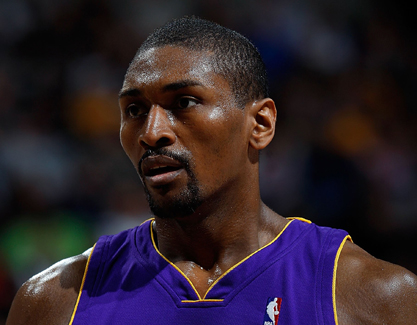
Metta World Peace and the Stigma of Criminalized Bodies Pt. 2 | Urban Cusp


Metta World Peace and the Stigma of Criminalized Bodies Pt. 2

By David J. Leonard

The elbow seen around the world and the media fallout continues to bother me. Over the last five weeks, I have found myself debating others online, yelling angrily at the television and otherwise struggling to make sense of Metta World Peace’s elbow of James Harden. As I noted in part 1, my concern stems from a media narrative that too often invokes the language and frames reserved for “criminal justice” matters (the courts). It also reflects a narrative that refuses to let MWP live in the moment, to be defined by his actions in our present. Instead, he is defined now (and as he has been since 2004) by his actions and the meaning of those actions within our racialized society. Having paid his debt to the NBA, and society, he continues to be dogged by the past, an unfair constraint of America’s criminalizing culture.

The efforts to criminalize MWP, to depict him as pathological and dangerous, as a constant threat to those on the court is illustrated in language usage but also in the constant references to his past. The constant reference to the Palace Brawl and to past suspensions without any acknowledgement of the specifics of each instance (and the differences), the timeframe involved, or the changes MWP has shown is telling. For example, many commentators continue to reference his “past,” his “history” and the fact that he has been suspended “13 times in his NBA career for a total of 111 games.”

However, few provide any specifics, as if they don’t matter. Three of those suspensions (4 games) were for exceeding the maximum allowable flagrant foul points, with another coming from his leaving the bench during an altercation that he was not involved with. Even his first suspension in the league (4 games – “With the Pacers, four games for confronting and making physical contact with Miami Heat coach Pat Riley, for taunting the Miami bench, for committing a flagrant foul-2 on Caron Butler (pushing him into the stands) and making an obscene gesture toward fans”) or two of his more recent suspensions, both of which were clearly impacted by his involvement with the Palace Brawl, points to the problems of imagining MWP as some “habitual” offender.

None of this is to excuse MWP for the elbow or even past actions (including a plea of “nolo contender” in a case where involving infliction of injury his wife, clearly his most troubling offense yet one that received much less media outrage that the elbow or the Palace). Rather, I call for specifics and reflection as a way to caution against the continued merging of the criminal justice system and public culture, between the criminal court and the basketball court. The normalization of the language of the criminal justice system and the criminalizing of “bad” bodies gives life to America’s prison culture, to America’s new Jim Crow.

This leads me to why the media coverage regarding the elbow gives me pause – why it troubles me more than the elbow itself. The intrusion of the language of the criminal justice system, the ubiquitous references to Metta’s past, and inability of others to allow MWP to move forward without the past shackling, defining, and controlling him reflects a larger injustice: the stigmas, life-sentence, and 2nd-class citizenship “afforded” to criminalized communities. “A criminal record today authorizes precisely the forms of discrimination we supposedly left behind,” writes Michelle Alexander in The New Jim Crow: Mass Incarceration in the Age of Colorblindness:

Continue reading @ Metta World Peace and the Stigma of Criminalized Bodies Pt. 2 | Urban Cusp.

Metta World Peace and the Language of Incarceration in Sports Coverage Pt. 1 | Urban Cusp

Metta World Peace and the Language of Incarceration in Sports Coverage Pt. 1

By David J. Leonard


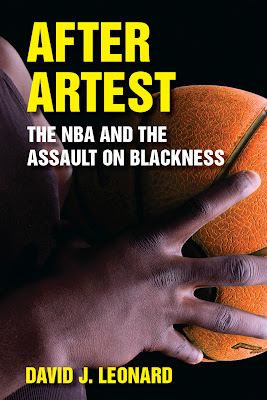
The elbow seen around the world and the media fallout continues to bother me. Over the last two weeks, I have found myself debating others online, yelling angrily at the television and otherwise struggling to make sense of Metta World Peace’s (formerly known as Ron Artest) elbow of James Harden. Almost every day, I have woken up thinking about the incident and what needs to be said. Clearly, Metta is on my mind, but not because of the elbow (indefensible), my love of the Lakers’ (unwavering), my tendency to always side with players (not saying much given the media), and the connection between this incident and my book, After Artest: The NBA and the Assault on Blackness.

So, what’s gives?

My focus or concern on Metta’s elbow and more centrally the media spectacle has little to do with the incident but instead what it tells us about society, especially as it relates to the criminal justice system and race. The media and public response has been one focused not on the foul itself, but rather depicting Metta as a crazy criminal that deserves punishment. The constant use of the language of the criminal justice system — “repeat offender”; “the letter of the law,” “does the punishment fit the crime” – is telling because while the incident has nothing to do with the criminal justice system, the media continues to apply language of criminalization to Metta World Peace. For example, Scott Carefoot depicts MWP as a “dangerous menace” in “Why intent shouldn’t factor into Metta World Peace’s suspension.”

I don’t need to read Metta’s mind or his body language to determine if he meant to nearly decapitate James Harden with his elbow — I don’t care because it doesn’t matter. I know he’s a swell guy with a big heart off the court, but he’s a dangerous menace on the court who is more likely to end somebody’s NBA career than anyone else in this sport. I’m not advocating a permanent ban, but I won’t complain if that’s Judge Stern’s verdict.

Similarly, Jess Coleman sees MWP as a serial “criminal” who cannot be helped, yet because of the NBA’s culture gets a free pass:

World Peace is lucky: he could have seriously injured Harden. Regardless, he will once again slip loose from this criminal act with nothing more than a measly suspension. Any money he loses – he will remake in the next few weeks. And when he does something like this again, we will all act surprised. My question to the NBA: what exactly are you waiting for?… If a normal citizen engaged in any of these actions on the street, they would be prosecuted. But when athletes act up on the field, they are immune from criminal law, and handed slaps on the wrist that do little more than please the public.

The argument that if any person did what Metta did on the street they would go to jail is at one level ridiculous (wouldn’t that be the case with any foul or even a box out) and on another level troubling. The continuous references to MWP as “criminal” as deserving of prosecution, as unredeemable points to a larger process of criminalization. When Henry Abbot labels MWP as a permanent threat — “I don’t think punishments are likely to extinguish the tinderbox of danger inherent in that combination, which has a track record of producing trouble – or when Kelly Ogle describes him as “a thug, a ticking time bomb” who should be “kick[ed]… out of the league [because] he’s dangerous,” we see how MWP represents not an individual who made a terrible mistake, who did something awful, but someone who is awful. We see how that he is being categorized as a criminal that needs to be locked up.

Continue reading @ Metta World Peace and the Language of Incarceration in Sports Coverage Pt. 1 | Urban Cusp.

NewBlackMan (in Exile): ESPN Must be High: Drugs & Jim Crow in Sports’ Reporting

ESPN Must be High: Drugs & Jim Crow in Sports’ Reporting

by David J. Leonard | NewBlackMan

My concern and interest in sports often has little to do with sports. While I am clearly a fan, someone who enjoys watching and thinking about sports, I am often drawn into the world sports because of the larger implications and meanings. Sports are more than a game; it is a pedagogy, a technology, and an instrument of larger social, political, and racial processes. During a recent interview with Colorlines, I spoke about the danger in seeing sport as purely game, entertainment, or distraction:

One of the things that often strikes me is the disconnect between progressive and those engaged in anti-racist movement and struggles — and sports. Sports continues to be seen as antithetical or a distraction, or not part and parcel with the movements for justice. I think that when you have a society that is increasingly invested in and has been for the last 30 years, with incarceration, with a suspension culture, with racial profiling, it’s not a coincidence that you have a sports culture that’s equally invested in those practices. And invested in the language of the criminal justice system.

I consume and am consumed by sports not simply because of the “thrill of victory and the agony of defeat” but because of its potential as a source of social change. Yet, sports continue to be a site for the perpetuation of injustice, violence, and despair. As a critical scholar, as an anti-racist practitioner, and as someone committed to justice, my gaze is never just as fan. In watching games, listening to commentaries, and reading various sports publications, I am unable and unwilling to suspend this gaze. So, it should be no surprise that when I recently opened ESPN: The Magazine, to find an article on drug use and college football, it had my attention.

“Of 400,000 athletes, about 0.6 percent will be tested for marijuana by the NCAA.” The lead-to ESPN’s sensationalized and misleading story on marijuana use and collegiate football, thus, frames the story as one about both rampant illegal drug use and the absence of accountability. While attempting to draw readers into their stereotyped-ridden, sensationalized tabloid journalism masking as investigative reporting/journalistic expose, it reflects the dangerous in this piece. “College football players smoking marijuana is nothing new. Coaches and administrators have been battling the problem and disciplining players who do so for decades,” writes Mark Schlabach. He highlights the purported epidemic plaguing college football by citing the following:

NCAA statistics show a bump in the number of stoned athletes. In the NCAA’s latest drug-use survey, conducted in 2009 and released in January, 22.6 percent of athletes admitted to using marijuana in the previous 12 months, a 1.4 percentage point increase over a similar 2005 study. Some 26.7 percent of football players surveyed fessed up, a higher percentage than in any other major sport. (The use of other drugs, such as steroids and amphetamines, has declined or held steady.) A smaller percentage of athletes actually get caught, but those numbers are also on the rise. In the latest available postseason drug-testing results, positive pot tests increased in all three divisions, from 28 in 2008-09 to 71 the following school year.

It is important to examine the evidence because of the narrative being offered here and the larger context given the racial implications of the war on drugs.

According to Schlabach, 22.6 percent of football players acknowledging using marijuana; in student-athletes playing football were the most likely to acknowledge marijuana amongst those participating in MAJOR sports. While unclear how he is defining major sports, I would gather that those major sports include football, track, basketball, and baseball, coincidentally sports dominated by African Americans in disproportionate numbers. Why limit the discussion here other than to perpetuate a stereotype? Does the revenue or popularity of a sport require greater scrutiny? I think not.

Examination of the actual NCAA study tells a different story. Indeed, baseball (21.5%); basketball (22.2%), and track (16.0%) trail football. Only men’s golf and tennis, with numbers of 22.5% 23.2% trails football amongst non-major sports. If one compares reported marijuana use between collegiate football players to their peers in swimming (27.2%) ice hockey (27.4%), wrestling (27.7%), soccer (29.4%), and lacrosse (48.5%), it becomes clear that football is not the problem. Add women’s field hockey (35.7) and women’s lacrosse into that mix, and yet again it is clear who is getting high. In fact, when High Times or Bill Maher looks for a role model within collegiate sports, they are more likely to call upon soccer or lacrosse players than a football player.

ESPN further mischaracterizes the study by failing to sufficiently acknowledge the differences drug use in Division 1 football and Division III. The NCAA study found that marijuana use is least common amongst Division I student-athletes (16.9%), where Division II student-athletes (21.4%) and those from Division III having the highest level of usage with a number of 28.3%. Since the 2005 study, drug usage actually declined at the Division I level, while increases were seen in other two divisions.

via NewBlackMan (in Exile): ESPN Must be High: Drugs & Jim Crow in Sports’ Reporting.

NFL Bounties and the Criminal Justice System: Not So Different? – Entertainment & Culture – EBONY

NFL Bounties and the Criminal Justice System:

Not So Different?

by David J. Leonard

Roger Goodell has spoken, which is never good for an NFL player. Because of their participation in “bountygate,” the NFL commissioner suspended Jonathan Vilma (entire season), Anthony Hargrove (8 games), Will Smith (4 games) Scott Fujita (3 games). And what was their infraction? They participated in a program, along with their coaches, that provided big dollars for vicious hits on the playing field, especially those leading “‘knockout’ or ‘cart-off’ hits.”

While others questioned the NFL’s commitment to safety, calling the punishments excessive, Roger Goodell justified suspensions as part of league’s commitment to root out unnecessary violence and protect its players: “It is the obligation of everyone, including the players on the field, to ensure that rules designed to promote player safety, fair play, and the integrity of the game are adhered to and effectively and consistently enforced. Respect for the men that play the game starts with the way players conduct themselves with each other on the field.” Linking the punishment to its effort to promote “safety, fair play and integrity,” Goodell seems to have concluded that encouraging on-the-field violence with financial incentives is counter to not just the NFL but the morals and values of society.

While drawing a wide range of opinions as to whether the “punishment fit the crime,” there seems to be agreement about the evils of a bounty system. According to Bill Plaschke, “The integrity of this country’s most popular sports league has been battered, and its commitment to safety bloodied, with the NFL’s report…that the New Orleans Saints spent three years operating a management-approved bounty pool that paid big money for inflicting injury.”

Similarly Jeff Schultz positioned “bountygate” in the context of morals and values “We’ve addressed this before: Anybody who trivializes the bounty program with comments like, ‘Everybody does it’ (not true) or the NFL loves violence (true, but they don’t love concussions and torn ligaments) is missing the point. There’s a difference between rewarding an athlete for an unscripted play and a premeditated assault. Payments for ‘cart-offs’ aren’t acceptable. We’re taking about people’s livelihoods. And lives.”

For them, Roger Goodell needed to send a message, one made clear that the league would not tolerate any efforts to reward and encourage on-the-field violence.

These suspensions have made clear that “bounties” have no place within football. But as the NFL’s crackdown on paid smackdowns takes hold, what about the bounty system that exists throughout our culture? If encouraging violence with financial incentives, if promises of cash and fame are unacceptable within football, can we say the same about the criminal justice system? If risking people’s lives and potentially destroying their careers violates the values of sport, can we not agree that it is also antithetical to justice and democracy?

If encouraging violence with financial incentives, if promises of cash and fame are unacceptable within football, can we say the same about the criminal justice system?

What is bad for football is surely bad for a system committed to justice and equal protection under the law. And yet ours is a criminal justice system that rewards officers for arrests and tickets, that provides financial incentives for the “war on drugs”, that encourages racial profiling and “stop and frisk” programs.

Continue reading @ NFL Bounties and the Criminal Justice System: Not So Different? – Entertainment & Culture – EBONY.

NewBlackMan: ‘No [Hoodies] Allowed’: The NBA’s Dress Code & the Politics of New Racism —Excerpt from After Artest: The NBA & the Assault on Blackness

‘No [Hoodies] Allowed’: The NBA’s Dress Code & the Politics of New Racism —Excerpt from After Artest: The NBA & the Assault on Blackness

—Excerpt from After Artest: The NBA & the Assault on Blackness

by David J. Leonard | NewBlackMan

The murder of Trayvon Martin has prompted widespread discussions about race in America, persistent inequalities within the criminal justice system, differential values afforded to different bodies, and the real-life consequences of racial stereotypes. Amid many of the discussions, media reports, and the protests have been questions about the racial signifier of the hoodie. From the million hoodie march to the backlash directed at Geraldo Rivera, who named the hoodie as a co-conspirator along with George Zimmerman, the discourse has reflected on the racial signifiers embedded in the hoodie. In other words, how is a black body, inherently criminal and suspect when read within a hoodie; what are the dialects between the hoodie and the black body within these processes of criminalization? These types of questions have been asked and represented in a spectrum of spaces, highlighting the ways the black bodies are imagined as threatening within the dominant white imagination. Pushing the conversation beyond individual prejudice and “what was in George’s heart,” such counternarratives have reflected on how media narratives, popular culture, and a culture that criminalizes black bodies produces a Trayvon Martin, whose mere presence is seen as a threat, all while producing a George Zimmerman.

As a scholar of race and sport, these questions have long guided my work: how do the representations of black athletes, particularly those in the NBA, buttress larger ideological, political, and criminalizing processes? How does the ubiquitous references to NBA players as “thugs” and “gangstas” as “criminals” and “punks” normalize blackness as questionable, undesirable, and inherently suspect? The murder of Trayvon, the prison industrial complex, the racial segregation in school discipline, and the levels of state violence are a product of these cultural projects. According to a report from the Opportunity Agenda, “distorted media representations can be expected to create attitudinal effects ranging from general antagonism toward black men and boys, to higher tolerance for race-based socio-economic disparities, reduced attention to structural and other big-picture factors, and public support for punitive approaches to problems.”

In my recently release book – After Artest: The NBA and the Assault on Blackness (SUNY 2012), I explore the broader criminalization of blackness inside and outside of the NBA’s arenas, that among things has focused on the attitudes, demeanor, and clothing of NBA ballers. I, thus, present to you a short excerpt from the book, one that explores the racialization and criminalization that is evident in the NBA’s dress code as a way to expand our conversation about the murder of Trayvon Martin to reflect on how popular culture, media discourses, and the language of everyday racism both normalizes the criminalization of blackness and points to the importance of intervention in this regard.

Continue reading @ NewBlackMan: ‘No [Hoodies] Allowed’: The NBA’s Dress Code & the Politics of New Racism —Excerpt from After Artest: The NBA & the Assault on Blackness.

NewBlackMan: The Elbow Heard Around the Nation: The NBA and the End of ‘Peace’

The Elbow Heard Around the Nation: The NBA and the End of ‘Peace’

by David J. Leonard | NewBlackMan

The Elbow Heard Around the Nation: The NBA and the End of ‘Peace’

by David J. Leonard | NewBlackMan

When Ron Artest announced his intent to change his name to Metta World Peace, I had discussions with several people about potentially changing the name of my book, After Artest (May 2012, SUNY Press) to reflect his metamorphosis. Examining how the Palace Brawl forever changed the NBA, while also highlighting the larger scripts of race and criminalization, After Artest reflects on the processes of demonization and criminalization directed at Artest and his black baller brethren in the aftermath of the 2004 fight between the Pacers-Pistons-Piston fans.  While deciding against changing the book’s title for a myriad of reasons, one principle issue for me in pushing back against a title like “Peace after the Palace” was that in spite of efforts from the NBA, its fans, and the media establishment to police, punish, and control blackness in their efforts to secure peace, neither condemnations and suspensions, dress codes or age restrictions, would bring about peace for the league because of the ways that race and racial narratives operate within the American cultural landscape.  The efforts to recreate the illusion of a racially-colorblind Jordan-esque landscape were futile given persistent anti-black racism and governing stereotypes.  Peace after the palace was not possible because of the ways that blackness and anti-black racism overdetermined its meaning within the national landscape.  Artest and what he embodied in the national imagination guided and served as a lens as the NBA sought to deracialize itself within the national imagination.  This is why I start After Artest as follows:

“The real question, how does it feel to be a problem” – W.E.B. DuBois, 1903 (Quoted in Jackson 2006, p. 9)

“Ron Artest more than likely will be suspended, but so should Kobe” (Resnick 2009)

“Kobe vs. Artest: Proof Artest Will Kill Your Team” (2009)

“NBA Bad Boy Ron Artest of L.A. Lakers Admits He Had A Problem: Drinking During Games! ” (Douglas 2009)

“Trevor Ariza loses shoe, Ron Artest tosses it into the stands” (2009).

Artest, who’s trying to put his bad-boy image behind him, said he could simply display his ring in his living room or he could wear it.’ But I think it’ll be more important to give back to something I believe in, which is providing kids with someone to talk to because it’s so expensive. I pay for parenting counseling, marriage counseling and anger management, and it’s very expensive. This will be for children of all demographics, rich or poor — preferably the rich can pay for their own psychologists — but it’ll be a great way to help kids who don’t know where they’re going in their life at this point’ (“Ron Artest Plans” 2010)

***

Artest, who’s trying to put his bad-boy image behind him, said he could simply display his ring in his living room or he could wear it.’ But I think it’ll be more important to give back to something I believe in, which is providing kids with someone to talk to because it’s so expensive. I pay for parenting counseling, marriage counseling and anger management, and it’s very expensive. This will be for children of all demographics, rich or poor — preferably the rich can pay for their own psychologists — but it’ll be a great way to help kids who don’t know where they’re going in their life at this point’ (“Ron Artest Plans” 2010)

***

At first glance, the above headlines point to the fact that Ron Artest’s personal history, and especially his association with the Palace Brawl, continues to determine the public narrative assigned to him by the dominant media and broader public discourse. Even those instances of praise and celebratory redemption does so in relationship to his past indiscretions. Despite the banality of his exchange with Kobe and his tossing of another player’s shoe off the court (his sportsmanship was questioned by an announcer), and notwithstanding his efforts to admit to a past drinking problem1 or shed light on the issue of mental health, each in varying degrees have been the read through the lens of the Palace Brawl.

In 2009, Ron Artest admitted to drinking alcohol at halftime while he was a member of the Chicago Bulls. Hoping to teach kids by sharing his past mistakes, Artest’s admission, not surprisingly, prompted much media and public debate. Although some people questioned the truthfulness of his admission, others used this moment as an opportunity to speculate about whether Artest was indeed drunk when he entered the stands in 2004. Likewise, his tossing of Trevor Ariza’s shoe into the stands, along with his physical and verbal altercations with Kobe Bryant, were given amplified meaning and importance considering his role. In all four instances, Artest’s past and his character are used as points of reference.

Often invoking his involvement in the 2004 Palace Brawl, the dominant frame that facilitates his representations is not only constrained by Artest’s personal and professional histories, but by the prism of race and blackness. He is consistently imagined as a problem. The nature of these representations point to the ways in which blackness overdetermines not only the meaning of Artest, but of all black NBA players in a post-Brawl context. Post-Artest, blackness is the hegemonic point of reference for both the commentaries and the policy shifts within the NBA, demonstrating that the Palace Brawl changed the racial meaning of the NBA and thus changed the regulatory practices governing the league. . . . .

The Palace Brawl was the culmination of the recoloring of the NBA. It represented a moment when the blackness of the league was irrefutable and thus needed to be managed, controlled, and, if necessary, destroyed. After Artest argues that the Palace Brawl served as that “aha moment” in which blackness displaced the racially transcendent signifier of Michael Jordan. This blackness, and its representative threat, were undeniable and, as such, necessitated intervention, termed as an assault within this book’s title. Not surprisingly, anti-black racist/white racial frames have anchored the debates and policies that have followed Artest; frames based on racial transcendence or colorblindness remain in the background. In this sense, Artest mandated a reversal wherein race/blackness had to be noticed (and controlled/destroyed), leading to public articulations of the white racial frame instead of denials of racial significance.

With this in mind, it is not surprising that the sports media establishment, and the social media world is all abuzz following a Metta World Peace foul on James Harden on Sunday in a nationally televised game.  A hard foul that was reckless and dangerous; one that warranted an injection (unlike others I have no idea his “intent”) and a suspension; and one that was disappointing to say the least and not worry of defense. I am not here to defend the foul or explain, although those who use the foul as a referendum on Metta, the NBA, or blackness need to check themselves.

It was unfortunate; yet equally unfortunate and more destructive have been the response.   Hayden Kim, on The Bleacher Report, referenced Metta’s “unstable mental stable” and an inability to maintain control; worse yet, he described his outburst in the following way:  “As he pounded his chest, acting like a gorilla during mating season, he caught James Harden with an ill-advised elbow that could have caused an earthquake” (the original piece no longer has this language but can still be found here and here).  The hyperbole notwithstanding, the descriptor of Metta as a “gorilla” given its historic meaning is disturbing to say the least – disgraceful, in fact.

Ken Berger focused more on the typical hyperbole and ‘what ifs” with his discussion of the elbow heard around the world.  “Metta World Peace’s vicious, dangerous elbow to the head of James Harden Sunday was no garden variety NBA elbow, and it probably will result in longer than your typical elbowing suspension,” writes Berger. “It should, anyway. This was about as cheap as a cheap shot gets. It’ll have nothing to do with the fact that Metta World Peace is really Ron Artest, he of Malice at the Palace fame. World Peace, after all, has come a long way since his 73-game suspension for going into the stands in Auburn Hills, Mich., in 2004, and even won the NBA’s citizenship award last season (when his name was still Ron Artest).”  Berger, unlike so many others notes his recent citizenship award, falls into the trap that he cautions against: reading the incident through the Palace Brawl.


Continue reading @NewBlackMan: The Elbow Heard Around the Nation: The NBA and the End of ‘Peace’.