Racial gap in pot busts extends to SF – SFGate

Racial gap in pot busts extends to SF

Justin Berton

(06-04) 20:58 PDT SAN FRANCISCO — In San Francisco, a city that prides itself on a progressive attitude toward marijuana, authorities have been arresting fewer and fewer people for pot possession. But African Americans are arrested at far higher rates than whites, according to a report released Tuesday.

The report by the American Civil Liberties Union, which analyzed federal arrest data, found that black people in San Francisco were 4.3 times more likely than white people to be arrested on the charge in 2010. The disparity was twice the state rate and slightly higher than the national rate.

The divide in marijuana arrests – which the ACLU attributed to a “staggering racial bias” – persisted even though black and white people have been found to use pot with similar frequency, the report concluded. It questioned the high cost of marijuana enforcement at a time when Americans are increasingly favoring legalization of the drug.

San Francisco Police Department officials did not respond Tuesday to requests for comment on the report.

The numbers varied across the Bay Area: In Marin County African Americans were 4.1 times more likely to be arrested than whites in 2010. In contrast, in Alameda County they were 1.3 times as likely to face arrest for marijuana possession as white people.

Experts on policing and drug enforcement offered a number of theories on the disparity in San Francisco, including that police officers target enforcement in neighborhoods that have high African American populations and high levels of crime, like Bayview-Hunters Point.

As the core African American population diminishes in San Francisco and concentrates in the city’s southeast districts, some experts said, the group can be disproportionately affected by such enforcement.

Continue reading at  Racial gap in pot busts extends to SF – SFGate.


Grant Program May Incentivize More Weed Arrests Among Blacks – COLORLINES

Grant Program May Incentivize More Weed Arrests Among Blacks – COLORLINES:

From Jamilah King,

Black Americans were nearly four times more likely than whites to be arrested on charges of marijuana posession in 2010, even though the two groups smoke weed at similar rates, according to new federal data. The American Civil Liberties Union cites the Edward Bryne Justice Assistantship Grant Program as one possible reason for the disparity. The program incentivizes increasing drug arrest numbers by tying the statistics to funding. Law enforcement then concentrates on low-income neighborhoods to keep those numbers up.

More at the Atlantic Wire:

The argument resonantes with criticism of the NYPD’s ‘stop and frisk’ program, which overwhelmingly targets young, black or latino men in the city (and, indeed, demonstrates a racial disparity in arrests for marijuana possession). But as the ACLU and the Times show, the problem of racial bias in arrests for possessing a drug that is, after all, gaining acceptance across the U.S., is a national one. the ACLU found a bias in ‘virtually every county in the country,’ they told the Times,regardless of the proportional population of minorities in that county.

Back in 2010 the NAACP called the racial discrepency in weed arrests a ‘civil rights issue.’ One year later, to mark the 20th anniversary of the U.S. War on Drugs, author Michelle Alexander told a crowd of 1,000 at Harlem’s Riverside Church back in 2011, ‘The enemy in this war has been racially defined. The drug war, not by accident, has been waged almost exclusively in poor communities of color.’

Continue reading at Grant Program May Incentivize More Weed Arrests Among Blacks – COLORLINES:

Michael Bloomberg and the Benevolent White Daddy Syndrome | NewBlackMan (in Exile)


by David J. Leonard

Hypocrisy is nothing new for America’s politicians. It is one of the few postures that remains bipartisan.

This is certainly evident as Michael Bloomberg pushes forward his assault on big sodas alongside his assault on constitutional rights and human dignity with his harmful stop and frisk policy. “For someone who wants to make sure people don’t smoke, waste energy, shoot each other with military-style firearms, or eat a bagel that’s way too big, you don’t express similar urgency when it comes to Black and Latino youth being violated on the streets of New York City,” writes Michael Arceneaux.

Stop and Frisk “has done absolutely nothing to make the city’s streets safer, and instead, fuels the fires of the already tense relationship between people of color and the police? Why focus on all off that when you can walk around telling people what not to eat and drink? Meanwhile, the heads of minority youth are buried into the concrete,” Acreneaux continues.

When defending big soda bans or cigarette concealment Bloomberg consistently notes health and safety, yet as Arceneaux notes, where is the concern for health, safety, dignity, life, and humanity with stop and frisk. Hypocrisy indeed.

Yet, on another level the soda ban and stop and frisk policy operate through the same racist ideologies: white paternalism. In both instances, Bloomberg and others claim discipline and punishment as necessary for the sake of safety, order, and protecting. They both are thought to be “preventative;” they are considered as policies thought to protect the law-abiding from poor choices, from dangerous values, and harmful things. They are considered interventions for bodies of color who obviously need to be controlled by the state.

Bloomberg defends his march on soda by invoking the kids, “I’ve got to defend my children, and yours, and do what’s right to save lives…Obesity kills. There’s no question—it kills…We believe that the judge’s decision was clearly in error, and we believe we will win on appeal.”

Given soda industries targeting of black and Latino youth, and the lack of concern for the turnstile refills at America’s finest restaurants, Bloomberg’s crusade against cola is wrapped up in the logics of race and class. You have to look no further than the exemption of coffee drinks; a massive mocha offers a whopping 360 calories, 19 g of fat, and more than a little bit of sugar. A blended version nets almost 500 calories, yet because it has milk, not to worry, all is supposedly good. The hipsters of Williamsburg have little to worry about as Bloomsberg’s Pepsi police are on the case at 7-11, making sure that sugar + coffee + milk remains the breakfast of (Wall-Street) champions.

Bloomsberg’s class and race-based logic of paternalism and protection, of saving black and brown youth from purported pathologies and dangers isn’t reserved for the soda fountain but also guides his policing policy.

“We are not going to walk away from a strategy that we know saves lives,” noted Mayor Bloomberg. He went on to say, “At the same time, we owe it to New Yorkers to ensure that stops are properly conducted and carried out in a respectful way.”

Scoffing at suggestions that stops should mirror population numbers in the city, he added, “If we stopped people based on census numbers, we would stop many fewer criminals, recover many fewer weapons and allow many more violent crimes to take place. We will not do that. We will not bury our heads in the sand.”

Continue reading at Michael Bloomberg and the Benevolent White Daddy Syndrome | NewBlackMan (in Exile).

The NFL and America’s Drinking Problem | NewBlackMan (in Exile)

The NFL and America’s Drinking Problem

by David J. Leonard | NewBlackMan (in Exile)

A month ago Jerry Brown Jr. lost his life. Like all too many people, each and every day, his death was the result of drunk driving. According to police reports, Brown was a passenger in the car of his Dallas Cowboys’ teammate and college roommate, Josh Brent. Traveling at what appeared to be a high speed on an interstate highway, Brent’s car struck the “outside curb, causing the vehicle to flip at least one time before coming to rest in the middle of the service road.” In just an instant one man’s life was lost and his best friend’s life would be forever changed. “Officers at the scene believed alcohol was a contributing factor in the crash,” noted John Argumaniz, an Irving police spokesman. “Based on the results and the officer’s observations and conversations with Price-Brent, he was arrested for driving while intoxicated.” This is tragic on so many levels, but that is not the emergent story.

In wake of this tragic death and Brent’s arrest, a narrative emerged that sought to construct a bridge between football and drunk driving. The Memphis Business Journal parroted widely cited statistics in its piece about the “NFL’s Drinking Problem” to highlight the large problem that had tragic consequences:

In the wake of the alcohol-related death of Dallas Cowboys linebacker Jerry Brown over the weekend, the NFL may have some serious soul-searching to do.

USA TODAY reports 28 percent of the 624 player arrests since 2000 occurred because of a suspicion of driving under the influence of drugs or alcohol. The single-vehicle accident in which Brown was killed marked the third time since 1998 an NFL player killed another person due to suspected intoxicated driving, the paper reported.

Barron H. Lerner, with “Why Can’t the NFL Stop Its Players From Driving Drunk?” offered a similar song, noting statistics about NFL players and arrests (yet of course failing to offer notation that this same study revealed that NFL players were less likely to engaged in this practice than their non-playing peers). He also recycled the longstanding argument that NFL players are more likely to engaged in such behavior because of the lack of moral and legal consequences:

It is reasonable to speculate that these efforts have lowered the rates of drunk driving among NFL players and, for that matter, all professional athletes. But there is still a culture of drinking and driving among NFL players. As Dan Wetzel reported on Yahoo, drunk driving is the league’s biggest legal issue. A study by the San Diego Union-Tribune found that 112 of the 385 NFL player arrests between 2000 and 2008 involved drunk driving. In 2009, Cleveland Browns wide receiver Donté Stallworth, who had been drinking at a hotel bar in Florida, struck and killed a pedestrian. The problem is that there are limits to moral and legal deterrents.

Similarly, Brian Miller called for greater surveillance and punishment to address the NFL’s criminal problem:

From drugs, murder, DUI, assault and battery, the NFL needs to stand up in front and lead. They need to be tougher and frankly, Roger Goodell is a pretty tough commissioner. However, it’s time that he starts landing major punches in his battle to clean up the image of the NFL. In order to do that, he will need more than simple cooperation from the (players’ union). This is not an NFL issue; it’s a players issue.

The narrative that imagines the NFL as a league of irresponsible drunks and criminally-minded threats to public safety dominants the landscape.

Continue reading at The NFL and America’s Drinking Problem | NewBlackMan (in Exile).

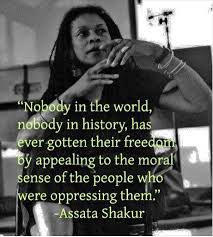
Historic Amnesia: Four Little Girls and Assata Shakur

That song…did more for me to get me out of myself than any song that I’ve ever done.  I was so outraged when the four colored girls were killed in…that Baptist church.  I tell you I was so outraged that I didn’t—I only walked the floor for hours at a time and that’s how it came out.  It just came out as a complete outraged protest against the injustices of this country against my people (Simone, Interview on Protest Anthology, 2008  – from Danielle Heard’s “Don’t Let Me Be Misunderstood”: Nina Simone’s Theater of Invisibility”)

Approaching the fifty-year anniversary of the release of Nina Simone’s “Mississippi Goddam,” the ghosts of Mississippi and the horror of white supremacist violence continues to haint the nation.

On Friday, May 24, 2013, President Barack Obama posthumously awarded Addie Mae Collins, Denise McNair, Carole Robertson, and Cynthia Wesley Congressional Gold Medals.  The murder of the “4 Little Girls” on September 15, 1963 at the 16th Street Baptist Church galvanized the black freedom struggle in its fight against white supremacy.

President Obama described the violence in the following way: “That tragic loss, that heartbreak, helped to trigger triumph and a more just and equal and fair America.”  Indeed – although it also triggered radicalization, outrage, and increasing calls for black power.

Taylor Branch, in Parting the Waters, describes Diane Nash’s reaction as one of growing dissatisfaction with methods embraced by the mainstream civil rights movement:

That night, Diane Nash presented to King the germ of what became his Selma voting rights campaign in 1965. She was angry. Privately, she told King that he could not arouse a battered people for nonviolent action and then give them nothing to do. After the church bombing, she and Bevel had realized that a crime so heinous pushed even nonviolent zealots like themselves to the edge of murder. They resolved to do one of two things: solve the crime and kill the bombers, or drive Wallace and Lingo from office by winning the right for Negroes to vote across Alabama. In the few days since, Nash had drawn up a written plan to accomplish the, latter with a rigorously trained nonviolent host, organized at brigade and division strength, that would surround Wallace’s government in Montgomery with a sea of bodies, “severing communication from state capitol building . . . Lying on railroad tracks, runways, and bus driveways . . . Close down the power company.” Her plan amounted to a protracted sit-in on the scale of the March on Washington. “This is an army,” she wrote King. “Develop a flag and an insignia or pin or button.”

The terrorism practiced by the Ku Klux Klan and other white supremacist organizations was part and parcel of American Apartheid.  The lynching of Emmett Till, the daily violence of white supremacy, and the bombings at 16th Street reflected the politics, morals, and values of the (southern) white American landscape but also contributed to a growing call for radical intervention.  Assata Shakur described the impact of white mobs, lynchings, and bombings on her political ethos:

Mostly, when I was young, the news didn’t seem real … only the news concerning black people had any impact on me. And it seemed that each year the news got worse. The first of the really bad news that I remember was Montgomery, Alabama. That was when I first heard of Martin Luther King. Rosa Parks had been arrested for refusing to give her seat to a white woman. The Black people boycotted the buses. It was a nasty struggle. Black people were harassed and attacked and, if I remember correctly, Martin Luther King’s house was bombed. Then came Little Rock. I can still remember those ugly, terrifying white mobs attacking those little children who were close to my own age … We would sit there horrified–from Harvey Young, “’A New Fear Known to Me’: Emmett Till’s Influence and the Black Panther Party”

There is more than a bit of irony, hypocrisy, and failure to understand history that in the same month that the “4 Little Girls” have been awarded this medal Assata is put on FBI’s most wanted list.  It is outrageous that someone committed to ridding America of white supremacist violence–to making sure no more children were murdered in the name of racism, segregation, and hatred–has been declared a terrorist worthy of a 2 million dollar bounty. She was fighting against the very terrorism that killed these girls.

Not Worthy of National Attention: The NOLA Mother’s Day Mass Shootings by David J. Leonard | NewBlackMan (in Exile)


Not Worthy of National Attention: The NOLA Mother’s Day Mass Shootings by David J. Leonard | NewBlackMan (in Exile)

Not Worthy of National Attention: The NOLA Mother’s Day Mass Shootings

by David J. Leonard | NewBlackMan (in Exile)

Amid the celebration of moms across the nation (amid the passage of policies that directly and indirectly hurt so many moms), America was once again reminded that all moms and all people are not celebrated equally; all lives are not worthy of similar mourning and attention. In New Orleans, 19 people, including 2 children, were shot at a Mother’s Day Celebration.

Hamilton Nolan reflected on the narrative that has already emerged (can you imagine how many stories about mothers celebrating with their children would have been on the air had this occurred in West Los Angeles or Manhattan, NY), offering a powerful comparison to the Boston marathon bombing:

A couple of disaffected young men in search of meaning drift into radical Islam and become violent. A couple of disaffected young men in search of meaning drift into street crime and become violent. A crowd of innocent people attending the Boston marathon are maimed by flying shrapnel from homemade bombs. A crowd of innocent people attending a Mother’s Day celebration in New Orleans are maimed by flying bullets. Two public events. Two terrible tragedies. One act of violence becomes a huge news story, transfixing the media’s attention for months and drawing outraged proclamations from politicians and pundits. Another act of violence is dismissed as the normal way of the world and quickly forgotten.

The juxtaposition of Boston and New Orleans is striking given the extent of death, given the violence that occurred within ritualized spaces, and given how each is a communal gathering space. Of course one doesn’t have to travel down South to New Orleans or West to Chicago to see the hypocrisy in the separate and unequal narratives. The lack of national attention afforded to violence in Roxbury, Mass; the lack of interventions in the form of jobs, reform to the criminal justice system, investment in education, and economic development is a testament to the very different ways violence registers in the national imagination. Roxbury doesn’t enliven narratives of humanity but instead those dehumanizing representations.

Yet, don’t we need to extend the comparison to Newtown, Aurora, and Milwaukee? Remixing the above: A couple of disaffected young men in search of meaning drift into spree shootings and become violent. Flying bullets wound crowds of innocent people attending a movie, going to school, or praying at their local temple. How is the reaction to Newtown and New Orleans, to Boston and Milwaukie, and to Aurora and Chicago an indicator of who we expect to commit violence, where we expect to be safe, who we see as a victim, and where we see violence as normalized and where it is exceptional?

One comment in the thread made the link between Boston, Newtown (Aurora), and New Orleans in a profound way:

The difference is, of course, that the media and the public focus on Things That Could Happen to Middle Class White People. Bombs placed at a marathon or a plane hitting a building or a gunman mowing down people in Newtown, Connecticut or Aurora, Colorado are things that happened to middle class white people and show the other white people that it could happen to them. Crime is somehow not supposed to happen to middle class white people; it’s supposed to happen to black people.

Whereas violence is supposed to happen in Chicago, Detroit, and New Orleans, because of “culture of poverty,” because of single parents, because of dystopia and nihilism, because of warped values, gangs, and purported pathologies, the Boston Marathon, an Aurora movie theater, or a Newtown school are re-imagined as safe. These are places and spaces immune from those issues.

The normalization of violence in inner cities is why the suburbs exist; it is why police work to keep violence from entering into those suburban safety zones; it is why police guard the borders, making sure the wrong people don’t cross into the idyllic homeland of the American Dream. It is why white middle-class America avoids “those” communities or activities presumed to be dangerous (or go during the right time with the right people); it is why the white middle-class America reacts when those spaces that are presumed to be safe are simply not.

The movie theater, the school, and the marathon are symbols of Americana and therefore desirable, pure, and the embodiment of goodness. As such, the violence that happens in these “otherwise safe” enterprises and places occurs because of the entry of “dangerous” and threatening people. Outsiders enter into otherwise safe and idealized spaces.

Continue reading at Not Worthy of National Attention: The NOLA Mother’s Day Mass Shootings by David J. Leonard | NewBlackMan (in Exile).

The Unbearable Invisibility of White Masculinity: Innocence In the Age of White Male Mass Shootings

The Unbearable Invisibility of White Masculinity: Innocence In the Age of White Male Mass Shootings

I have been profiled my entire life as innocent. When disruptive in class, I was told that I was eccentric, that I needed to work on my focus. Growing up, I looked for fights and conflicts yet I never fit the profile of a juvenile delinquent. The chip on my shoulder never signified a thug; I was just a kid with a bad temper who needed to mature and grow out of it.

When I was pulled over in Emeryville, CA for speeding for several miles and asked multiple times by the police officer if there was a reason for my speeding, I told him the truth. “Officer, my ice cream is melting.”

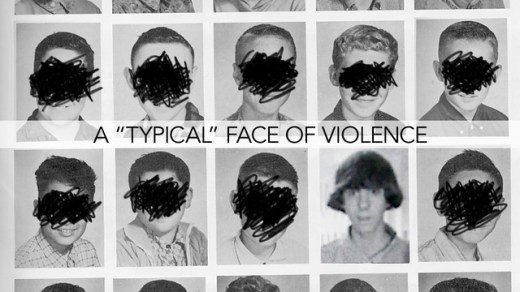
No stop and frisk. No pretext stop. No humiliating search. No fear of how to hold my hands. No ticket. I, like Adam Lanza and James Holmes, the two most notorious mass shooters of the past year, am white male privilege personified. We are humanized and given voice and innocence over and over again.

***

The most recent shooting in Newtown highlights whiteness and the ways it has been rendered invisible after every mass shooting. Described as a “nerd,” who “still wears a pocket protector,” Adam Lanza has been reimagined as a character straight out of The Revenge of the Nerds series and not a cold-blood killer. He carried a brief case, not a gun; he read The Catcher in the Rye and Of Mice and Men, not Guns and Ammo; he wore button down polos, not fatigues. His life was not extraordinary but was that of an average kid. From the reading list to the sartorial choices we have been sold a Normal Rockwell painting. The Associated Press painted a picture of Adam that imaged him as a character ripped out of a Brady Bunch script: “He was an honors student who lived in a prosperous neighborhood with his mother, a well-liked woman who enjoyed hosting dice games and decorating the house for the holidays.”

While identified as “reclusive,” and “shy,” as “quiet and reserved,” as “weird” and a “loner” outcast, Lanza has been consistently described as an average kid who had problems and difficulties. At worst, he was odd and painfully shy. “He didn’t have any friends, but he was a nice kid if you got to know him,” said Kyle Kromberg. “He didn’t fit in with the other kids. He was very, very shy.” Yet, the constant quest to figure out what caused him to snap, to speculate about the effects of his parents’ divorce or medications, all refashions Lanza as a good kid, a victim of sorts. He just snapped so there must have been a reason. Yes, he was strange, but do good (white, suburban, upper-middle class) kids shoot up an elementary school? Thus, reports the New York Post: “Bloodthirsty child killer Adam Lanza might have snapped, and carried out his unspeakable atrocities after learning that his mom wanted him thrown in the loony bin, according to published reports today.”

Is James Holmes a Nerd?

Here’s something that almost all the mass killers of the last fifteen years or so have in common: they’ve been called “nerds.”… Read…

The narrative following Adam Lanza and Newtown might as well recycled the media coverage surrounding James Holmes and the Aurora, Colorado shooting. Described as “smart” and quiet, as “nice,” and “easy-going,” the narrative sought to not only humanize James Holmes, but also imagine him as good at his core. It worked to tell a story of a normal kid, whose life turned toward evil for some yet-to-be-explained reason.

Sympathetic and identifiable, Holmes was depicted as Beaver Cleaver for most of his life. Anthony Mai, a longtime family friend, told the Los Angeles Times: “I saw him as a normal guy, an everyday guy, doing everyday things.” Like many others in the community, he is “very shy, well-mannered young man who was heavily involved in their local Presbyterian church.” The AP similarly depicted Holmes as a cross between Norman Rockwell, Jason, and Opie. Mind you the extent of its evidence comes from someone who had a beer with him at a local bar. “We just talked about football. He had a backpack and geeky glasses and seemed like a real intelligent guy and I figured he was one of the college students.” Can you imagine having your identity reduced to a single meeting at a bar? Sure, he was quirky, and a bit of a “loner” but he was a “reserved” and “respectful” “kid.”

Because these are told as stories of individuals with specific reasons for killing others, there is no reason to talk about race, class, or gender; there is no reason to talk about society, nor is there any reason to think that Aurora, Newtown, or Columbine are becoming Chicago or Detroit.

Continue reading at The Unbearable Invisibility of White Masculinity: Innocence In the Age of White Male Mass Shootings.