NewBlackMan: Like Father, Like Son?: An Open Letter to Coach Pat Knight

Like Father, Like Son?: An Open Letter to Coach Pat Knight

by David J. Leonard | NewBlackMan

Dear Coach Pat Knight (Lamar University):

I am writing to you about your post-game comments the other night. As others may not have seen your press conference, I quote it for their sake. Entering the press conference, you first tell a student-athlete: “I am next, because you don’t have a clue what it takes to win.” Your tone of disrespect didn’t end there:

We’ve got the worst group of seniors right now that I’ve ever been associated with. Their mentality is awful. Their attitude is awful. It has been their M.O. for the last three years.

We’ve had problems with them off the court, on the court, classroom, drugs, being late for stuff. All that stuff correlates together if you’re going to win games. You just can’t do all that B.S. and expect to be a good team and win games. These guys got to learn; they have to grow up. They don’t need to be coddled; they don’t need to be babysat. That is the problem with society . . . because people don’t make kids accountable. These kids are stealing money by being on scholarship with their approach . . . . If you act like this in the real world, you are going to be homeless, with a job… And if people have a problem with me being harsh about it, I don’t care. I came here to clean something up.

While others have called your post-game comments an “epic rant,” as “tough love” or as an example your honesty, I don’t share their opinion. It was abusive, disrespectful and an affront to the educational mission of every institution of higher learning. You have defended these comments by noting the support of your fellow coaches, who are “all dealing with the same thing.” You have cited parents as so appreciative of your comments that they would want their kids to play on your team. While I don’t write as a parent (although the thought of my kids learning anything from you is one I cannot bear), I do write you as a teacher and a member the higher education community.

I am not sure if you think of yourself as a teacher or an educator. I don’t know if you subscribe to the belief that coaches, like professors, are advancing the mission of higher education through instilling values, fostering skill development, and otherwise preparing the next generation to succeed in all walks of life. Sally Jenkins, a sports columnist with the Washington Post, highlights the presumed pedagogical power (or mission) of collegiate coaches:

The best college coaches teach sport as a set of problems and how to tease out the solutions. They don’t just teach content and skill, but how to transfer it into real-world performance through study, organization and communication under pressure. They ask, what happens if you follow a strategy to its logical conclusion? What are the consequences of making things up as you go along? Why do things break down? What are effective fallback principles when skill or strategy breaks down? What are the traits of successful organizations across professional boundaries?

I would gather that you do see yourself as an educator, as a teacher molding the future generation. Whether true or not, I have to tell you your approach is both troubling and offensive and has NOTHING to do with teaching or educating. Teaching is not about publicly humiliating; teaching is not about ridiculing, demeaning, and disrespecting. You may think your approach reflects a commitment to disciplinarity and accountability but there have to be other ways to instill a commitment to excellence on and off the court. Anyone can stand before an audience, microphone in hand, without fear of any reprisal, to criticize. Teachers find other ways of inspiring, informing, or helping beyond intimidation and fear. Teachers don’t violate the trust of their students by announcing their grades in front of millions of people. Teachers don’t disrespect their students; calling out behavior is one thing, but condemning their character is another. Your decision to treat student-athletes as children, to publicly condemn and ridicule them, shows that you have a lot to learn as a teacher because anyone has the capacity to do what you did that night.

Beyond the tone, do you think it is proper to share students’ private academic records?  You obviously do because you followed your press conference with additional statements about academic performance:  “I’ve never seen more F’s on report cards than I ever have since I got here. Missing classes, being late for workouts, missing workouts. … What I don’t think they understand is all that correlates together. If you’re not going to be a winner off the court, you’re not going to be a winner on the court.” What good can come from embarrassing these students? At the same time, do you think it is proper to reference drug arrests, even though when I searched online all I could find is one arrest for a minor marijuana possession charge?
I would be remised if I didn’t bring up the racial optics of a white male coach publicly chastising, ridiculing and demonizing 5 African American players (based on search of roster, it appears that all 5 seniors are black)?  Did you think about how publicly castigating 5 black players as academically deficient, drug using, and otherwise lacking the requisite values and attitude to be successful as basketball players or people fits in a larger racial context?  Did you think about the societal stereotypes and how your claims are not only disrespectful to the players but reinforce widely circulated stereotypes about student-athletes and particularly black student-athletes?
Your arrogant comments makes me wonder if you and Newt Gingrich are writing a book together acting as if success and opportunity come as the result of a recipe of values, work ethic, and the right cultural ethos.  Was he busy lecturing members of the NAACP so you decided to use your platform to reduce success and failure to attitude and values?  Do you really think that excoriating 5 (black) players will help them develop a work ethic to avoid being homeless as if homelessness or unemployment is the result of not having the requisite values?  You seem to imply that people succeed or fail because of their actions, which is far from the truth (just ask Mitt Romney).  I wonder how your white manhood fits into your own career and how your own connections allowed you to make it irrespective of your own actions.  You claim to fear for the futures of those players who lack the needed maturation, but maybe they have a Dad who can help them out.

Continue reading @ NewBlackMan: Like Father, Like Son?: An Open Letter to Coach Pat Knight.
NO WAY OUT: Mother Jailed for ‘Stealing’ Child’s Education – News & Views – EBONY

NO WAY OUT:

Mother Jailed for ‘Stealing’ Child’s Education

The Tanya McDowell case is (yet another) heartbreaking example of the country’s failure to educate its youth

By David Leonard Writer

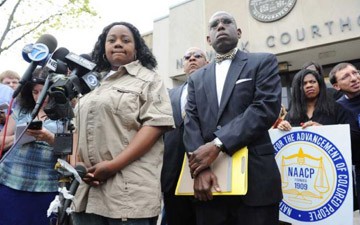
Tanya McDowell has joined the ranks of millions of people, mostly of color, facing incarceration. In April 2011, McDowell was arrested and charged with larceny for allegedly enrolling her 6-year old child in a Norwalk, Connecticut elementary school instead of the required Bridgeport school associated with her “residence” (she was reportedly homeless at the time).

Less than a year later, McDowell entered an Alford Plea, which is not an admission of guilt but rather an acceptance that the state has sufficient evidence to make its case. In exchange for her plea as well as a guilty plea stemming from a drug case, the court sentenced McDowell to 12 years in prison with the possibility of release after 5 years.

The media response has emphasized how her sentence reflects punishment for her “stealing of an education,” worth over 15,000 dollars as well as a consequence of the narcotics arrest. Subsequent to her arrest for educational larceny, McDowell allegedly sold drugs to an undercover officer on three separate occasions. While the timing of this arrest was questionable (her attorney at the time described the investigation that led to the drug charges as “‘retaliatory’ because the community was embarrassed by McDowell’s April 14 arrest for allegedly sending her son, A.J., to Norwalk’s Brookside Elementary School while they lived in Bridgeport), the efforts to paint her as a bad parent, as a criminal, as an unredeemable person is further revealing. Upon her arrest, Norwalk Mayor Richard Moccia scoffed at those who represented McDowell as a victim: “This is not a poor, picked-upon homeless person. This is an ex-con, and somehow the city of Norwalk is made into the ogre,” he noted. “She has a checkered past at best … This woman is not a victim.”

Her subsequent arrest has been used to further substantiate these claims, justifying the initial charges and the subsequent sentence of 12 years. The conflating of these cases (beyond their simultaneously adjudication) points to the ways that the drug case has obscured the horrible injustice of the wrongful enrollment arrest. It would be a mistake and a further miscarriage of justice to excuse the criminalization of her decision to enroll her child at a school that provided better services, a better education, and a better future for her child by referencing her drug arrest.

She was forced to choose between terrible schools and violating the law so that her child could receive a quality education. Fordham University professor Mark Naison says “If there were enough good schools around so that any school you chose would be acceptable, and if there were enough decent paying jobs to keep your head above water through legal work, that would be one thing. But what if NEITHER of those things were true. What are you supposed to do? Let your child go hungry to a terrible school.” Even so, she became the first person in the history of Connecticut to be prosecuted for enrolling a child out-of-district, even though experts claim it to be a common practice.

She was forced to choose between terrible schools and violating the law so that her child could receive a quality education.

McDowell isn’t the first Black woman to face criminal prosecution and jail for enrolling her children out-of district. In Akron, Kelley Williams-Bolar was charged and served 10 days in jail for enrolling her two daughters at a Copley Fairlawn school even though they should have attended an Akron school. Her decision was easy to understand given that Copley-Fairlawn School District met 26 out 26 standards set up the Ohio Department of Education, whereas Akron City School District met only 4 of these same standards. Graduation rates were equally disparate with almost 98% of students graduating from Copley-Fairlawn compared to 75% within Akron City. Williams-Bolar, like McDowell, sought to challenge the inequity and segregation that defines America’s school system, and thus faced the sanctions and condemnation from a system that mandated that she stay in her place.

McDowell’s incarceration on drug charges reflects a willingness to wage the war on drugs with the greatest force and consequence against communities of color. According to the Drug Policy Alliance, Latinas are 1.6 times and Black women are 3.8 more times more likely to be sent to prison than White women despite similar rates of usage and distribution. McDowell is indicative of the consequences of a racialized war on drugs. It reflects the pipeline from failed schools to prisons; it reflects an effort to incarcerate those who challenge this process.

Yet, the attempts, whether from the criminal justice system, the media, or the broader community to justify her criminalization and ultimate incarceration by linking the drug charges with the larceny charges is both troubling and without basis. The state prosecuted her before any drug charges so the injustice of her arrest cannot take cover from a subsequent arrest.

Continue reading @ NO WAY OUT: Mother Jailed for ‘Stealing’ Child’s Education – News & Views – EBONY.

[EXCLUSIVE] UVA Football Star Joseph Williams Talks Hunger Strike

[EXCLUSIVE] UVA Football Star Joseph Williams Talks Hunger Strike

Williams explains what inspired him to stand up for worker’s rights

By David Leonard Writer

On February 17, a group of students at the University of Virginia embarked on a hunger strike in “to protest the economic and social injustices perpetrated by the UVA administration against the vast majority of the University’s service-sector employees.” Although a living wage is 13 dollars per hour, the starting pay for many UVA employees is $10.65, egregious in itself but even more so when considers that its administrators make between $400,000-700,000 and the school’s basketball coach makes 1.7 million per year.

Two days after the strike began, Joseph Williams, a member of the school’s football team, joined the protest. In a column on Michaelmoore.com, he explained his personal reasons behind his decision:

“On a personal level, this cause is one that hits very close to home. As one of four children supported by a single mother, I have experienced many periods of economic hardship in my life. Growing up, I moved over 30 times – including various stays in homeless shelters, the homes of family friends, and church basements. As a result of these experiences, I know firsthand what the economic struggle is like for many of these underpaid workers. One UVA employee anonymously shared that though she works full time for the University, over 40 hours a week, her family was still forced to go without electricity for nearly 3 months, unable to pay for the rent, electric bill and other basic necessities on the meager wages she is paid by the University. Such stories are the reason that I and countless other Living Wage supporters have chosen to take up this cause and give a voice to the many University employees who often cannot speak up for fear of retaliation from the administration.”

Over the course of the week, countless faculty, community members and students Charlottesville campus have joined Williams and the other student protestors in voicing their discontent with the wage issues on campus. I had the opportunity to talk to Joseph six days into his hunger strike about the movement for fair pay and his involvement.

EBONY: What is the Living Wage Campaign about and why a hunger strike?

Joseph Williams: The Living Wage Campaign has been active and we have a number of demands, including a living wage for the majority of direct and contracted workers at Virginia. We also want to have an oversight board put in place so employees feel comfortable and safe speaking out. Currently a lot of employees supporting us anonymously; they are afraid to do so publicly. In the past, they have written up or been fired because of involvement with the campaign. For the past 14 years we have exhausted every tactic, so we decided to move forward with a hunger strike to pressure the administration to negotiate with us.

I had a responsibility to speak out for those who aren’t able to have the same things I have been enjoying.

EBONY: What led you to get involved in the campaign?

JW: I have been involved with the Living Wage campaign for several years while at UVA although not (always) to the extent I am now. It really inspired me that they were willing to start a hunger strike because it revealed their seriousness, a willingness to their livelihoods and their bodies on the line for a cause that was bigger than them. Specifically, the cause spoke to me because I have been in a place similar to a lot of the workers in terms of economic struggles and hardships. To be at this university, to have such a position as a student, as a student-athlete, to have the spoils that come with being here, I had a responsibility to speak out for those who aren’t able to have the same things I have been enjoying, who have been systematically marginalized by the university administration.

Continue reading at Ebony

Super Spectacle: Race, Gender, and the Hawking of Products | The Feminist Wire

Super Spectacle: Race, Gender, and the Hawking of Products

February 15, 2012

By David J. Leonard

The Super Bowl is a spectacle. Whether talking about the pregame festivities, the hype, the halftime show, or the game itself, it is the embodiment of a spectacle. Its commercials, however, especially given the ways that gender, race, and sexuality are circulated, are the embodiment of our contemporary spectaclized society.

By spectacle I am not referring to the everyday use of spectacle as an important or memorable event that a sizable portion of the population views, but instead in the tradition of Guy Debord. Debord, whose Society of Spectacle identifies the dialectics between late capitalism and mass media in the production of mediated spectacles, highlights a condition whereupon the relationship between commodities and people take precedent over any other sort of relationship. According to Debord, “The spectacle is not a collection of images, but a social relation among people, mediated by images.” While the game itself embodies this ritualistic process, the commercials themselves embody and perpetuate the spectacle. “Spectacles are those phenomena of media, culture, and society that embody the society’s basic values, and serve to enculturate individuals into a way of life,” writes Douglas Kellner. Mediated spectacles “dramatize[s] our conflicts, celebrate[s] our values, and project[s] our deepest hopes and fears.”

The spectacle of Super Bowl commercials are evident in the ways in which consumers’ relationships are defined vis-à-vis products. Similarly, the hype, and extravagance is evidence of the ways in which the Super Bowl and the commercials operate as “weapons of mass distraction.” Yet, the existence of a spectacle, illustrated by the presence of Flav Flav and Elton John in a Pepsi commercial, is not limited to size and scope; as Kellner reminds us with the ways in which mediated spectacles “dramatize our conflicts, celebrate our values, and project our deepest hopes and fears.”

The denigration and sexualization of women during the Super Bowl is indicative of the ways in which spectacles operate within our cultural landscape. From the first quarter right until the end of the game, the place of women is made clear: as sexualized objects whose presence figures in eliciting pleasure from the male gaze. Those women who cannot or refuse to reaffirm male sexual pleasure, who deviate from the standards of sexual beauty, are rendered undesirable. While not limited to the Super Bowl, the “Go Daddy” commercials embody the sexualized spectacle of the Super Bowl. Virtually naked women are represented as little more than eye-candy, existing in the mediated space, ready, willing, and able to appeal to the sexual wants of (white) young men. Women enter the spectalized space to provide pleasure to both the males in the commercial and those watching at home. Equally important, the two most visible women of these commercials are Jillian Michaels and Danica Patrick, whose physical strength and presence in the masculine worlds of physical fitness and car racing are muted because they don’t disrupt the dominant values concerning femininity.

There is something revolting about a corporate sponsor taking a woman who has made it in a highly male-dominated and masculine field, car racing, and putting her back in a woman’s rightful place: in a skimpy costume under the male gaze. (Chloe from Feministing)

Dramatizing conflicts about the purported breakdown of male and female spaces, reflecting both hopes and fears, all while validating patriarchy, Go Daddy is the quintessential spectacle. A commercial from Kia further reinforces the sexualized place of women within the male world of sports, celebrating a narrative of female subservience:

The ad from Kia sends a pretty clear message that men and women are totally different species with totally different dreamworlds. A woman dreams of riding across a meadow on the back of a white horse with a handsome fairytale prince under a rainbow sky. But a man dreams of driving a race car while Adriana Lima and thousands of hot bikini-clad women cheer him and Motley Crue plays, and something about a giant sandwich and a boxing match. And these two worlds are so separate and different that a Kia is the only thing that can bring them together.

The sexualized representation of women, and specifically white women and those luminally white ethnic bodies (Italian, for example), is as central to the Super Bowl as the teams themselves. The absence of commercials that turn women into sexual objects would be as impossible as having a Super Bowl without a football. This is evidenced by the barrage of commercials, including an NFL prize commercial that defines the American Dream through access to millions of dollars and scantily clad cheerleaders, and a Valentine’s Day commercial that depicts this holiday as a simple relationship based on exchange. The idea is this: men exchange gifts for sex (“Give and you will receive”). Or there is the Fiat commercial that treats women as if they are interchangeable with cars–both objects to be consumed, sexualized, and fantasized about by men.

Continue reading at Super Spectacle: Race, Gender, and the Hawking of Products | The Feminist Wire.

SLAM ONLINE | » Not Entertained?

Not Entertained?

Brittney Griner continues to challenge expectations.

by David J. Leonard / @DR_DJL

Average 22.7 points/game – Check

Sixty percent from field and over 80 percent from the line – Check

Almost 10 rebounds each night – Check

Record 155 blocks after 30 games in season – Check

Team undefeated and ranked No. 1 – Check

Outscore opponents by 30+ points/game – Check

With numbers like this—and the level of dominance seen throughout their career—you would think that this player would be the talk of the town, with magazine covers, lengthy biographic pieces on ESPN and a theme of celebration. Yet, these numbers and success hasn’t translated into Britsanity, all of which reflects the power of race, gender and sexuality within sport culture.

Unable to transform the narrative, in spite of her amazing (revolutionizing) play, Brittney Griner remains an afterthought within the basketball world. Unable to embody the traditional feminine aesthetic and beauty, yet fulfilling the stereotypes usually afforded to Black male ballers, there is little use for Griner within the national imagination. Her greatness is relatively invisible (outside of hardcore sports fans) because she simultaneously fits and repels our expectations for female athletes.

When Brittney Griner emerged on the national scene three years ago (and even while still in high school), the media focus wasn’t solely on her game, but instead positioned her as a player who was challenging the expectations of female athletes. Unlike the vast majority of celebrated female athletes, she was, according to the narrative, a less feminine “androgynous female” who challenged the “rigidity of sex roles.” Often comparing her to males, the media narrative consistently imagined her as a “freak” and as an aberration, contributing to a story of shock, amazement and wonderment whether Griner was indeed a woman. According to Lyndsey D’Arcangelo, “The world of women’s basketball has never seen a player like this before. Griner has the athletic skills and build of any budding male college basketball star, which has brought her ‘gender’ into question.”

In Brittney Griner, Basketball Star, Helps Redefine Beauty, Guy Trebay highlights the ways in which the dominant narrative of Griner imagine her as not baller, as not student-athlete, but as signifier of gender and sexuality.

Feminine beauty ideals have shifted with amazing velocity over the last several decades, in no realm more starkly than sports. Muscular athleticism of a sort that once raised eyebrows is now commonplace. Partly this can be credited to the presence on the sports scene of Amazonian wonders like the Williams sisters, statuesque goddesses like Maria Sharapova, Misty May Treanor and Kerri Walsh, sinewy running machines like Paula Radcliffe or thick-thighed soccer dynamos like Mia Hamm.

While celebrating her for offering an alternative feminine and aesthetic, the media narrative of course represented her in ways limited to female athletes—she was confined by the stereotype of women athletes. Focusing on her body, and how she meshes with today’s beauty stands, all while defining her “as a tomeboy” the public inscription of Grinner did little to challenge the image of female athletes. In purportedly breaking down the feminine box that female athletes are confined to within sports cultures, Griner provided an opportunity, yet as we see the opportunity is still defined through feminine ideals and sexual appeal to men.

The limited national attention afforded to Griner irrespective of her dominance and her team’s success reflects the profound ways that her emergence has not ushered in a new moment for women’s sports. Unable to appeal to male viewers, to fulfill the expectations of femininity and sexuality, Griner has remained on outside the already infrequent media narrative of women’s sports. Even though there are multiple networks dedicated to sport, even though there are magazines, countless websites, and a host of other forms of social networking dedicated to sports, there are few places for female athletes, much less black female athletes. Studies have demonstrated that less than 10 percent (3-8 percent) of all sports coverage within national and local highlight packages focuses on women’s sports.

Substantive coverage and national attention so often comes through sex and sex appeal, where female athletes who are successful at sport (less important) and eliciting pleasure from male viewers garner the vast majority of sport. Matthew Syed (2008) argues that, “There has always been a soft-porn dimension to women’s tennis, but with the progression of Maria Sharapova, Ana Ivanovic, Jelena Jankovic and Daniela Hantuchova to the semi-finals of the Australian Open, this has been into the realms of adolescent (and non-adolescent) male fantasy.” Attempting to elevate women’s sports by telling readers that it is OK to view female athletes as sexual objects, he laments how western culture has not “reached a place where heterosexual men can acknowledge the occasionally erotic dimension of watching women’s sport without being dismissed as deviant.” This sort of logic contributes to the relative invisibility of Griner on the national landscape.

Continue reading @ SLAM ONLINE | » Not Entertained?.

Family Ties: On Jeremy Lin, “Tiger Moms,” And Tiger Woods | Racialicious – the intersection of race and pop culture

Family Ties: On Jeremy Lin, “Tiger Moms,” And Tiger Woods

By Guest Contributor Dr. David J. Leonard

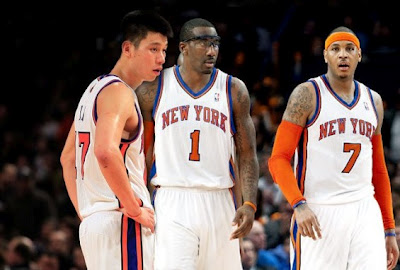
In a world that imagines basketball as the purview of African Americans, the emergence of Jeremy Lin has sent many commentators to speculate and theorize about Lin’s success. Focusing on religion, Eastern philosophy, his educational background, his intelligence, his parents, and his heritage, the dominant narrative has defined Lin’s success through the accepted “model minority” myth.

In other words, while celebrating Lin’s success as a challenge to dominant stereotypes regarding Asian Americans, the media has consistently invoked stereotypical representations of Asianness to explain his athletic success, as if his hard work, athleticism, and talents are not sufficient enough explanations.

Intentional or not, the story of Lin is both an effort to chronicle his own success in comforting and accepted terms and, in doing so, offer a commentary on blackness.

“Discussions about the NBA are always unique because the NBA is one of the few spaces in American society where blackness, and specifically black masculinity, is always at the center of the conversation, even when it’s not. Power is often defined by that which is assumed, as opposed to that which is stated,” notes Todd Boyd.

“Because black masculinity is the norm in the NBA, it goes without saying. Concurrently any conversation about race in the NBA inevitably refers back to this norm. In other words, people seldom describe someone as a ‘black basketball player’ because the race of the player is assumed in this construction. So any current discussion about Jeremy Lin is taking place within the context of a league and its history where the dominant players have long been black men. Lin is ‘the other’, as it were, but here the standard is black, not white, as would normally be the case in most other environments.”

Not only does the constructed Lin narrative exist in opposition to the normative blackness of the NBA, but also the specific rhetorical utterances often play upon the dominant assumptions of today’s black ballers.

Central to the efforts to explain Lin’s success, a process that renders him as exceptional, has a focus on his parents. In the New York Daily News, Jeff Yang argues that, “the secret to Lin’s success seems to have been a combination of high expectations and unconditional support–a kind of tiger-panda hybrid, if you will.” Emphasizing his Dad’s role as basketball tutor and coach extraordinaire who exposed Lin to the “signature moves from the likes of Dr. J, Moses Malone, Kareem Abdul-Jabbar, and, most of all, Michael Jordan,” the media consistently depicts his father in the tradition of (white) American fathers who nurtured and encouraged athletic performance. His mom, on the other hand, is depicted as a “tiger mom” of sorts, as someone who balanced out the father by maintaining an emphasis on education. Requiring that Lin and his brothers complete their homework prior to basketball, the narrative describes Lin’s athletic prowess as being the result of the perfect marriage of “Asian values” and “American” cultural norms.

While the media often links black athletic success to “God’s gifts” or to physical “prowess,” the efforts to chronicle Lin’s rise as reflecting his cultural background reinforces dominant conceptions of both blackness and Asianness.

Continue reading @ Family Ties: On Jeremy Lin, “Tiger Moms,” And Tiger Woods | Racialicious – the intersection of race and pop culture.

NewBlackMan: #LinSanity and the Blackness of Basketball

#LinSanity and the Blackness of Basketball

by David J. Leonard | NewBlackman

Over the last week, there has been significant discussion about how race is playing out within the media and fan reception of Jeremy Lin. Focusing on anti-Asian slurs, prejudice, and stereotypes, the media narrative has not surprisingly provided a simplistic yet pleasurable narrative. Imagining racism as simply bias that can be reduced through exposure and education, the media discourse has erased the powerful ways that sports teaches race and embodies racism. As Harry Edwards argues, sports recapitulates society, whether it be ideology or institutional organization.

According to Marc Lamont Hill, professor of education at Columbia, “blackness is at the center” of the media’s Linsanity. Seeing basketball as a space of blackness, “the whole undertone is irony, bewilderment and surprise.” Harry Edwards, Sociology Professor emeritus at UC Berkeley, highlights the predicable narrative, which reflects the fact that “we live in a niche society.” This encourages people to “retreat into traditional storylines.” Irrespective of facts or specifics, the deployed media narrative has retreated to a place that depicts the NBA as a black-league defined by athleticism and hip-hop that is changing before our eyes. The arrival of Jeremy Lin, who the media continues to cast in the role of the “model minority” whose intellect, personality, and overall difference is providing the league with something otherwise unavailable, is constructed through a narrative black-Asian conflict.

Replicating stereotypes, the undercurrent of the Lin narrative, the media inducted fantasy, has been his juxtaposition to the league’s black players. “Discussions about the NBA are always unique because the NBA is one of the few spaces in American society where blackness, and specifically black masculinity, is always at the center of the conversation, even when it’s not. Power is often defined by that which is assumed, as opposed to that which is stated,” noted Todd Boyd, Professor of Critical Studies at USC, in an email to me. “Because black masculinity is the norm in the NBA, it goes without saying. Concurrently any conversation about race in the NBA inevitably refers back to this norm. In other words, people seldom describe someone as a ‘black basketball player’ because the race of the player is assumed in this construction.

So any current discussion about Jeremy Lin is taking place within the context of a league and its history where the dominant players have long been black men. Lin is ‘the other’ as it were, but here the standard is black, not white, as would normally be the case in most other environments.” From the constant references to his being “humble” and “team-oriented,” to his widely circulated idea that he came out of no where and that his career is one of low expectations and being overlooked, the media narrative has imagined him as the anti-black baller. The stereotypes of both Asian Americans and blacks guide the media narrative.

According to Oliver Wang, “Some in the Asian American community are following “Linsanity” with caution, especially as commentators praise Lin for being “hard working,” “intelligent” and “humble,” words associated with long-standing stereotypes of Asian Americans. Chuck Leung, writing for Slate.com, expressed the fear that “beneath this Linsanity is an invitation for others to preserve these safe archetypes.” Whereas black ballers are defined/demonized with references to selfishness and ego, a sense of entitlement that comes from societal fawning, Lin purportedly provides something else. Compared to black players, who are defined through physical prowess and athleticism, Lin, who is 6’3”, extremely physical and athletic, the media has consistently presented him as a “cerebral player” whose success comes from guile, intestinal fortitude, and determination, seemingly discounting his physical gifts and his talents on the floor. Marc Lamont Hill noted a report that described Lin as a “genius on the pick n’ roll.” Continuously noting his Harvard education, his high school GPA, his college GPA, and his economics major all advance the narrative of his exceptionalism and his presumed difference from the league’s other (black) players.

On Weekends with Alex Witt, Sports Illustrated columnist and Lin friend Pablo Torre celebrated Lin as a “student of the game,” and as an anomaly. Torre noted that Lin watches game footage at halftime, a practice he says isn’t seen within the NBA. While David West of the Indiana Pacers told me that watching footage is standard practice with the NBA, its usage here is just another example as how Lin is being positioned as NBA model minority and the desired body outside the sports arena.

Reflecting on the nature of this discourse, Hiram Perez in an essay about Tiger Woods, describes “model minority rhetoric” as both homogenizing the Asian American experience through professed stereotypes and celebration of Asian American accomplishments, but “disciplin[ing] the unruly black bodies threatening national stability during the post-civil rights era” (Perez, 2005, p. 226). The caricatured and stereotyped media story with Lin illustrates this dual process, one that reifies stereotypes concerning Asian Americans while at the same demonizing blackness. Historically, the model minority discourse has work to juxtapose homogenized identities, cultures, and experiences associated with Asian Americans and African Americans.

Continue reading @ NewBlackMan: #LinSanity and the Blackness of Basketball.