CHANGING LANES: What if NASCAR was Black? – News & Views – EBONY

CHANGING LANES: What if NASCAR was Black?

By David Leonard

Can you imagine if NASCAR was Black?

In 2010, scholar Tim Wise and rapper-activist Jasiri X called upon their readers and listeners to imagine “If the Tea Party was Black”—how might their perception, reach and behavior be received if the race of the people involved changed?

Two years later, I think we should play this game again, but with NASCAR. Like the Tea Party, NASCAR is overwhelmingly White (there have been 5 Black drivers in its 64 year history), male, and tied to a particular set of reactionary politics. Can you imagine if NASCAR was Black?

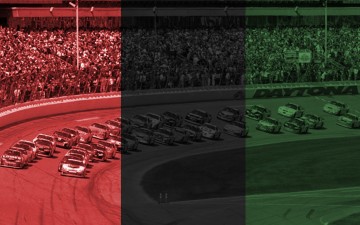
Can you imagine the reaction to fans in “Black Power” shirts lining racetracks, as red, black and green flags and Black Panther Party imagery blanked NASCAR events? Whereas the Confederate flag—a symbol of secession and White supremacy—are commonplace at NASCAR events, symbols of Black pride would surely bring about major criticism and attacks.

What if it was an African-American driver who purposely crashed into another driver’s car, sending him airborne as Carl Edwards did to Brad Keselowski in 2010? Can you imagine if Barry Bonds, Metta World Peace, or Terrell Owens was a race car driver and how the public might respond at the sight of intentional crashes, trash talking, fist fights, and helmet throwing? Would it be “boys will be boys” or “that’s just NASCAR”? Or would the talk to turn to criminality, thugs, and “gangstas?” One has to wonder if hip-hop would take the blame, even though nobody blames country music for this type of behavior from White NASCAR drivers.

Take a recent incident involving Kyle Busch and Ron Hornaday during a Camping World Truck Series race. After bumping each other, Busch proceeded to rear-end Hornaday’s truck into the wall, ostensibly wrecking his car. While Busch received a 1-race suspension and a 50,000 fine, can you imagine the outrage, moral posturing and punishments had the driver not been White?

Although a recent study highlighted the connection between NASCAR viewing and “aggressive driving,” with no such study on the impact of watching hard fouls, one has to wonder what people are actually scared about. If an elbow from Metta World Peace and a hard foul from Udonis Haslem prompts national outrage that focus on how the foul could have killed someone or that if someone did on the street would have been in jail, a Black NASCAR driver would lead to similar statements about “cars being weapons” and “out-of-control” drivers who are obviously crazy and therefore unsafe and off the track.

If the U.S. military gave $136 Million to a Black NASCAR driver as it did to Dale Earnhardt Jr., would people see it as advertisement or maybe a handout, welfare, or affirmative action?

Can you imagine if NASCAR fans that were overwhelmingly (if not entirely) Black booed the First Lady of the United States, what might the reaction be? Whereas White fans can boo Michelle Obama and Jill Biden during an appearance at Homestead-Miami Speedway, which it is hard to imagine Laura Bush and Lynne Cheney receiving similar treatment at a Black NASCAR event; certainly such disrespect would elicit national outrage and condemnation. Can you imagine the reaction from Sean Hannity and Rush Limbaugh, who actually thought the incident to be justifiable given the Obamas’ “uppity-ism?”

That sort of disrespect wouldn’t fly if NASCAR were Black, nor would a group of drivers refusing to meet with the president. Just this year, several White NASCAR drivers passed on an invitation to the White House, citing scheduling conflicts. We don’t have to guess what might happen given the experiences of Craig Hodges, who in 1992 while visiting the Bush White House not only wore a dashiki, but also “handed the President a letter that asked him to do more to end injustice toward the African-American community.” He was soundly denounced in the media and shortly thereafter he was out of the league.

Continue reading @ CHANGING LANES: What if NASCAR was Black? – News & Views – EBONY.
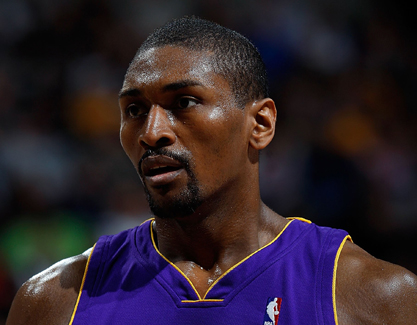
Metta World Peace and the Stigma of Criminalized Bodies Pt. 2 | Urban Cusp


Metta World Peace and the Stigma of Criminalized Bodies Pt. 2

By David J. Leonard

The elbow seen around the world and the media fallout continues to bother me. Over the last five weeks, I have found myself debating others online, yelling angrily at the television and otherwise struggling to make sense of Metta World Peace’s elbow of James Harden. As I noted in part 1, my concern stems from a media narrative that too often invokes the language and frames reserved for “criminal justice” matters (the courts). It also reflects a narrative that refuses to let MWP live in the moment, to be defined by his actions in our present. Instead, he is defined now (and as he has been since 2004) by his actions and the meaning of those actions within our racialized society. Having paid his debt to the NBA, and society, he continues to be dogged by the past, an unfair constraint of America’s criminalizing culture.

The efforts to criminalize MWP, to depict him as pathological and dangerous, as a constant threat to those on the court is illustrated in language usage but also in the constant references to his past. The constant reference to the Palace Brawl and to past suspensions without any acknowledgement of the specifics of each instance (and the differences), the timeframe involved, or the changes MWP has shown is telling. For example, many commentators continue to reference his “past,” his “history” and the fact that he has been suspended “13 times in his NBA career for a total of 111 games.”

However, few provide any specifics, as if they don’t matter. Three of those suspensions (4 games) were for exceeding the maximum allowable flagrant foul points, with another coming from his leaving the bench during an altercation that he was not involved with. Even his first suspension in the league (4 games – “With the Pacers, four games for confronting and making physical contact with Miami Heat coach Pat Riley, for taunting the Miami bench, for committing a flagrant foul-2 on Caron Butler (pushing him into the stands) and making an obscene gesture toward fans”) or two of his more recent suspensions, both of which were clearly impacted by his involvement with the Palace Brawl, points to the problems of imagining MWP as some “habitual” offender.

None of this is to excuse MWP for the elbow or even past actions (including a plea of “nolo contender” in a case where involving infliction of injury his wife, clearly his most troubling offense yet one that received much less media outrage that the elbow or the Palace). Rather, I call for specifics and reflection as a way to caution against the continued merging of the criminal justice system and public culture, between the criminal court and the basketball court. The normalization of the language of the criminal justice system and the criminalizing of “bad” bodies gives life to America’s prison culture, to America’s new Jim Crow.

This leads me to why the media coverage regarding the elbow gives me pause – why it troubles me more than the elbow itself. The intrusion of the language of the criminal justice system, the ubiquitous references to Metta’s past, and inability of others to allow MWP to move forward without the past shackling, defining, and controlling him reflects a larger injustice: the stigmas, life-sentence, and 2nd-class citizenship “afforded” to criminalized communities. “A criminal record today authorizes precisely the forms of discrimination we supposedly left behind,” writes Michelle Alexander in The New Jim Crow: Mass Incarceration in the Age of Colorblindness:

Continue reading @ Metta World Peace and the Stigma of Criminalized Bodies Pt. 2 | Urban Cusp.

Metta World Peace and the Language of Incarceration in Sports Coverage Pt. 1 | Urban Cusp

Metta World Peace and the Language of Incarceration in Sports Coverage Pt. 1

By David J. Leonard


The elbow seen around the world and the media fallout continues to bother me. Over the last two weeks, I have found myself debating others online, yelling angrily at the television and otherwise struggling to make sense of Metta World Peace’s (formerly known as Ron Artest) elbow of James Harden. Almost every day, I have woken up thinking about the incident and what needs to be said. Clearly, Metta is on my mind, but not because of the elbow (indefensible), my love of the Lakers’ (unwavering), my tendency to always side with players (not saying much given the media), and the connection between this incident and my book, After Artest: The NBA and the Assault on Blackness.

So, what’s gives?

My focus or concern on Metta’s elbow and more centrally the media spectacle has little to do with the incident but instead what it tells us about society, especially as it relates to the criminal justice system and race. The media and public response has been one focused not on the foul itself, but rather depicting Metta as a crazy criminal that deserves punishment. The constant use of the language of the criminal justice system — “repeat offender”; “the letter of the law,” “does the punishment fit the crime” – is telling because while the incident has nothing to do with the criminal justice system, the media continues to apply language of criminalization to Metta World Peace. For example, Scott Carefoot depicts MWP as a “dangerous menace” in “Why intent shouldn’t factor into Metta World Peace’s suspension.”

I don’t need to read Metta’s mind or his body language to determine if he meant to nearly decapitate James Harden with his elbow — I don’t care because it doesn’t matter. I know he’s a swell guy with a big heart off the court, but he’s a dangerous menace on the court who is more likely to end somebody’s NBA career than anyone else in this sport. I’m not advocating a permanent ban, but I won’t complain if that’s Judge Stern’s verdict.

Similarly, Jess Coleman sees MWP as a serial “criminal” who cannot be helped, yet because of the NBA’s culture gets a free pass:

World Peace is lucky: he could have seriously injured Harden. Regardless, he will once again slip loose from this criminal act with nothing more than a measly suspension. Any money he loses – he will remake in the next few weeks. And when he does something like this again, we will all act surprised. My question to the NBA: what exactly are you waiting for?… If a normal citizen engaged in any of these actions on the street, they would be prosecuted. But when athletes act up on the field, they are immune from criminal law, and handed slaps on the wrist that do little more than please the public.

The argument that if any person did what Metta did on the street they would go to jail is at one level ridiculous (wouldn’t that be the case with any foul or even a box out) and on another level troubling. The continuous references to MWP as “criminal” as deserving of prosecution, as unredeemable points to a larger process of criminalization. When Henry Abbot labels MWP as a permanent threat — “I don’t think punishments are likely to extinguish the tinderbox of danger inherent in that combination, which has a track record of producing trouble – or when Kelly Ogle describes him as “a thug, a ticking time bomb” who should be “kick[ed]… out of the league [because] he’s dangerous,” we see how MWP represents not an individual who made a terrible mistake, who did something awful, but someone who is awful. We see how that he is being categorized as a criminal that needs to be locked up.

Continue reading @ Metta World Peace and the Language of Incarceration in Sports Coverage Pt. 1 | Urban Cusp.

SLAM ONLINE | » The Crackdown on Smack Downs

SLAM ONLINE | » The Crackdown on Smack Downs

The Crackdown on Smack Downs

Why we are seeing the end of the hard foul in the NBA.

by David J. Leonard

“McHale clotheslines Rambis”

“Laimbeer hammers Bird”

“Karl Malone elbows Isiah Thomas”

“Rick Mahorn levels MJ”

The list of NBA hard fouls is a long one; whether during the regular season or the most memorable deckings during the playoffs, the history of the NBA is one littered with hard fouls, flagrant fouls, and physical play. Yet, if you turned on the television these days and read countless commentaries on the NBA’s problem with physical play, you would think the NBA was facing some new epidemic of lawlessness and dirty plays. The game has always been physical and the NBA’s crackdown on such play doesn’t reflect changes in the game or the players’ approach to the game, but a myriad of factors that are bigger than the game itself.

There are multiple reasons for why the NBA is cracking down on physical play and hard fouls: (1) the style of play within the NBA has changed since late 1980s and early 1990s. Responding to the rise of the “Bad Boys” and their distant cousins in NY and Miami, as well as the lack of fanfare for the physical domination of the likes of Shaquille O’Neal, the League has pushed through changes that have led to a more free-flowing game, one defined by slashing and dynamic scorers going hard to the basket. While scoring is actually down from the golden age of both hard fouls and offense, the twenty-first century game is defined by penetration, athletic moves around the basket, and the artistry that results from Westbrook, DRose, or LeBron attacking the rim. A league of hard fouls, or a strictly enforced “no layup rule” would potentially undermine the beauty of the contemporary game.

(2) Hard fouls have been dramatically curtailed because of the NBA’s reliance on stars as global marketing icons. The need for multiple superstars, many of whom garner their global reach through success during the Playoffs, makes minimizing injuries crucial.

(3) Increased knowledge about the long-term effects of injuries as well as the physical changes amongst today’s athletes compels greater scrutiny when it comes to fouls. “Nowadays bigger, stronger bodies collide play after play, at elevations off the court few could imagine three decades ago,” writes Henry Abbott. “The forces in play are vastly greater, the knowledge of brain damage that much more acute. The League does far more than ever to prevent the escalation of violence, because it has to and should.” While these issues surely play a role in the heightened anxiety, the increasingly loud calls from the media to crackdown on the rough play in the NBA, and that flagrant foul calls have become more commonplace than traveling and double dribbling calls combine, the changing landscape of the sports media and race help explain the draconian approach to hard fouls within today’s NBA.

Sandwiched between Blake Griffin’s Kia commercials and those for Subway, the media landscape during the last month of NBA coverage has been dominated by Metta World Peace’s elbow of James Harden. Seemingly played on an endless loop, it seems that virtually every conversation about the NBA lead to a replay of the elbow over and over again. The widespread circulation of these fouls, and the saturation of the airwaves of fouls create conditions where league intervention is inevitable. With its efforts to reach untapped markets within and beyond the United States, the league seeks to control its image, an increasingly difficult task within our highlight-oriented culture. A flagrant foul can potentially be seen within minutes of its occurrence, leading to many judgments and commentaries from fans and pundits alike even before the league is able to formally review the play. Reflecting the 24-7 sports new industry, the reach of blogs, the power of Twitter, Facebook and YouTube, hard fouls in the NBA exists as a spectacle allowing fans to witness the physicality and the violence over and over again.

At YouTube, one can type in “3-pointer and Metta World Peace” only to find a handful of videos that has been viewed in the thousands. Type in “flagrant foul and Metta World Peace” and shockingly there are endless video choices, some of which have been viewed by over 1 million people. Do the same for “Andrew Bynum and post moves” and compare that to “Andrew Bynum” and “JJ Barea/flagrant fouls”; even someone like Dwyane Wade, who clearly has a highlight reel of brilliant shots and slashing drives, is equally visible within new media circles for an array of flagrant and hard fouls.

While physical play, flagrant fouls and suspensions are not unique to the playoffs, this time of year seems to bring about heightened insecurity about elbows, forearm shivers, and “no layup” defense. Sure, the play might be more physical, as more is at stake, but it would seem that the increased coverage during the playoffs, the millions of new eyes watching, puts the league in a difficult situation. The hyper saturation contributes to an impression of the league as getting more and more physical, more and more violent, which not surprisingly has compelled intervention from the League—for the sake of publication relations and for “basketball reasons” the League has shown itself to be unwilling to return to the physical play of yesteryear.

Continue reading @ SLAM ONLINE | » The Crackdown on Smack Downs.

SLAM ONLINE | » The Enigma

The Enigma

The basketball media is struggling to figure out Andrew Bynum.

by David J. Leonard

What feels as commonplace as a Derrick Rose injury this season and New York Knicks streaks (winning and losing), media and fans joined hands this week to criticize Andrew Bynum. Mirroring the entire season, this week’s criticism has been a recipe of 1-part “your game ain’t right” and 9-parts “your attitude, effort, and demeanor ain’t right.” In fact, his critics have little to say about his game since numbers don’t like. During the Lakers’ seven-game series versus the Nuggets he averaged 16.7 pts/game on 51.2 percent shooting, 12.3 rebounds, and 4.0 blocks. Compared to his 18.7 points/game on 55.7 percent shooting, 11.8 rebounds, and 1.9 blocks during the regular season, it is hard to see how pundits are bemoaning his performance. Sure, his FG percentage is down, but facing double teams and a defensive intensity unseen during the regular season, his numbers are quite impressive. His stretch vs. the Nuggets wasn’t an exceptional performance ever given his inconsistency, but I cannot imagine any team scoffing at this kind of production.

Not surprisingly, his critics have focused elsewhere, lamenting his attitude his suspect work ethic. For example, with the Lakers up 3-1, Bynum stated, “Closeout games are actually kind of easy. Teams tend to fold if you come out and play hard in the beginning.” Rather than potentially reading his statement as an effort to motivate himself or the Lakers’ to come out strong, pundits turned into yet another piece of evidence of his arrogance, sense of entitlement, and disrespect for his opponents. In article and after article, his statement was presented as if he said that, “close games were easy” or that the Nuggets were weak and soft. To me, he was simply noting that when teams seize upon the opportunity to finish a series, opponents often whither under the pressure and the prospect of goin’ fishin’. History has actually shown this to be the case, most recently with the Lakers’ Game 4 loss to the Mavericks and the Knicks loss to the Heat. His comments were not evidence of arrogance or entitlement yet it was used to authenticate a narrative that follows his every move.

Andrew Rafner goes all in with his denunciation of Bynum focusing not so much on his game, but his attitude and character:

Andrew Bynum is the worst. And not in a “You’re the worst, but we still love you because you’re so awful at everything you do” kind of way, like Britta from “Community.” He’s just actually the worst.

And why, you may ask is arguably the most talented true center in the league the worst? Well, to put it simply, Andrew Bynum is the worst because of his totally shitty attitude and penchant for making the worst possible decision at all times. … He openly criticized Mike Brown at nearly every opportunity. He took inappropriate 3-pointers during meaningful possessions (not to say that it was any worse than the inappropriate 15-footers he’d been taking for years, but this just LOOKED worse), leading Brown to bench Bynum during the fourth quarter in a March game against Golden State. After being questioned about the incident, Bynum responded by saying “I don’t know what was bench-worthy about the shot, to be honest with you. I made one last [game] and wanted to make another one.” This guy….With Andrew Bynum, it will only get worse for the Lakers. This is only the start. The shitty attitude, the lack of hustle on defense, the stray grey hairs, the insulting quotes before playoff games (see: prior to Game 5, when he said “close-out games are actually kind of easy.” And that “teams tend to fold if you come out and play hard in the beginning”…. As far as Andrew Bynum is concerned, his attitude seems to be “Deal with it.” But as fans of a league filled with the most likable talent it’s ever had, should we have to deal with it? No. That’s why Andrew Bynum is the worst.

The criticism directed at Bynum seems to be more about his personality than anything. He doesn’t look like he is having fun; he doesn’t seem to possess the ferocity of Dwight Howard or the motor of Shaquille O’Neal, who would often sprint from “box to box” only to get a dunk.

I get it, but my questions: (1) Why does the fan and media care if he is enjoying himself out there; Why do people care if he is smiling, laughing, and looking like the basketball court is the beginning, middle, and end of his life? It is his job, and the demand that he enjoy his job for the sake of fan and media enjoyment is neither fair nor realistic. The criticisms that he shot a 3-pointer as if he is the only player in the NBA ever to take a bad shot, that he isn’t engaged in huddles as he is alone in tuning out instruction from one’s bosses (check yourself at your next staff meeting) are telling.

Any and every moment where Bynum doesn’t embody the expectations of him on-the-court, he seems subjected to wrath and unmerciful criticisms about his game and demeanor. More than his game itself, the contempt for Bynum emanates for his inability to meet the desires for larger-than-life NBA big men whose on-the-court strength and ferocity is balanced out with a teddy-bear type sweetness. He isn’t Shaq or Dwight Howard and the bigger question is, Why do we want him to be?

Continue reading @ SLAM ONLINE | » The Enigma.

Masculinity, the NFL, and Concussions

Masculinity, the NFL, and Concussions

May 12, 2012

By

The defenders of the National Football League (NFL) have been busy.  In the wake of the suicide of Junior Seau, on the heels of several other untimely deaths, “bountygate,” several former lawsuits regarding concussions, and growing scientific literature highlighting the dangers of football, its protectors have gone on the offensive.  From citing other potential factors that have led to ridiculous rates of suicide, traumatic brain injuries, and a life-after-football defined by depression, memory loss, neurological difficulties and a quality of life no one would associate with America’s heroes, to celebrating the NFL for its efforts to protect the players, the NFL hype machine has gone to great lengths to push back against the growing outcry against football.

Yet probably the most common response has been to place blame on the players, emphasizing their choices and responsibility. “I can’t blame the NFL for every issue that every former player in the NFL has,” noted former player and current ESPN football analyst Cris Carter.  “I signed up to be in the NFL. It wasn’t like someone had to force me. I kinda knew what I was signing up for.”  Responsibility resides with the men who play football and few else. In other words, while terrible, concussions and the long-term impact of those concussions is an unfortunate reality brought about by choices. Players understand the risks, and are rewarded because of the violence and danger, and thus the NFL and any of its partners bear little burden. Illustrating the ways that hegemony works and the illusion of choice, Carter’s comments reflect the erasure of power and ideology.

Greg Doyel, at CBS Sports, further encapsulates the “logic” and framing that turns the violence of football into a choice, one that may have consequences:

For me, it comes down to choice — and football players have a choice whether to play or not. It’s not a blind choice, either. This isn’t the 1960s, when Colts tight end John Mackey had no idea what the violent collisions were doing to his brain. The greatest tight end of his generation was showing signs of dementia in his 50s, in an assisted-living center at age 65, dead at 69. Mackey never knew the risks, but today’s players know. Playing football is like smoking a cigarette: This isn’t the 1960s; everyone knows the risks. . . . Football isn’t dog fighting, where mistreated animals take it out on each other in a cage. Those dogs have no choice. NFL players do. And let’s be honest: The lifestyle of an NFL player is incredible. Even if it ultimately shaves years off their lifespan — and lessens the quality of those remaining years — there’s an argument to be made that it’s worth it. The fortune, the fame. The thrill of the crowd. That’s a lifestyle they can’t get anywhere else. Live like a king at 30, hobbled at 50, dead at 65? Not sure I’d take it, but many would. And do.

Similarly, Karla Milner, who commented on The Washington Times website, offered the following:

… two words people: PERSONAL ACCOUNTABILITY. We all make choices – not all of them are good. But they are our choices and we should own them. If you choose to smoke all your life you should NOT be able to sue the tobacco companies as in my lifetime there’s never been one second that we didn’t know it was bad for our health (and I’m over 50). And if you choose to play football (professionally or otherwise) you should not be able to sue over issues from concussions or other injuries because there’s no way in hell you could NOT know that the risk of injury and issues down the road was a possibility…

She wasn’t alone, with dozens of commenters reiterating the mantra of choice and accountability. One such person, Blair, agreed: “Like you were all forced into playing the game…. Look at boxers? Heck, who warned me that everytime (sic) I got on my bike after school I could get a concussion jumping ramps in the alley?” Patrick Hruby describes the fan and media reaction as follows:

1. Getting hit in the head is bad for you;

1a. Duh;

2. Former football players understood this risk when they signed on the NFL’s dotted line;

3. Ergo, the league is not responsible for helping players deal with subsequent memory loss, lack of emotional control, cognitive decline or early-onset dementia;

4. Also ergo, any former football player with the sheer gall to file a lawsuit is a greedy moocher trying to work the system, akin to the lady who sued McDonald’s over spilled hot coffee.

The ubiquitous links to McDonalds and tobacco are interesting in that in both those cases, the logics of capitalism and the instruments that protect the bottom line sought to minimize or, better said, quash any threats. The tobacco industry, in fact, sought to deny the consequences of tobacco, so why are we to think that such denials or reframes are little more than a tobacco-like distraction?

The constant references to players reportedly hiding symptoms or players refusing to listen to medical advice regarding concussions represent a narrative emphasizing choice. It is the players who bear responsibility for their choices; and more importantly, those who choose to remain in the league, who continue to live the American Dream playing America’s current pastime, do so knowing the risks.

This conservative reactionary response is of little surprise given the links between the U.S. political establishment, the military, commercial culture, and football. The constant emphasis on choice, individual actions, on pulling oneself up by one’s cleat laces, on risks and rewards, is emblematic of the hegemony of a protestant work ethic trope and meritocracy. Never mind the lack of transparency and education that allows one to make “informed choices,” the efforts to defend the NFL and deny culpability erases the ways in which masculinity and dominant notions of good versus bad manhood constrain the choices that players and fans alike make regarding football.

Continue reading @ Masculinity, the NFL, and Concussions | The Feminist Wire.

Violence On And Off The Ice

Violence On And Off The Ice:

Twitter Racism And The NHL

By Guest Contributor David J. Leonard

Courtesy Bossip.com

Moments after Joel Ward’s overtime goal secured a playoff victory for the Washington Capitals over Boston last month, the twittersphere exploded with a barrage of racial epithets, threats of violence, and stereotypes.

Editor’s Note: Trigger Warning under the cut–pictures of racist slurs

Here is but a sampling of the vitriol and hostility resulting from his goal (for complete list, go here):

Receiving national attention, such racism was dismissed through narratives of fan ignorance, fan drunkenness, fan anger, and a myriad of other excuses that explain the situation as of little importance to understanding race in contemporary society. For example, at DCist, shawnwhiteboy offered the following response to an article about these tweets:

The obvious problem with twitter is that any drunk asshole with a smart phone can use a hashtag and get ‘hits’. The problem with the media is that you cover these drunk assholes as news. When will this end? Is this comment I am typing news worthy? No! What’s worse, the last sentence of this article lumps all bruin fans together with those drunk assholes. Boston fans are passionate and sometimes obnoxious but not racist. Having lived in boston and dc for 5 years each, people are not more enlightened in one place over the other. Okay, rant over.. . Those racist comments are terrible, how server going to get back at those fuckers listed here?

In an ESPN story covering the backlash against Ward, another commenter offered a similar refrain, identifying the Internet as the reason for such outbursts: “It isn’t at all surprising to see the slew of racist comments after the game,” he wrote. “Social media allows total anonymity if the user desires; these things can be said with no fear of reprisal. Such bravery!” These explanations were commonplace not only in the aftermath of Ward’s game winning goal, but following a game less than two weeks later.

With less than a minute to go in a game versus the New York Rangers, with his team up by a goal, Ward committed a penalty that sent him to the box for four minutes. Before he would be able to step back onto the ice, the Rangers would score two power play goals, sending the Capitals to a crushing defeat. Less than two weeks after facing a barrage of racial taunts and epithets from Bruins fans, Ward now faced similar violence from Capitals fans.

A common response to both of these incidences has been to link them to hockey; that above all else, the hostility embodies racism in hockey culture. Seemingly ignoring and erasing online racism of all kinds and those particular to virtual sports landscapes, hockey fans have become the problem rather than a symptom. Ironically, such a narrative imagines hockey as the “South” of sports culture.

Given its whiteness and even the working-class demographic of its fan base, commentators have sought to identity this as reflective of hockey culture, rather than sports or even society at large. Race and nation have a particular history within hockey. As I wrote a couple months back following an incident where fans threw a banana at Boston’s Wayne Simmonds, whiteness, privilege, and racism are all part of the hockey story:

Others connected to the sport were not so willing (despite their having greater power and privilege) to reflect on the racial realities and hostilities of the NHL in this moment or elsewhere. While describing it as a “stupid and ignorant action,” Commissioner Gary Bettman made clear that incident was “in no way representative of our fans or the people of London, Ontario.” Maxine Talbot, a teammate of Simmonds, summarily dismissed the incident as “isolated” that said little about the state of hockey: “It’s not like there’s a problem with racism in our league. It’s one person!”

Dismissing it as an aberration and the work of some ignorant fans, the response fails to see the broader history of the NHL, not to mention the larger racial issues at work. While Bettman and others sought to isolate the incidence as the work of a single person who isn’t representative of hockey culture or society at large, others pointed to the persistence of racism within the NHL. Kevin Weeks, who had a banana thrown at him during the 2002 Stanley Cup Playoffs, noted his lack of surprise that Simmonds was subjected to such racism: “I’m not surprised. We have some people that still have their heads in the sand and some people that don’t necessarily want to evolve and aren’t necessarily all that comfortable with the fact that the game is evolving.”

Yet, it would be a mistake to link these visible instances of racism to the whiteness of hockey, its racial politics, or resistance to integration given the ubiquity of racism online and offline. While comforting to construct racial hostility through hockey in that it allows to preserve the myths of integration and breaking down social distance as a weapon against racism, similar racial hostility and tweeted racial epithets can be seen with other sports as well. In the last week, these tweets have been sent out:

While the incidents involving Ward have received ample coverage in parts because of the comfort of blaming hockey, online racism directed at black athletes is not particular to one sport. Integration or greater presence has not led to full acceptance.

Continue reading @ Violence On And Off The Ice: Twitter Racism And The NHL | Racialicious – the intersection of race and pop culture.