The terrorist next door: James Holmes and the false media profile of mass murderers
by David Leonard | July 24, 2012 at 12:42 PM
Accused movie theater shooter James Holmes makes his first court appearance at the Arapahoe County on July 23, 2012 in Centennial, Colorado.(Photo by RJ Sangosti-Pool/Getty Images)
Accused movie theater shooter James Holmes makes his first court appearance at the Arapahoe County on July 23, 2012 in Centennial, Colorado.(Photo by RJ Sangosti-Pool/Getty Images)
In less than 36 hours, we’ve learned a lot about James Holmes, the alleged shooter in Aurora, Colorado. The desire to learn about his background, to understand him, speaks to the destructive ways that we talk about violence within our culture. It speaks to our collective discomfort whenever we see, confront, and face violence that is “not supposed to happen.”
Described as “nice,” “easy-going,” “smart” and “quiet,” the media discourse has gone to great lengths to humanize Holmes, describing him in sympathetic terms. Whether identified as churchgoing, or as someone who worked with underprivileged kids, the media has gone to great lengths to depict him as a good person gone awry.
The Los Angeles Times, quoting Anthony Mai (a family friend), described Holmes in the following way: “I saw him as a normal guy, an everyday guy, doing everyday things.” He was a “very shy, well-mannered young man who was heavily involved in their local Presbyterian church.” Similarly, an AP Report included the assessment of Jackie Mitchell, who lived in the same neighborhood as Holmes and reportedly had a beer with him the week of the shootings. “We just talked about football. He had a backpack and geeky glasses and seemed like a real intelligent guy,” Mitchell said. “And I figured he was one of the college students.” Noting that he had “swagger,” Mitchell’s “insight,” albeit based on a single encounter, purportedly authenticates a narrative of Holmes as a “normal” All-American kid. He drinks beer and talks football like many other 24-year olds. Other reports depict Holmes as “reserved” and “respectful;” as a “loner” and as a “kid,” despite being 24-years old.
According to neighbors in San Diego, who shared apple cider with his family just last year, Holmes was not unlike many of his peers. While he rarely socialized with other kids and never had a girlfriend, he was a “nice guy.” Tom Mai agreed with his daughter, noting, “James was nice and quiet. He was studious, he cut the grass, and cleaned the car. He was very bright.” Likewise, in “From Quiet Kid to Accused Mass Killer,” Nick Martin illustrates the trajectory and scope of the emerging Holmes narrative:
Growing up in San Diego, James Eagan Holmes was seen by his neighbors as an “everyday guy,” a smart kid who was otherwise unremarkable. But by Friday, the young man was being described by Colorado’s governor as a “very deranged mind” and was the sole suspect in a horrific massacre that left 12 people dead and 59 wounded at a movie theater in the Denver suburbs.
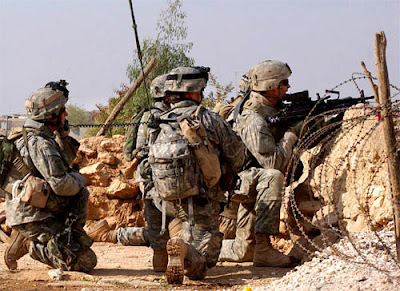
Increasingly since 9/11, American political discourse and popular culture has acknowledged, if not celebrated, the sacrifices of members of its armed forces. The often self serving praise of the service of others, which so few with privilege have ever seriously contemplated, has not resulted in heightened care for soldiers and veterans, nor deeper reflection among many on those who opt to serve, and what their service might mean for American democracy.
Unfortunately, Wade Michael Page likely will not foster the needed conversations about these issues, but instead prompt attention to the dispositions and drives that led to Page to commit what has repeatedly been described “as a senseless act.” Yet, as noted by Rinku Sen in Colorlines, these murders “are neither senseless nor random, and the vast majority of such incidents here involve white men. Racism holds a terrible logic, for a concept with no grounding whatsoever in science or morality, yet too many white people don’t see any pattern.” Equally powerful, Harsha Walia reminds readers to break down the walls between extreme and mainstream, between individual and societal, between civilian and military, to look at this violence not as yet another instance of a bad apple but yet another of the rotten tree(s):
The crimes of white supremacists are not exceptions and do not and cannot exist in isolation from more systemic forms of racism. People of colour face legislated racism from immigration laws to policies governing Indigenous reserves; are discriminated and excluded from equitable access to healthcare, housing, childcare, and education; are disproportionately victims of police killings and child apprehensions; fill the floors of sweatshops and factories; are over-represented in heads counts on poverty rates, incarceration rates, unemployment rates, and high school dropout rates. Colonialism has and continues to be shaped by the counters of white men’s civilizing missions.
To our minds, if this properly projects the arc of media coverage, until the next trauma or panic, we fear we will have lost real occasion to put into dialogue two key elements of Page’s biography: he was a veteran and he was a white supremacist. We do not know how these elements of his identity and experience interfaced with one another, though apparently his general discharge in 1998 was not related to bias. We do know, however, that thinking about the connections between white nationalist groups and the U.S. military, between the mainstream and the extreme, will help us better apprehend the shooting in Wisconsin, and more engage their implications more sensibly. “It would be a mistake to dismiss Page was an isolated actor from a lunatic fringe disconnected from the mainstream of U.S. society. In fact, the reality is that white supremacy is a persistent, tragic feature of the American cultural and political landscape,” writes Jessie Daniels. “The extreme expressions of white supremacy – like this shooting, or like some of the violent images and messages previously circulated in print and now online – are part of a larger problem. White supremacy is woven into the fabric of our society and it kills people.” We see this fact in the relationship between white supremacy and the U.S. military.
This is not a new issue, but it one that continues to resurface, often in association with tragic acts of violence. Nearly 25 years ago, the Southern Poverty Law Center (SPLC) brought to the attention of the Reagan administration that “active-duty Marines at Camp Lejeune, NC, were participating in paramilitary Ku Klux Klan activities and even stealing military weaponry for Klan use.” Secretary of Defense Caspar Weinberger acted decisively, clarifying for members of the armed forces that involvement with “white supremacy, neo-Nazi and other such groups…[was] utterly incompatible with military service.”
There is a speech making its rounds in the blogosphere and on social media that seems to galvanizing (parts of liberal) America. Unfortunately, it isn’t Malcolm’s “Ballot or the Bullet,” Fannie Lou Hamer’s brilliance at the 1968 Democratic Convention, King’s “Beyond Vietnam” or Fred Hampton’s inspiring language, but rather Jeff Daniels’ monologue at the beginning of HBO’s Newsroom. Capturing Aaron Sorkin’s propensity for sappy dialogue that is drunk on optimism, this speech also reflects his propensity to see the world through binaries, often erasing the complexities, divisions, and inequalities that define culture, politics, and society. It also embodies a disturbing level of nostalgia that seems commonplace within televisual culture. From Mad Men(more discussion here) to Pan-AM, contemporary TV (and film – The Help) is rooted in nostalgia for the past, one that fails to account for the less than idyllic world for people of color, women, the GLBT community, and others whose dreams remain deferred.
In responding to a young woman’s question about America’s greatness (American Exceptionalism), Will (Daniels) launched into a lengthy monologue:
Will: It’s not the greatest country in the world, professor,
that’s my answer.
Moderator [pause]: You’re saying—
Will: Yes.
Moderator: Let’s talk about—
Will: Fine. [to the liberal panelist] Sharon, the NEA is a loser. Yeah, it accounts for a penny out of our paychecks, but he [gesturing to the conservative panelist] gets to hit you with it anytime he wants. It doesn’t cost money, it costs votes. It costs airtime and column inches. You know why people don’t like liberals? Because they lose. If liberals are so fuckin’ smart, how come they lose so GODDAM ALWAYS!
And [to the conservative panelist] with a straight face, you’re going to tell students that America’s so starspangled awesome that we’re the only ones in the world who have freedom? Canada has freedom, Japan has freedom, the UK, France, Italy, Germany, Spain, Australia, Belgium has freedom. Two hundred seven sovereign states in the world, like 180 of them have freedom.
And you—sorority girl—yeah—just in case you accidentally wander into a voting booth one day, there are some things you should know, and one of them is that there is absolutely no evidence to support the statement that we’re the greatest country in the world. We’re seventh in literacy, twenty-seventh in math, twenty-second in science, forty-ninth in life expectancy, 178th in infant mortality, third in median household income, number four in labor force, and number four in exports. We lead the world in only three categories: number of incarcerated citizens per capita, number of adults who believe angels are real, and defense spending, where we spend more than the next twenty-six countries combined, twenty-five of whom are allies. None of this is the fault of a 20-year-old college student, but you, nonetheless, are without a doubt, a member of the WORST-period-GENERATION-period-EVER-period, so when you ask what makes us the greatest country in the world, I don’t know what the fuck you’re talking about?! Yosemite?!!!
As I initially watched this Olberman-esque sermon, I was intrigued, although I didn’t find the information or the argument particularly powerful – it was unusual for mainstream TV. It also did speak to how whiteness operates, whereupon Will or Sorkin can challenge American Exceptionalism without their patriotism or citizenship being questioned; yet people of color cannot offer these same arguments without denunciation and demonization. My interest quickly turned from frustration to annoyance to disgust to outrage as he continued with his myopic and white-colored lecture:
We sure used to be. We stood up for what was right! We fought for moral reasons, we passed and struck down laws for moral reasons. We waged wars on poverty, not poor people. We sacrificed, we cared about our neighbors, we put our money where our mouths were, and we never beat our chest. We built great big things, made ungodly technological advances, explored the universe, cured diseases, and cultivated the world’s greatest artists and the world’s greatest economy. We reached for the stars, and we acted like men. We aspired to intelligence; we didn’t belittle it; it didn’t make us feel inferior. We didn’t identify ourselves by who we voted for in the last election, and we didn’t scare so easy. And we were able to be all these things and do all these things because we were informed. By great men, men who were revered. The first step in solving any problem is recognizing there is one—America is not the greatest country in the world anymore.
In a blink of an eye, Sorkin transports viewers from the problems of today to a time worthy of celebration and memory. In erasing the violence, inequality, segregation, dehumanization, and denied rights, the monologue nostalgically imagines an exceptional time in American history. It offers evidence of and potential for the American Dream; it sees the past as time for meritocracy. America’s greatness rests with the hard work and perseverance of previous generation. It exists with a time when anyone could live out his or her dream. At the same time, the show imagined a time where people struggled and triumphed, overcoming obstacles through personal responsibility, hard work, and community.
What a crock; clearly we need to crack open a history book in Hollywood. Ernest Hardy offered his assessment of the clip in a Facebook post:
Ugh. I really, really, really hate this ahistorical bullshit paean to an America that never existed. Every time I watch this clip, I think of Black GI’s who were denied the same loans as their white brothers-in-arms when they returned from WWII; of the Black men used as lab rats in Tuskegee to help America reach those dizzying heights of medical breakthroughs; of the Black women who endured all sorts of emotional/sexual/psychological horrors that ‘The Help’ would never have the balls to really detail; I see Medgar Evers’ assassinated in his driveway in a warm-up to the murders of Dr. King and Malcolm X. Fuck this angry white dude rewrite and whitewash of history.
His comments and the scene itself made me think of a spoken word piece I wrote a few years ago regarding “the greatest generation” and this commonplace racial amnesia:
The greatest generation
You mean the Jim Crow generation
White only signs, lynchings, and the Klan
You mean the Scottsboro generation
One of many incarcerated from the generations of blacks in American
You mean the sharecropper generation
Debt servitude, enslavement, and no protections
You mean the Tom, Coon and mammy generation
Hollywood representations: Amos, Andy, and Mammy
You mean the Emmett Till generation
Murder a boy for whistling, like so many others
You mean the Japanese internment generation
“No Japs allowed,” excepted in Hawaii and in the military
You mean the atom-bomb generation
Killin 1000s, but none It Italy or Germany
You mean the segregated military generation
German prisoners first, freedom and democracy not for you
You mean the St. Louis generation
A war to save the Jews, just not those on the St. Louis or 1000s others
You mean the McCarthyism generation
Red scares, loyalty oaths, and the absence of dissent
You mean the Zoot Suit Riot generation
Soldiers attacking all who are Mexican
You mean the Bracero program generation
Give us your tired, your exploitable, your cheap
You mean the operation wetback generation
Don’t give your brown, black and yellow
You mean the bordering school generation
‘Speak English,” not the savage tongue of your inferior generations
You mean the white affirmative action generation
GI Bills, suburban homes and white American Dreams
Dreams made for a white generation
You mean the restrictive covenant generation
“Whites only,” America’s ghettos become black and brown
The greatest generation
The greatest generation
1960s youth who stood face to face with Exceptional violence
Who stood toe to toe with police dogs, fire hoses, and COINTELPRO
The greatest generation
Malcolm, Martin, Cesar, Shirley, Cha Cha, Fred
The greatest generation
Fredrick Douglas, David Walker, Sojourner Truth
The greatest generation
Ida B. Wells, Clarence Darrow and Zapata
The greatest generation
Curt Flood, Tommie Smith and Muhammad Ali
The greatest generation
Amzie Moore, Ella Baker, Fannie Lou Hammer
The greatest generation
BPP, Young Lords, TWLF, AIM
The greatest generation
Alcatraz, blowouts, Palante Siempre Palante
The greatest generation
“Serve the people,” “power to the people”
The greatest generation
Hip Hop
The greatest generation
Anti Apartheid
The greatest generation
Carlos Delgado, Etan Thomas, Craig Hodges and Mahmoud Abdul Rauf
The greatest generation
Books not prisons, Books not Bombs
The greatest generation
Walkouts and blowouts,
The greatest generation
Down with 187, 209, 227
The greatest generation?
Ain’t never been THE GREATEST GENERATION TO ME
In other words, despite the nostalgia and the historic amnesia of Newsroom, one that reflects its social location and the refusal to interrogate privilege, America’s exceptionalism isn’t a waning reality in that as noted by Langston Hughes “America has never been America” for countless generations.
During a discussion about James Holmes and the Aurora, Colorado shooting, Touré asked, “how can someone so young be so depraved?” Citing a “festering rage from that stems from feeling marginalized and powerless,” a feeling “that leads to them to try to get back at the world, ” Touré feeds the public’s insatiable desire to understand Holmes and his alleged crimes. He goes to great lengths to explain why Holmes – a white male who grew up in San Diego, a white male who has been identified as “nice,” “easy-going,” “smart” and “quiet” within the media; a white male who we are now learning was nothing more than a very shy, well-mannered young man who was heavily involved in their local Presbyterian church” – allegedly committed this heinous crime.
The efforts to describe Holmes as “otherwise normal” who must have gone crazy, who must have lost it, who must have faced something to make him go into a movie theater and shoot 70 people, speaks to the ways that the (il)logics of race and gender operate in the context of America.
“The freedom to kill, maim, commit wanton acts of violence, and to be anti-social (as well as pathological) without having your actions reflect on your own racial group, is one of the ultimate, if not in fact most potent, examples of White Privilege in post civil rights era America,” writes Chauncey DeVega in “What James and the Colorado Movie Massacre Tell us about While (male) Privilege.” “Instead of a national conversation where we reflect on what has gone wrong with young white men in our society–a group which apparently possesses a high propensity for committing acts of mass violence – James Holmes will be framed as an outlier.” In fact the media narrative has gone to great lengths to him as “mentally unstable and as a loner,” and as a “good kid who happened to shoot up a movie theater” all speaks to the efforts to define him through an outlier narrative.
You already know that if it was a Muslim that did the crime, the news would be speaking right now about the threat of “Muslim” terrorism.
This Batman shooting will never be referred to as “White” terrorism or “American” terrorism. Everyone knows that American and terrorism are exact opposites! ….
What if the shooter was not white? The Virginia Tech shooter was not white, and we all know thanks to the news that he was an immigrant from South Korea. They chose only the best pictures with a smiling face to let Americans know what that killer looked like.
Now just imagine if the mass shooter was a former Mexican American Studies student! You know that news would be all over that!
Regardless, this is a significant story, and the media has responded accordingly. Go ahead and do a Google news search. Myriad articles will pop up, titles all containing such words as “shooter” and “gunman.” Of course, if this guy was brown, I guaran-fucking-tee you he’d be a terrorist. But don’t worry. James Holmes is white, and it’s all good according to the Obama Administration, who “…do not believe at this point there was an apparent nexus to terrorism.” Whew, thank goodness! The last thing I need is to have to walk past more of these assholes:
In just a few short days, the media has gone to great lengths to explain what we are told over and over again is unexplainable (and impossible): a white criminal, a white murderer, a white “thug,” a white “pariah” and a “white terrorist.” That is, in the dominant white imagination, a white terrorist, a white thug, and a savage white man are all contradictions in terms. The national whisper is clear: “a dangerous middle-class suburban white criminal isn’t possible. How could this happen?” Whiteness is innocence, goodness, and normalcy within the national imagination.
While we learn more hourly about the recent shooting spree targeting Sikhs in Wisconsin, to properly understand it, one must understand white power today, which is no longer about cross burnings and white robes. This is especially important since the media appear ill-equipped, if not unable, to talk about white supremacists.
Rather than reflecting on the deathly consequences of white supremacy, rather than look at the burgeoning white nationalist movement, rather than look at the recruiting efforts from white supremacist organizations within the military, the narrative has already been in overdrive to individualize and contextualize, to describe this murderous rampage as a “senseless act.” Yet, as noted by Rinku Sen in Colorlines, these murders “are neither senseless nor random, and the vast majority of such incidents here involve white men. Racism holds a terrible logic, for a concept with no grounding whatsoever in science or morality, yet too many white people don’t see any pattern.” Equally powerful, Harsha Walia reminds readers to break down the walls between extreme and mainstream, between individual and societal, between civilian and military, to look at this violence not as yet another instance of a bad apple but yet another of the rotten tree(s):
The crimes of white supremacists are not exceptions and do not and cannot exist in isolation from more systemic forms of racism. People of colour face legislated racism from immigration laws to policies governing Indigenous reserves; are discriminated and excluded from equitable access to healthcare, housing, childcare, and education; are disproportionately victims of police killings and child apprehensions; fill the floors of sweatshops and factories; are over-represented in heads counts on poverty rates, incarceration rates, unemployment rates, and high school dropout rates. Colonialism has and continues to be shaped by the counters of white men’s civilizing missions.
To our minds, if this properly projects the arc of media coverage, until the next trauma or panic, we fear we will have lost real occasion to put into dialogue two key elements of Page’s biography: he was a white supremacist and he was a veteran.
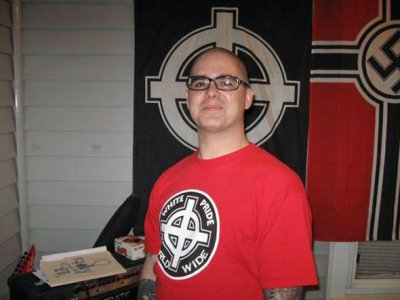
According to reports from the Southern Poverty Law Center, Wade Michael Page has a long association with white power. In 2000, he allegedly made purchases from the National Alliance, a once prominent white supremacist groups. He also appears in pictures in front of a Nazi flag.
Several websites have shown pictures of Page’s left bicep revealing a “Celtic cross” with the number 14 on top of it. Both are common white power symbols: the former with connections to the Ku Klux Klan, while the latter references the “14 Words,” a key phrase coined by David Lane, a founding member of the Aryan inspired terrorist group the Order: “We must secure the existence of our people and a future for White Children.” It represents the core of contemporary white nationalist ideology, emphasizing the importance of the white race protecting its future, one they believe to be imperiled by multiculturalism, immigration, integration, homosexuality, and globalization. The focus on the family and the protection of progeny underscores the entanglements of race, gender, and sexuality in the white power subculture today.
Page was a member of multiple hate rock groups named End Apathy and Definitive Hate. Its album “Violent Victory” contains a picture of a white hand, tattoo with the letters “HFFH” (“Hammerskins Forever, Forever Hammerskins”) punching a black male in the face. According to its website, the Hammerskins is “a leaderless group of men and women who have adopted the White Power Skinhead lifestyle… the Hammerskin brotherhood is way of achieving goals which we have all set for ourselves… summed up with one phrase consisting of 14 words.”
While many took comfort in the election of Barack Obama, it, along with the intensification of globalization and worsening economics, has sparked a rise in skinhead, neo-Nazi, and other white supremacists groups in the United States and around the world. According to a report from the SPLC, which has tracked such groups for more than a quarter-century, while more than 1,000 hate groups were identified in 2011, up from roughly 600 in 2000, militia and patriot groups numbered 1,274, up more than 450 from the year before.
Baseball’s “Puppy Mill”?: ‘Pelotero’ and the Dominican Connection
by David J. Leonard | NewBlackMan (in Exile)
Sports films are a staple within American culture. From the Hollywood imagination to documentaries, there has been a longstanding interest in sporting cultures. Offering a window into fundamental American tropes and ideologies – meritocracy; bootstraps; rages to riches; the American Dream – sports films fill the insatiable desire for stories of perseverance, redemption, and possibility. Pelotero, a new documentary narrated by John Leguizamo, enters into this larger cultural landscape, highlighting the dreams and nightmares of global baseball.
Pelotero sets out to answer a simple yet immensely complex question: how can a country the size of the Dominican Republic, with only 2% of the population of the United States, produce so many professional baseball players? In 2010, 86 of MLB’s 833 players come from the Dominican Republic; almost 25% of the 7,000 minor league players hailed from this nation of 9.7 million people. The film’s directors, Ross Finkel, Jon Paley, and Trevor Martin describe their goal as follows:
The central question behind Pelotero was a simple one: Why are Dominicans so good at baseball? The tiny island nation is consistently overrepresented in the Major Leagues, and as America’s pastime continues to globalize, every year brings a fresh crop of young Dominican Peloteros to the top levels of the game. We had a romantic image of these players’ humble beginnings etched in our minds; poor kids chasing rolled up socks through dusty streets as motorbikes whizzed by. However, that vision of street ball felt disconnected to another romantic idea of Dominican baseball; Big Papi, Sammy Sosa, or Robinson Cano slowly trotting around the bases under the bright lights and cheering fans of a big league ballpark. How does one lead to the other? And what is the story in between the two?
Eschewing cultural arguments, those that emphasize role models and “the single-minded pursuit of baseball” and theories that harken Social Darwinism, Pelotero highlights the social, political and economic contexts that funnel Dominican youth into the professional ranks.
With only two offices throughout the world, one in New York City and the other in Dominican Republic, it is clear that Major League Baseball has focused its efforts on developing future players. The desperation and poverty facing those in the Dominican Republic and throughout the Caribbean and Latin America has produced conditions ripe for American corporations taking advantage of this potential labor force, ultimately exploiting workers (players) inside and outside the United States. The establishment of “schools” – baseball’s sweatshops that produce its raw materials – has exacerbated this process.
Beyond filling the League with talented ball players, Major League Baseball teams use the “third world” because the “raw materials” (the players) are cheap. Dick Balderson, a vice-president of the Colorado Rockies, called this process a “boatload mentality.” The idea behind this approach is to sign a “boatload” of Latin players for less money, knowing that if only a couple make it to the big leagues, teams will still profit from the relationship. “Instead of signing four [American] guys at $25,000 each, you sign 20 [Dominican] guys for $5,000 each.” The desperation and poverty facing those in Latin America is facilitating this “single-minded” pursuit of sports, creating a situation where professional baseball teams are able exploit this labor force.
Charles S. Farrell, who is the former director of Jesse Jackson’s Rainbow Sports, described the dangerous predicament facing youth in the Dominican Republic:
Baseball is mainly the sport of the poor in the Dominican Republic, and viewed by so many as a way to escape poverty. Mothers and fathers put a glove on boys as soon as they can walk in order to pursue the dream of la vida buena.
But with every dream there are dream merchants, those who promise to pave a path to glory and riches for a price. The buscónes, as they are known, latch onto prospects at an early age, giving them advice and consul on how best to pursue the dream. Some are genuine in their mission; others simply hook into a potential meal ticket. Either way, good or bad, the buscónes have become a part of the Dominican baseball scene.
Pelotero highlights the consequences of the overdevelopment of the institutions of baseball alongside the underdevelopment of society at large (thanks in part to the polices of the IMF and World Bank). It elucidates how everyone from scouts to the teams themselves take advantage of the limited economic opportunities, the manipulated (unfree) marketplace, and the imported American Dream to get young 13 and 14 year olds to work hard so that maybe their parents can have a better life. Reduced to commodity, the efforts to sell a dream, a future, and most powerfully freedom/independence (signing day is July 2) to the players and their families are crucial in maintaining this exploitative system. One respondent in the film describes the ways that baseball views these young men: “It’s like when you harvest the land, you put seed on the land, you water it, you clear, and then when it grows, you sell it.”
The Criminalization of Mental Illness in Black America
By David J. Leonard
It was a normal night in 2009 at Delonte West’s house. Tired from a long day, West retreated to his room to get some rest. As usual, he took a dose of Seroquel, medication he uses for his bipolar disorder. “Sadness is a normal human emotion,” explains West. “And there’s a mechanism that kicks in and lets you know it’s time to stop being sad. With bipolar, that mechanism is out, so you don’t even know when you’re sad.” Despite certain side effects, Seroquel helps to regulate these mechanisms.
Shortly after falling asleep, West was awoken and told that his friends were downstairs messing around with some guns in the house. Despite feeling the effects of the medication, West decided that the best course of action was to remove the guns from his home, transporting them to a house nearby. He described the situation to Slam Magazine in the following way:
A few of my cats had found some stuff in the studio and they were living the whole gangsta life thing- guns in the air and this and that. And I said, ‘Oh my God. What the fu*k are y’all doin’ in here? Y’all got to go. Momma ain’t on that. Kids are running around upstairs. It’s time to go.’
Gassed up from the commotion, West decided it would be prudent for him to relocate the guns to an empty house he owned nearby. So, with his other vehicles blocked in by guests’ cars, and expecting it to be a short trip, he haphazardly loaded up his Can-Am and placed the weapons in a Velcro-type of bag – “not a desperado, hardcase, gun-shooting-out-the-side type case” -and set off.
Unfortunately, while responsibly moving the guns, he found himself unable to shake his groggy feeling. Realizing the terrible predicament he faced, he sought out a police officer, only to find himself under arrest and ultimately in jail. While clearly a result of his Bipolar Disorder and his need to medicate, West would be punished by the criminal justice system (1-year house arrest), by the media (in terms of ridicule and a narrative that consistently imagined him as criminal), and with a 10-game suspension from the NBA. Named as a member of The Bleacher Report’s “all thug team” and also a member of a list of players who “could double as gang members,” and often described as a “thug” and a “gangsta” in comment sections, Delonte West highlights the ways the criminality and mental health becomes within the black body.
His difficulties and troubles are rarely linked to his disease, instead positioned as yet another criminal baller. Moreover, even acknowledgment about his Bipolar Disorder provides little cover or context given the stigmas directed at black males. Knowledge of medical conditions, instead, are used as further evidence of his criminality and danger. “West wouldn’t be the first person to be picked on for having a mental health condition, and certainly not the first to be picked up for the same,” notes Sam Eifling. “But it’s worth noting that, despite harming precisely no one, West likely became another example of the criminalization of mental illness in America. Now he’s stigmatized as not just sick, but criminal.” Ain’t that a truth known all too well by a disproportionate number of African Americans.



 Dr. David J Leonard