White Scripts and Black Supermen: A Review | NewBlackMan (in Exile)

White Scripts and Black Supermen: A Review

by David J. Leonard | NewBlackMan (in Exile)

Recent weeks have seen endless debates – critical celebration and critical opposition galore – of Django Unchained within social media circles. While a myriad of issues and themes have manifested within these conversations, one of the most striking elements has centered around the black male hero. In fact, the recognition and power of the black male hero, amid a cultural landscape where black heroes remain a dream deferred, is one thing that has unified a myriad of voices and perspectives.

Having recently watched Jonathan Gayles’ White Scripts and Black Supermen: Black Masculinities in Comic Books (California Newsreel), a film that documents the history of black comic books and the obstacles in the production of black heroes, it is clear that the ample debate over Django (and even Red Tails) has a larger history; it has larger meaning, implications, and context

From the history demanded within the comic book industry and from fans demanding white masculine heroes, to the contemporary yearning and nostalgia for white male comic book narratives, race has been at the center of this history. White Scripts and Black Superman highlights the structural obstacles and systemic racism that resulted in a Jim Crowed comic world.

Yet, the film simultaneously brings to the life the many ways that artists and fans negotiated and challenged white hegemony within comic worlds. In providing primarily black youth with the opportunity to see themselves in a world of super heroes, resistance, and galaxatical battles, the history of comic books is a one where race and gender are constantly being contested. Whether with the Black Panther or Tyroc, John Stewart, or Luke Cage, the history of black comic books is one of exclusion and visibility; it is one defined by fights over positivity, authorship, respectability, and politics. For example, whereas superman fights universal evil, saving the universe one day at a time, the likes of Luke Cage is a “hero for hire,” battling costly rents and police abuse. While admirable, heroism operates on a different scale. The meaning and significance within the larger history of social movements, identity formation (race, gender, class), comic books, and youth culture is on full display here.

White Scripts and Black Supermen also explores the perpetuation of stereotypes within the often-cited empowering masculine spaces of comic books. For example, Tyroc replicates longstanding representations of the hypersexual, entertaining black body. However, the film highlights how the history of comic book is also a cultural space where some black comic book characters happen to be black as opposed to being a black super hero. From the hyper racial to the post-racial, from the black radical to the freedom fighter, the film highlights the range of subjectivities available within the world of comic books.

The many important conversations about cultural resistance, commodification, anti-black racism, identity formation, and those struggles waged by artists, comic book heroes and fans against the forces of evil inside and outside the fantastical realm of comic book culture is at the core of interface between White Scripts and Black Supermen. Bringing into conversation of Jelani Cobb, Reginald Hudlin, John Jennings, Dwayne McDuffie, and Mark Anthony Neal, White Scripts and Black Supermen offers viewers much to think about.

Continue reading at White Scripts and Black Supermen: A Review | NewBlackMan (in Exile).
Historic Amnesia: Four Little Girls and Assata Shakur

That song…did more for me to get me out of myself than any song that I’ve ever done.  I was so outraged when the four colored girls were killed in…that Baptist church.  I tell you I was so outraged that I didn’t—I only walked the floor for hours at a time and that’s how it came out.  It just came out as a complete outraged protest against the injustices of this country against my people (Simone, Interview on Protest Anthology, 2008  – from Danielle Heard’s “Don’t Let Me Be Misunderstood”: Nina Simone’s Theater of Invisibility”)

Approaching the fifty-year anniversary of the release of Nina Simone’s “Mississippi Goddam,” the ghosts of Mississippi and the horror of white supremacist violence continues to haint the nation.

On Friday, May 24, 2013, President Barack Obama posthumously awarded Addie Mae Collins, Denise McNair, Carole Robertson, and Cynthia Wesley Congressional Gold Medals.  The murder of the “4 Little Girls” on September 15, 1963 at the 16th Street Baptist Church galvanized the black freedom struggle in its fight against white supremacy.

President Obama described the violence in the following way: “That tragic loss, that heartbreak, helped to trigger triumph and a more just and equal and fair America.”  Indeed – although it also triggered radicalization, outrage, and increasing calls for black power.

Taylor Branch, in Parting the Waters, describes Diane Nash’s reaction as one of growing dissatisfaction with methods embraced by the mainstream civil rights movement:

That night, Diane Nash presented to King the germ of what became his Selma voting rights campaign in 1965. She was angry. Privately, she told King that he could not arouse a battered people for nonviolent action and then give them nothing to do. After the church bombing, she and Bevel had realized that a crime so heinous pushed even nonviolent zealots like themselves to the edge of murder. They resolved to do one of two things: solve the crime and kill the bombers, or drive Wallace and Lingo from office by winning the right for Negroes to vote across Alabama. In the few days since, Nash had drawn up a written plan to accomplish the, latter with a rigorously trained nonviolent host, organized at brigade and division strength, that would surround Wallace’s government in Montgomery with a sea of bodies, “severing communication from state capitol building . . . Lying on railroad tracks, runways, and bus driveways . . . Close down the power company.” Her plan amounted to a protracted sit-in on the scale of the March on Washington. “This is an army,” she wrote King. “Develop a flag and an insignia or pin or button.”

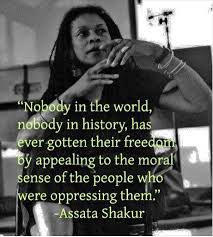
The terrorism practiced by the Ku Klux Klan and other white supremacist organizations was part and parcel of American Apartheid.  The lynching of Emmett Till, the daily violence of white supremacy, and the bombings at 16th Street reflected the politics, morals, and values of the (southern) white American landscape but also contributed to a growing call for radical intervention.  Assata Shakur described the impact of white mobs, lynchings, and bombings on her political ethos:

Mostly, when I was young, the news didn’t seem real … only the news concerning black people had any impact on me. And it seemed that each year the news got worse. The first of the really bad news that I remember was Montgomery, Alabama. That was when I first heard of Martin Luther King. Rosa Parks had been arrested for refusing to give her seat to a white woman. The Black people boycotted the buses. It was a nasty struggle. Black people were harassed and attacked and, if I remember correctly, Martin Luther King’s house was bombed. Then came Little Rock. I can still remember those ugly, terrifying white mobs attacking those little children who were close to my own age … We would sit there horrified–from Harvey Young, “’A New Fear Known to Me’: Emmett Till’s Influence and the Black Panther Party”

There is more than a bit of irony, hypocrisy, and failure to understand history that in the same month that the “4 Little Girls” have been awarded this medal Assata is put on FBI’s most wanted list.  It is outrageous that someone committed to ridding America of white supremacist violence–to making sure no more children were murdered in the name of racism, segregation, and hatred–has been declared a terrorist worthy of a 2 million dollar bounty. She was fighting against the very terrorism that killed these girls.

Not Worthy of National Attention: The NOLA Mother’s Day Mass Shootings by David J. Leonard | NewBlackMan (in Exile)


Not Worthy of National Attention: The NOLA Mother’s Day Mass Shootings by David J. Leonard | NewBlackMan (in Exile)

Not Worthy of National Attention: The NOLA Mother’s Day Mass Shootings

by David J. Leonard | NewBlackMan (in Exile)

Amid the celebration of moms across the nation (amid the passage of policies that directly and indirectly hurt so many moms), America was once again reminded that all moms and all people are not celebrated equally; all lives are not worthy of similar mourning and attention. In New Orleans, 19 people, including 2 children, were shot at a Mother’s Day Celebration.

Hamilton Nolan reflected on the narrative that has already emerged (can you imagine how many stories about mothers celebrating with their children would have been on the air had this occurred in West Los Angeles or Manhattan, NY), offering a powerful comparison to the Boston marathon bombing:

A couple of disaffected young men in search of meaning drift into radical Islam and become violent. A couple of disaffected young men in search of meaning drift into street crime and become violent. A crowd of innocent people attending the Boston marathon are maimed by flying shrapnel from homemade bombs. A crowd of innocent people attending a Mother’s Day celebration in New Orleans are maimed by flying bullets. Two public events. Two terrible tragedies. One act of violence becomes a huge news story, transfixing the media’s attention for months and drawing outraged proclamations from politicians and pundits. Another act of violence is dismissed as the normal way of the world and quickly forgotten.

The juxtaposition of Boston and New Orleans is striking given the extent of death, given the violence that occurred within ritualized spaces, and given how each is a communal gathering space. Of course one doesn’t have to travel down South to New Orleans or West to Chicago to see the hypocrisy in the separate and unequal narratives. The lack of national attention afforded to violence in Roxbury, Mass; the lack of interventions in the form of jobs, reform to the criminal justice system, investment in education, and economic development is a testament to the very different ways violence registers in the national imagination. Roxbury doesn’t enliven narratives of humanity but instead those dehumanizing representations.

Yet, don’t we need to extend the comparison to Newtown, Aurora, and Milwaukee? Remixing the above: A couple of disaffected young men in search of meaning drift into spree shootings and become violent. Flying bullets wound crowds of innocent people attending a movie, going to school, or praying at their local temple. How is the reaction to Newtown and New Orleans, to Boston and Milwaukie, and to Aurora and Chicago an indicator of who we expect to commit violence, where we expect to be safe, who we see as a victim, and where we see violence as normalized and where it is exceptional?

One comment in the thread made the link between Boston, Newtown (Aurora), and New Orleans in a profound way:

The difference is, of course, that the media and the public focus on Things That Could Happen to Middle Class White People. Bombs placed at a marathon or a plane hitting a building or a gunman mowing down people in Newtown, Connecticut or Aurora, Colorado are things that happened to middle class white people and show the other white people that it could happen to them. Crime is somehow not supposed to happen to middle class white people; it’s supposed to happen to black people.

Whereas violence is supposed to happen in Chicago, Detroit, and New Orleans, because of “culture of poverty,” because of single parents, because of dystopia and nihilism, because of warped values, gangs, and purported pathologies, the Boston Marathon, an Aurora movie theater, or a Newtown school are re-imagined as safe. These are places and spaces immune from those issues.

The normalization of violence in inner cities is why the suburbs exist; it is why police work to keep violence from entering into those suburban safety zones; it is why police guard the borders, making sure the wrong people don’t cross into the idyllic homeland of the American Dream. It is why white middle-class America avoids “those” communities or activities presumed to be dangerous (or go during the right time with the right people); it is why the white middle-class America reacts when those spaces that are presumed to be safe are simply not.

The movie theater, the school, and the marathon are symbols of Americana and therefore desirable, pure, and the embodiment of goodness. As such, the violence that happens in these “otherwise safe” enterprises and places occurs because of the entry of “dangerous” and threatening people. Outsiders enter into otherwise safe and idealized spaces.

Continue reading at Not Worthy of National Attention: The NOLA Mother’s Day Mass Shootings by David J. Leonard | NewBlackMan (in Exile).

The Unbearable Invisibility of White Masculinity: Innocence In the Age of White Male Mass Shootings

The Unbearable Invisibility of White Masculinity: Innocence In the Age of White Male Mass Shootings

I have been profiled my entire life as innocent. When disruptive in class, I was told that I was eccentric, that I needed to work on my focus. Growing up, I looked for fights and conflicts yet I never fit the profile of a juvenile delinquent. The chip on my shoulder never signified a thug; I was just a kid with a bad temper who needed to mature and grow out of it.

When I was pulled over in Emeryville, CA for speeding for several miles and asked multiple times by the police officer if there was a reason for my speeding, I told him the truth. “Officer, my ice cream is melting.”

No stop and frisk. No pretext stop. No humiliating search. No fear of how to hold my hands. No ticket. I, like Adam Lanza and James Holmes, the two most notorious mass shooters of the past year, am white male privilege personified. We are humanized and given voice and innocence over and over again.

***

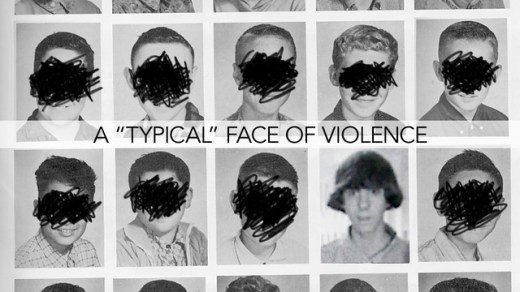
The most recent shooting in Newtown highlights whiteness and the ways it has been rendered invisible after every mass shooting. Described as a “nerd,” who “still wears a pocket protector,” Adam Lanza has been reimagined as a character straight out of The Revenge of the Nerds series and not a cold-blood killer. He carried a brief case, not a gun; he read The Catcher in the Rye and Of Mice and Men, not Guns and Ammo; he wore button down polos, not fatigues. His life was not extraordinary but was that of an average kid. From the reading list to the sartorial choices we have been sold a Normal Rockwell painting. The Associated Press painted a picture of Adam that imaged him as a character ripped out of a Brady Bunch script: “He was an honors student who lived in a prosperous neighborhood with his mother, a well-liked woman who enjoyed hosting dice games and decorating the house for the holidays.”

While identified as “reclusive,” and “shy,” as “quiet and reserved,” as “weird” and a “loner” outcast, Lanza has been consistently described as an average kid who had problems and difficulties. At worst, he was odd and painfully shy. “He didn’t have any friends, but he was a nice kid if you got to know him,” said Kyle Kromberg. “He didn’t fit in with the other kids. He was very, very shy.” Yet, the constant quest to figure out what caused him to snap, to speculate about the effects of his parents’ divorce or medications, all refashions Lanza as a good kid, a victim of sorts. He just snapped so there must have been a reason. Yes, he was strange, but do good (white, suburban, upper-middle class) kids shoot up an elementary school? Thus, reports the New York Post: “Bloodthirsty child killer Adam Lanza might have snapped, and carried out his unspeakable atrocities after learning that his mom wanted him thrown in the loony bin, according to published reports today.”

Is James Holmes a Nerd?

Here’s something that almost all the mass killers of the last fifteen years or so have in common: they’ve been called “nerds.”… Read…

The narrative following Adam Lanza and Newtown might as well recycled the media coverage surrounding James Holmes and the Aurora, Colorado shooting. Described as “smart” and quiet, as “nice,” and “easy-going,” the narrative sought to not only humanize James Holmes, but also imagine him as good at his core. It worked to tell a story of a normal kid, whose life turned toward evil for some yet-to-be-explained reason.

Sympathetic and identifiable, Holmes was depicted as Beaver Cleaver for most of his life. Anthony Mai, a longtime family friend, told the Los Angeles Times: “I saw him as a normal guy, an everyday guy, doing everyday things.” Like many others in the community, he is “very shy, well-mannered young man who was heavily involved in their local Presbyterian church.” The AP similarly depicted Holmes as a cross between Norman Rockwell, Jason, and Opie. Mind you the extent of its evidence comes from someone who had a beer with him at a local bar. “We just talked about football. He had a backpack and geeky glasses and seemed like a real intelligent guy and I figured he was one of the college students.” Can you imagine having your identity reduced to a single meeting at a bar? Sure, he was quirky, and a bit of a “loner” but he was a “reserved” and “respectful” “kid.”

Because these are told as stories of individuals with specific reasons for killing others, there is no reason to talk about race, class, or gender; there is no reason to talk about society, nor is there any reason to think that Aurora, Newtown, or Columbine are becoming Chicago or Detroit.

Continue reading at The Unbearable Invisibility of White Masculinity: Innocence In the Age of White Male Mass Shootings.

Animal House on Steroids – The Conversation – The Chronicle of Higher Education

Animal House on Steroids

April 16, 2013, 2:17 pm

By David J. Leonard and C. Richard King

Recently, David Warner, a colleague in our department at Washington State University, was severely beaten outside an off-campus bar. While the facts are still unclear, the police have indicated that drinking was most likely involved. The incident was among countless acts of violence and violation perpetrated on and around college campuses in recent weeks, all by-products of a culture of excess that celebrates intoxication. At Washington State, we have seen a semester in which police officers reported that alcohol played a role in three students’ falling from buildings and another student’s death, from alcohol poisoning. Such events are a tragic reminder of the costs of America’s collegiate party culture—which parents and administrators often lament, but which the structure of higher education tacitly endorses.

Of course, collegiate partying is nothing new. It is the stuff of local legend and school tradition, woven into the mythos of American life. For years, higher education has served as a rite of passage for young men and (increasingly) women, a time between childhood and adulthood in which essential skills, secret knowledge, and transformative experience prepare them for new roles and responsibilities in society. Important, this phase of the (upper- and middle-class) life cycle long has coupled the seriousness of education and the practicality of career preparation with the freedoms, experiments, and indulgences of social life. And academic leaders and student-life professionals have sought to counter the abuses and excesses associated with the latter to advance the former.

Increasingly over the past two or three decades, however, that balance has begun to break down, as universities have begun to actively contribute to a new formula that often embraces entitlement and indulgence over learning and hard work.

Along with the media, which celebrate collegiate party culture and regularly issue lists of “the best party schools,” institutions also promote an atmosphere the puts fun and experience ahead of academics and learning. In an era of increasing tuition and shrinking job prospects, universities can no longer promise a certain path to the American Dream. In light of the continuing structural realignments, party culture provides some students with more compelling reasons to fork over thousands of dollars. In their new book, Paying for the Party: How College Maintains Inequality, the sociologists Elizabeth A. Armstrong and Laura T. Hamilton concluded that America’s universities use the “party pathway” to lure upper-middle-class students onto campus. “At the heart of the party pathway was a powerful Greek system, a residence-hall system that fed students into the party scene, and numerous ‘easy, majors,” they write, describing their research in The Chronicle. “As the most visible and well-resourced route through the institution, the party pathway was impossible to avoid—even by those who wished to.”

Continue reading at Animal House on Steroids – The Conversation – The Chronicle of Higher Education.

Athletic Programs’ Twitter Jitters – The Conversation – The Chronicle of Higher Education

Athletic Programs’ Twitter Jitters

February 25, 2013, 12:43 pm

By David J. Leonard

A few months into his inaugural season at Washington State University last fall, the football coach Mike Leach faced yet another controversy. Plagued by allegations that he had mistreated a player while coaching at Texas Tech and a reputation as a bit of a loose canon, Leach was about to wade into what some people consider another form of abuse—barring players from using Twitter.

Reporters from a student news service had provided Leach with evidence that several players apparently posted messages on a social-media site that included negative terms for women and African-Americans. Leach imposed an immediate ban for the entire Cougar football team. “If after today you see anything on Twitter from our team—and I don’t care if it says ‘I love life’—I would like to see it because I will suspend them,” he announced.

Leach’s decision is nothing new. In 2010, Chris Petersen (Boise State University) decided that intercollegiate athletics and social media were incompatible. The next year, Steve Spurrier (University of South Carolina) and Turner Gill (University of Kansas) followed suit. Then Mississippi State’s basketball coach, Rick Stansbury, took away his team’s tweeting privileges after a player criticized the team on Twitter. “The reason we decided to not allow our players to have a Twitter account is we feel like it will prevent us from being able to prepare our football program to move forward. Simple as that.” Tell that to the University of North Carolina at Chapel Hill, whose road to NCAA punishment started with a tweet from a player about his lavish lifestyle. UNC would ultimately lose 15 football scholarships—that’s less than 10 characters per scholarship.

Outright bans have not been the only approach. Some institutions have suspended players for tweets. A Lehigh University student-athlete was disciplined for retweeting a racial slur; at Western Kentucky University, officials suspended a player who did the unthinkable—criticizing oh-so-important fans in social media. At Boston College, a women’s soccer player was suspended because of several tweets about Jerry Sandusky.

Other colleges are employing commercial monitoring services like Varsity Monitor, Centrix Social (recently acquired by Varsity Monitor), and UDiligence to flag the use of a growing number of taboo words. According to The Chronicle, the University of Louisville nixes references to drugs, sex, and alcohol; the University of Kentucky, agents’ names.

Continue reading at Athletic Programs’ Twitter Jitters – The Conversation – The Chronicle of Higher Education.

Preventing the Rise of Pothead U. – The Conversation – The Chronicle of Higher Education

Preventing the Rise of Pothead U.

January 2, 2013, 3:29 pm

By David J. Leonard


With the election season thankfully in our rear-view mirror, we can take stock of what the marijuana legalization initiatives (in both Washington and Colorado) mean. It should come as no surprise that college students have been rallying to end the prohibition of marijuana. I, for one, have often seen students pushing their decriminalization agenda on campus. What always struck me as I walked past these primarily white, middle-class crusaders is that marijuana is already effectively decriminalized on college campuses, as well as in suburbs and middle-class communities.

Decriminalization is a daily reality and has always been the applied law of the land in these environments. Sure, colleges and universities may claim to comply with federal drug laws, which, theoretically, should prevent the rise of Pothead U. Still, I can’t imagine the DEA swooping down anytime soon. A student conduct hearing and threat of drug education is not criminal enforcement.

Take a look at the numbers. Studies typically show that close to 50 percent of college students have used marijuana during the course of their young lives. According to a 2007 study, the number of students using marijuana daily more than doubled between 1993 and 2005. Furthermore, research has consistently shown that white students (and Latino students) use illegal drugs more frequently than African-American or Asian college students. Those trends also reflect drug-use patterns among young people not enrolled in college. It is not surprising that most of agitation for legalization of marijuana has been overwhelmingly white.

Of course, even the federal decriminalization of marijuana won’t eradicate all of the criminal misconduct among today’s college students. In recent years, drug use has also worsened with the proliferation of “performance-enhancing drugs” like Adderall. During the early part of the 21st century, sales increased by 3,100 percent; in recent surveys, anywhere from 5 percent to 35 percent of students admitted to popping these “study drugs.” Despite the fact that it violates federal drug laws, students regularly secure Adderall with little fear of punishment.

Continue reading at Preventing the Rise of Pothead U. – The Conversation – The Chronicle of Higher Education.